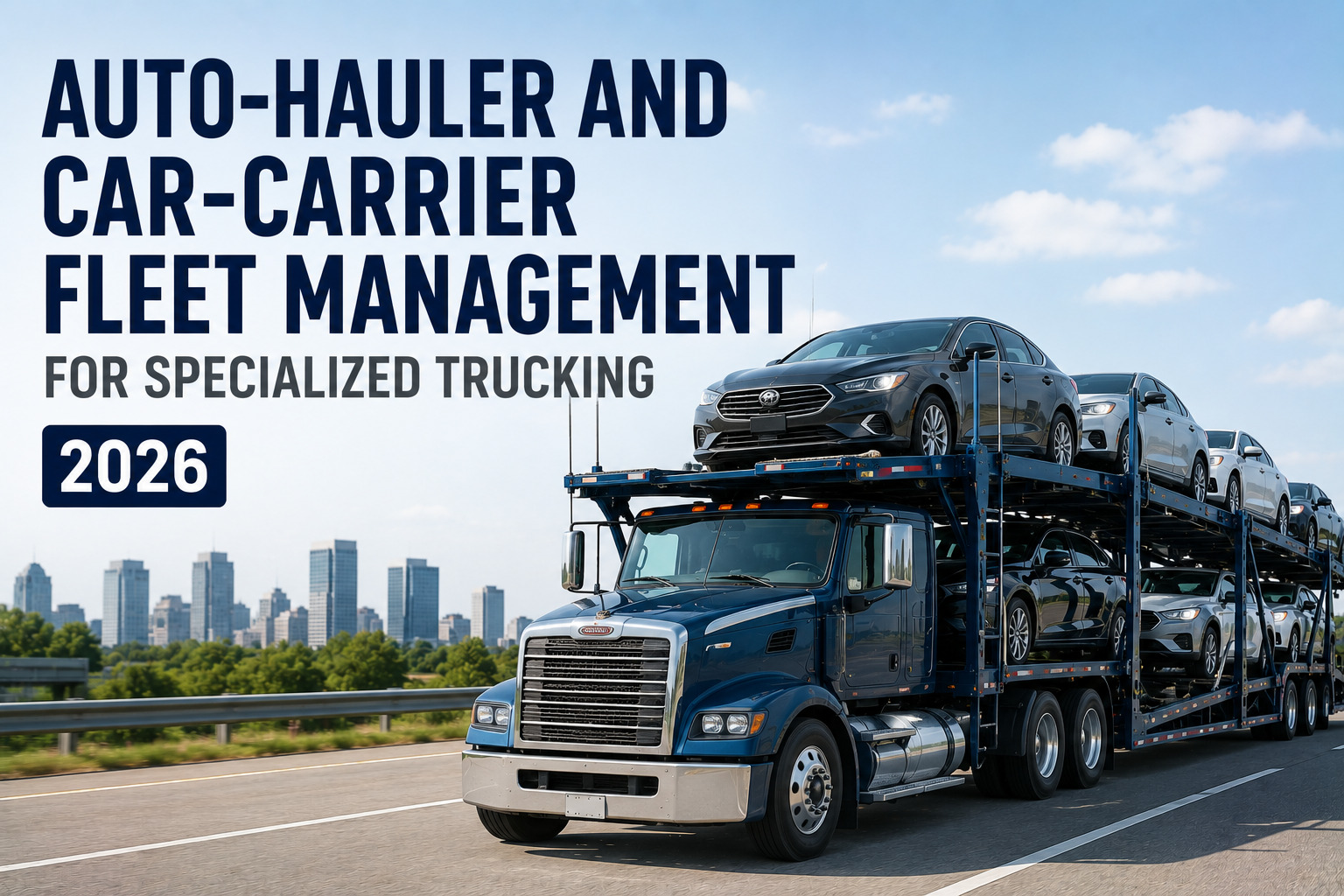
Auto hauling and car carrier operations sit in a category of their own within the trucking industry. You're not moving freight — you're transporting high-value vehicles worth $20,000 to $150,000 each, often for dealerships, auctions, manufacturers, and private clients who expect zero damage and precise delivery windows. A single scratched hood or missed auction delivery can cost more than an entire week of revenue. The equipment itself — multi-level hydraulic decks, ramps, tie-down systems — demands a maintenance discipline that generic fleet management tools were simply never built to handle. In 2026, auto hauler and car carrier operators who manage their fleets with purpose-built software are outperforming those who don't in every measurable category: lower damage claims, higher truck utilization, fewer compliance violations, and stronger profit margins.
The U.S. auto transport industry moves approximately 35 to 40 million vehicles annually. The average open auto hauler carries 7 to 10 vehicles per load with a cargo value of $140,000 to $500,000 per trip. A single hydraulic system failure on a loaded carrier can cost $4,000 to $12,000 in repairs plus the revenue loss from a missed load — making proactive equipment management the single highest-ROI operational investment for auto hauler fleets. FleetRabbit is purpose-built to manage exactly this complexity.
Why Auto Hauler Fleet Management Is Unlike Any Other Trucking Segment
Most trucking fleet management discussions focus on freight carriers — dry van, flatbed, refrigerated. Auto hauling is fundamentally different in ways that affect every management decision. The cargo is self-valuable and damage-prone. The equipment is complex, multi-system, and expensive to repair. The regulatory environment is specialized. And the business relationships — with OEM manufacturers, franchise dealerships, and wholesale auctions — carry contractual expectations around condition and timing that most freight carriers never encounter.
Understanding these differences is the starting point for building a management system that actually works. If you're running auto hauling operations and relying on a generic fleet management tool designed for box trucks or dry vans, you're managing with a tool that doesn't understand your equipment, your cargo risk, or your compliance obligations. Book a demo with FleetRabbit to see a platform designed specifically for specialized carrier operations.
Cargo Value Per Load
Average open hauler load: $140,000 – $500,000 in vehicle value. A single damage claim from a scratch, dent, or tie-down strap mark can cost $1,500 to $8,000 in repairs plus the labor of managing the claim.
Hydraulic Equipment Complexity
Multi-level decks, hydraulic ramps, and winch systems require maintenance schedules that go far beyond standard truck service intervals. Each component has independent inspection and service requirements.
Specialized Compliance
Auto haulers operating over 26,000 lbs require CDL-A, USDOT numbers, and often broker authority. Loaded weight with vehicles frequently exceeds 80,000 lbs, requiring axle weight compliance and oversize permits in some states.
Condition Documentation
Every vehicle must be inspected and documented at pickup and delivery. Paper condition reports create disputes and liability exposure. Digital condition documentation with timestamped photos is the industry standard and legal protection.
Load Planning Precision
Loading sequence on a multi-level carrier affects weight distribution, deck height clearance for oversized vehicles, and unloading efficiency at multi-stop routes. Poor load planning adds hours to every run.
Delivery Window Sensitivity
OEM manufacturers and franchise dealerships operate on tight inventory windows. A carrier arriving 4 hours late to a dealership group delivery may trigger contract penalties or shipment redirection fees of $500 to $2,000 per occurrence.
The Hidden Cost of Unmanaged Auto Hauler Operations
Many auto hauler operators understand their revenue — loads per week, average pay per car, total annual revenue. Fewer have full visibility into the cost side of the equation. Fleet management software creates that visibility, and what it reveals is often surprising. Here are the cost categories that most auto hauler operators underestimate until they have data:
Industry average for a 5-truck operator. Digital condition reports reduce disputed claims by 60 to 80%.
Average cost of emergency hydraulic repair plus towing and load transfer. Preventive service costs $300 to $600.
DOT violations, overweight fines, and out-of-service orders. Compliance tracking software eliminates preventable violations entirely.
Breakdown-related delivery failures to OEM or dealership accounts. Every breakdown prevented eliminates both repair cost and penalty exposure.
Core Management Functions for Auto Hauler Fleets
A complete auto hauler fleet management system must address operational areas that don't exist in standard trucking — particularly around equipment maintenance, cargo documentation, and load management. Here is how each function contributes to safer, more profitable operations:
Hydraulic and Deck Equipment Maintenance Tracking
The hydraulic systems on a multi-level auto hauler are the most expensive and failure-prone components on the equipment. A typical 8-car open hauler has hydraulic cylinders for each deck level, a pump and reservoir system, hydraulic lines throughout the frame, and ramp actuation mechanisms — all requiring separate maintenance attention. Without a structured tracking system, these components get serviced reactively — meaning they get serviced after they fail. Sign up for FleetRabbit and create custom maintenance schedules that track hydraulic system service intervals independently from engine and drivetrain service.
| Equipment Component | Service Interval | Planned Service Cost | Emergency Failure Cost |
|---|---|---|---|
| Hydraulic Fluid Change | Every 500 – 1,000 hours | $200 – $400 | N/A (contamination causes pump failure) |
| Hydraulic Pump Inspection | Every 6 months or 50,000 mi | $150 – $300 | $2,500 – $6,000 (pump replacement) |
| Hydraulic Line Inspection | Every 3 months | $80 – $150 labor | $800 – $2,000 (line burst, fluid loss) |
| Deck Cylinder Service | Annually or 100,000 mi | $400 – $800 per cylinder | $3,000 – $8,000 (seized or burst) |
| Ramp Mechanism Lubrication | Every 30 days or 10,000 mi | $50 – $100 | $500 – $1,500 (seized ramp on load) |
| Winch and Strap Inspection | Pre-trip and monthly | Included in inspection | $2,000 – $15,000 (vehicle damage from failure) |
| Frame and Deck Weld Inspection | Annually | $200 – $500 | $5,000 – $20,000 (structural failure) |
Vehicle Condition Documentation at Pickup and Delivery
Condition documentation is the legal and financial protection system for every auto hauler. Without it, any damage claim — whether legitimate or fraudulent — becomes a word-against-word dispute where the carrier frequently loses. Digital condition reporting through a mobile app captures pre-existing damage with timestamped, geotagged photos at pickup, creates a digital bill of lading with customer or dealer signature, and produces a delivery condition report that compares against pickup documentation automatically. Fleets that implement digital condition documentation see disputed damage claim rates drop by 60 to 80% within the first year.
Load Planning and Weight Distribution
Loading an 8 or 10-car hauler isn't first-come-first-loaded. Vehicle size, height, weight, and delivery sequence all influence where each vehicle should be positioned on the carrier. A lifted truck that won't clear the upper deck, a lowered sports car that needs a specific ramp angle, or a delivery sequence that would require unloading four vehicles to reach one buried in the middle — all of these are avoidable with structured load planning. Software that incorporates vehicle specifications into load assignment reduces driver delays at pickup by 30 to 45 minutes per load.
Stop Managing the Most Complex Fleet in Trucking With Generic Tools
FleetRabbit tracks hydraulic equipment maintenance, vehicle condition documentation, compliance deadlines, and driver performance — all in one platform designed for the specific demands of auto hauler and car carrier operations.
DOT and Regulatory Compliance for Auto Haulers
Auto haulers face a compliance landscape that's more complex than most trucking segments. Vehicle weight with a full load of 8 to 10 vehicles frequently approaches or exceeds federal weight limits, making axle weight compliance a per-load calculation rather than a static fact. Here is every compliance area that auto hauler fleet managers must actively track:
USDOT Number and Operating Authority
Required for carriers transporting vehicles across state lines. MC number required if acting as a broker. Annual FMCSA updates and biennial MCS-150 filings must be current or operations risk penalties up to $10,000.
CDL-A Driver Requirements
Auto haulers over 26,001 lbs require CDL-A. Drivers must maintain valid medical certificates, clean MVR records, and current hazmat endorsements if transporting vehicles with fuel. Track all per-driver.
Federal Bridge Law and Axle Weights
Loaded auto haulers often approach the 80,000 lb federal limit. Vehicle positioning on the carrier affects axle weight distribution. Overweight fines range from $0.01 to $0.20 per pound over limit depending on state.
Oversized and Overwidth Permits
Some open auto hauler configurations exceed standard width limits. State-specific permits required for overwidth loads. Operating without valid permits triggers fines of $500 to $5,000 per state of violation.
Hours of Service and ELD Compliance
Electronic Logging Device requirements apply to auto haulers subject to HOS regulations. 11-hour driving, 14-hour on-duty, and 70-hour weekly limits must be tracked per driver. ELD malfunction protocols must be documented.
Annual Vehicle Inspection Requirements
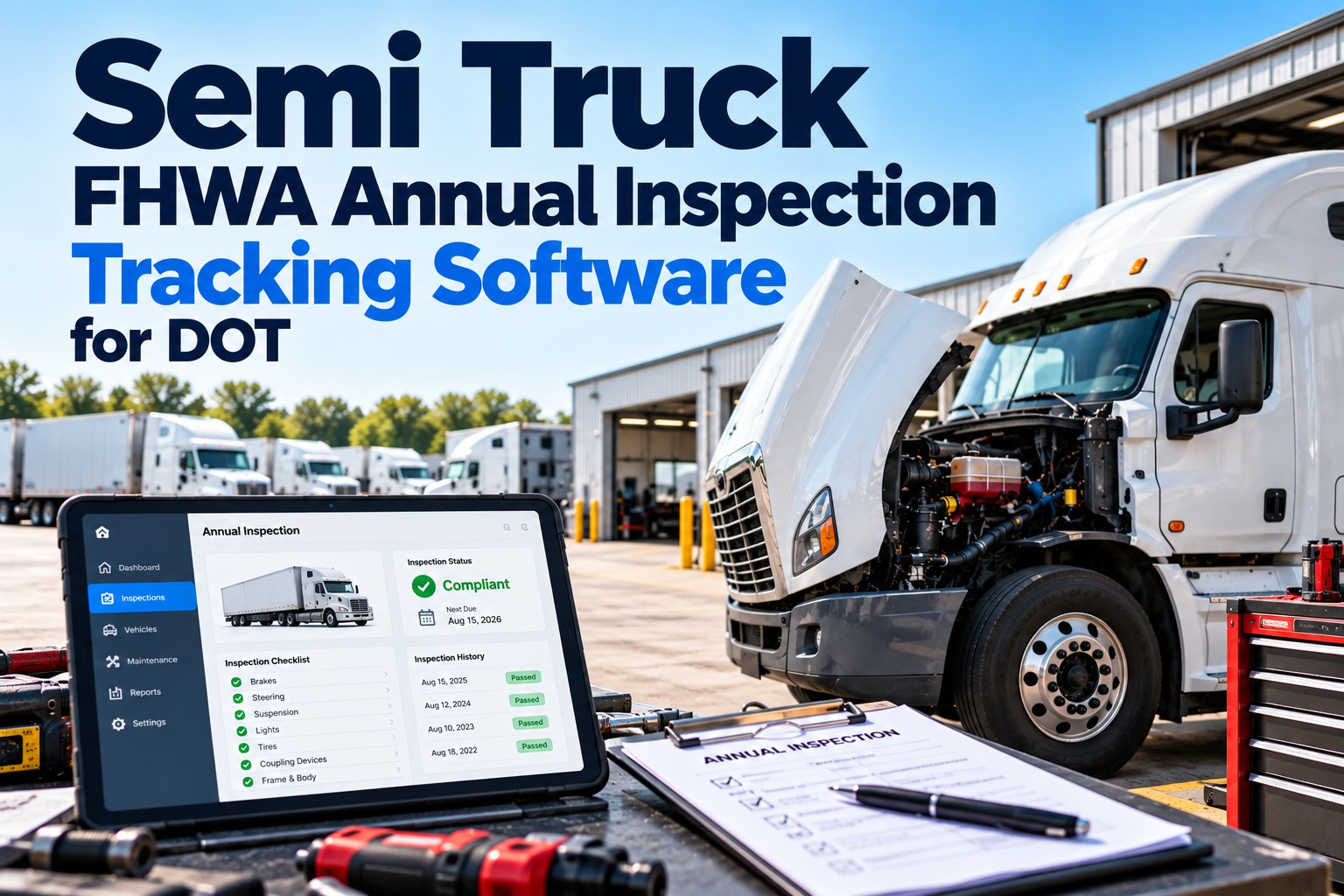
Both the tractor and the trailer/carrier deck require separate annual DOT inspections. The carrier deck inspection must cover structural integrity, hydraulic systems, tie-down equipment, and lighting — not just standard truck components.
Measuring Auto Hauler Fleet Performance
Without data, auto hauler fleet performance management is guesswork. With the right metrics tracked consistently, it becomes systematic and improvable. Here are the key performance indicators that separate top-performing auto hauler fleets from average operators:
Open vs. Enclosed Auto Hauler Management Differences
Open and enclosed auto transport operations share core management principles but differ in several important operational and equipment details that affect how you configure a fleet management system.
Carries 7 to 10 vehicles per load — higher volume, lower per-vehicle revenue
Multi-level hydraulic deck exposed to road debris, weather, and elements
Deck ramp and hydraulic maintenance critical — outdoor exposure accelerates corrosion
Weather-related damage liability — hail, flooding events require documented response protocols
Primary market: dealership deliveries, auction transport, OEM distribution
Average revenue: $300 – $600 per vehicle transported depending on distance
Carries 2 to 6 vehicles per load — lower volume, premium per-vehicle revenue
Climate-controlled interior protects exotic, classic, and high-value vehicles
Interior lift and ramp systems require inspection — enclosed environment hides wear
Clients expect white-glove documentation — condition reports with photo evidence mandatory
Primary market: collector car dealers, auctions, private clients, motorsport teams
Average revenue: $800 – $2,500 per vehicle transported depending on value and distance
Regardless of carrier type, the management fundamentals are the same: equipment must be tracked, drivers must be managed, compliance must be current, and cargo must be documented. Sign up for FleetRabbit and configure your platform for open, enclosed, or mixed fleet operations in a single unified dashboard.
ROI of Fleet Management Software for Auto Hauler Operations
For a 5-truck auto hauler operation, here is what a realistic return-on-investment calculation looks like when implementing a purpose-built fleet management platform:
Digital condition documentation at pickup and delivery reduces successful damage claims by 60 to 80%. At $8,000 to $45,000 average annual claim cost for a 5-truck fleet, the savings are immediate and significant.
Preventing 2 to 3 hydraulic or deck equipment failures annually at $4,000 to $12,000 per incident. Planned hydraulic service costs $300 to $600 per service — a fraction of the emergency alternative.
Automated compliance tracking prevents DOT violations, overweight fines, and out-of-service orders. A single out-of-service order on a loaded hauler costs the fine plus the load transfer cost plus missed delivery penalties.
Route optimization and load planning reduce wasted miles and pickup delays. At $2.80 to $3.20 per mile all-in operating cost, eliminating 3,000 to 6,000 annual miles of inefficiency delivers direct bottom-line savings.
Building Your Auto Hauler Fleet Management System: A Practical Roadmap
Phase 1 — Equipment Audit and Compliance Baseline
Start by auditing every piece of equipment: tractors, carrier decks, hydraulic systems, tie-down equipment, and safety gear. Document current service status, last inspection dates, next scheduled service, and any deferred maintenance items. Simultaneously audit driver compliance records — medical certificates, license endorsements, HOS logs, and drug testing enrollment. This baseline typically takes 2 to 3 days for a 5-truck fleet and reveals the compliance exposure points you need to address before they become violations. Book a FleetRabbit demo and we'll show you exactly how the platform captures and organizes this baseline data.
Phase 2 — Digital Condition Documentation Rollout
Implement mobile-based vehicle condition reporting before tackling any other management system change. This has the fastest and most direct financial impact — reducing damage claim exposure from day one. Train drivers on the photo documentation workflow: walk-around photos at pickup, specific damage documentation with close-ups, customer or dealer signature on digital BOL, and delivery confirmation with photos. The first time a disputed claim is resolved in your favor with timestamped photo documentation, drivers understand the value and adoption becomes self-sustaining.
Phase 3 — Equipment Maintenance Schedule Configuration
Configure maintenance schedules for each piece of equipment — tractor engine and drivetrain on standard intervals, hydraulic systems on separate schedules, deck components on their own service tracks, and tie-down equipment on pre-trip inspection cycles. Set alert thresholds at 30, 15, and 7 days before each service interval. Parts pre-ordering reminders ensure common hydraulic fluids, filters, and seals are on hand before the service appointment, eliminating delays from parts sourcing.
Phase 4 — Performance Tracking and Continuous Improvement
With equipment and documentation managed, shift focus to performance optimization. Track revenue per truck per week, cars transported per truck, load utilization rate (how many positions are filled per trip), and fuel economy per driver. Monthly performance reviews using this data identify which trucks, routes, or drivers are underperforming and why. Most auto hauler operators who implement systematic performance tracking see 10 to 20% improvement in revenue per truck within 6 months — simply from better visibility into what's working and what isn't.
Frequently Asked Questions
Why Auto Haulers Choose FleetRabbit in 2026
The fleet management software market has many options, but most were designed for freight carriers — not vehicle transport specialists. Auto haulers choosing FleetRabbit get a platform that understands the operational reality of their business: equipment that requires custom maintenance tracking, cargo that requires condition documentation at every touchpoint, compliance requirements that go beyond standard trucking, and performance metrics that reflect how auto hauler profitability is actually measured.
What Sets FleetRabbit Apart for Auto Hauler Operations
FleetRabbit allows operators to build custom maintenance schedules for hydraulic systems, deck components, and tie-down equipment — tracked independently from tractor service intervals. Digital condition report workflows are configurable for open and enclosed carriers with photo documentation, signature capture, and automatic comparison between pickup and delivery records. Compliance tracking covers both tractor and carrier deck inspection requirements, driver medical certificates, operating authority renewals, and permit expiration. Performance dashboards track the metrics that matter for auto hauler profitability — not just generic fleet KPIs. Sign up for FleetRabbit and start your free trial with no credit card required. Or book a personalized demo and see exactly how the platform works for auto hauler and car carrier operations your size.
The Fleet Management Platform Built for Auto Haulers and Car Carriers
Protect your cargo. Maintain your equipment. Stay compliant. Manage your drivers. FleetRabbit handles all of it in one platform built specifically for the complexity of specialized vehicle transport — not adapted from a generic trucking tool.