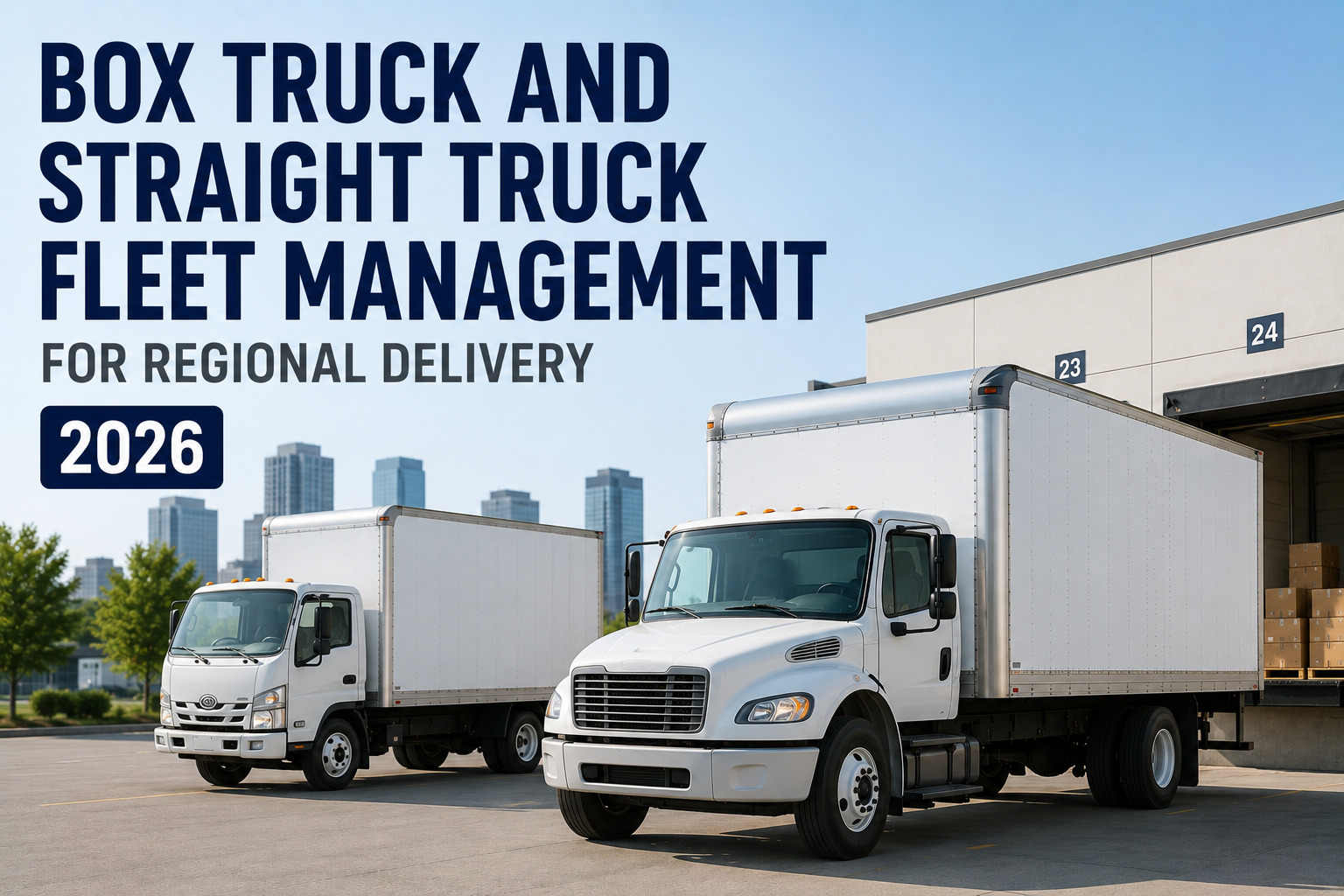
Regional delivery is the backbone of modern commerce — and box trucks and straight trucks are its workhorses. From last-mile grocery deliveries to multi-stop furniture runs and medical supply routes, these vehicles carry the operational weight of thousands of businesses every single day. Yet many regional operators still manage their fleets through spreadsheets, phone calls, and paper logs — a gap that quietly costs tens of thousands of dollars annually in missed maintenance, compliance violations, inefficient routing, and driver overtime. In 2026, that gap has a solution: purpose-built fleet management software designed for the specific demands of box truck and straight truck operations.
Box truck and straight truck fleet management combines route optimization, preventive maintenance scheduling, DOT compliance tracking, driver management, and real-time dispatch into a single operational platform. Operators using dedicated management software reduce fuel costs by 12 to 18%, cut unplanned downtime by up to 40%, and improve on-time delivery rates by 20 to 30% within the first year of implementation. FleetRabbit is built specifically for regional delivery fleets of this type.
The Regional Delivery Challenge in 2026
Running a regional box truck operation sounds simpler than managing long-haul trucking — shorter distances, familiar routes, predictable customers. But the operational complexity is deceptive. A 15-truck regional delivery fleet might complete 150 to 300 individual stops per day across multiple drivers, routes, and time windows. Each stop is a potential service failure. Each vehicle is a potential breakdown. Each driver is a compliance exposure point. And unlike long-haul carriers with dedicated dispatch teams and fleet coordinators, most regional operators are managing all of this with lean back-office staff.
The result is a management environment where small inefficiencies compound fast. A single box truck sitting in the shop on a Tuesday during a high-volume delivery week doesn't just cost the repair bill — it costs rerouted drivers, overtime hours, missed delivery windows, and potential customer churn. If your operation is still managing reactively, book a demo with FleetRabbit to see what proactive fleet management looks like for regional delivery.
High Stop Density
Regional fleets make 10 to 30 stops per truck per day. Every inefficient route decision multiplies across the entire stop sequence, adding hours of unproductive drive time weekly.
Tight Delivery Windows
Customers expect narrow delivery windows. A single mechanical breakdown or traffic delay cascades through the entire day's schedule, creating service failures at multiple stops simultaneously.
DOT Compliance Pressure
Box trucks over 10,000 lbs GVWR require DOT number registration, medical certificates, and hours-of-service compliance. Violations carry fines of $1,000 to $16,000 per incident.
Driver Turnover
Regional delivery drivers turn over at 35 to 55% annually. Each new driver requires route familiarization, compliance onboarding, and performance monitoring — all time-intensive without software support.
Maintenance Visibility
Box trucks running 150 to 300 miles daily need aggressive maintenance schedules. Without centralized tracking, service intervals slip — turning a $400 preventive repair into a $3,500 roadside breakdown.
Fuel Cost Control
Fuel represents 35 to 45% of direct operating costs for regional box truck fleets. Idling, inefficient routing, and aggressive driving behavior each add 8 to 15% to fuel consumption without behavioral data.
What Box Truck Fleet Management Software Actually Does
Purpose-built fleet management for box trucks and straight trucks isn't a GPS tracker bolted onto a spreadsheet. It's an integrated operational layer that connects dispatch, maintenance, compliance, and performance data into a single view. Here's how each functional area works and what it delivers:
Route Optimization and Dispatch
Intelligent route planning calculates the most efficient stop sequence for each driver, factoring in delivery time windows, traffic patterns, vehicle capacity, and driver availability. For a 10-truck fleet making 20 stops per truck daily, route optimization typically saves 45 to 90 minutes of drive time per vehicle per day — translating to 75 to 150 hours of recovered capacity weekly across the fleet. That's the equivalent of hiring an additional driver without adding payroll costs. Sign up for FleetRabbit and run your first optimized route plan today.
Preventive Maintenance Scheduling
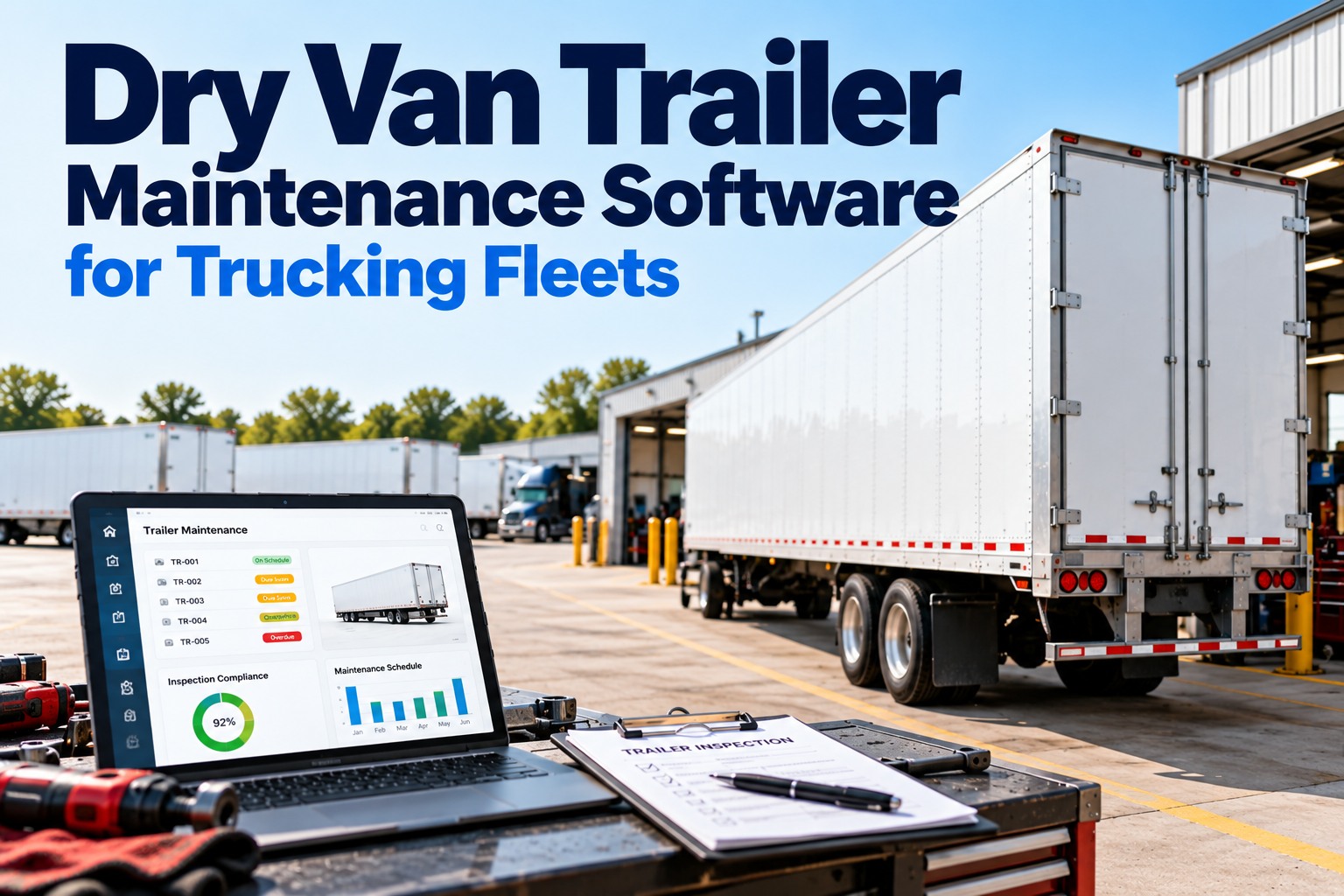
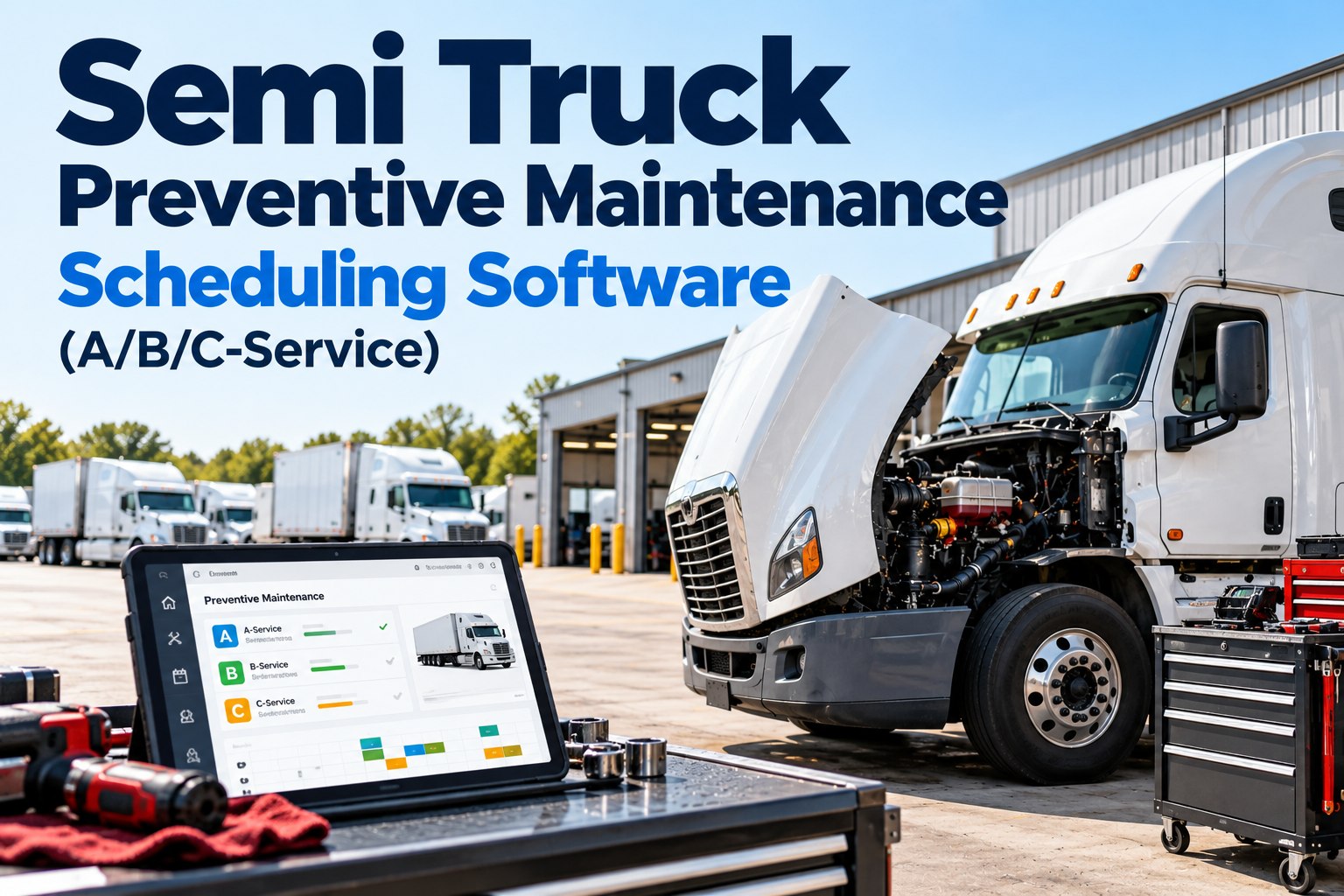
Automated maintenance tracking triggers service reminders based on mileage, engine hours, or calendar intervals — whichever comes first. Oil changes, brake inspections, tire rotations, and DOT-required annual inspections are tracked per vehicle and surfaced to fleet managers before they become overdue. The financial impact is direct: planned brake service costs $500 to $800. The same repair as an emergency roadside breakdown costs $2,500 to $4,500 including towing and overtime labor.
DOT Compliance Management
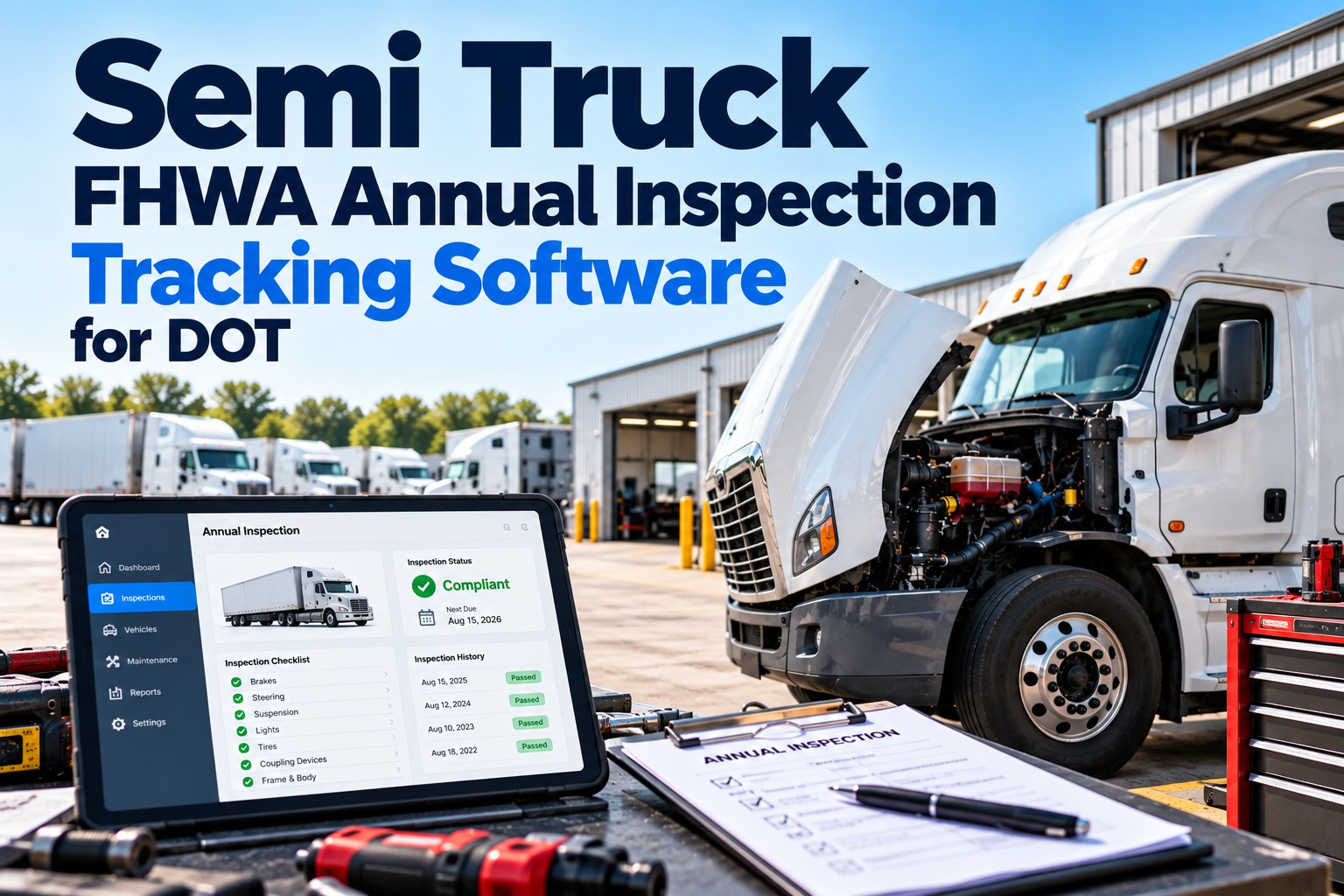
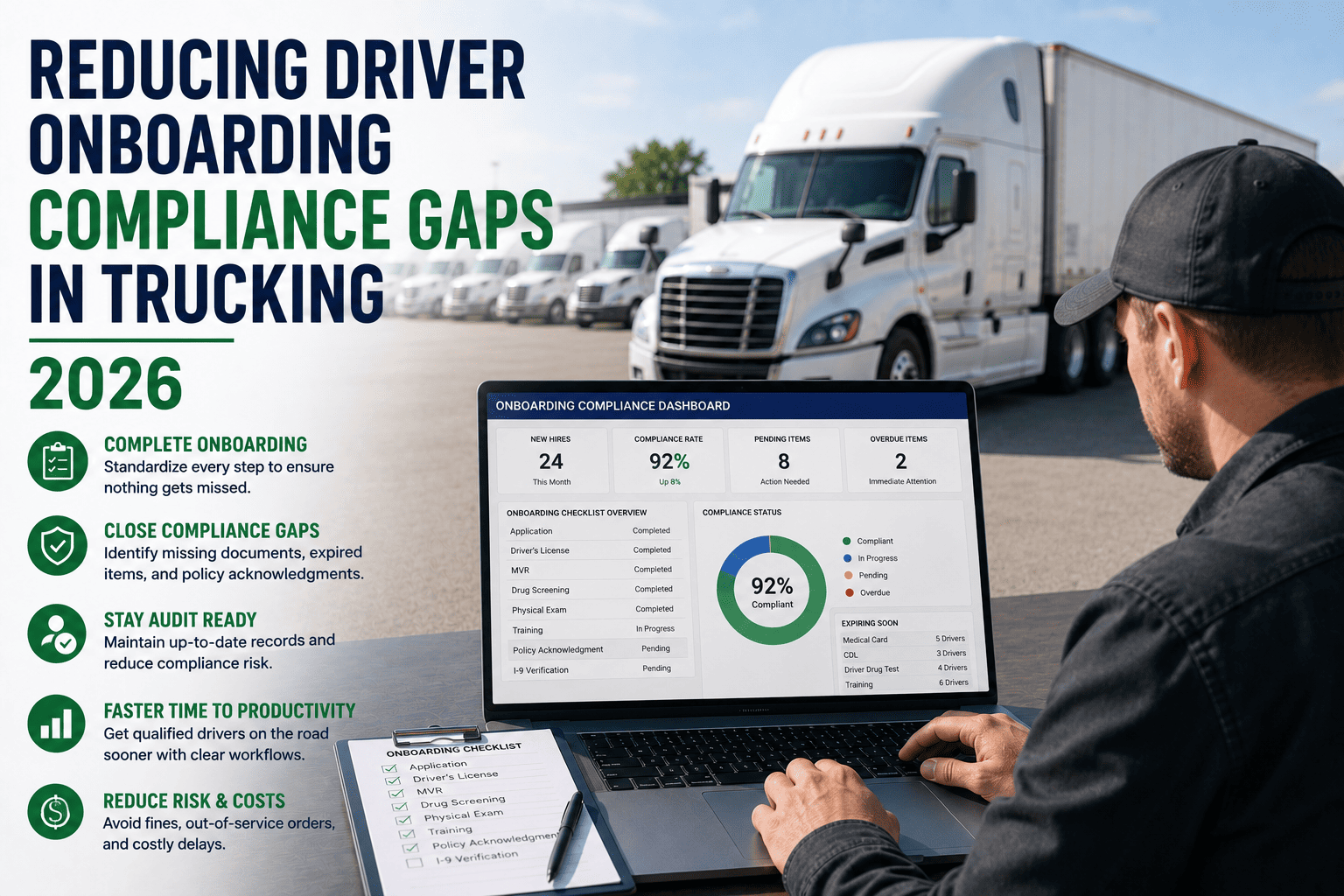
Compliance tracking for box truck fleets covers driver medical certificate expiration, vehicle registration renewals, annual DOT inspections, hours-of-service records, and DVIR (Driver Vehicle Inspection Report) completion. Automated alerts notify managers 30, 15, and 7 days before any compliance deadline. This eliminates the scenario where a driver gets flagged at a roadside inspection for an expired medical card — a violation that puts the driver out of service immediately and triggers a CSA score hit that affects insurance premiums for up to 24 months.
Driver Management and Performance
Driver performance monitoring tracks fuel economy per driver, idle time, harsh braking events, speeding incidents, and on-time delivery rates. This data serves two purposes: it identifies coaching opportunities for underperforming drivers, and it creates objective performance records for HR decisions. Fleets that implement driver scorecards typically see 10 to 15% improvement in fuel economy within 60 days — purely from behavioral change driven by visibility and accountability. Ready to see your driver data? Book a FleetRabbit demo and we'll show you what the dashboard looks like for your fleet size.
Real-Time GPS Tracking and Visibility
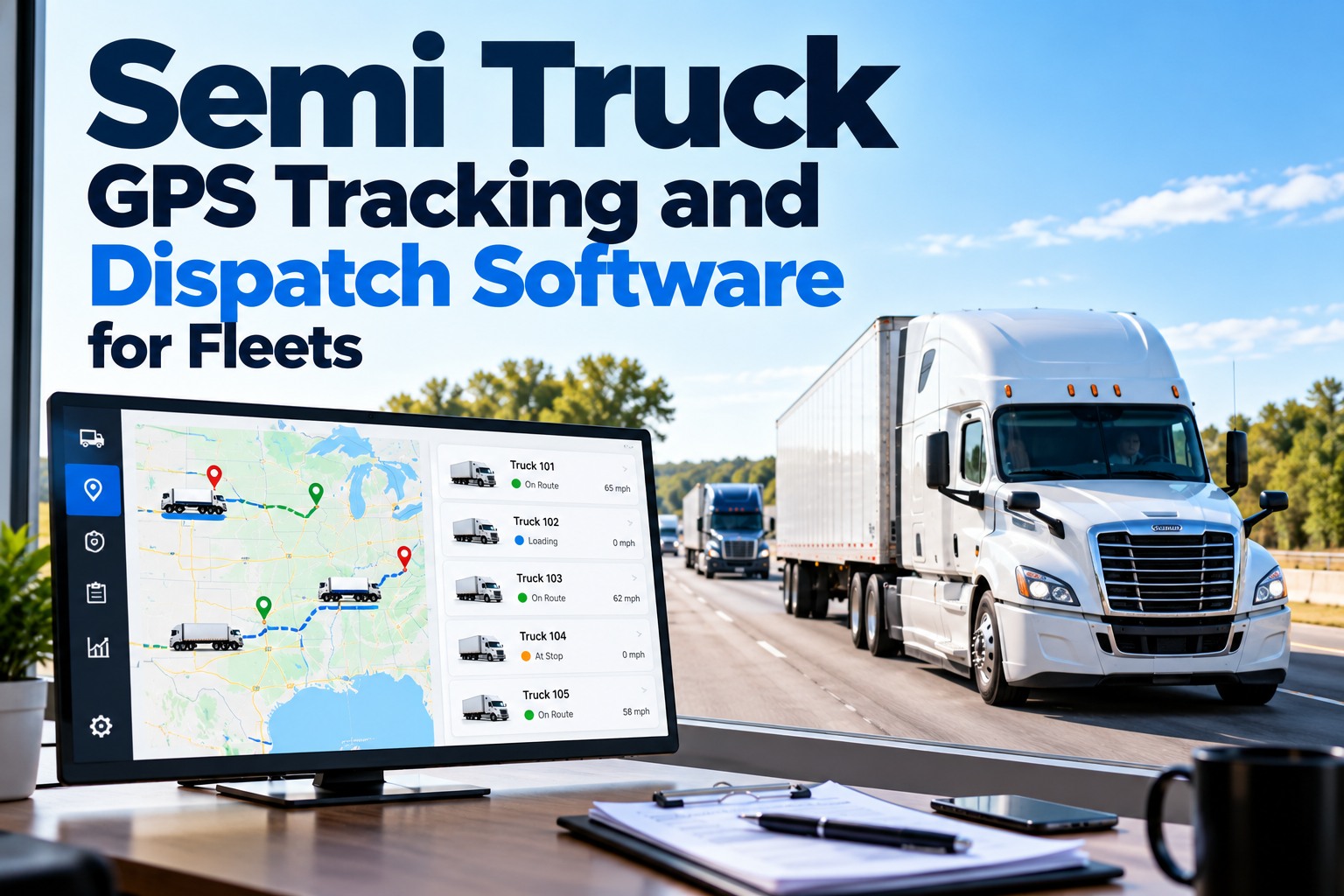
Live vehicle location gives dispatchers immediate answers to the questions that drive their day: Where is truck 7? Has driver Maria completed her 14th stop? Is the vehicle on schedule to make the 2pm delivery window? Real-time tracking also enables proactive customer communication — automatically notifying recipients when their delivery is 30 minutes away, reducing failed delivery attempts and redelivery costs that average $15 to $30 per incident.
Box Truck vs. Straight Truck: Understanding the Difference for Fleet Management
The terms "box truck" and "straight truck" are often used interchangeably, but they have slightly different operational profiles that affect how you manage them.
Regardless of which vehicle type dominates your fleet, the management fundamentals are identical: you need visibility, scheduled maintenance, compliance tracking, and performance data. Sign up for FleetRabbit and manage both vehicle types from a single unified dashboard.
DOT Compliance for Box Truck Fleets: What You Must Track
DOT compliance requirements catch many regional operators off guard — especially those who grew from small delivery businesses without formal fleet management experience. Here's a complete breakdown of what must be tracked for commercial box truck and straight truck operations:
DOT Number Registration
Required for any commercial vehicle over 10,001 lbs used in interstate commerce. Operating without a DOT number carries fines of $1,000 to $10,000 per violation.
Driver Medical Certificates
Commercial drivers must maintain a valid DOT physical medical certificate, typically valid for 2 years. Expired certificates result in immediate driver disqualification.
Hours of Service Records
ELD or paper logs required for vehicles subject to HOS regulations. Box trucks under 10,000 lbs may be exempt, but over that threshold HOS compliance is mandatory.
Driver Vehicle Inspection Reports (DVIR)
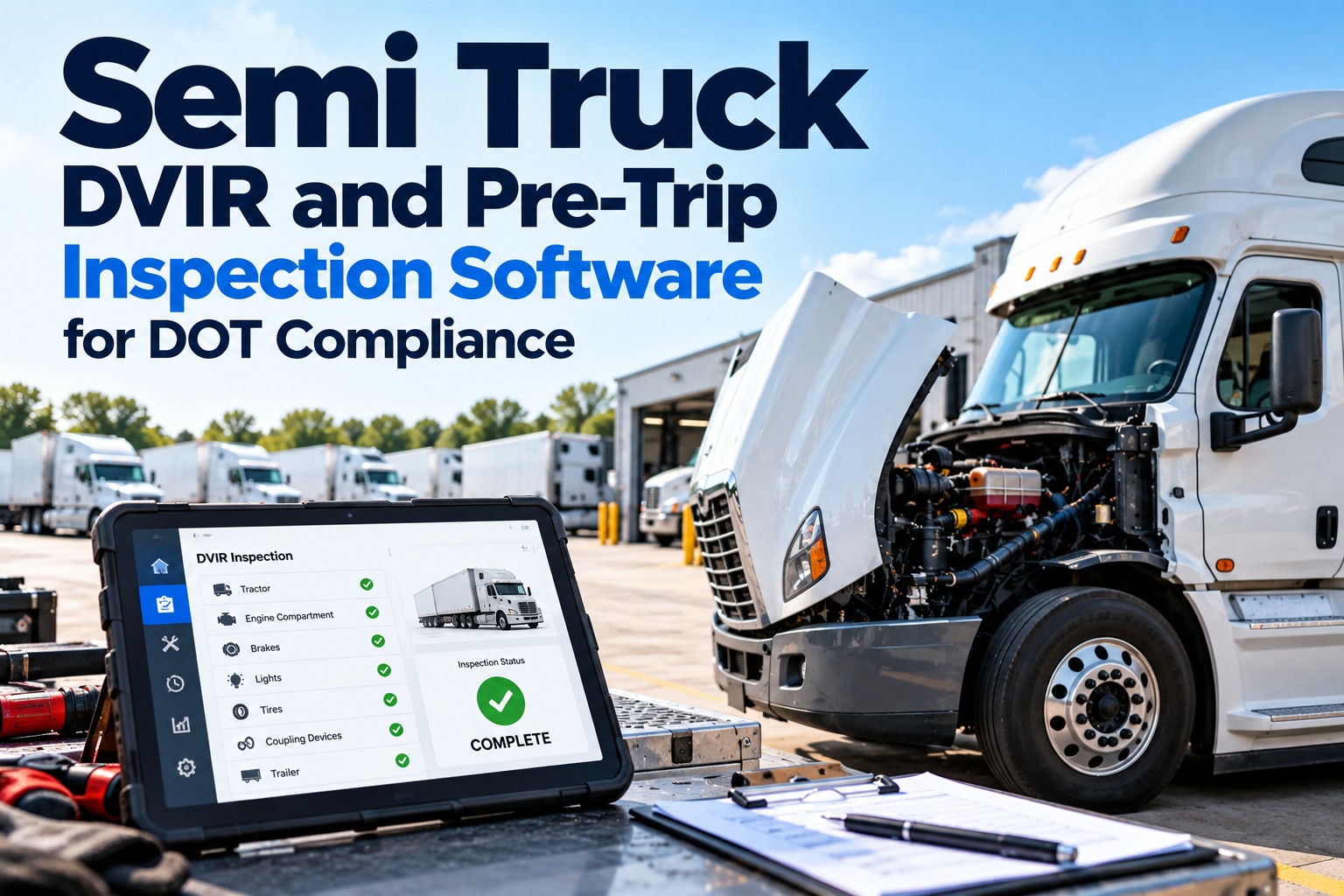
Pre-trip and post-trip inspections must be documented daily per vehicle. Digital DVIR completion through mobile apps creates an auditable compliance trail instantly.
Annual DOT Vehicle Inspections
Every commercial vehicle requires an annual inspection by a qualified inspector. Records must be retained and available for roadside inspection. Overdue inspections result in out-of-service orders.
Drug and Alcohol Testing Records
CDL drivers must be enrolled in a DOT-compliant drug and alcohol testing program. Pre-employment, random, post-accident, and reasonable suspicion testing records must be maintained.
Vehicle Registration and IRP Credentials
State registration and International Registration Plan credentials for vehicles operating across state lines must be current and displayed. Renewal tracking prevents expired operation.
Automate Your DOT Compliance Tracking
FleetRabbit tracks every compliance deadline across your entire box truck and straight truck fleet — driver medicals, annual inspections, registrations, and DVIR completion — all in one dashboard with automated alerts before anything expires.
Maintenance Cost Benchmarks for Box Trucks and Straight Trucks
Understanding typical maintenance costs per vehicle type helps fleet managers identify outliers and set realistic budgets. Regional delivery vehicles running 150 to 250 miles per day have specific wear patterns that differ from long-haul operations — more frequent brake use, more idling time, and more door and liftgate cycles.
| Maintenance Item | Planned Cost | Emergency Cost | Frequency (Regional Delivery) |
|---|---|---|---|
| Oil and Filter Change | $120 – $200 | N/A (rarely emergency) | Every 5,000 – 7,500 miles |
| Brake Service (front axle) | $400 – $700 | $2,200 – $4,000 | Every 30,000 – 50,000 miles |
| Tire Replacement (per tire) | $280 – $420 | $600 – $1,400 (roadside) | Every 50,000 – 70,000 miles |
| Liftgate Service | $200 – $500 | $800 – $2,500 | Every 6 – 12 months |
| Transmission Service | $300 – $600 | $3,500 – $7,000 (rebuild) | Every 50,000 – 100,000 miles |
| Cooling System Flush | $150 – $300 | $800 – $2,000 (engine damage risk) | Every 2 years |
| Annual DOT Inspection | $100 – $250 | $1,000+ (violation fines) | Annually per vehicle |
For a 15-truck regional delivery fleet, the difference between proactive and reactive maintenance typically amounts to $45,000 to $120,000 annually. That's not a system upgrade cost — that's money currently leaving the business through preventable emergency repairs. Start your FleetRabbit free trial and begin tracking maintenance intervals across your fleet this week.
Fuel Management: Where Regional Fleets Lose the Most Money
For a 10-truck box truck fleet averaging 150 miles per day at 10 MPG and $3.80 per gallon, annual fuel spend runs approximately $208,000. Behavioral and operational inefficiencies typically add 15 to 25% on top of the minimum necessary spend. That's $31,000 to $52,000 in avoidable fuel costs annually — before accounting for routing inefficiencies.
Inefficient Routing
Unoptimized stop sequences and unnecessary backtracking. Route optimization alone reduces miles driven by 10 to 20%.
Excessive Idling
Box truck engines burn 0.8 to 1.2 gallons per hour at idle. Urban delivery routes with frequent stops create significant idle accumulation without monitoring.
Aggressive Driving
Hard acceleration and heavy braking increase fuel consumption by 15 to 30%. Driver scorecards with fuel economy metrics drive measurable behavioral improvement.
Poor Tire Pressure
Tires underinflated by 10 PSI reduce fuel economy by 1 to 2%. Across a fleet running daily, this compounds into thousands in annual excess fuel cost.
Deferred Maintenance
Dirty air filters, worn injectors, and degraded engine oil all reduce fuel efficiency. Vehicles on preventive maintenance schedules consistently outperform those on reactive cycles.
Building a Fleet Management System: Step-by-Step for Regional Operators
Step 1 — Inventory and Baseline Assessment
Before implementing any system, document every vehicle in your fleet: VIN, year, make, model, current mileage, last service date, next scheduled service, registration expiration, and current compliance status. This baseline reveals your actual compliance exposure and maintenance backlog. Most operators discover 2 to 4 vehicles with overdue service items they weren't aware of. This assessment takes 1 to 2 days for most regional fleets and is the foundation of everything that follows.
Step 2 — Select and Configure Your Management Platform
Choose a platform designed for regional delivery operations — not a generic fleet tool adapted for the purpose. Key capabilities to verify: mobile driver apps for DVIR completion, maintenance interval tracking per vehicle, compliance deadline alerts, route optimization, and GPS tracking integration. Configuration should include setting up maintenance schedules for each vehicle based on manufacturer intervals and your operational patterns. Book a FleetRabbit demo and we'll walk through the configuration process for your specific fleet composition.
Step 3 — Driver Onboarding and App Adoption
Driver adoption is where most fleet management implementations succeed or fail. Keep the driver-facing workflow simple: pre-trip inspection checklist, delivery confirmations, and post-trip inspection. Three tasks per day. Anything more complex creates resistance. Brief drivers on how the data is used — not as surveillance, but as protection for them in the event of an accident dispute or compliance question. Drivers who understand the benefit are far more compliant with the workflow.
Step 4 — Establish Performance Baselines and Review Cadence
After 30 days of active system use, you'll have enough data to establish meaningful performance baselines: average fuel economy per driver, on-time delivery rate per route, maintenance cost per vehicle, and compliance score across the fleet. Set monthly reviews with department leads to track improvement trends and identify vehicles or drivers that need attention. Most operators see meaningful improvement in all four metrics within 60 to 90 days of consistent use.
ROI Model: What Fleet Management Software Returns for a 15-Truck Operation
Platform investment for a 15-truck fleet runs $8,000 to $18,000 annually depending on feature set and integration requirements. At conservative ROI estimates, that's a 5 to 12x return — with payback typically achieved within the first 60 to 90 days of operation. Start your free trial with FleetRabbit and begin capturing these savings immediately.
Frequently Asked Questions
Choosing the Right Fleet Management Platform for Box Trucks in 2026
The fleet management software market has matured significantly, but not all platforms are suited for regional delivery operations. Enterprise TMS solutions built for large truckload carriers are over-engineered and expensive for a 10 to 50 truck regional operation. Generic small business tools lack the compliance tracking and DOT-specific features that commercial vehicle operators need. The right platform sits between these extremes: purpose-built for commercial vehicle compliance, scaled for regional fleet sizes, and priced to deliver positive ROI at 5 to 50 trucks.
Key Evaluation Criteria
When evaluating platforms, prioritize: mobile driver app quality (drivers use it daily — friction kills adoption), compliance deadline automation (alerts before violations, not after), maintenance scheduling flexibility (interval types vary by vehicle and operator), and integration capability with your existing fuel cards, GPS hardware, and accounting software. Pricing transparency matters too — platforms that bundle everything into opaque per-truck pricing without clear feature tiers make ROI modeling difficult. Book a demo with FleetRabbit and get a clear breakdown of what's included at your fleet size before making any commitment.
Implementation Timeline Expectations
A realistic implementation timeline for a 15-truck regional fleet looks like this: Week 1 — vehicle and driver data entry, GPS hardware installation if applicable. Week 2 — maintenance schedule configuration, compliance record upload, driver app training. Week 3 — live operation with support, route optimization configuration. Week 4 to 6 — team adjustments, workflow refinements, first performance report review. By Week 8, the system should be running with minimal manager intervention and delivering measurable data on the four core metrics: fuel economy, on-time delivery, maintenance cost per vehicle, and compliance status.
Manage Every Box Truck and Straight Truck From One Platform
Route optimization, DOT compliance tracking, preventive maintenance scheduling, driver performance management, and real-time GPS visibility — all in a platform designed for the way regional delivery fleets actually operate. No complex setup. No enterprise pricing. Positive ROI within 90 days or your money back.