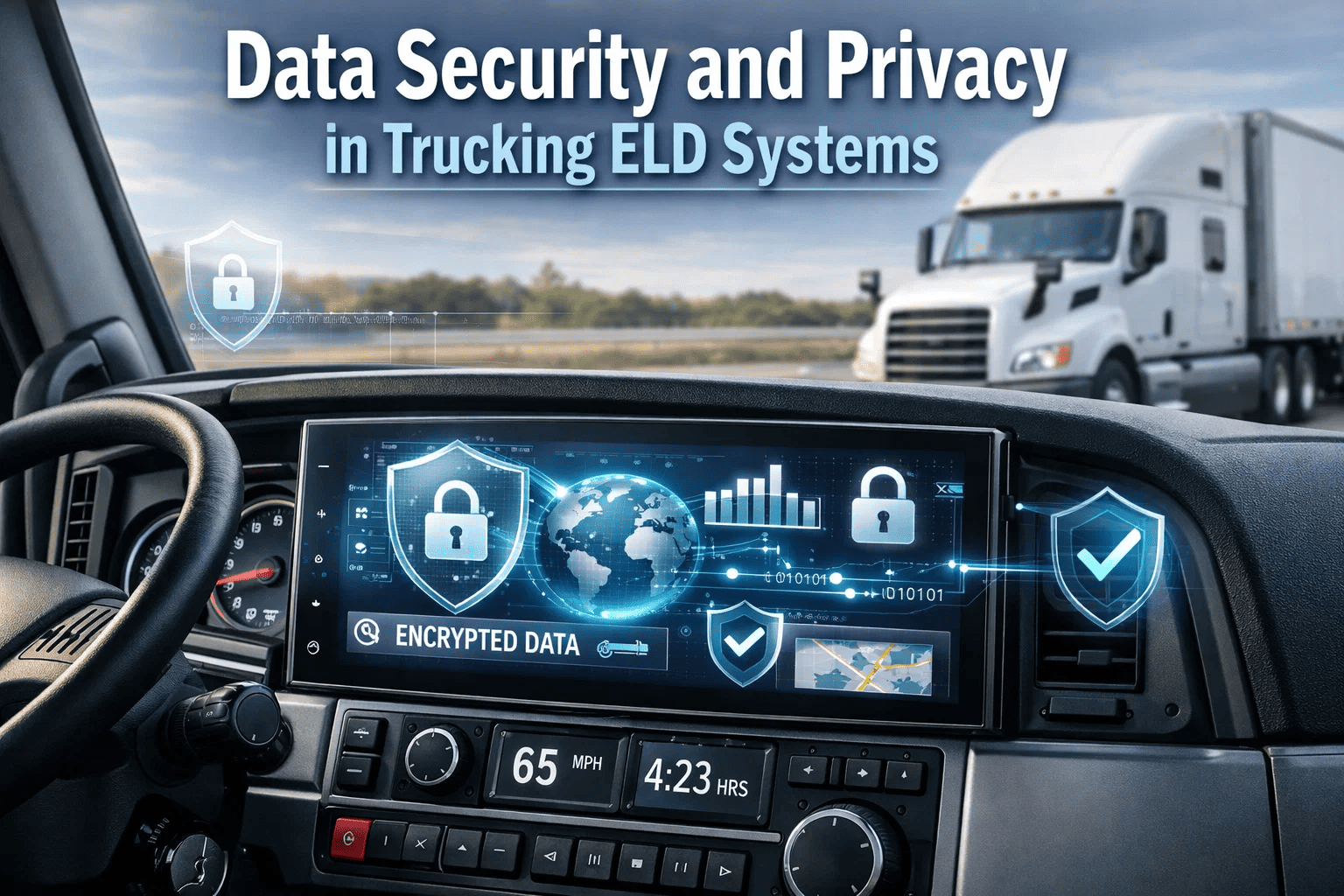
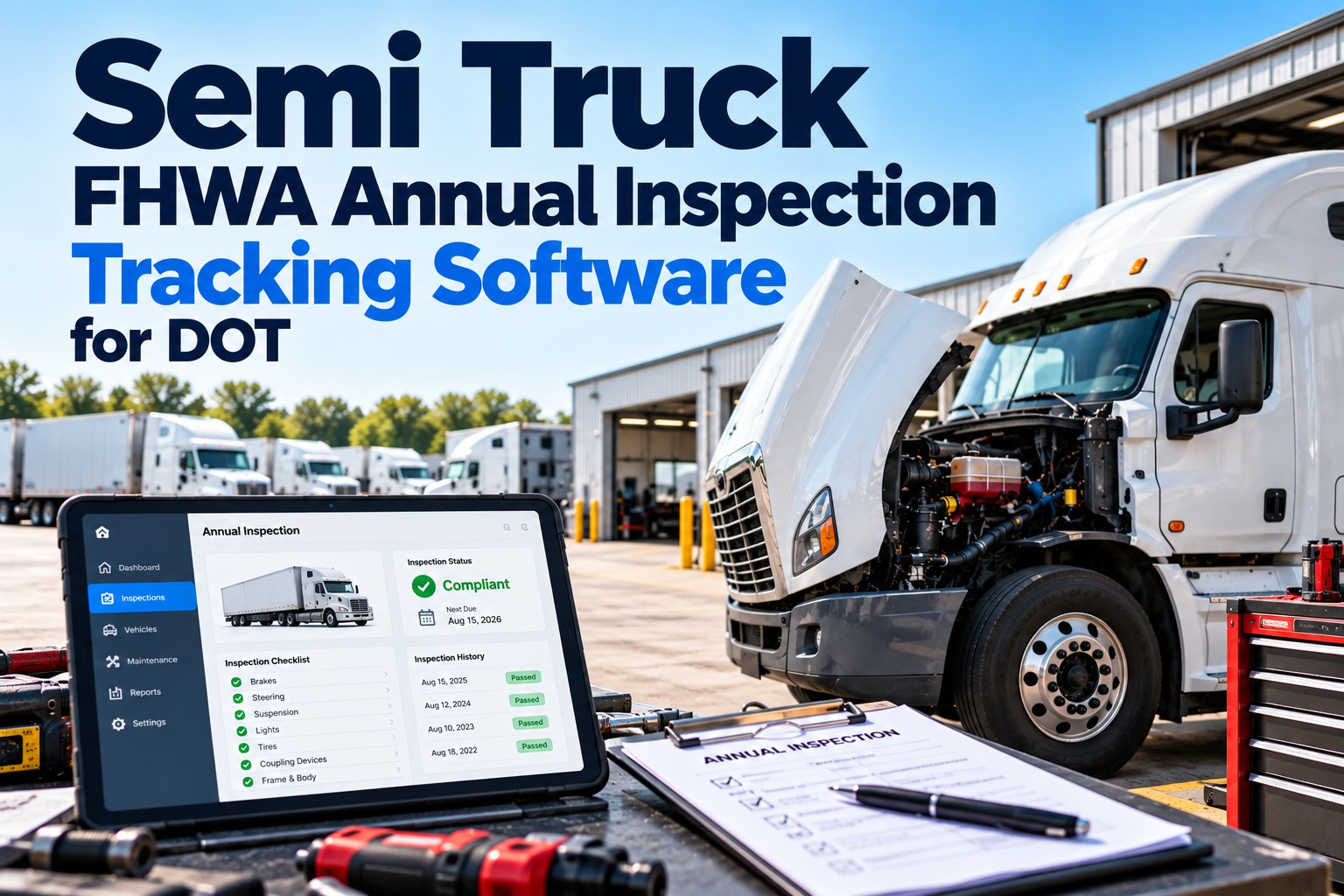
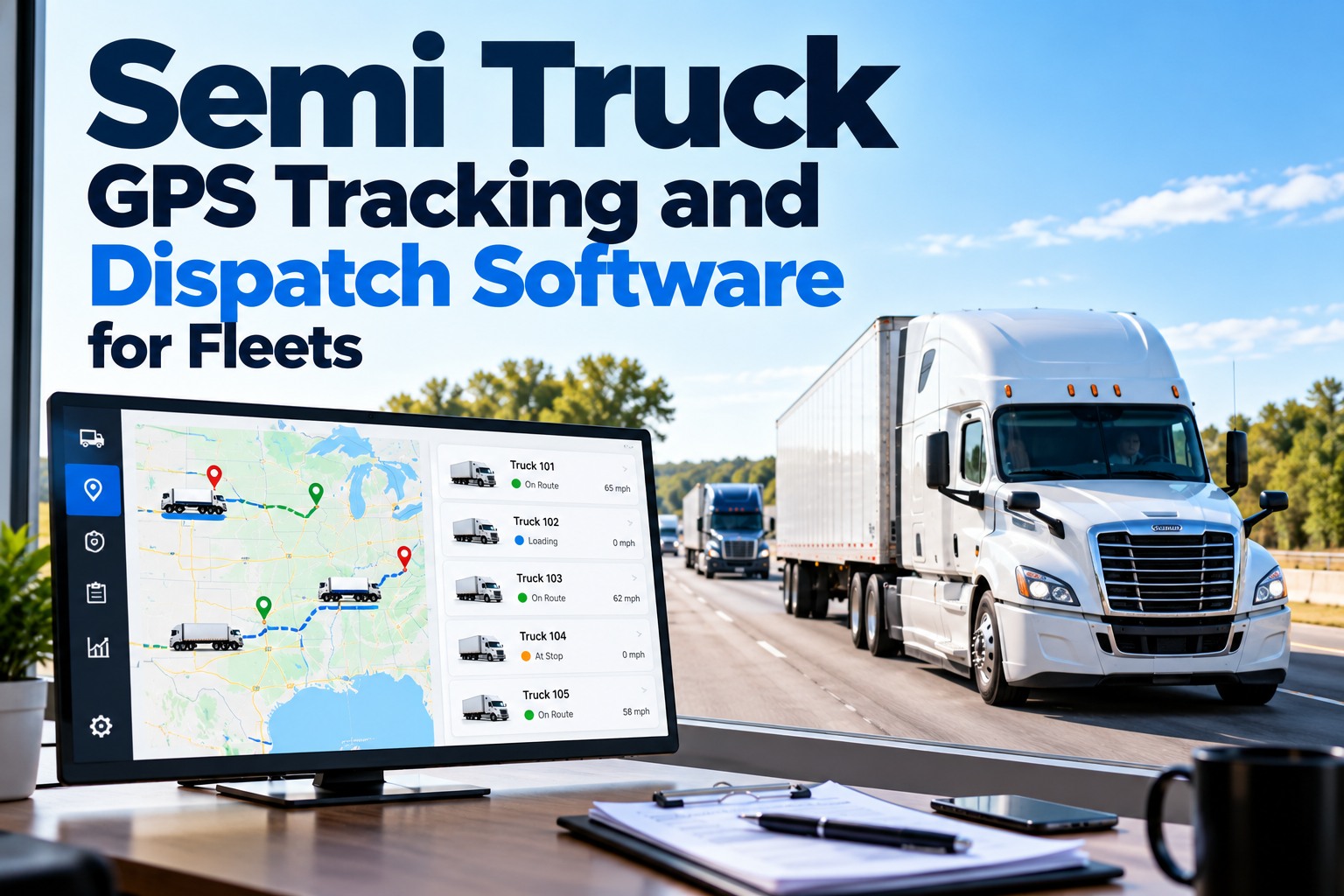
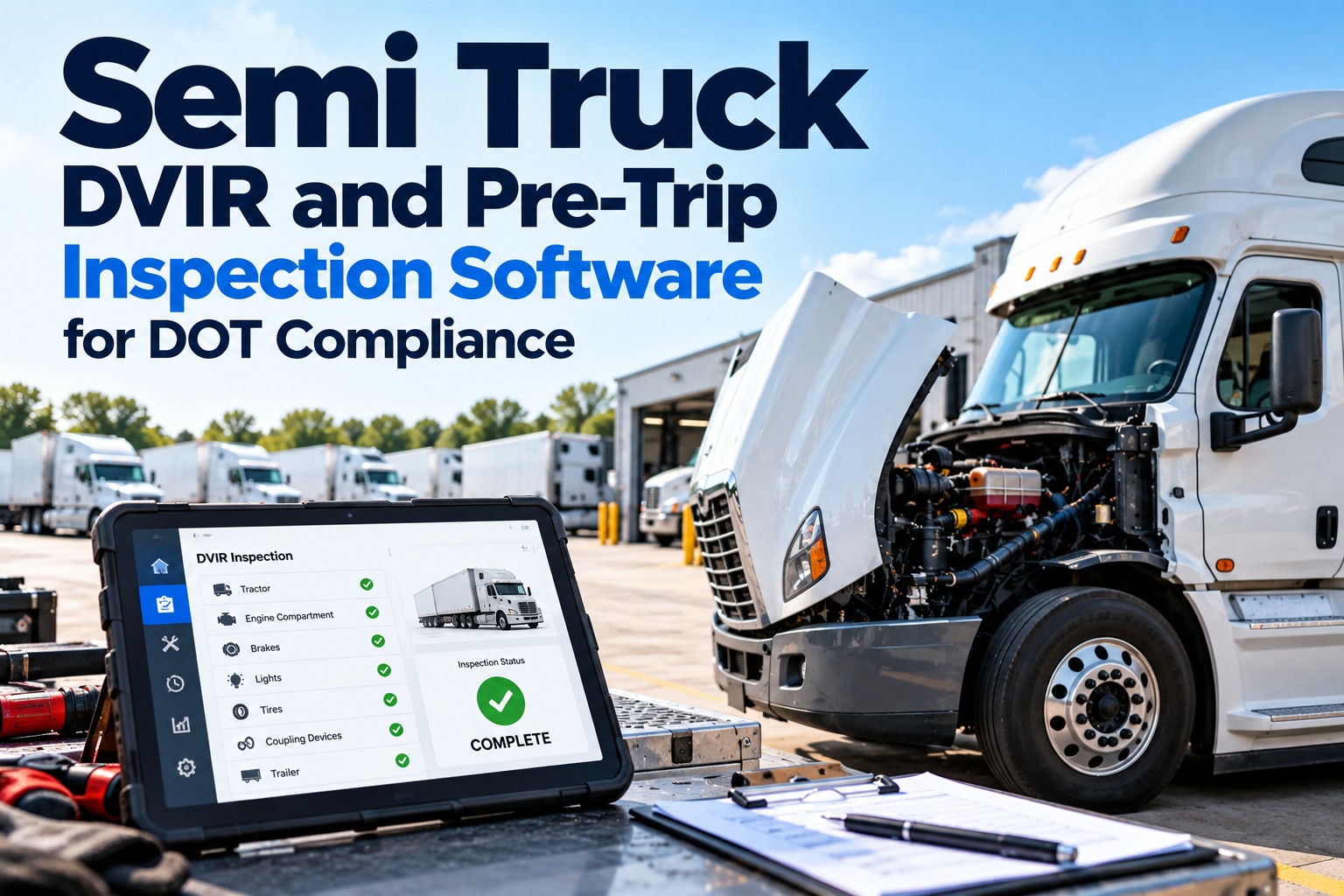
Electronic Logging Devices have transformed regulatory compliance for trucking fleets — but every connected device is also a potential vulnerability. As fleet managers and transportation executives push toward full digital operations, the question of who owns your ELD data, how it is protected in transit, and what happens when a breach occurs has moved from IT concern to boardroom priority. This guide examines the full scope of data security and privacy risk in trucking ELD systems and details how FleetRabbit addresses each exposure point from device to dashboard. Book a demo to see how FleetRabbit secures your fleet's ELD data end to end.
Guide Summary
ELD data includes driver hours of service records, GPS location histories, vehicle diagnostic logs, and driver identification — all of which carry legal, operational, and privacy implications. This guide covers the five major security risk areas facing trucking fleets using ELD systems, explains the regulatory obligations that attach to each, and details how FleetRabbit's platform architecture addresses every layer of exposure through encryption, access controls, audit logging, and compliance automation.
68%
of transportation companies report at least one cybersecurity incident involving fleet telematics data in the past three years
$4.9M
average cost of a data breach in the transportation sector according to IBM Security 2024 reporting
100%
of FMCSA-mandated ELD data must be retained and accessible for a minimum of six months per federal regulation
256-bit
AES encryption standard applied to all FleetRabbit ELD data in transit and at rest across every fleet deployment
Why ELD Data Security Is Now a Fleet Management Imperative
The FMCSA ELD mandate, which reached full enforcement in 2019, created a new category of sensitive operational data that most trucking companies were not equipped to protect. Prior to electronic logging, driver hours of service records were paper documents — physically bound, difficult to aggregate, and of limited value to a bad actor. The transition to connected ELD devices changed this equation entirely.
Modern ELD systems generate a continuous stream of structured data: GPS coordinates updated at regular intervals, engine hours, vehicle speed profiles, hard braking and acceleration events, driver identification tied to login credentials, and hours of service status tied to federal compliance obligations. This data is transmitted from the vehicle over cellular networks to cloud-hosted platforms, where it is stored, indexed, and made accessible to dispatchers, compliance managers, fleet executives, and — under federal inspection procedures — DOT enforcement officers.
Each transmission, each storage node, and each access point represents a potential vulnerability. The threat landscape facing transportation companies now includes ransomware targeting fleet management software, GPS spoofing attacks that corrupt location records, credential theft targeting driver and dispatcher accounts, and third-party data broker activity that aggregates ELD data from multiple sources without fleet operator knowledge.
The regulatory dimension adds further complexity. FMCSA regulations require that ELD data be tamper-resistant and that drivers be able to review and certify their own records. State privacy laws — particularly California's CCPA and its CPRA amendment — impose notice and deletion rights that apply to driver personal data collected through ELD systems. Failure to satisfy these obligations creates both enforcement exposure and litigation risk.
FleetRabbit was architected to address these risks at the platform level — not as an add-on security layer, but as a foundational design principle. The following sections examine each major risk area and how FleetRabbit's architecture responds.
The Five Major Security Risk Areas in Trucking ELD Systems
01
Data Interception in Transit
ELD devices transmit location, hours of service, and diagnostic data over cellular networks continuously. Unencrypted or weakly encrypted transmissions are vulnerable to man-in-the-middle attacks that can intercept, alter, or inject false data — undermining both operational integrity and regulatory compliance records.
02
Unauthorized Platform Access
Fleet management platforms with weak authentication controls expose driver records, route histories, and compliance documentation to unauthorized access. A compromised dispatcher account can expose the entire fleet's operational data. Without role-based access controls, over-permissioned users create persistent insider risk.
03
Tampered or Falsified ELD Records
FMCSA regulations explicitly require that ELD systems prevent unauthorized editing of hours of service records. Platforms without immutable audit trails and cryptographic record integrity cannot detect or demonstrate tampering — creating both regulatory exposure and legal liability in post-accident litigation.
04
Third-Party Data Sharing Without Consent
Many ELD vendors and fleet management platforms monetize aggregated fleet data through data broker arrangements. Fleet operators frequently have no visibility into what data is shared, with whom, and under what terms. This practice may violate state privacy laws and creates reputational risk when exposed.
05
Driver Privacy Rights and Compliance
ELD systems collect personal data about drivers — including precise location history, behavior patterns, and biometric-adjacent driving profiles. State privacy laws impose notice, access, and deletion rights that fleet operators must satisfy. Most legacy fleet management systems were not designed to support these obligations.
06
Inadequate Incident Response Capability
When a security incident occurs — whether a device is stolen, a credential is compromised, or a platform breach is detected — fleet operators need the ability to identify the scope of exposure, isolate affected systems, and notify affected individuals within regulatory timeframes. Most fleet operators have no defined incident response playbook.
Understanding What ELD Data Actually Contains — and Why It Matters
Before examining security architecture, it is important to understand the full scope of data generated by ELD systems. Fleet managers often underestimate how much sensitive information flows through their ELD platform, and this underestimation leads to underinvestment in protective measures.
Location Data
GPS coordinates recorded at each duty status change and at intervals when the vehicle is in motion. For a typical long-haul driver, this produces hundreds of precise location records per day — sufficient to reconstruct entire routes, identify home terminals, customer locations, and rest patterns.
Privacy Risk: High — precise movement history is sensitive personal data under most state privacy frameworks.
Hours of Service Records
Duty status logs — on-duty driving, on-duty not driving, off-duty, and sleeper berth — timestamped and attributed to the driver. These records directly determine federal regulatory compliance and are used as evidence in post-accident litigation to assess fatigue-related liability.
Legal Risk: Very High — HOS records are primary evidence in FMCSA enforcement actions and personal injury claims.
Vehicle Diagnostics
Engine hours, odometer readings, diagnostic trouble codes, and malfunction indicators transmitted from the vehicle's ECM. This data reveals vehicle condition, maintenance compliance, and — in some cases — cargo loading patterns that may be commercially sensitive.
Commercial Risk: Medium — vehicle diagnostic data can reveal operational patterns of competitive value.
Driver Identification
Driver credentials tied to ELD login events, including driver ID numbers, authentication timestamps, and co-driver assignments. This data links all subsequent records to a named individual and is the primary point of connection between ELD data and personal privacy rights.
Privacy Risk: High — personally identifiable information that triggers state and federal privacy obligations.
Driving Behavior Profiles
Speed profiles, hard braking frequency, acceleration patterns, and idle time — aggregated into behavioral records that can be used for performance management, insurance underwriting, and — if exposed — discriminatory employment decisions or adverse insurance actions.
Employment Risk: Medium-High — behavioral profiling data requires careful access governance to prevent misuse.
Roadside Inspection Records
DOT inspection events, safety scores, and violation history linked to driver and vehicle records. This data is both federally mandated and commercially sensitive — it affects CSA scores, insurance premiums, and carrier safety ratings.
Regulatory Risk: High — inspection data is subject to specific FMCSA retention and access requirements.
How FleetRabbit Secures ELD Data From Device to Dashboard
FleetRabbit's security architecture is built on four foundational layers: encrypted data transmission, secure cloud storage with access controls, immutable audit trails, and privacy compliance tooling. Each layer addresses a specific category of risk identified above.
End-to-End Encryption
All ELD data transmitted from FleetRabbit devices to the cloud platform uses TLS 1.3 transport encryption. Data at rest is protected with AES-256 encryption. This eliminates the interception risk that affects unencrypted or weakly encrypted ELD transmissions across cellular networks.
Role-Based Access Control
FleetRabbit's platform implements granular role-based access controls that limit each user's data access to what their job function requires. Drivers see their own records. Dispatchers see their assigned vehicles. Compliance managers see HOS and violation data. Executives see aggregated KPIs. No user is over-permissioned by default.
Tamper-Evident Audit Logs
Every action taken on ELD data within the FleetRabbit platform is logged with a timestamp, user identifier, and action type. These logs are immutable — they cannot be edited or deleted by any platform user, including administrators. This satisfies FMCSA tamper-resistance requirements and provides litigation-grade record integrity.
Multi-Factor Authentication
FleetRabbit enforces multi-factor authentication for all platform users with access to ELD records. Driver authentication on the device uses a two-step credential verification process that prevents unauthorized ELD logins — a common vector for HOS record manipulation.
Driver Privacy Rights: The Regulatory Layer Most Fleets Are Not Ready For
The intersection of ELD data collection and driver privacy rights is one of the most rapidly evolving compliance challenges in transportation. Drivers are employees or independent contractors whose personal data — precise location, behavioral profiles, and identification records — is collected continuously by their employer's ELD system. This creates a set of obligations that go beyond FMCSA compliance into the territory of state and federal privacy law.
California CCPA / CPRA
Applies to fleets with California-based drivers or operations serving California commerce. Drivers who qualify as California residents have rights to know what data is collected, access their own records, request deletion of certain data categories, and opt out of data sale arrangements. The CPRA amendment — effective January 2023 — extends these rights to employees and contractors, closing the previous exemption that many carriers relied upon.
FleetRabbit Action: Driver data access portal, automated deletion request handling, no third-party data sale arrangements.
Illinois Biometric Information Privacy Act
BIPA applies to biometric identifiers and biometric information collected from individuals in Illinois. While standard ELD driver logins do not typically collect biometric data, fleet management features including fingerprint authentication, facial recognition for distracted driving detection, and voice-activated logging may trigger BIPA compliance obligations. BIPA carries a private right of action with statutory damages of $1,000 to $5,000 per violation.
FleetRabbit Action: No biometric data collection by default. Biometric-adjacent features are disabled unless explicitly enabled with appropriate consent documentation in place.
Washington My Health My Data Act
Washington's My Health My Data Act — effective 2024 — applies broadly to health-related data, which some regulators have interpreted to include driving behavior data and fatigue-related monitoring. Fleets with Washington-based operations should assess whether their ELD and fleet management data collection triggers MHMD obligations, particularly for wellness and fatigue monitoring features.
FleetRabbit Action: Data classification engine identifies health-adjacent data categories and applies appropriate consent and retention controls.
Federal Motor Carrier Safety Regulations
Beyond ELD-specific requirements, FMCSA regulations impose record retention and driver access obligations that interact with privacy rights. Carriers must provide drivers with access to their own qualification files, medical certificates, and — under ELD rules — their hours of service records. Compliance with these access obligations must be documented.
FleetRabbit Action: Integrated driver record portal provides self-service access to all regulatory records, with access events logged for compliance documentation.
GPS Spoofing and Location Data Integrity: An Emerging Threat for Trucking Fleets
GPS spoofing — the transmission of false GPS signals to deceive receivers into reporting incorrect positions — has emerged as a material threat to trucking fleet operations in the past three years. Initially documented in maritime and aviation contexts, GPS spoofing incidents have increasingly been reported in road freight operations across North America and Europe.
For trucking fleets, GPS spoofing presents multiple risk dimensions. Operationally, spoofed location data corrupts route records, produces false arrival and departure timestamps, and can trigger fraudulent hours of service records if a vehicle appears stationary when it is in motion. From a regulatory standpoint, corrupted GPS records in ELD data submitted to DOT inspectors can create compliance findings that the carrier genuinely cannot explain — because the records are inaccurate due to external interference rather than internal manipulation.
Signal Anomaly Detection
FleetRabbit's ELD firmware includes GPS signal quality monitoring that detects characteristics associated with spoofed signals — including abnormal satellite count changes, sudden position jumps, and signal-to-noise ratio anomalies. Suspected spoofing events are flagged in the compliance dashboard with a timestamped alert and the associated ELD record is marked for review.
Multi-Source Position Verification
For high-value or high-risk routes, FleetRabbit supports multi-source position verification that cross-references GPS coordinates with cellular tower positioning and, where available, onboard accelerometer data. Position records that cannot be corroborated across multiple sources are flagged for manual review rather than automatically recorded as compliance data.
Geofence Integrity Monitoring
FleetRabbit's geofencing system monitors for position records that are inconsistent with physical travel constraints — a vehicle appearing to teleport between distant locations, or position records that place a vehicle on routes incompatible with road network topology. These anomalies are flagged automatically and generate compliance alerts requiring dispatcher acknowledgment.
ELD Data Security for Owner-Operators Versus Enterprise Fleets
The security requirements and risk profiles of owner-operators and large enterprise fleets differ substantially. A single-truck owner-operator faces a different threat landscape than a regional carrier with 300 vehicles, and the security controls appropriate for each situation differ accordingly. FleetRabbit's tiered approach to security configuration reflects these differences.
Owner-Operators (1-5 Vehicles)
Essential Security Baseline
For owner-operators, the primary security concerns are regulatory compliance and protection of personal data. FleetRabbit's base configuration provides encrypted ELD data transmission, FMCSA-compliant tamper detection, six-month automatic record retention, and a driver portal for record access. Setup requires no IT expertise and is operational within 30 minutes of device installation.
Encrypted Transmission
FMCSA Retention
Driver Record Portal
DOT Inspection Mode
Regional Carriers (6-100 Vehicles)
Operational Security Controls
Regional carriers operating across multiple states face a more complex compliance landscape, with multiple drivers, multiple dispatchers, and potentially multiple state privacy law obligations. FleetRabbit's mid-tier configuration adds role-based access controls, multi-factor authentication for all platform users, automated compliance alerts, and the driver privacy request workflow for CCPA and similar obligations.
Role-Based Access
Multi-Factor Auth
Compliance Alerts
Privacy Workflows
Enterprise Fleets (100+ Vehicles)
Enterprise Security Architecture
Enterprise carriers face the full spectrum of security risk: sophisticated threat actors, complex multi-state regulatory obligations, third-party integrations with TMS and ERP systems, and board-level accountability for data governance. FleetRabbit's enterprise configuration adds SIEM integration, custom role definition, API governance tools, single sign-on, dedicated security event logging, and a formal incident response support package.
SIEM Integration
SSO Support
API Governance
Incident Response
Protecting Your Fleet in a Post-Breach Environment: What FleetRabbit's Clients Have Learned
The following section reflects patterns observed across transportation and logistics clients and provides guidance for fleet managers who want to strengthen their security posture proactively rather than reactively.
Credential Sharing Is the Most Common Initial Access Vector
In the vast majority of fleet management security incidents examined, the initial point of unauthorized access was not a sophisticated technical attack — it was a driver or dispatcher sharing login credentials with a third party, or using a weak password that was reused across multiple services. FleetRabbit's multi-factor authentication requirement eliminates this vulnerability by ensuring that even a correct password cannot alone authenticate a user session.
Terminated Employee Access Is Consistently Not Revoked Promptly
When a dispatcher or compliance manager leaves a fleet operator — whether voluntarily or involuntarily — their platform access is often not revoked promptly. In documented incidents, former employees with active fleet management credentials have accessed ELD records weeks or months after their departure. FleetRabbit's administrator dashboard makes access revocation a single-action process, and the security alert system flags accounts that have been inactive for extended periods.
Data Export Controls Prevent Bulk Exfiltration
Unauthorized data export — whether by a departing employee downloading the entire driver record database or by a compromised account being used to extract compliance documentation — is a significant but preventable risk. FleetRabbit's data export controls require administrator authorization for bulk exports, limit the volume of records that can be exported in a single session, and generate alerts for export events that deviate from established patterns.
Regulatory Notification Timelines Are Shorter Than Fleet Operators Expect
State breach notification laws impose notification timelines that are often shorter than fleet operators realize — California requires notification within 72 hours under certain circumstances. Many carriers discover during a breach response that their incident documentation capabilities are inadequate to support timely regulatory notifications. FleetRabbit's incident response tools are designed specifically to support the notification documentation process within these compressed timelines.
Building a Fleet Data Security Policy: A Framework for Fleet Managers
A technology platform can only provide security within the boundaries defined by the policies that govern it. Fleet managers who want to maximize the security of their ELD data need a documented fleet data security policy that addresses the organizational and procedural dimensions of data protection — not just the technical ones.
Step 1
Data Inventory and Classification
Document every category of data collected by your ELD and fleet management system — location data, HOS records, driver identification, vehicle diagnostics, driving behavior profiles — and classify each by sensitivity level and applicable regulatory framework. This inventory is the foundation for all subsequent policy decisions and is a required first step for CCPA compliance.
Step 2
Access Control Policy
Define who in your organization can access which data categories, under what circumstances, and for what purposes. Map these access rules to the role configurations in your fleet management platform. Establish a formal process for access provisioning when new employees join and access revocation when employees depart. Conduct quarterly access reviews to identify over-permissioned accounts.
Step 3
Driver Notification and Consent
Provide drivers with written notice of all data collected through your ELD system, the purposes for which it is used, how long it is retained, and their rights to access and request deletion of their own records. This notice should be provided at onboarding, when data collection practices change, and annually as a privacy acknowledgment. Document signed acknowledgments and retain them as compliance records.
Step 4
Third-Party Vendor Assessment
Assess every vendor that receives your fleet or driver data — including your ELD platform provider, TMS system, fuel card processor, and insurance telematics program. For each vendor, confirm what data they receive, under what legal basis, what security controls they maintain, whether they share data with additional parties, and what their breach notification obligations to you are. Require data processing agreements from all vendors that process driver personal data.
Step 5
Incident Response Plan
Document a written incident response plan that covers: how security incidents will be detected, who is responsible for coordinating the response, what investigative steps will be taken, how affected individuals will be notified, how regulatory notifications will be made and within what timeframe, and how the incident will be documented for insurance and legal purposes. Test the plan through tabletop exercises at least annually.
Step 6
Annual Security Review
Conduct an annual review of your fleet data security posture that includes a review of access control configurations, audit log analysis for anomalous activity, vendor data sharing inventory update, policy updates to reflect regulatory changes, and a security awareness refresher for all staff with access to fleet management systems. Document the review and the actions taken as a result.
Real-World Impact: What Secure ELD Data Management Means for Fleet Operations
DOT Audit Defense
Full Record Integrity
Fleets using FleetRabbit's tamper-evident ELD records enter DOT compliance audits with a complete, verifiable chain of custody for all hours of service data — eliminating the record integrity questions that generate compliance findings in paper-based and legacy ELD environments.
Defensible Records
In post-accident litigation, ELD records are primary evidence. FleetRabbit's immutable audit logs and tamper detection create a record that is demonstrably unaltered — providing fleet operators with defensible evidence in a context where record integrity challenges are common plaintiff strategies.
Insurance Premiums
Risk-Based Pricing
Insurers increasingly offer premium adjustments for fleets that can demonstrate structured safety and compliance data. FleetRabbit's clean compliance record output — verified by third-party audit trails — supports the documentation packages that risk-based insurance pricing requires.
Driver Trust
Transparent Data Practices
Driver retention is a persistent challenge in transportation. Fleets that can demonstrate to drivers that their personal data is handled responsibly — with clear privacy notices, self-service record access, and no unauthorized third-party sharing report higher driver satisfaction scores on data-related topics.
Operational Efficiency
Security Without Friction
FleetRabbit's security architecture is designed to operate transparently — drivers complete normal ELD workflows without additional steps, and the security layer operates in the background. Authentication is fast, record transfers are automatic, and compliance documentation is generated without manual intervention.
Regulatory Readiness
Multi-Framework Coverage
FleetRabbit's combined FMCSA compliance, state privacy law tooling, and audit log architecture covers the full regulatory footprint facing U.S. transportation operations — without requiring separate systems for federal compliance, state privacy law management, and security incident documentation.
Before and After: ELD Data Security With and Without FleetRabbit
| Security Area |
Without FleetRabbit |
With FleetRabbit |
| Data transmission security |
TLS 1.2 or unspecified; no certificate pinning; interception risk on cellular networks |
TLS 1.3 with certificate pinning; encrypted from device to cloud at all times |
| User access controls |
Basic username and password; all platform users see all fleet data; no MFA enforcement |
Role-based access controls; MFA enforced; granular data visibility by role |
| HOS record integrity |
Basic tamper detection; limited audit trail; record integrity difficult to demonstrate in audit |
Cryptographic hash-chained audit logs; immutable records; FMCSA tamper-resistance compliant |
| Driver privacy compliance |
No structured workflow for privacy requests; CCPA compliance manual and ad hoc |
Automated privacy request workflow; driver record access portal; documented response trail |
| Third-party data sharing |
Data broker arrangements common; fleet operators often unaware of sharing practices |
No data sale; explicit authorization required for all integrations; sharing documented |
| Incident response |
No defined incident response capability; breach notification manual and slow |
Structured incident documentation tool; anomaly alerts; 72-hour notification support |
| DOT inspection data transfer |
Manual transfer process; format compliance not verified before submission |
One-touch transfer in DOT inspection mode; automatic format verification; transfer logged |
Frequently Asked Questions: ELD Data Security for Fleet Managers
Q. Does FMCSA have specific requirements for how ELD data must be encrypted?
The FMCSA ELD Technical Specifications do not specify a particular encryption standard, but they do require that ELD data be protected against unauthorized access and tampering. The industry standard for satisfying this requirement is TLS encryption for data in transit and AES-256 for data at rest. FleetRabbit implements both, with certificate pinning as an additional protection against man-in-the-middle attacks on cellular transmission channels.
Q. Can a driver request that their location history be deleted under CCPA?
Under CCPA and its CPRA amendment — which extended privacy rights to employees and contractors effective January 2023 — California-based drivers may have the right to request deletion of certain personal data, including location history. However, FMCSA regulations require that HOS records be retained for a minimum of six months, and this retention obligation takes precedence over deletion requests for regulatory records. The practical answer is that location data associated with HOS records cannot be deleted during the required retention period, but non-regulatory location data may be subject to deletion requests. FleetRabbit's privacy request workflow handles this distinction automatically, applying regulatory retention holds before processing deletion requests.
Q. What happens to FleetRabbit data if the company experiences a security breach?
FleetRabbit maintains a documented incident response plan that includes fleet operator notification within 72 hours of breach detection, investigation and scope assessment procedures, and support for the regulatory notification obligations that fleet operators may have under applicable state breach notification laws. Fleet operator data is stored with encryption that limits the value of raw data access to a bad actor. In the event of a security incident, FleetRabbit provides fleet administrators with an incident documentation package that supports their notification and response obligations. The specific steps and timeline for any incident response depend on the nature and scope of the incident.
Q. Does FleetRabbit sell or share fleet data with insurance companies or data brokers?
No. FleetRabbit does not sell fleet or driver data to third parties, including insurance companies or data brokers. Integration with insurance telematics programs or risk management platforms requires explicit authorization from the fleet administrator and is governed by a data processing agreement that specifies exactly what data is shared and for what purpose. This policy is documented in FleetRabbit's data processing terms and is available to fleet operators on request.
Q. How does FleetRabbit protect against a disgruntled employee accessing and exporting fleet data?
FleetRabbit addresses insider access risk through several overlapping controls. Role-based access controls ensure that each user can only access data relevant to their job function. Multi-factor authentication prevents credential sharing. Data export controls require administrator authorization for bulk exports and generate alerts for export volumes that deviate from established patterns. All data access and export events are logged in the immutable audit trail. When an employee's access needs to be revoked, a single administrator action terminates all active sessions and disables the account. The security alert system flags accounts that become inactive — prompting review of whether access should be formally revoked.
Q. How long does FleetRabbit retain ELD data?
FleetRabbit retains ELD records for a minimum of six months as required by FMCSA regulations. Fleet operators can configure retention periods for different data categories based on their specific regulatory and operational requirements — for example, retaining HOS records for longer periods to support post-accident litigation defense. Non-regulatory data categories can be configured with shorter retention periods to limit privacy exposure. Retention schedules are documented and configurable through the fleet administrator portal.
Book a demo to review retention configuration options for your fleet's specific requirements.
One Platform. Full ELD Security. Complete Compliance Coverage.
FleetRabbit secures your ELD data from device transmission through cloud storage to compliance reporting — satisfying FMCSA requirements, state privacy obligations, and enterprise security standards from a single platform your team uses every day.
FMCSA ELD Compliance
AES-256 Encryption
Driver Privacy Workflows
Tamper-Evident Audit Logs
Role-Based Access Control
GPS Spoofing Detection
April 21, 2026
By Jason Smith
All Posts