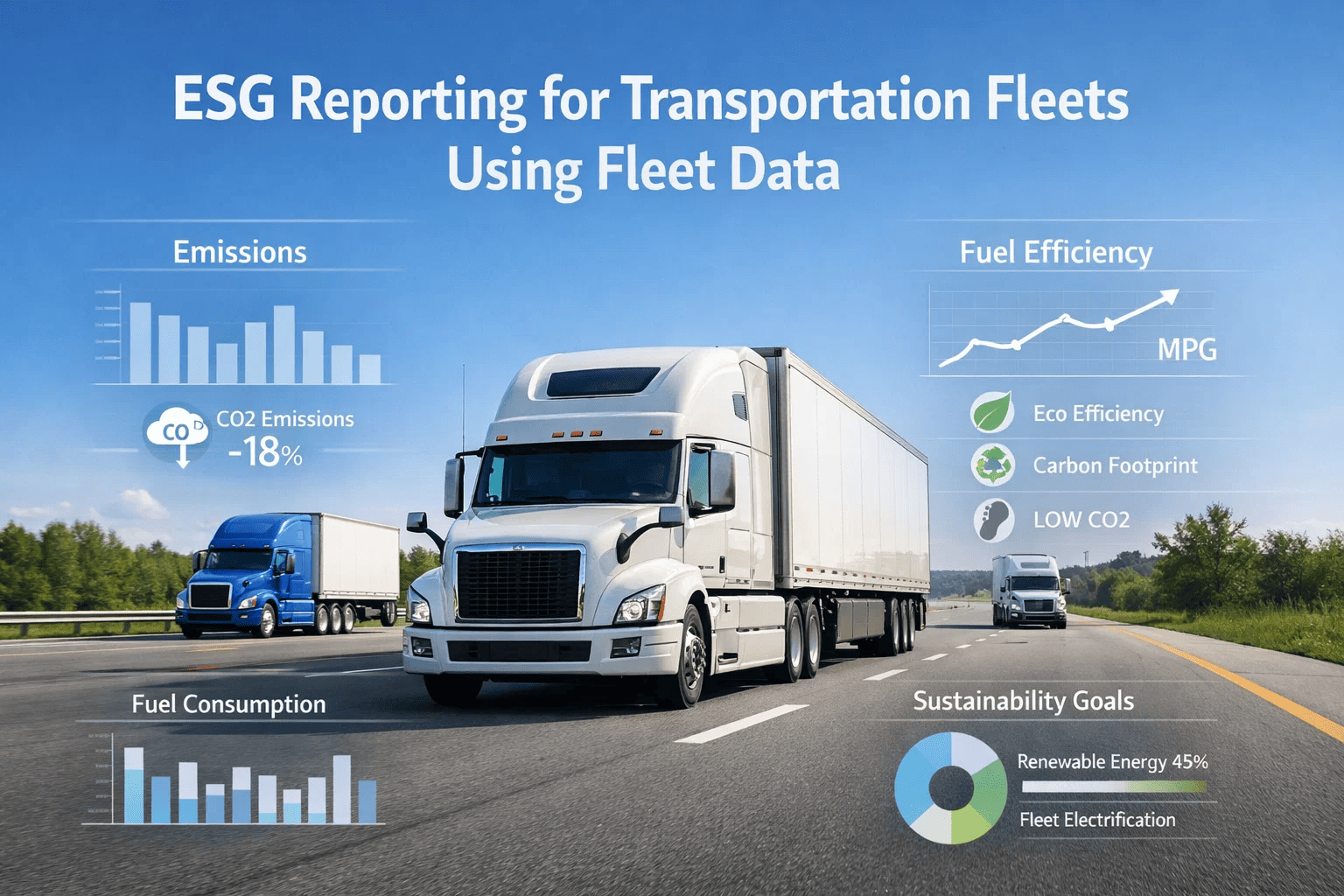
ESG reporting requirements for transportation fleets have escalated dramatically. Regulators demand transparent emissions tracking. Investors scrutinize carbon footprints. Shippers increasingly require sustainability credentials. Yet most fleet managers still rely on fragmented spreadsheets, manual fuel logs, and incomplete data — leaving critical ESG metrics invisible.
FleetRabbit transforms fleet data into actionable ESG intelligence. Real-time emissions tracking, fuel efficiency analytics, and compliance-ready reporting help transportation leaders meet sustainability mandates while reducing operational costs. Whether you manage 50 vehicles or 500, unified data infrastructure ensures your fleet's environmental impact is measured, monitored, and continuously improved.
ESG Reporting for Transportation Fleets
Track Emissions, Optimize Fuel Efficiency, Stay Compliant with Evolving Regulations
Why ESG Reporting Matters for Fleet Operations
Environmental, Social, and Governance (ESG) reporting is no longer optional for transportation companies. Stakeholders from regulatory bodies to freight customers demand measurable sustainability progress. Yet most fleets operate without comprehensive emissions visibility, making compliance audits expensive and strategy development guesswork.
Regulatory Pressure is Intensifying
EPA Scope 3 emissions reporting, state fuel carbon intensity standards, and international sustainability frameworks now require fleets to quantify environmental impact. Non-compliance risks fines, operating restrictions, and loss of freight contracts worth millions annually.
Customer Demands Drive Sustainability Credentials
Major shippers and Fortune 500 companies require transportation partners to demonstrate emissions reduction progress. Without ESG transparency, you lose competitive access to high-value contracts that increasingly include sustainability requirements.
Cost Reduction Opportunities Hide in Fleet Data
Emissions and fuel consumption are directly tied to operational inefficiency. Optimizing routes, reducing idling, improving driver behavior, and maintaining vehicles systematically can cut fuel costs by 12-18% while simultaneously lowering environmental impact.
Investor and Stakeholder Expectations
Public and private investors now demand clear sustainability metrics from portfolio companies. Transportation firms without credible ESG strategies face higher cost of capital and reduced access to institutional funding. ESG data proves commitment to long-term value creation.
The Six ESG Reporting Pillars for Transportation
Comprehensive ESG reporting for fleets spans multiple dimensions of environmental performance and operational responsibility. Each pillar requires specific data infrastructure, tracking systems, and reporting frameworks.
Carbon Emissions Tracking
Automated collection of fuel consumption, vehicle miles, and Scope 1, 2, and 3 emissions data. Real-time dashboards convert raw telematics into actionable CO2 metrics for compliance and strategy.
Average fleet: 450 metric tons CO2 annually per 100 trucksFuel Efficiency & Optimization
Monitor fuel consumption patterns, identify inefficient routes, track idling time, and benchmark driver performance. Systematic efficiency improvements directly reduce emissions while cutting fuel spend.
Optimized fleets achieve 12-18% fuel cost reduction year-over-yearFleet Maintenance & Longevity
Preventive maintenance reduces unplanned downtime, extends vehicle lifespan, and improves fuel efficiency. Well-maintained engines emit less, run cleaner, and consume less fuel than neglected vehicles.
Proper maintenance improves fuel efficiency by up to 4%Compliance Reporting & Audits
Automated documentation for EPA emissions reporting, state fuel standards, and customer sustainability questionnaires. Generate audit-ready reports instantly instead of months of manual compilation.
Digital reporting reduces audit prep time by 87%Driver Behavior & Safety
Safe driving reduces accident risk, prevents costly claims, improves fuel economy, and lowers insurance premiums. Behavioral analytics reward efficient drivers while reducing environmental and safety incidents.
Safe driving programs reduce fuel consumption by 5-8%Alternative Fuel & Fleet Modernization
Track vehicle age, emissions class, and readiness for electric or natural gas alternatives. Data-driven fleet replacement strategies prioritize high-impact vehicles for retirement and electrification investment.
EV adoption plans require accurate baseline emissions dataKey ESG Metrics Every Fleet Should Track
Effective ESG reporting requires consistent measurement across critical environmental and operational indicators. These metrics form the foundation of compliance, strategy, and stakeholder communication.
CO2 Emissions per Mile
Total fleet CO2 divided by total miles driven. Industry benchmark: 0.13-0.22 kg CO2/mile for Class 8 trucks. Trending improvement demonstrates genuine environmental progress.
Primary KPIFuel Consumption Rate
Miles per gallon across entire fleet. Track by vehicle model, driver, route, and time period. Baseline fuel efficiency drives cost reduction and emissions improvement.
Cost LeverIdling Time & Idling Fuel Loss
Percentage of engine hours spent idling. Class 8 truck idling costs 0.8 gallons/hour. Reducing idling by 10% saves $1,200+ annually per truck while cutting emissions.
Quick WinRoute Efficiency Index
Actual miles driven versus optimal miles for same deliveries. Excessive mileage increases fuel burn, emissions, and operating costs. Well-optimized fleets operate 5-8% fewer miles.
Data-DrivenMaintenance Compliance Rate
Percentage of vehicles completing scheduled maintenance on time. Poor maintenance increases fuel consumption, emissions, and breakdown costs. Target: 98%+ compliance.
ReliabilityFleet Age & Emissions Profile
Average vehicle model year and EPA emissions class. Older vehicles emit 3-5x more than modern engines. Modernization roadmaps require accurate fleet composition data.
StrategicScope 1, 2, 3 Emissions Breakdown
Scope 1 (direct fuel), Scope 2 (electricity), Scope 3 (supply chain). Most logistics emissions fall in Scope 1 and Scope 3. Comprehensive tracking enables reduction strategy prioritization.
FrameworkAccident Rate & Safety Efficiency
Crashes per million miles. Safe fleets are efficient fleets. Safety programs reduce accidents, lower insurance, improve fuel economy, and demonstrate social responsibility.
Risk MgmtHow FleetRabbit Solves ESG Reporting Challenges
Manual ESG reporting creates blind spots, expensive audits, and missed improvement opportunities. FleetRabbit automates data collection, standardizes metrics, and generates compliance-ready reports in minutes instead of months.
Unified Fleet Data Collection
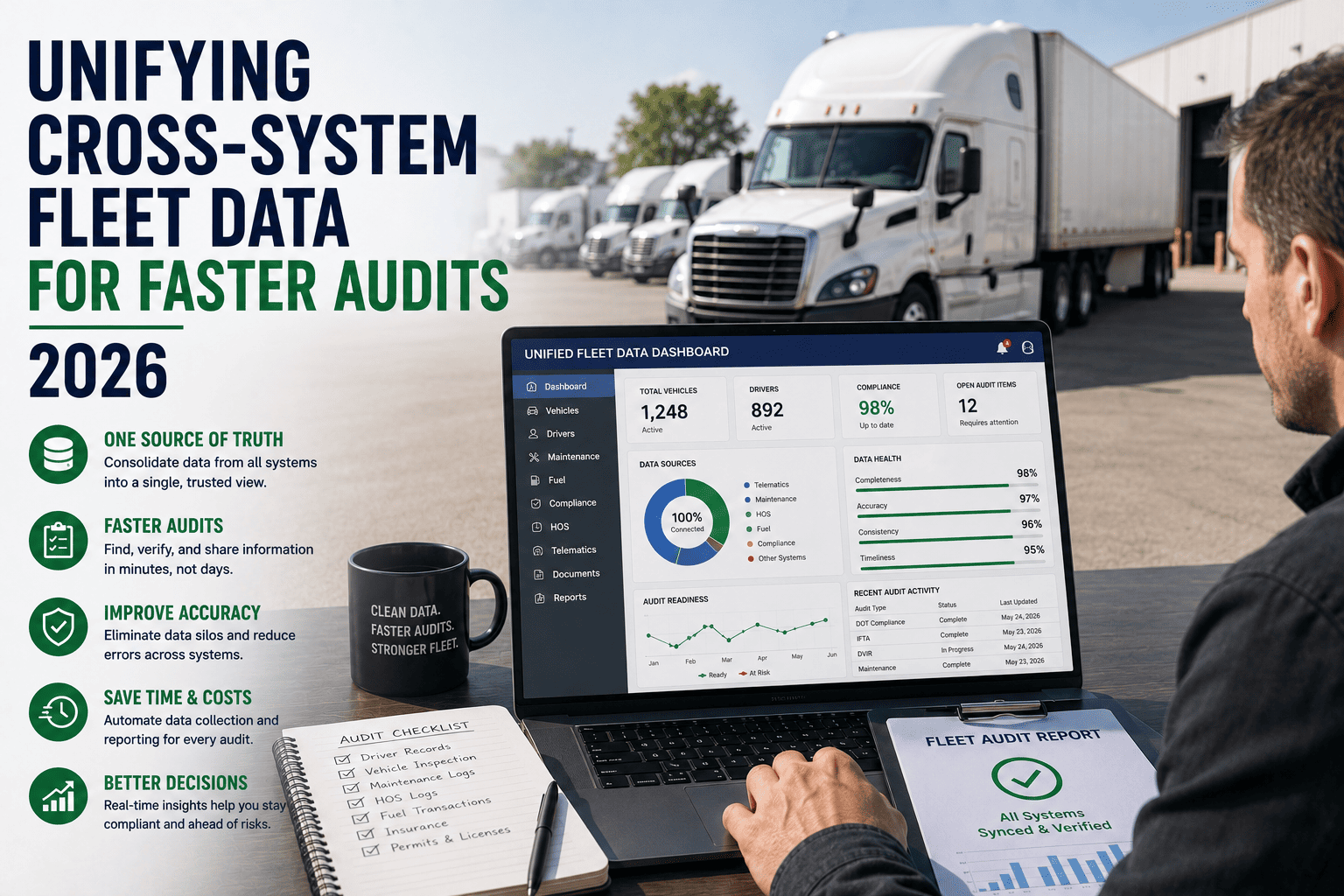
Integrate telematics, fuel systems, maintenance records, driver logs, and vehicle registrations into single data source. Real-time data visibility eliminates manual entry and synchronization errors.
Automated Emissions Calculations
FleetRabbit calculates Scope 1, 2, and 3 emissions using EPA-approved methodologies. Continuous recalculation as new data flows in keeps metrics current without spreadsheet updates.
Compliance-Ready Reporting
Generate EPA, state fuel standard, customer sustainability questionnaire, and investor ESG reports automatically. All documentation includes required certifications and audit trails.
Customizable Dashboards & Analytics
Executive summaries for board reporting, operational dashboards for dispatch, and detailed analytics for sustainability teams. Role-based access ensures everyone sees relevant metrics.
Benchmarking & Improvement Tracking
Compare your fleet against industry standards and your own historical performance. Identify top and bottom performers, optimize routes, and measure impact of sustainability initiatives.
Regulatory Update Automation
FleetRabbit tracks regulatory changes in EPA, state emissions standards, and industry frameworks. Calculation methodologies update automatically to maintain compliance as rules evolve.
ESG Impact: Real Fleet Results
Transportation companies using FleetRabbit consistently achieve measurable environmental and financial improvements. These results demonstrate that rigorous ESG tracking drives genuine operational transformation.
Average fuel cost reduction within first 6 months of implementing comprehensive fuel tracking and efficiency optimization.
CO2 emissions prevented annually per 100-truck fleet through route optimization and idling reduction alone.
Reduction in audit preparation time when generating compliance reports from centralized digital data versus manual compilation.
ROI achieved in year one combining fuel savings, reduced maintenance costs, and operational efficiency improvements.
2026 ESG Regulatory Landscape for Transportation
Regulatory momentum around fleet emissions is accelerating globally. Transportation leaders must understand emerging mandates to plan investment and strategy effectively.
EPA Scope 3 Emissions Reporting Expansion
EPA now requires comprehensive supply chain emissions tracking for large shippers and carriers. Transportation fleets must quantify upstream and downstream emissions in supply chains.
State Low Carbon Fuel Standards
California and Northeast states enforce fuel carbon intensity standards requiring 20% reduction in transportation fuel carbon by 2030. Non-compliant carriers face fuel surcharges or market restrictions.
Corporate Sustainability Disclosure Standards
SEC climate disclosure rules and emerging corporate ESG frameworks demand transportation companies report climate risk, strategy, and metrics. Public and private firms must disclose fleet emissions and reduction plans.
Customer-Required Sustainability Credentials
Fortune 500 shippers increasingly require transportation partners to demonstrate ESG progress. Fleets without credible emissions tracking lose access to premium freight and preferred shipper contracts.
Getting Started: Your ESG Implementation Roadmap
Beginning ESG reporting doesn't require massive upfront investment or complex restructuring. Most fleets can establish baseline emissions, implement tracking, and generate compliance reports within 60-90 days of platform deployment.
Assessment & Baseline (Weeks 1-2)
FleetRabbit analyzes your current fleet data, vehicle telematics, fuel consumption, and maintenance records. We establish your emissions baseline and identify quick-win optimization opportunities. Zero disruption to operations.
Data Integration & Setup (Weeks 2-4)
Connect your telematics provider, fuel systems, maintenance databases, and driver platforms to FleetRabbit. Our integration specialists ensure smooth data flow with no manual entry required. Real-time data visibility begins immediately.
Report Templates & Compliance (Weeks 4-6)
Build customized reporting templates for EPA, state fuel standards, customer questionnaires, and investor ESG disclosures. Generate your first compliance-ready reports. Begin quarterly emissions tracking.
Team Training & Optimization (Weeks 6-12)
Train dispatch, drivers, maintenance, and leadership teams on dashboard navigation and sustainability KPIs. Begin targeted fuel efficiency and route optimization initiatives. Measure and celebrate early wins.
Continuous Improvement & Strategy (Ongoing)
Monitor ESG metrics continuously. Implement quarterly strategy adjustments based on performance data. Plan long-term investments in vehicle modernization, electrification, and alternative fuels. Build investor confidence with credible, auditable ESG progress.
Why Transportation Leaders Choose FleetRabbit for ESG
Real-Time ESG Visibility
Track emissions, fuel efficiency, and sustainability KPIs continuously. Make data-driven decisions instantly instead of waiting for monthly or quarterly reports.
Compliance Confidence
EPA-approved methodologies, automatic regulatory updates, audit-ready documentation. Never worry about emissions calculation errors or missing compliance deadlines.
Rapid Implementation
Most fleets establish complete ESG tracking within 60-90 days. Minimal disruption, zero required IT overhead, and immediate value from fuel optimization and efficiency improvements.
Cost Savings Built In
Fuel efficiency improvements, idling reduction, and route optimization generate ROI within 6-12 months. ESG software becomes profitable, not just a compliance expense.
Scalable Infrastructure
Manage ESG reporting whether you have 10 vehicles or 1,000. Centralized platform scales without additional complexity, cost, or manual work.
Customer & Investor Credibility
Third-party auditable ESG reports strengthen customer relationships and investor confidence. Demonstrate genuine environmental commitment with data-backed evidence.
Transform Your ESG Reporting Today
Stop managing emissions in spreadsheets. Start tracking real-time fleet sustainability data. FleetRabbit gives you the infrastructure, analytics, and automation to meet ESG requirements, reduce costs, and build environmental credibility.
Most transportation fleets see measurable fuel savings and operational improvements within the first 90 days of implementation. Your ESG strategy can begin this month.
Free trial: 3 vehicles | $3/vehicle/month | No contracts | Full feature access