FMCSA Audit Preparation Checklist for Trucking Companies
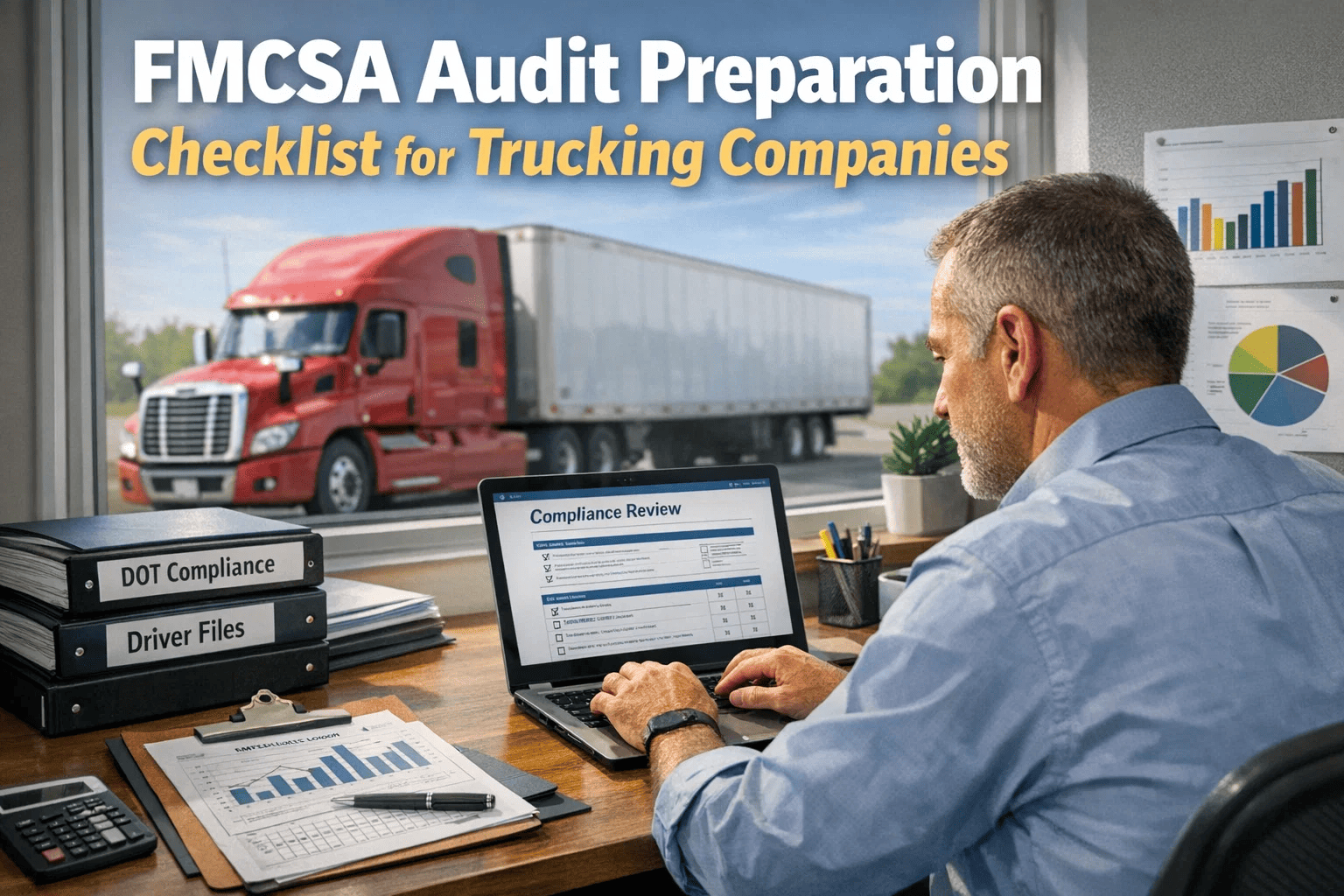
An FMCSA compliance review is not an event that arrives without warning. The agency's Safety Measurement System generates a continuous, publicly visible score of every motor carrier's safety performance, and carriers whose CSA BASIC percentile rankings reach intervention thresholds enter a structured enforcement sequence that culminates in a compliance review if the underlying performance problems are not corrected. What separates carriers who survive compliance reviews with minimal findings from those who receive unsatisfactory ratings, civil penalties, and consent agreements is not the quality of their operational safety — it is the completeness and accessibility of their documentation. An operation that maintains genuinely safe practices but stores its records in banker boxes, aging spreadsheets, or disconnected ELD and HR systems will produce a poor compliance review outcome even when the underlying compliance record is substantially sound. This checklist covers every major document category reviewed in a standard FMCSA compliance review, organized by the audit team's typical review sequence, with FMCSA regulation citations, document retention requirements, and specific guidance on how FleetRabbit organizes and surfaces each record category for immediate retrieval during an audit.
$16,000+
Maximum civil penalty per violation that FMCSA may assess following an unsatisfactory compliance review rating for a motor carrier
62%
Of trucking operations receiving unsatisfactory audit ratings cite poor document organization — not actual safety failures — as the primary finding
3 years
Best-practice document retention period for most FMCSA-required records, exceeding the regulatory minimum by 1.5x for audit defensibility
18 months
Maximum time before FMCSA conducts a New Entrant Safety Audit for newly registered motor carriers entering interstate commerce
FMCSA Audit Types and What to Expect
Understanding which type of regulatory review your operation may face is the first step in targeted preparation. The FMCSA conducts multiple types of carrier investigations with different triggers, scopes, and potential outcomes. FleetRabbit's compliance management modules are designed to prepare your operation for all review types — not only scheduled audits — because unannounced investigations are increasingly common for carriers with deteriorating CSA scores or recent accident history.
Audit Type
Trigger
Scope
Potential Outcome
Typical Duration
New Entrant Safety Audit
All new carriers within 18 months of registration
Basic safety management practices and document systems
Pass/Fail — failure results in operating authority revocation
1–2 days on-site
Compliance Review
CSA threshold breach, complaint, accident pattern, or targeted enforcement
All six BASIC categories, DQ files, maintenance records, HOS, drug program
Driver Qualification (DQ) files are the most frequently cited deficiency category in FMCSA compliance reviews. Every commercially licensed driver operating a CMV subject to FMCSA regulations must have a complete DQ file, and every element of the file must be current, properly executed, and retained for the required period. A single missing or expired element in a driver's DQ file constitutes a violation against that driver record — and auditors review a sample of driver files proportional to fleet size. With FleetRabbit managing your DQ file completeness, every element is tracked with advance expiration alerts and document storage that makes retrieval during an audit a matter of seconds per driver.
CDL and License Verification
Medical and Physical Qualification
Category 2: Hours-of-Service and ELD Records
HOS record review is the category in which FMCSA auditors spend the most time during a comprehensive compliance review. Auditors review a specific sample of driver log records for the period under investigation — typically the most recent six months — and verify each record against supporting documents for consistency. An ELD record that contradicts a fuel receipt, a toll record, or a dispatch delivery confirmation creates a compliance finding regardless of whether the contradiction reflects a recordkeeping error or a genuine HOS violation.
ELD Compliance and Record Retention
Category 3: Vehicle Maintenance Records
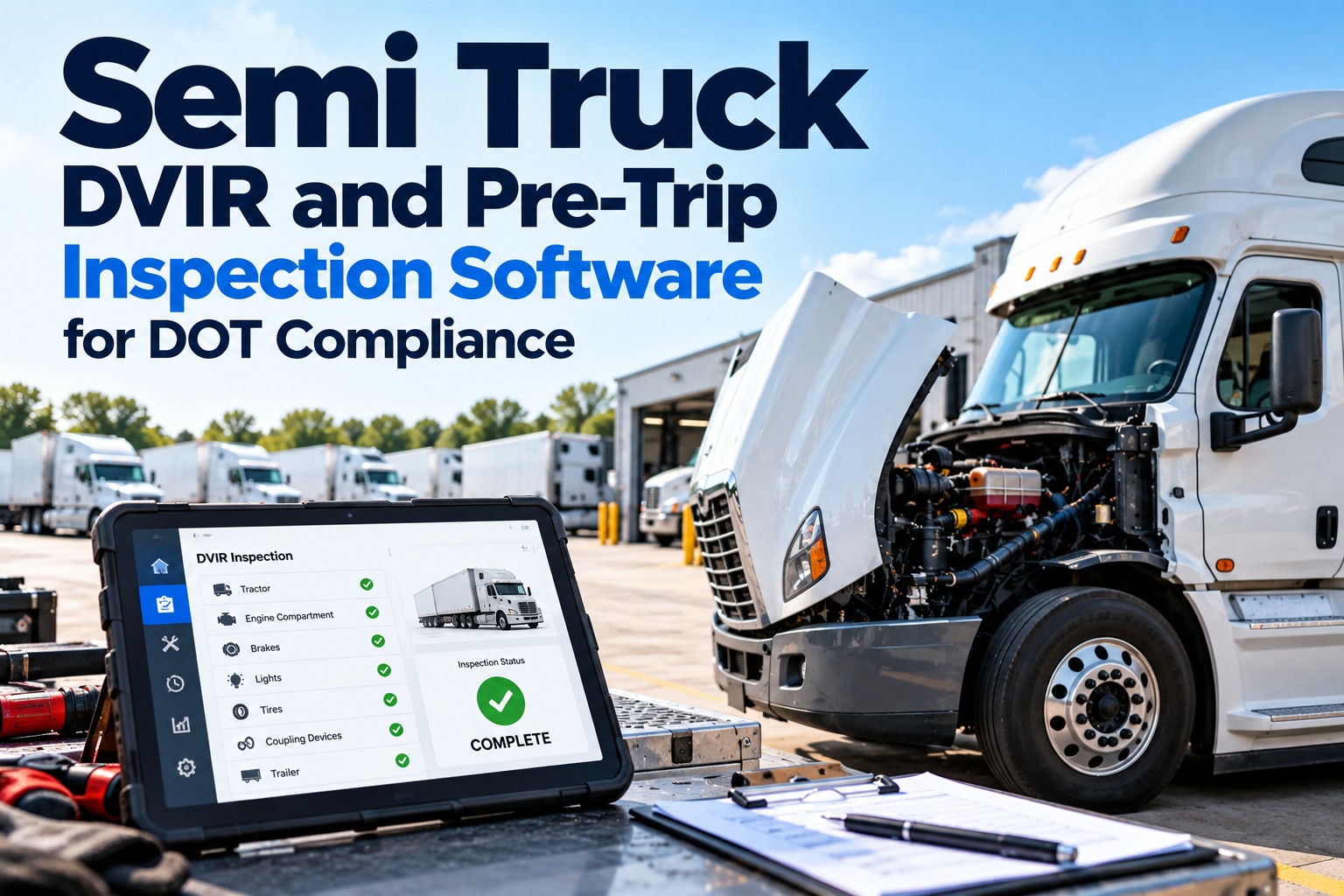
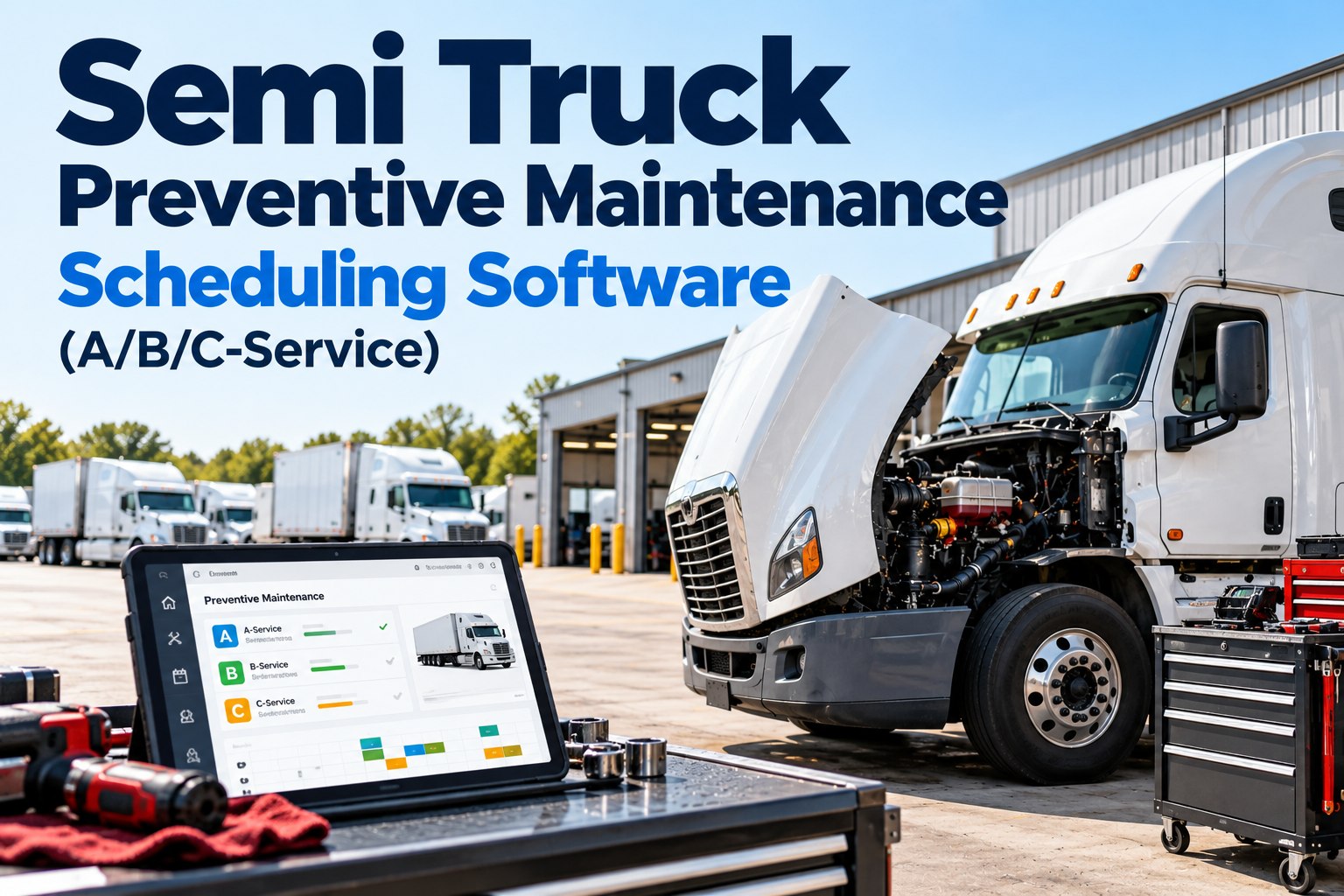
FMCSA's vehicle maintenance regulation — 49 CFR 396.3 — requires every motor carrier to systematically inspect, repair, and maintain all its vehicles and to retain maintenance records demonstrating compliance with this requirement. Auditors assess whether the carrier has a documented preventive maintenance program, whether vehicles receive inspections on schedule, and whether driver-reported DVIR defects receive timely documented repair. FleetRabbit's maintenance management system creates the complete, accessible maintenance record that satisfies every element of this requirement — connected to DVIR records, work orders, and annual inspection certificates in a single searchable history per vehicle.
Preventive Maintenance Program Documentation
Category 4: Drug and Alcohol Testing Program
FMCSA's controlled substances and alcohol testing regulation — 49 CFR Part 382 — requires every motor carrier operating CDL-required vehicles to implement a complete drug and alcohol testing program covering pre-employment, random, post-accident, reasonable suspicion, return-to-duty, and follow-up testing. Program completeness is assessed through documentation of every required program element — not through test results alone. Carriers who participate in a consortium or use a third-party administrator must maintain documentation of the consortium relationship and confirm that random testing rates meet or exceed FMCSA's minimum requirements.
Program Documentation and Testing Records
Category 5: Accident Register and Incident Documentation
FMCSA requires every carrier to maintain an accident register documenting every accident meeting the DOT-reportable definition — a fatality, a bodily injury requiring medical treatment away from the scene, or disabling vehicle damage requiring a tow. The accident register must be retained for three years and made available to FMCSA within the required timeframe upon request. Beyond the register requirement, carriers with post-accident testing obligations must document the testing decision and outcome for every qualifying accident — and the failure to conduct required post-accident testing is itself a testing violation separate from any HOS or vehicle violation associated with the accident.
Accident Register and Post-Accident Testing
Category 6: Operating Authority, Insurance, and Hazmat Compliance
Operating authority and insurance requirements are typically the easiest compliance categories to satisfy — but they are also the categories that produce the most severe immediate consequences when they are not satisfied. A carrier whose operating authority has lapsed, whose insurance has cancelled, or who is operating without required hazardous materials registration faces immediate prohibition from interstate commerce — consequences that are independent of the carrier's safety performance record. Verify authority and insurance status as frequently as your premium billing cycle and annually in advance of any compliance review.
Authority and Insurance Verification
Document Retention Quick Reference
Use this retention reference during audit preparation to confirm your document management program retains each category for the required or recommended period. Where FleetRabbit stores the document electronically, the platform retention period matches or exceeds the regulatory minimum, with export capability for long-term archival.
Document Category
FMCSA Minimum Retention
Best Practice Retention
FleetRabbit Storage Module
Driver Qualification File — Active Driver
Duration of employment
Duration of employment + 3 years
Driver Records — DQ File Tab
Driver Qualification File — Terminated Driver
3 years after termination
5 years after termination
Driver Records — Archived Drivers
Annual MVR Records
3 years
5 years
Driver Records — MVR History
Medical Examiner Certificates
3 years
5 years
Driver Records — Medical Tab
ELD Records of Duty Status
6 months
12 months
HOS Monitoring — Log Archive
Supporting Documents (HOS)
6 months
12 months
HOS Monitoring — Document Store
Vehicle Maintenance Records
In service + 6 months
In service + 3 years
Maintenance — Vehicle History
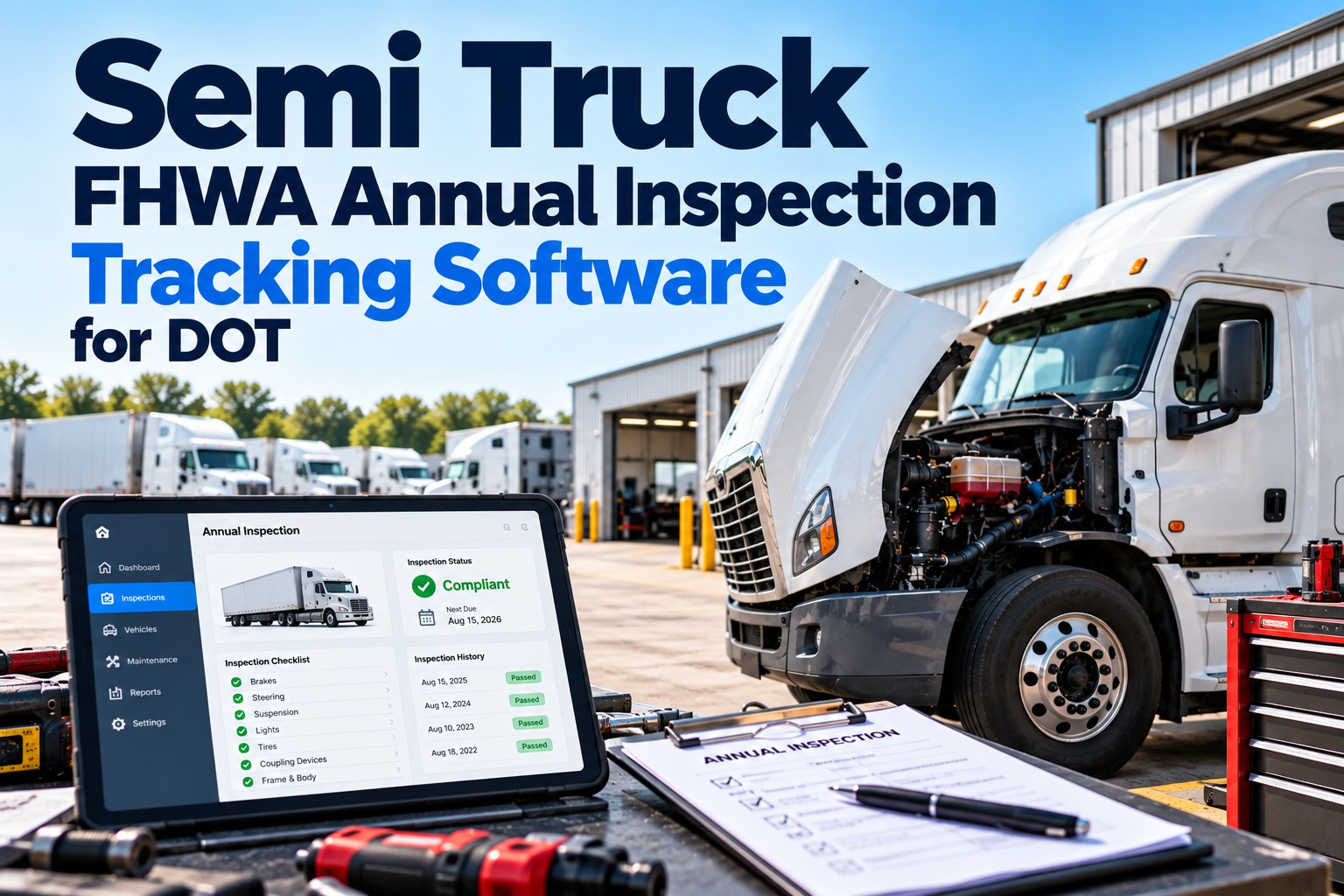
Annual Inspection Certificates
14 months (while vehicle in service)
3 years
Compliance — Inspection Records
DVIR Records (Signed-off defects)
3 months
12 months
DVIR Records — Completed Inspections
Drug Test Results — Negative
1 year
5 years
Driver Records — Drug Program Tab
Drug Test Results — Positive / Refusal
5 years
7 years
Driver Records — Drug Program Tab
Accident Register
3 years
5 years
Compliance — Incident Register
Frequently Asked Questions
What triggers an FMCSA compliance review for a motor carrier?
FMCSA initiates compliance reviews through multiple trigger mechanisms. The most common is a CSA BASIC percentile score reaching the intervention threshold — currently 65th percentile for most BASICs and 80th percentile for the Crash Indicator BASIC. Other triggers include a serious accident or pattern of accidents, a complaint filed by a shipper, driver, law enforcement agency, or member of the public, a targeted enforcement initiative focused on a specific commodity or geographic corridor, or a carrier's failure to respond to an FMCSA inquiry or warning letter. New motor carriers are subject to a New Entrant Safety Audit within 18 months of registration as a standard regulatory requirement. Carriers identified by state partners through the Commercial Vehicle Safety Alliance as having systemic safety problems may be referred to FMCSA for a federal compliance review outside of the standard CSA threshold process.
How far in advance should a trucking company begin FMCSA audit preparation?
Continuous preparation is the correct standard — not a pre-audit sprint. However, if your CSA scores are approaching intervention thresholds or you have received a warning letter or notice of a compliance review, begin an intensive preparation process immediately. The practical preparation timeline for a full compliance review is 60 to 90 days if records are reasonably organized, or three to six months if significant record remediation is required. Immediate priorities in the first two weeks are: confirming DQ file completeness for all active drivers, verifying ELD registration status and record availability for the past six months, and confirming drug program enrollment and testing rate compliance. FleetRabbit's compliance dashboard provides a real-time gap analysis against all major audit categories — making the initial assessment phase a matter of hours rather than weeks.
What are the most commonly cited deficiencies in FMCSA compliance reviews?
Driver Qualification File deficiencies consistently rank as the leading citation category — specifically missing or expired medical examiner certificates, missing annual MVR records, and absent safety performance history inquiry documentation. Hours-of-service violations are the second most common category, with particular frequency in supporting document discrepancies and failure to retain records for the required period. Vehicle maintenance deficiencies typically center on missing annual inspection certificates, lack of a documented preventive maintenance program, and DVIR defects without corresponding repair records. Drug and alcohol program deficiencies most often involve random testing rate shortfalls, missing MRO documentation, and absent reasonable suspicion training records for supervisors. FleetRabbit's compliance management modules are specifically designed to prevent each of these common deficiency categories through advance alerts, document completeness monitoring, and automated record retention.
What is the difference between an FMCSA Compliance Review and a New Entrant Safety Audit?
A New Entrant Safety Audit is a mandatory review for all newly registered motor carriers, conducted within 18 months of registration, focused on whether the carrier has the basic safety management practices and regulatory awareness required to operate safely. The outcome is pass or fail — a failing carrier loses operating authority. The scope is foundational: does the carrier have a written accident register process, does it understand HOS rules, does it have a drug program, does it maintain inspection records? A Compliance Review is a comprehensive investigation of an operating carrier's compliance record, typically triggered by CSA performance or a safety event. It covers all six BASICs in depth with document sampling, and it results in a safety rating — Satisfactory, Conditional, or Unsatisfactory — that is published publicly and affects the carrier's insurance premiums, shipper relationships, and regulatory standing. An Unsatisfactory rating following a Compliance Review can result in an out-of-service order against the carrier's operating authority.
How does FleetRabbit help organize driver qualification files for audit readiness?
FleetRabbit's Driver Records module maintains a complete digital DQ file for every driver — organized by required document type, with expiration date tracking, advance renewal alerts, and document storage for uploaded certificates and records. The completeness view for each driver shows which required DQ elements are complete, which are approaching expiration, and which are missing or expired — giving the fleet safety manager a real-time gap analysis that would otherwise require manual review of every physical driver file. During an audit, any driver record can be retrieved and all required DQ elements displayed in under 30 seconds — compared to the physical file search process that requires minutes per driver across a large fleet. The platform also generates a DQ file audit report showing the completeness status of all active driver files simultaneously, enabling pre-audit remediation to focus exactly where gaps exist rather than requiring a full file review from scratch.
Can FMCSA conduct an unannounced compliance review?
Yes. FMCSA has the authority to conduct unannounced compliance reviews for carriers with serious safety concerns — particularly those with CSA scores at the critical intervention threshold, carriers involved in recent serious accidents, or carriers where a complaint suggests imminent safety risk. While most compliance reviews include advance notice of one to two weeks, carriers with deteriorating CSA scores or recent safety events should not assume they will receive advance notice sufficient for a documentation remediation effort. This is the strongest argument for maintaining continuous audit readiness rather than point-in-time preparation. FleetRabbit's real-time compliance dashboard means your audit readiness status is known at any moment — not only when you have weeks to prepare for a scheduled review.
Maintain Continuous FMCSA Audit Readiness with FleetRabbit
FleetRabbit's compliance management platform maintains the complete documentation infrastructure that FMCSA auditors review — driver qualification files, HOS records, vehicle maintenance history, DVIR records, and incident documentation — in a single, searchable, accessible system. When an audit notice arrives, fleet managers using FleetRabbit respond from a position of documented confidence rather than emergency remediation.
The platform's compliance gap analysis runs continuously, alerting safety managers to expiring credentials, missing documents, and records approaching their retention deadline — before those gaps become audit findings. Fleet executives receive weekly and monthly compliance summary reports that provide the same visibility into organizational compliance status that FMCSA auditors see during a review — enabling proactive correction rather than reactive response.
Schedule Your FleetRabbit Compliance Platform Demonstration
See how FleetRabbit organizes every FMCSA-required document category in a real-time compliance dashboard with advance alert systems, audit-ready retrieval capability, and gap analysis reporting across your entire driver and vehicle roster. We demonstrate against your fleet's specific document categories and operational profile.