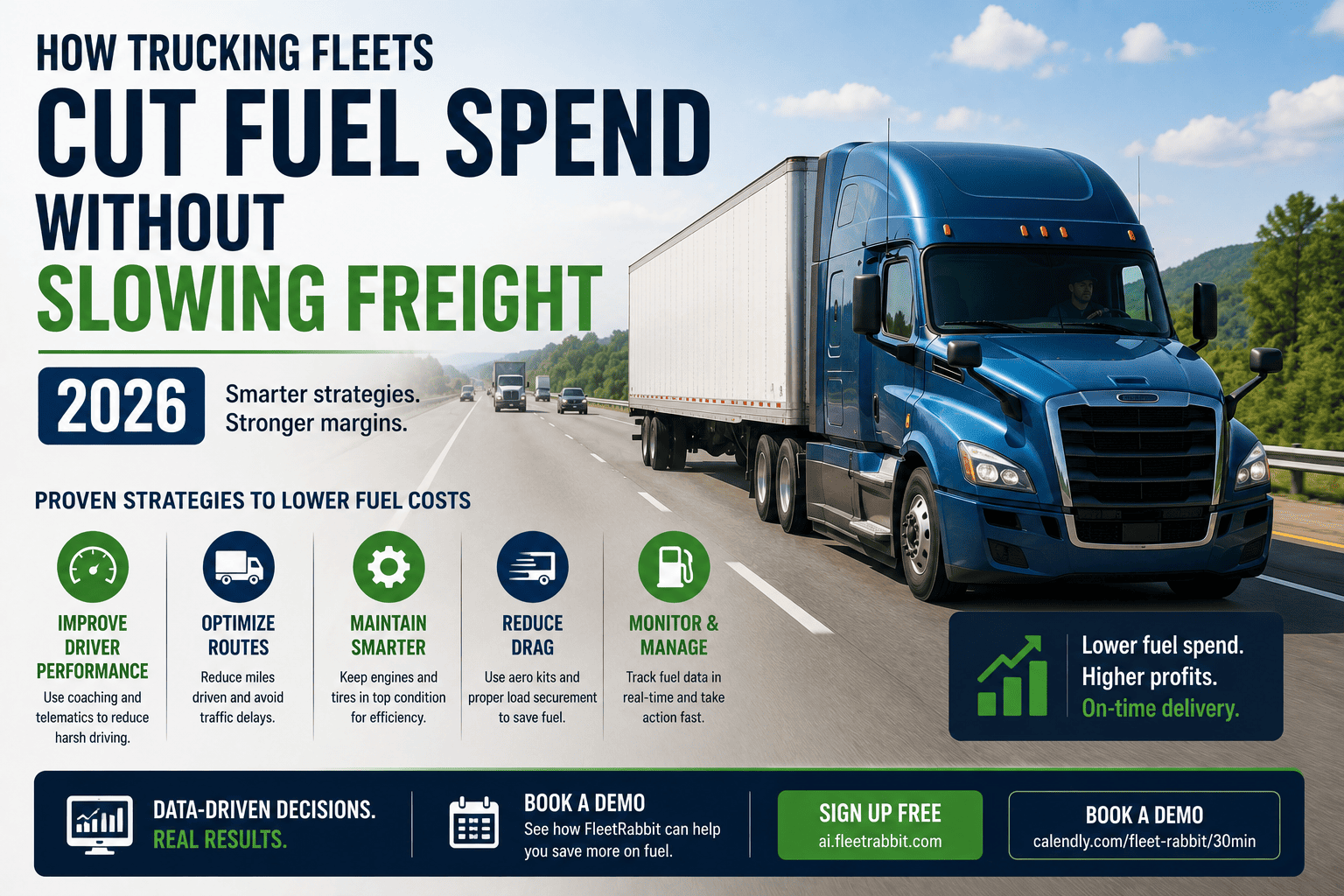
Diesel is eating trucking budgets alive. Fuel now accounts for roughly 20 to 30 percent of total operating costs for most fleets, and in early 2026 average U.S. diesel prices climbed toward the 4.75 to 4.85 dollar per gallon range, squeezing margins that were already thin. The instinctive reaction for many fleet managers is to slow down, cut routes, or hold back on service commitments. But the fleets actually winning on fuel spend in 2026 are doing the opposite. They are moving just as fast, delivering just as reliably, and still cutting fuel costs by double digits. The difference is not less freight. It is smarter fuel management, and it starts long before the truck ever leaves the yard.
Trucking fleets are cutting fuel spend 10 to 25 percent without slowing freight by combining four levers together: idle reduction, AI-driven route optimization, driver behavior coaching, and real-time fuel analytics. A 50-truck fleet applying these levers together typically recovers 85,000 to 280,000 dollars a year, and most of the savings show up within the first 90 days.
Why Fuel Waste Hides in Plain Sight
Most fleet managers assume fuel spend is simply a function of miles driven and current diesel prices. In reality, a large share of fuel cost is pure waste that never shows up on a delivery report. A Class 8 truck idling for one hour burns close to a gallon of diesel while earning zero revenue. A driver who takes five extra minutes of aggressive acceleration or brakes hard through every stop can lose 15 to 30 percent of highway fuel economy without anyone noticing until the monthly fuel bill arrives. None of this waste slows freight down on paper, but all of it drains cash every single week.
Four Levers That Cut Fuel Without Cutting Freight
Fleets that reduce fuel spend without slowing service are not relying on a single fix. They stack four levers together so the savings compound instead of competing with each other. Leading fleets are seeing well-optimized operations reduce fuel consumption 10 to 15 percent compared to fleets still running manual processes.
1. Idle Reduction
Idle time is the fastest fuel dollar to recover because it requires no capital investment, only visibility and policy. Telematics-based idle caps of five minutes or less, combined with driver scorecards, routinely deliver measurable savings within a single quarter. Fleets moving from 30 percent idle time down to under 10 percent can recover hundreds of thousands of dollars a year in fuel alone, plus reduced engine wear and lower DEF and aftertreatment maintenance costs.
2. AI-Powered Route Optimization
Cutting unnecessary mileage compounds savings across fuel, tire wear, and driver hours at the same time. Modern route optimization factors in live traffic, delivery windows, terrain, and hours-of-service data to shave 5 to 15 percent off total mileage. One regional delivery fleet reduced daily mileage by 9 percent after adopting traffic-aware routing, delivering six-figure annual fuel savings across roughly 100 vehicles, all while keeping delivery windows intact.
3. Driver Behavior Coaching
How a driver accelerates, brakes, and holds speed has an outsized effect on fuel economy. Telematics-driven coaching that targets smooth throttle input and consistent speeds has been shown to improve fuel economy by an average of 6.6 percent, and fleets combining measurement with structured coaching have reported fleet-wide fuel economy gains as high as 15 percent.
4. Real-Time Fuel Analytics
You cannot fix what you cannot see. Fuel cards and analytics platforms that track consumption by vehicle and driver flag anomalies before they compound into a bad month. Fleets using real-time fuel monitoring most fleets save 15 to 25 percent on fuel costs within 90 days simply by catching waste early instead of discovering it at month-end reconciliation.
| Fuel-Saving Lever | Typical Fuel Savings | Time to See Results | Capital Needed |
|---|---|---|---|
| Idle Reduction | 3 to 6 percent | Within one quarter | None to low |
| Route Optimization | 5 to 8 percent | Within weeks | Low, software only |
| Driver Coaching | 4 to 15 percent | 30 to 90 days | Low, telematics only |
| Fuel Analytics and Cards | 2 to 5 percent | Immediate visibility | Low |
FleetRabbit combines idle tracking, route optimization, driver scorecards, and fuel analytics in one platform, so every wasted gallon becomes visible and actionable. Fleets typically see savings inside the first 90 days without changing a single delivery commitment. Start your free trial and see where your fleet is losing money today.
What a Fuel-Efficient Fleet Actually Looks Like
The math on fuel savings is not theoretical. A 100-truck fleet averaging 75,000 miles a year at typical fuel economy can see a 12 percent reduction in fuel spend translate into roughly 204,000 dollars in annual savings without reducing service in any way. Smaller fleets see the same proportional impact. A 15 to 25 truck operation applying the same structured fuel management strategies typically recovers 30,000 to 50,000 dollars a year, money that goes straight back into growth instead of the fuel pump.
Route Discipline Beats Route Guessing
Fixed routes feel predictable, but they quietly bake in waste when traffic patterns, customer locations, or order volumes shift. Dynamic, AI-assisted routing re-optimizes on the fly, reduces deadhead miles by reallocating stops between nearby vehicles, and prevents the doubling back and excessive dwell time that burn fuel without adding a single mile of billable freight.
Where the extra miles usually come from
Poor load sequencing, last-minute customer changes handled manually, and drivers defaulting to familiar routes instead of the fastest available one are the three most common sources of avoidable mileage. Each one is fixable with automated dispatch and live route recalculation, not with slower service.
Idle Policy Only Works With Enforcement
A written anti-idling policy costs nothing and takes about a week to roll out, but policy alone rarely changes behavior. Idle limits paired with telematics-based alerts and weekly driver scorecards are what actually move the needle, because drivers respond to visibility and feedback far more consistently than to a memo.
Why hardware alone does not fix idling
Auxiliary power units and automatic shutdown systems help, but fleets that install hardware before fixing driver habits often see the equipment go unused out of habit. The sequence matters: measure and coach first, then invest in hardware to lock in the gains.
How FleetRabbit Helps Fleets Cut Fuel Without Cutting Corners
FleetRabbit's platform was built around one idea: fuel savings should not require slower trucks or missed delivery windows. The system tracks idle time by vehicle, driver, and location, recommends optimized routes using live traffic and order data, generates automatic driver scorecards from telematics data, and sends real-time alerts the moment fuel consumption drifts outside normal range. Instead of discovering waste at the end of the month, fleet managers see it the same day it happens and can correct course immediately. If you want to see exactly where your fleet is losing fuel dollars, you can book a free demo and walk through your own fleet data with the FleetRabbit team.
Frequently Asked Questions
Fuel prices are not going back down on their own, but fleet fuel costs are one of the few large expenses that can be cut significantly without touching service levels. The fleets pulling ahead in 2026 are not the ones driving less. They are the ones driving smarter, with full visibility into every idle minute, every extra mile, and every driver habit that quietly drains the fuel budget.
FleetRabbit gives fleet managers a single view of idle time, route efficiency, driver behavior, and fuel consumption, so savings show up in weeks, not years. Start your free trial with no credit card required, or book a short demo to see your own fleet's fuel savings potential.