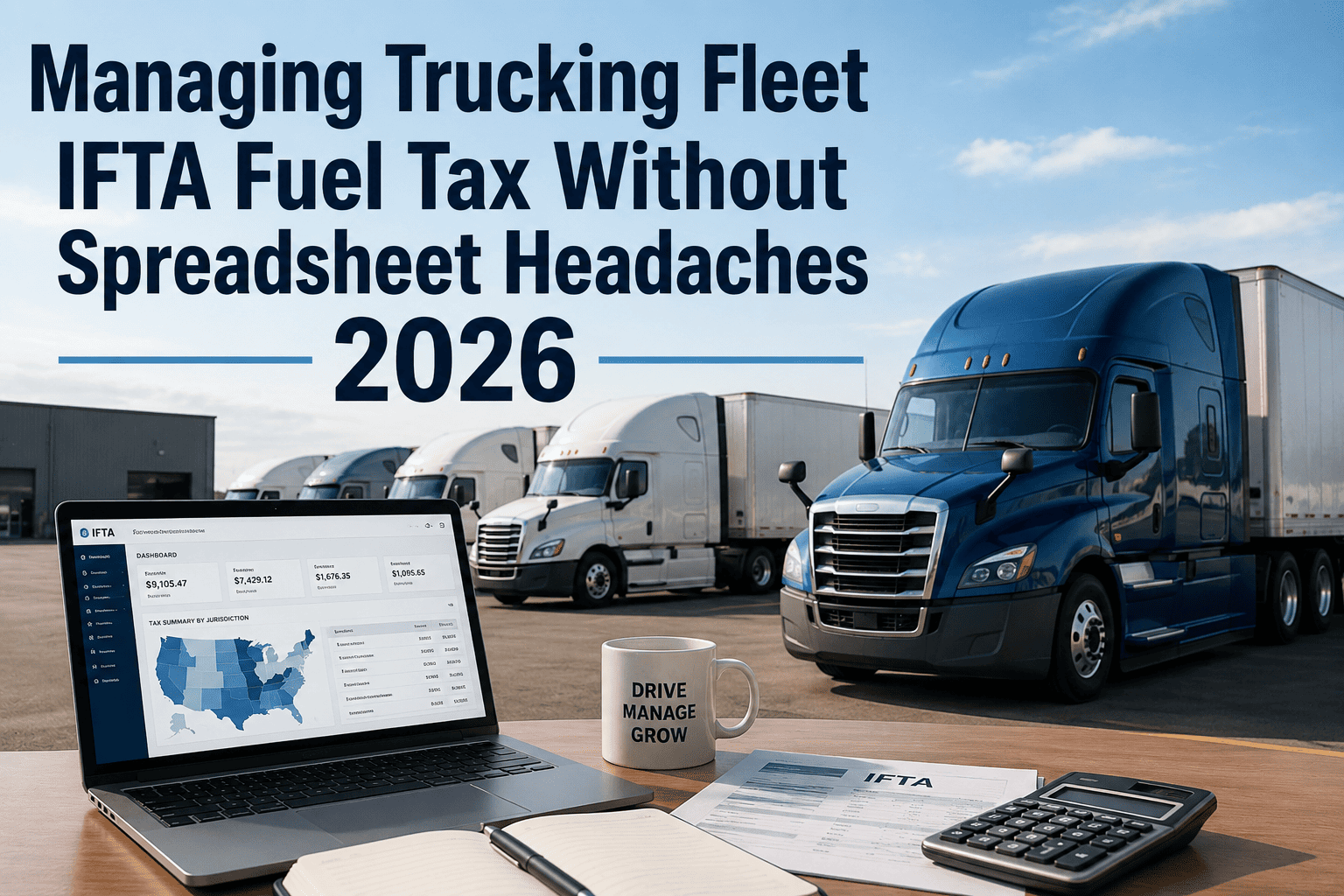
Every trucking fleet that crosses state lines eventually runs into the same quarterly ritual: pulling fuel receipts out of a shoebox, cross-checking odometer logs, and hoping the spreadsheet formulas didn't break again. IFTA fuel tax reporting was built to simplify multi-state tax filing, but for most fleet managers it still feels like a part-time job that shows up four times a year, uninvited, with a hard deadline attached.
IFTA covers 48 US states and 10 Canadian provinces, and every jurisdiction can set its own fuel tax rate each quarter. Carriers must track miles and fuel purchases separately for each jurisdiction, file returns four times a year even when no tax is owed, and late filings trigger penalties and interest. Fleets that automate mileage and fuel tracking cut IFTA prep time by 60 to 80 percent and dramatically reduce filing errors.
Why IFTA Quietly Becomes a Fleet's Biggest Headache
IFTA, the International Fuel Tax Agreement, exists to save carriers from filing a separate fuel tax report in every state they drive through. Instead, one quarterly return goes to your base jurisdiction, which distributes the tax owed to each state or province based on miles driven and fuel purchased there. That sounds simple until you realize the return depends on dozens of moving numbers that change every ninety days.
Jurisdiction-by-Jurisdiction Mileage
Total fleet mileage means nothing to IFTA. Every state and province a truck crosses needs its own logged mileage figure, pulled from GPS or driver logs and reconciled by hand in most fleets.
Rates That Shift Every Quarter
Fuel tax rates are reset at the start of nearly every quarter, and some states adjust rates independently of the national schedule. Using last quarter's rate on this quarter's return is one of the most common filing mistakes.
Receipts That Have To Match Exactly
Every tax-paid fuel purchase needs a receipt showing date, location, gallons, and vehicle ID. Fuel card statements and paper receipts rarely line up perfectly, and the gap becomes an audit flag.
A Deadline That Never Moves
Returns are due quarterly whether or not tax is owed. Missing the window brings fines, interest charges, and a compliance mark against your base jurisdiction license.
The Real Cost of Doing IFTA the Manual Way
Most fleets underestimate what manual IFTA prep actually costs. It is not just the hours spent in spreadsheets, it is the errors that slip through, the missed fuel tax credits, and the staff time pulled away from dispatch and maintenance every quarter.
| Manual Process Pain Point | What Typically Happens | Automated Alternative |
|---|---|---|
| Jurisdiction mileage logging | Drivers estimate state-line crossings from memory or paper logs, creating rounding errors | GPS-based tracking records exact jurisdiction miles automatically as trucks cross state lines |
| Fuel receipt matching | Office staff manually match paper receipts to fuel card statements each quarter | Fuel card data syncs directly and reconciles against trip records in real time |
| Rate table updates | Someone has to remember to download the new quarterly rate table before filing | Current jurisdiction rates are applied automatically the moment a quarter changes |
| Report preparation time | 8 to 15 hours per quarter for a mid-sized fleet, spread across multiple staff members | Ready-to-file reports generate in minutes from data already collected all quarter |
| Audit readiness | Records scattered across spreadsheets, email, and paper files, hard to produce on request | Digital trip and fuel records stored in one place, exportable instantly for an audit |
Automated Mileage and Fuel Tracking
FleetRabbit logs jurisdiction miles and fuel purchases automatically as your trucks run their routes, then applies the correct quarterly tax rates for every state and province. Sign up for FleetRabbit and see your next IFTA report build itself, or book a demo to watch it in action first.
How Automated IFTA Reporting Actually Works
Moving away from spreadsheets does not mean losing visibility into your numbers, it means getting better visibility with none of the manual reconciliation. Here is what the process looks like once mileage and fuel tracking run automatically in the background.
Every Mile Is Tagged To A Jurisdiction Automatically
GPS data from each truck records exactly when and where it crosses a state or provincial line, building an accurate jurisdiction mileage log without a driver ever touching a form.
Fuel Purchases Sync From The Card Automatically
Fuel card transactions flow in with gallons, location, and price already attached, removing the need to manually enter or match paper receipts.
Current Quarter Rates Are Applied Automatically
The correct tax rate for each jurisdiction is applied the moment the quarter changes, removing the risk of filing with an outdated rate table.
A Ready-To-File Report Generates Itself
By the time quarter-end arrives, the report is already built from three months of continuously collected data, ready for review and submission to your base jurisdiction.
What Fleets Save When They Stop Using Spreadsheets
The value of automating IFTA reporting shows up in three places: staff hours recovered, tax credits that no longer slip through the cracks, and the reduced risk of late-filing penalties. For a fleet running 40 to 60 trucks across ten or more jurisdictions, quarterly spreadsheet prep commonly consumes 10 to 20 staff hours. Multiply that across four quarters and a full-time role is effectively dedicated to a task that automated tracking handles continuously in the background.
Fuel tax credits are just as easy to lose. When a truck buys fuel in a high-tax state but drives most of its miles in a lower-tax jurisdiction, that difference is owed back to the carrier as a credit. Manually tracked fleets frequently under-claim these credits simply because reconciling purchase location against mileage by jurisdiction is tedious and easy to shortcut. Automated tracking captures every gallon against the exact jurisdiction it was used in, so credits are calculated in full every quarter instead of estimated.
Where The Time And Money Actually Go
Staff Hours
10 to 20 hours per quarter spent gathering, matching, and re-checking data before a report can even be started.
Filing Errors
Mismatched receipts and outdated rate tables are the two most common causes of amended returns and follow-up notices.
Missed Credits
Fuel tax credits owed back to the carrier are frequently under-claimed when purchase location is not reconciled precisely against jurisdiction miles.
Penalty Exposure
Late or inaccurate filings bring fines and interest, plus added scrutiny on future returns from your base jurisdiction.
Building An IFTA-Ready Fleet: A Practical Checklist
Whether or not a fleet is ready to automate fully, a few habits make every quarterly filing smoother. Confirm each truck's GPS or ELD data is capturing full trip routes, not just start and end points, since jurisdiction crossings in the middle of a route are the easiest miles to lose. Keep fuel card purchase locations set to the actual pump address rather than a regional billing code. Pull the current quarter's rate table before, not after, preparing the return. And reconcile mileage and fuel data monthly instead of waiting until the quarter closes, so errors get caught while they are still easy to fix.
Fleets that follow this rhythm manually still spend real time on it every month. Fleets that let FleetRabbit handle jurisdiction tracking and fuel reconciliation continuously get the same clean data without the monthly check-in, because the system is already doing the reconciliation as trips happen.
File With Confidence, Not Spreadsheets
FleetRabbit keeps jurisdiction mileage, fuel purchases, and current tax rates organized continuously, so quarterly filing becomes a five-minute review instead of a five-day project. Book a demo to see your fleet's data mapped out, or start your free trial before your next filing window opens.
The Bottom Line On IFTA Fuel Tax Reporting
IFTA was designed to make multi-state fuel tax simpler, and for fleets still doing it by hand, the quarterly grind of matching receipts, tracking jurisdiction miles, and chasing the latest rate table can eat entire weeks a year. That time, along with the tax credits and filing accuracy lost along the way, adds up to a real operational cost that most fleets never fully calculate.
Automating jurisdiction mileage and fuel purchase tracking turns IFTA from a quarterly scramble into a five-minute review. The data is already collected, already matched, and already current on tax rates, so filing becomes a formality instead of a project.
Make Your Next IFTA Filing The Easiest One Yet
FleetRabbit tracks jurisdiction miles and fuel purchases automatically, applies current quarterly tax rates, and builds your report continuously so nothing is left for the last minute. Start your free trial today, no credit card required.