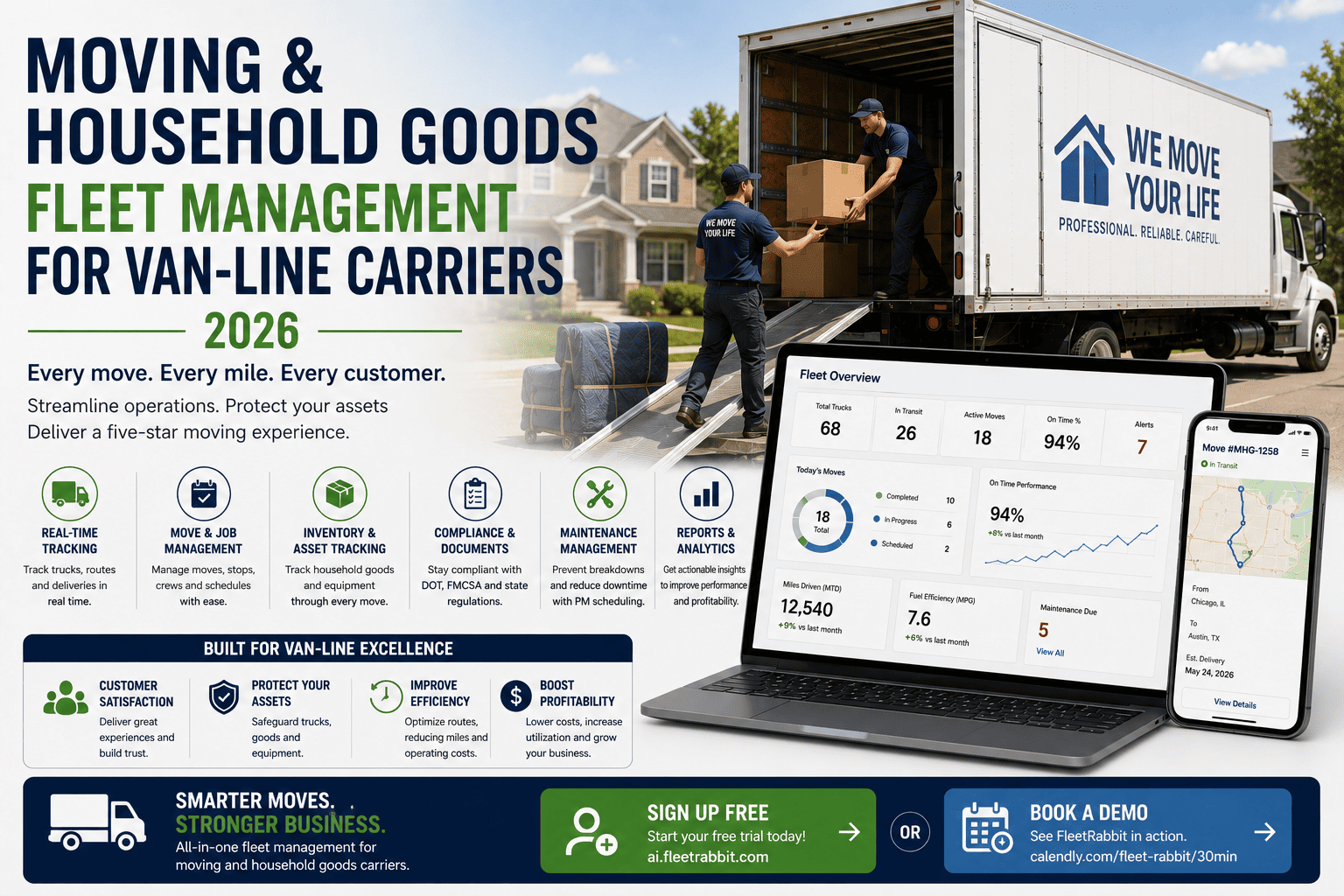
Moving companies operate under a regulatory structure that most other trucking segments never deal with. Household goods carriers aren't just moving freight, they're moving a customer's entire life, and federal consumer protection rules hold movers accountable for damage, delays, and pricing transparency in ways general freight carriers never face. Add in a moving season that compresses most of the year's volume into a few peak summer months, and van line fleets need a different kind of operational discipline than a standard trucking fleet. Managing a moving fleet in 2026 means keeping trucks road-ready, drivers compliant, and every shipment documented well enough to survive a claim.
Interstate household goods carriers must register with FMCSA under a USDOT number and maintain at least 750000 dollars in bodily injury and property damage liability coverage. Consumer protection rules under 49 CFR Part 375 govern estimates, bills of lading, and claims handling, while Part 370 governs how loss and damage claims must be investigated. Fleets that document vehicle condition and shipment handling digitally resolve claims faster and reduce disputed damage costs significantly.
The Compliance Layer Every Van Line Carrier Operates Under
Interstate household goods carriers need a USDOT number as their operating authority, along with minimum financial responsibility coverage of 750000 dollars in bodily injury and property damage liability plus cargo insurance covering goods in transit. On top of standard motor carrier safety rules, movers answer to 49 CFR Part 375, which governs how estimates are prepared, what must appear on a bill of lading, and how tariffs are disclosed to shippers. FMCSA has also run targeted enforcement campaigns like Operation Protect Your Move specifically aimed at rooting out scam movers ahead of peak season, which means legitimate carriers face closer scrutiny of their paperwork, pricing practices, and driver conduct during the busiest months.
Why Documentation Discipline Matters More Here
A missing signature on a bill of lading or an estimate that doesn't match the final invoice isn't just a paperwork gap for a household goods carrier, it's a consumer protection violation with real enforcement consequences. Fleets that standardize digital documentation across every truck reduce the chance that a single driver's shortcut becomes a compliance finding.
Core Documents Every Move Needs
A compliant shipment file typically includes the written estimate, a fully executed bill of lading, an inventory with condition notes, and a copy of the applicable tariff made available to the shipper on request.
FleetRabbit gives van line carriers a digital record of vehicle condition, driver activity, and maintenance history that stands up when a claim or an FMCSA review comes in. Start your free trial and put your documentation on autopilot.
Preventing Damage Claims Before They Start
Every dented dresser or cracked mirror that reaches a claims desk traces back to a moment on the truck, whether that's a poorly secured load, a worn tie-down, or a lift gate that wasn't inspected before the run. Household goods carriers that treat vehicle and equipment condition as a claims-prevention tool, not just a safety requirement, see fewer disputes and faster resolutions when something does go wrong.
Load Securement Equipment Needs Its Own Maintenance Cycle
Straps, blankets, dollies, and ramps wear down with volume, not mileage, so a fleet running peak-season volume needs to inspect this equipment far more often than a typical maintenance calendar would suggest.
Photo Documentation Protects Both Sides
Time-stamped photos of goods at pickup and delivery give movers a clear record when a customer disputes pre-existing damage, and they give honest claims a fast path to resolution instead of a drawn-out investigation under Part 370.
| Risk Area | Reactive Approach | Documented Approach | Fleet Benefit |
|---|---|---|---|
| Load Damage Claims | Disputed condition, no timestamped record | Photo inventory at pickup and delivery | Faster claims resolution, fewer disputes |
| Securement Equipment | Inspected on general maintenance calendar | Inspected by usage volume during peak season | Fewer in-transit damage incidents |
| Vehicle Breakdown | Emergency repair mid-route with goods onboard | Preventive inspection before dispatch | Avoids delayed deliveries and storage costs |
| Driver Conduct Records | Paper logs, inconsistent across crews | Digital work orders and inspection sign-off | Clean audit trail for compliance reviews |
Running a Fleet Through a Short, Intense Peak Season
Most household goods volume clusters into a tight summer window, and van line carriers that don't prepare for it end up running worn equipment at maximum capacity during the exact months when a breakdown does the most damage, a delayed delivery, a stranded shipment, or a customer left without their belongings for days.
Pre-Season Fleet Readiness
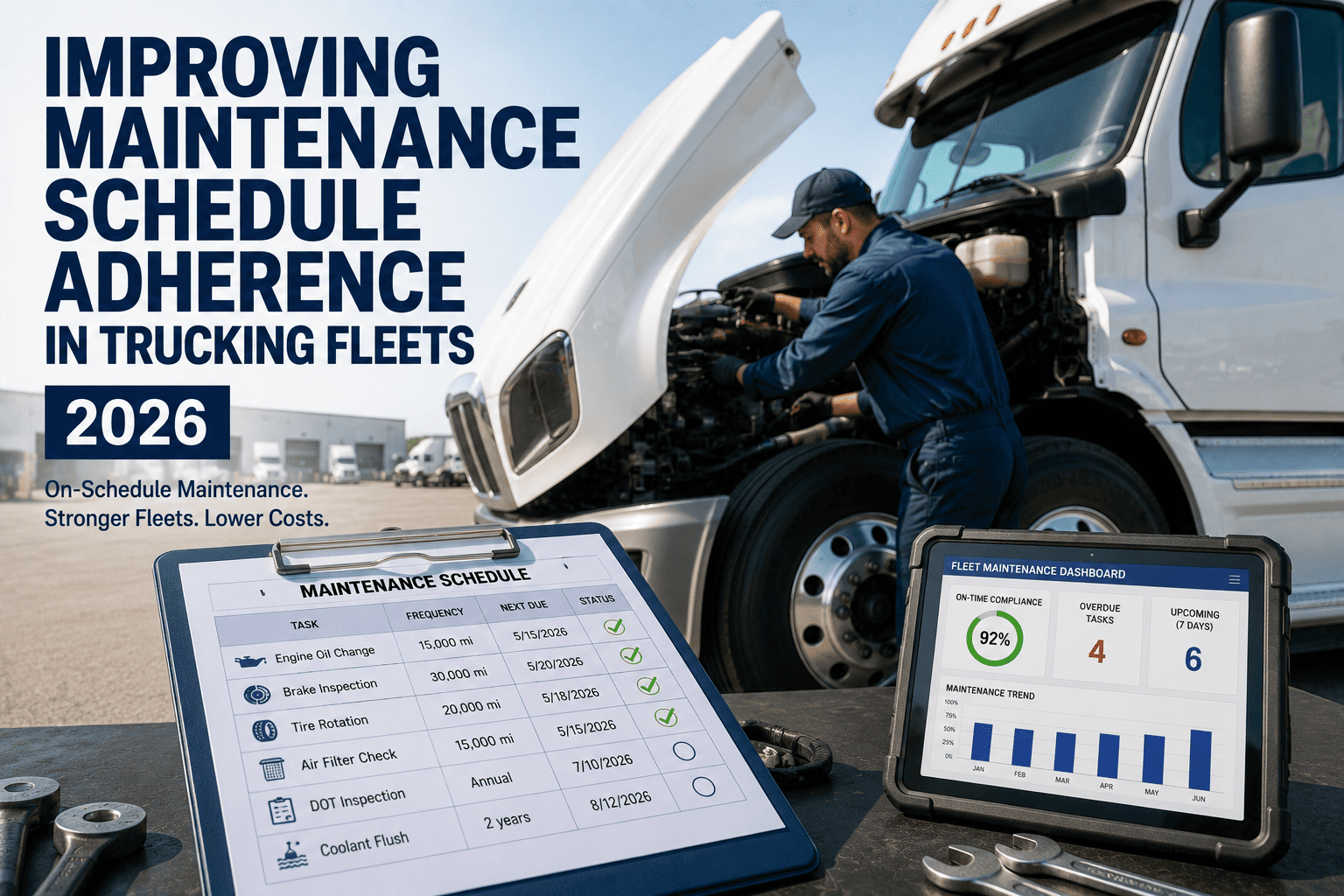
Trucks, lift gates, and trailers that sat lighter through the slower months need a full inspection pass before peak season starts, checking brakes, tires, hydraulic lift systems, and cargo area condition well before the first summer booking goes on the schedule.
Driver Capacity and Vetting
Peak season often means bringing on seasonal drivers and helpers quickly, and FMCSA's enforcement focus on scam movers during the busy months makes it more important than ever that every driver added to a truck is properly vetted, licensed, and documented before their first run.
FleetRabbit schedules pre-season inspections across your entire van line fleet and flags equipment that needs attention before the summer rush hits. Book a demo to see your fleet's readiness picture before the season starts.
Technology That Fits Van Line Operations
Household goods fleets need more than route tracking, they need visibility into where a customer's shipment is, what condition it's in, and whether the truck carrying it is mechanically sound for the trip ahead. The right platform ties maintenance history, driver records, and shipment documentation together instead of scattering them across paper files and separate systems.
GPS and Shipment Visibility
Real-time location tracking lets dispatch answer the question every moving customer asks, where is my truck, without a phone call to the driver mid-route, and it gives operations teams early warning when a delivery is trending late.
Digital Work Orders and Inspection Records
Mobile inspection tools let drivers document vehicle and equipment condition before every dispatch, creating the kind of consistent record that protects a carrier when a claim or compliance review comes in months later.
Benchmarks for Household Goods Fleets
Van line carriers should track a few metrics that general freight fleets don't prioritize as heavily. Claims per completed move is the clearest signal of how well load securement and documentation practices are working, with well-run fleets keeping this rate low and trending down year over year. On-time delivery rate matters more during peak season than any other time, since a single delayed truck during the summer rush can cascade into missed appointments across several other bookings. Vehicle uptime during the peak season window deserves a tighter target than the off-season, since there's little slack capacity to absorb an unexpected breakdown when every truck is already booked.
Keeping Every Move on Track From Pickup to Delivery
Household goods carriers succeed on trust as much as on trucking capability, and trust is built through documented estimates, well-maintained equipment, and a claims process customers can rely on when something goes wrong. Fleets that treat compliance, maintenance, and documentation as one connected system move through peak season with fewer disputes, fewer breakdowns, and stronger customer relationships than fleets that scramble to catch up once the summer rush is already underway.
FleetRabbit brings maintenance scheduling, digital inspections, and driver records into one platform built for the way household goods carriers actually operate. Start your free trial with no credit card required, or book a walkthrough to see it against your own fleet before the next peak season hits.