.png)
Reactive fleet maintenance—fixing trucks only when they break down—costs transportation companies 4 to 5 times more than planned preventive service. A single unexpected engine failure on a long-haul truck can sideline the vehicle for days while costing $5,000 to $12,000 in repairs. Multiply that across a fleet of 20 vehicles and you're looking at catastrophic losses in revenue, emergency repair labor, and towing fees. Preventive maintenance eliminates these crises by scheduling service before failures occur, keeping trucks running reliably and predictably within budget. This guide explains the financial impact of reactive versus preventive maintenance, shows you exactly how to calculate true maintenance costs, and reveals why predictive PM scheduling is the most cost-effective strategy for modern fleets.
Stop Paying for Breakdowns with Reactive Maintenance
FleetRabbit's predictive PM scheduling detects maintenance needs before failures happen. Keep trucks running on schedule and eliminate expensive emergency repairs that drain your budget.
What Is Reactive Maintenance and Why Does It Cost So Much?
Reactive maintenance is the strategy of fixing fleet vehicles only after they fail or show visible problems. A driver notices the check engine light, a tire starts leaking, or brakes feel soft, and only then does the vehicle get serviced. This approach might seem cost-effective initially because you're not scheduling maintenance you don't immediately need. In reality, reactive maintenance creates a cascade of hidden costs that compound over time.
When a truck breaks down unexpectedly, multiple expensive events happen simultaneously. The vehicle sits idle, generating zero revenue while still incurring financing costs. The driver is sidelined, losing billable hours. Emergency repair facilities charge premium rates (often 30–50% higher than scheduled service) because mechanics drop everything to accommodate the urgent repair. Towing costs $500–$2,000 depending on distance. Parts are often ordered at rush rates, adding 20–40% to component costs. A brake failure that could have been caught during routine inspection at $200 in parts and labor instead requires a $3,000+ emergency repair because the vehicle was towed 50 miles and parked for three days waiting for parts.
Beyond direct repair costs, reactive maintenance creates operational chaos. Dispatchers scramble to reassign loads or find backup vehicles. Customers miss delivery deadlines, triggering penalty clauses or losing future business. Insurance premiums increase when vehicles are not maintained to manufacturer specifications. Drivers experience stress from breakdowns, which increases turnover and training costs. One unexpected failure cascades into lost revenue, emergency logistics, and relationship damage that persists long after the repair is complete.
How Preventive Maintenance Works and Why It Saves Money
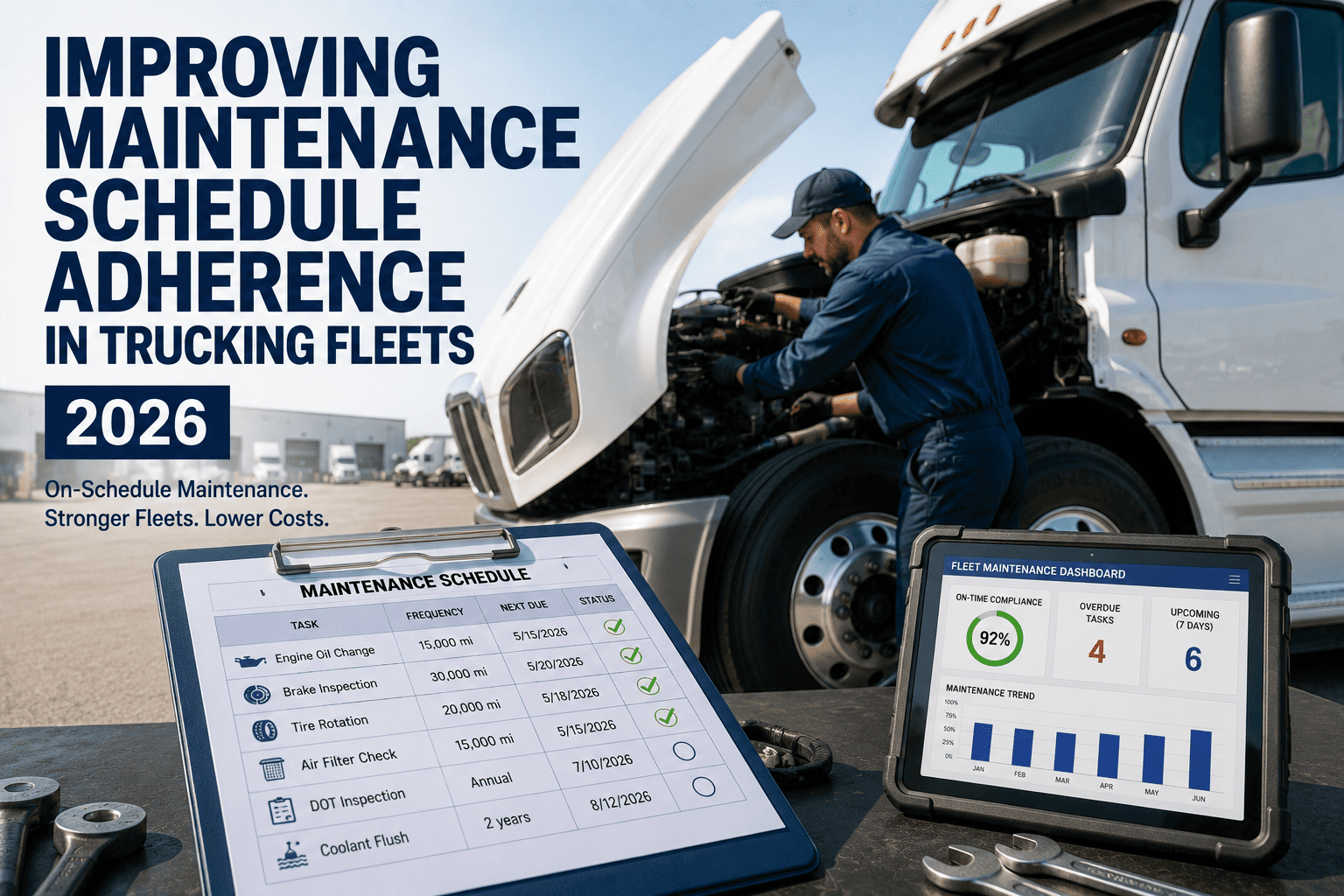
Preventive maintenance follows a schedule—typically based on mileage intervals (every 10,000 miles) or time intervals (every month)—to perform routine service before failures occur. Oil changes, filter replacements, brake inspections, fluid checks, and component wear analysis happen on predictable schedules when vehicles are not in revenue service. This approach costs more per service visit but dramatically reduces catastrophic failures.
The financial benefit of preventive maintenance operates through several mechanisms. First, scheduled service can be batched efficiently. A shop can sequence five oil changes and filter replacements in a single morning, with mechanics working at normal pace and parts ordered in bulk at standard rates. Emergency repairs scattered randomly throughout the year require mechanics to interrupt current work, source parts at rush rates, and operate at lower efficiency. Second, early detection prevents small problems from becoming expensive failures. A worn belt detected during routine inspection costs $150 to replace. That same belt failing while in service might destroy the alternator, water pump, and serpentine system, turning a $150 repair into a $2,500 catastrophe. Third, preventive maintenance eliminates downtime. Vehicles are scheduled for service during maintenance windows when they're not generating revenue anyway, rather than breaking down in random locations at the worst possible times.
Fourth, preventive maintenance preserves vehicle resale value. Trucks with complete service histories and no major component failures retain 15–25% more resale value than vehicles with a history of reactive repairs and emergency fixes. Fifth, planned maintenance optimizes technician utilization. Mechanics working from a predictable schedule can work steadily without the chaos of emergency breakdowns. They cost less per hour to employ when they're not being rushed and can be trained more effectively on diagnostic procedures. Sixth, preventive maintenance qualifies for better insurance rates. Insurers give discounts to fleets demonstrating systematic maintenance programs because accident and failure risk is lower with properly maintained equipment.
Key Financial Benefits of Preventive Maintenance
- Lower Repair Costs: Scheduled service uses standard pricing and bulk parts. Emergency repairs cost 30–50% more and often require towing, rush shipping, and premium labor rates.
- Reduced Downtime: Planned maintenance happens during non-revenue windows. Reactive repairs sideline vehicles at unpredictable times, losing revenue and creating operational disruption.
- Early Problem Detection: Routine inspections catch worn components before catastrophic failure. A worn bearing detected during PM costs $400 to replace; bearing failure can total an engine worth $8,000–$15,000.
- Predictable Budgeting: Preventive maintenance costs are known in advance and can be budgeted accurately. Reactive maintenance creates unpredictable emergency expenses that blow through monthly budgets.
- Improved Resale Value: Vehicles with complete PM histories retain 15–25% more resale value. Complete service records prove systematic care; reactive repair histories signal neglect.
- Better Insurance Premiums: Insurers reward fleets with documented PM programs through lower rates and better coverage terms because systematic maintenance reduces accident and failure risk.
The True Cost Comparison: Reactive vs Preventive Maintenance
Let's calculate the actual cost difference between reactive and preventive maintenance for a realistic fleet scenario. Assume a fleet of 10 Class 8 trucks operating long-haul interstate routes, each covering 120,000 miles per year. All trucks are 4 years old with an average replacement cost of $120,000 each.
| Cost Category | Reactive Maintenance | Preventive Maintenance | Difference |
|---|---|---|---|
| Routine Service (per vehicle/year) | $2,100 | $2,800 | +$700 |
| Emergency Repairs (per vehicle/year) | $8,500 | $1,200 | -$7,300 |
| Downtime Revenue Loss (per vehicle/year) | $12,000 | $2,400 | -$9,600 |
| Towing & Emergency Logistics (per vehicle/year) | $2,800 | $400 | -$2,400 |
| Accelerated Component Wear (per vehicle/year) | $1,600 | $300 | -$1,300 |
| TOTAL PER VEHICLE PER YEAR | $27,000 | $7,100 | -$19,900 |
| TOTAL FLEET (10 vehicles) | $270,000 | $71,000 | -$199,000 |
This comparison reveals the true cost differential. Preventive maintenance appears more expensive in routine service costs ($2,800 versus $2,100 per vehicle annually), but emergency repairs, downtime, and logistics costs completely reverse the economics. A fleet shifting from reactive to preventive maintenance saves approximately $199,000 annually on 10 vehicles, or $19,900 per truck per year. Over a 5-year truck lifecycle, that's $99,500 in savings per vehicle—nearly 83% of the truck's original purchase price.
Predictive Maintenance: Taking Prevention to the Next Level
Traditional preventive maintenance uses fixed schedules regardless of how each vehicle is actually operating. All trucks get oil changes every 10,000 miles or 30 days, whether they've been idling in stop-and-go delivery work or cruising at steady highway speeds. Predictive maintenance uses telematics data, engine diagnostics, and component wear analysis to predict exactly when each vehicle actually needs service, optimizing both timing and cost.
Predictive maintenance systems continuously monitor engine temperature, oil pressure, fuel consumption, tire pressure, brake wear, battery condition, and transmission performance. When diagnostic data shows a component is trending toward failure, the system triggers a maintenance alert before failure occurs. A bearing that typically lasts 200,000 miles can be replaced at 180,000 miles based on vibration analysis showing accelerated wear. This prevents the catastrophic failure that would happen at 220,000 miles while the truck is loaded with perishable cargo 500 miles from the maintenance facility.
Predictive maintenance also adapts to actual operating conditions. A truck doing highway work on flat terrain might need brake service every 18 months. The same truck model doing urban delivery work with constant stopping might need brake service every 9 months. Fixed preventive schedules miss this nuance and cause either over-maintenance or under-maintenance. Predictive systems adjust scheduling based on actual brake wear patterns detected through telematics.
The financial advantage of predictive maintenance is substantial. Reducing unnecessary maintenance on vehicles operating in favorable conditions saves 20–30% of preventive maintenance costs. Improving early detection accuracy prevents emergency repairs that are 4–5 times more expensive than planned service. Optimizing maintenance scheduling around peak revenue periods means fewer trucks are offline during high-utilization weeks. Fleets implementing predictive maintenance typically report 25–35% total maintenance cost reduction compared to traditional preventive schedules, and 50–70% reduction compared to reactive maintenance.
Predictive Maintenance ROI Drivers
- 25–30% Reduction in Preventive Service Costs: Telematics eliminate unnecessary maintenance on vehicles operating optimally. A truck cruising highway routes doesn't need urban delivery-level brake maintenance.
- 50–70% Reduction in Emergency Repairs: Early detection catches wear patterns before failures occur. Predictive alerts trigger service while components are worn but functional, preventing catastrophic failures.
- Optimal Scheduling Around Revenue Operations: Maintenance is scheduled during known low-utilization periods rather than randomly when failures occur. Peak revenue weeks stay fully staffed and operational.
- Extended Component Life: Vehicles maintained predictively based on actual wear patterns last 15–25% longer than those on fixed schedules, extending vehicle lifecycle and reducing replacement frequency.
- Reduced Insurance Claims: Predictive maintenance prevents accidents caused by brake failure, tire blowout, or engine problems. Lower claim frequency improves insurance terms and reduces premiums.
- Better Technician Utilization: Predictive scheduling creates steady, optimized work for maintenance teams. Mechanics spend less time on emergency repair chaos and more time on efficient planned service.
How to Calculate Maintenance Costs for Your Fleet
Step 1: Define Your Current Maintenance Baseline Collect 12 months of maintenance expense data. Include all repair costs, parts, labor, towing, and vehicle downtime. Separate routine maintenance (oil changes, filter replacements, scheduled inspections) from emergency repairs. Calculate total cost per vehicle and identify which vehicles have disproportionately high emergency repair costs.
Step 2: Quantify Hidden Costs of Reactive Maintenance Calculate downtime costs by multiplying the number of unexpected breakdowns by average days sidelined by average daily revenue per vehicle. Include towing costs, emergency logistics, lost customer deliveries, and penalty clauses. These hidden costs often exceed direct repair costs by 2 to 3 times.
Step 3: Research Preventive Maintenance Scheduling for Your Vehicle Types Manufacturer maintenance recommendations provide baseline schedules. Service bulletins and technical forums reveal common failure points and optimal service intervals. A diesel engine specialist might recommend fuel filter service every 15,000 miles instead of the manufacturer's 20,000 miles based on actual field experience with fuel quality issues.
Step 4: Model Preventive Maintenance Costs Apply manufacturer maintenance schedules to your annual mileage. Include all scheduled services: oil changes, filter replacements, fluid checks, brake inspections, tire rotations, belt replacements, transmission service. Include labor rates for your region. This gives a realistic estimate of preventive maintenance costs.
Step 5: Calculate ROI of Shifting to Preventive Maintenance Compare total current costs (routine plus emergency plus downtime plus logistics) to projected preventive maintenance costs. The difference is your ROI. Most fleets show 3 to 5 year payback periods, with positive ROI in year one through dramatically lower emergency repair costs.
Step 6: Implement Telematics for Predictive Optimization Once preventive maintenance is baseline, add telematics and diagnostic monitoring. Predictive data identifies which vehicles and components are high-risk and need more frequent service, and which are operating optimally and can extend intervals. This layer of optimization adds 20–30% additional savings on top of the preventive maintenance baseline.
Common Challenges in Shifting from Reactive to Preventive
Upfront Cost Shock: Moving to systematic preventive maintenance requires higher initial spending. A fleet accustomed to paying $200,000 annually in reactive repairs must initially budget $280,000 for full preventive coverage. This increase looks expensive until month four when emergency repair costs collapse. The solution is understanding that preventive costs are investment, not expense, with full payback by month 6–8 through avoided emergency repairs.
Resistance from Operations Staff: Dispatchers accustomed to running vehicles until failure resist scheduling maintenance that removes trucks from service. A dispatcher sees preventive maintenance as lost revenue; maintenance planning requires educating operations that scheduled maintenance prevents the catastrophic downtime of emergency failure. Strong communication about the economics usually resolves this resistance.
Inconsistent Compliance with Preventive Schedules: Some facilities execute preventive maintenance rigorously; others defer scheduled service when loads are pending. Enforcement requires clear policies and metrics. If preventive maintenance is optional, drivers and operations teams will eliminate it when busy. Making maintenance non-negotiable requires executive commitment and metrics tracking to ensure compliance.
Inadequate Maintenance Facility Capacity: Many fleets discover their in-house or contracted maintenance facilities cannot execute aggressive preventive schedules without hiring additional technicians. This requires planning. Budget for additional labor, cross-training mechanics, or partnering with additional service providers before preventive maintenance demand exceeds facility capacity.
FleetRabbit Preventive Maintenance Automation
FleetRabbit automates preventive maintenance scheduling by creating work orders based on manufacturer intervals or custom specifications. The system tracks each vehicle's mileage, engine hours, and time since last service. When a vehicle approaches a scheduled maintenance point, FleetRabbit automatically generates a maintenance work order with all required service items, notifies maintenance staff, and tracks completion. This eliminates the manual calendar management that often causes missed services.
FleetRabbit integrates maintenance records with telematics data. Engine diagnostic codes are captured automatically and correlated with maintenance history. If a truck shows declining fuel economy, the system flags this pattern and suggests fuel system inspection. If tire pressure sensors show one tire consistently low, a work order for tire inspection is generated. This data integration converts maintenance management from a calendar exercise into intelligence-driven decision making.
Historical maintenance data in FleetRabbit reveals which vehicles have recurring issues, which components fail prematurely, and which service intervals are optimal for your fleet's specific operating conditions. A fleet might discover that a particular brand of vehicle requires transmission service every 40,000 miles instead of the recommended 60,000 miles. Adjusting maintenance intervals based on your actual data prevents premature failures while eliminating over-maintenance on vehicles operating optimally.
FleetRabbit's mobile app allows maintenance staff to document completed work, log parts used, record labor hours, and attach photos of defect corrections. This creates an auditable record of all maintenance performed, satisfying DOT compliance requirements and providing evidence of systematic maintenance if accidents occur. Parts inventory integration shows exactly what materials are in stock and what needs to be ordered, eliminating delays from missing parts.
FleetRabbit Preventive Maintenance Features
- Automatic work order generation based on mileage or time intervals
- Customizable maintenance schedules for different vehicle types and makes
- Real-time mileage tracking triggers maintenance alerts automatically
- Integration with engine diagnostics for early issue detection
- Mobile work order completion with photo documentation and parts logging
- Parts inventory management to prevent delays from missing materials
- Maintenance history and trend analysis by vehicle and component
- DOT compliance audit trails with complete service documentation
- Executive dashboard showing maintenance costs, uptime, and compliance status
Preventive Maintenance by Fleet Type and Industry
Long-Haul Trucking: High-mileage vehicles require frequent oil changes (every 10,000–15,000 miles), fuel system service, and brake inspection. Engines run continuously at steady RPMs, creating predictable wear patterns. Preventive schedules should emphasize drivetrain components and brake systems. Predictive diagnostics can identify declining fuel economy indicating fuel system issues.
Local Delivery and Urban Fleets: Stop-and-go operations create accelerated brake wear and transmission stress. Preventive schedules should emphasize brakes, transmission fluid, and cooling system. Predictive monitoring of brake temperature and brake pressure patterns enables optimized service intervals. Many urban vehicles need brake service 2–3 times more frequently than long-haul equivalents.
Utility and Field Service Fleets: Highly variable operating conditions (highway, job sites, parking) create unpredictable wear patterns. Preventive maintenance should be combined with predictive monitoring. Utilization patterns are irregular (high activity some weeks, idle others), requiring flexible scheduling. Predictive data showing which vehicles are operating in harsh conditions enables more aggressive maintenance for those assets.
Construction and Equipment Transport: Heavy loading and challenging terrain accelerate wear on suspension, brakes, and driveline. Preventive maintenance should emphasize undercarriage inspection, suspension service, and driveline components. Predictive monitoring of suspension load and braking intensity identifies high-stress vehicles requiring more frequent service.
Refrigerated Transport and Specialized Cargo: Refrigeration units and specialized equipment add complexity. Preventive schedules must cover both vehicle systems and auxiliary equipment. Refrigeration unit compressor service and seal inspection are critical but often neglected. Predictive monitoring of refrigeration unit temperature stability and compressor efficiency detects problems before cargo spoilage occurs.
Q: How much can preventive maintenance actually save my fleet?
Most fleets save $15,000–$25,000 per vehicle annually by shifting from reactive to preventive maintenance. The savings come from eliminating emergency repair premiums, preventing catastrophic failures, and reducing downtime. A 20-vehicle fleet typically saves $300,000–$500,000 annually. See exact savings for your fleet by booking a maintenance ROI assessment.
Q: What's the difference between preventive and predictive maintenance?
Preventive maintenance follows fixed schedules (every 10,000 miles or 30 days). Predictive maintenance uses telematics and diagnostics to determine exactly when each vehicle needs service based on actual wear patterns. Predictive adds 20–30% additional savings on top of preventive baseline by eliminating unnecessary maintenance on vehicles operating optimally.
Q: Do I need specialized tools or software to implement preventive maintenance?
FleetRabbit automates preventive maintenance tracking and work order generation based on mileage, engine hours, or time intervals. The system notifies maintenance staff when service is due and tracks completion. Start free with up to 3 vehicles to see how maintenance scheduling works on your fleet.
Q: How do I calculate ROI for preventive maintenance implementation?
Compare your current annual maintenance spending (routine plus emergency plus downtime) to projected preventive maintenance costs. Add telematics data showing actual vehicle operating patterns, and calculate emergency repairs prevented through early detection. Most fleets see positive ROI by month 4–6 as emergency repair costs collapse.
Q: What happens if I skip scheduled preventive maintenance?
Skipping preventive maintenance typically results in catastrophic failures that cost 4–5 times more than planned service. A skipped $300 brake pad replacement becomes a $2,000 emergency repair when brakes fail. One major failure often costs more than six months of preventive maintenance budgets, making maintenance deferral economically irrational.
Q: Can predictive maintenance prevent all unexpected breakdowns?
Predictive maintenance prevents 80–90% of component-related failures through early detection of wear patterns. Random failures (tire blowout from road debris, broken spring from road hazard) cannot be predicted but are uncommon. The vast majority of fleet downtime comes from preventable wear issues that predictive systems catch reliably.
Eliminate Costly Emergency Repairs with Preventive Maintenance Automation
FleetRabbit automates preventive maintenance scheduling and tracks service completion. Keep your fleet running on schedule and avoid the 4–5x cost premium of reactive repairs that drain your budget and sideline vehicles.
Fleet Maintenance Compliance and Best Practices
DOT regulations require carriers to maintain vehicles in safe operating condition. This is not just good practice; it's legal requirement under 49 CFR 396. Maintenance records must be retained for at least 12 months and be retrievable for inspection. Reactive maintenance strategies increase the risk of compliance violations because vehicles are less likely to meet safety standards if they're maintained only after failures are reported. Preventive maintenance creates documented evidence of systematic safety practices that auditors want to see.
Best practice is combining preventive maintenance schedules with post-trip driver inspections and pre-trip safety checks. Drivers report visible issues (leaking fluids, warning lights, unusual sounds) that supplement the maintenance schedule. A driver noting soft brakes during pre-trip triggers immediate inspection rather than waiting for the next scheduled brake service. This layered approach catches the maximum number of problems before they become catastrophic.
Maintenance optimization should include regular review of failure patterns. If a particular component consistently fails before the scheduled replacement interval, the interval should be shortened for that vehicle. If components regularly exceed their replacement interval with no failures, intervals can be extended without increasing risk. This data-driven tuning of maintenance schedules extracts maximum efficiency from your maintenance budget.
Fleet Maintenance Management Solutions
Making the Transition from Reactive to Preventive Maintenance
Month 1: Baseline Assessment and Schedule Development Audit 12 months of maintenance spending. Separate routine maintenance from emergency repairs. Calculate true costs including downtime, towing, and lost revenue. Research maintenance schedules for your vehicle types and years. Develop a realistic preventive maintenance plan based on manufacturer recommendations and your actual operating patterns.
Month 2: Infrastructure and Facility Planning Assess current maintenance facility capacity. Identify capacity gaps where preventive schedules cannot be executed without hiring additional technicians. Plan for parts inventory expansion. Establish relationships with parts suppliers for bulk ordering at preventive maintenance rates. Configure FleetRabbit or similar systems for automated work order generation and tracking.
Month 3: Pilot Program with Subset of Fleet Launch preventive maintenance with 3–5 vehicles while continuing reactive maintenance on others. Use this period to validate maintenance schedules, identify facility capacity issues, and refine processes. Track maintenance costs, downtime, and emergency repairs on pilot vehicles compared to control vehicles still on reactive maintenance.
Month 4: Staff Training and Communication Educate dispatchers, maintenance staff, and drivers about the new preventive maintenance strategy. Explain the economics and how preventive maintenance benefits operations (fewer emergencies, more predictable costs). Train maintenance teams on new scheduling systems and work order procedures. Establish performance metrics (maintenance compliance, cost per vehicle, uptime percentage) to track the transition.
Month 5: Fleet-Wide Rollout Expand preventive maintenance to all vehicles. Implement full telematics and diagnostic monitoring. Monitor compliance with preventive schedules closely. Respond rapidly to any facility capacity constraints. Track maintenance costs, emergency repairs, and vehicle downtime to validate ROI projections.
Ongoing: Continuous Optimization Analyze maintenance data monthly to identify trends. Adjust maintenance intervals based on actual failure patterns. Expand predictive capabilities using telematics data. Report ROI to leadership showing cost savings and uptime improvements. Plan expansion of maintenance facility if needed to support fleet growth.