The FMCSA's record retention requirements form a foundational compliance obligation that every commercial motor carrier must satisfy — not periodically during audits, but continuously, from the moment records are created through the end of their mandatory retention period. Carriers who manage record retention informally — storing documents in physical files organized by personal preference rather than regulatory category, without systematic tracking of retention expiration dates or secure disposal procedures — consistently discover compliance gaps only when an FMCSA compliance review reveals records that should have been maintained, documents that should have been purged but were not, or retention systems that cannot produce required records within the timeframes auditors expect. Book a demo to see how FleetRabbit's digital documentation, maintenance records, and compliance management capabilities support FMCSA-compliant record retention for trucking operations.
FMCSA record retention encompasses driver qualification files, hours of service records, drug and alcohol testing records, vehicle maintenance records, accident registers, and financial safety records — each with specific retention periods ranging from 1 year to the life of the motor carrier. This guide provides a complete reference for each record category's retention requirement, the applicable regulatory citation, storage and security standards, audit production expectations, and the secure disposal procedures required at retention period expiration. FleetRabbit's role in maintaining digital records for key categories is integrated throughout.
The Complete FMCSA Record Retention Reference Guide
FMCSA regulations establish retention requirements across dozens of record categories in Parts 382, 383, 390, 391, 395, 396, 397, and 398 of Title 49 CFR. The retention periods range from 1 year (certain HOS records) to the carrier's existence (authority filing), and the specific counting method — from the record creation date, from the driver's termination date, from the last day of employment, or from the date of the activity — varies by record category in ways that create genuine compliance complexity for fleet managers who have not mapped their specific retention obligations against regulatory text. The table below provides the primary record categories, retention periods, and regulatory citations that commercial carriers must maintain.
| Record Type | CFR Citation | Retention Period | Period Counts From | Key Notes |
|---|---|---|---|---|
| Driver application for employment | 391.51(b)(1) | 3 Years | Date of application | Retained whether driver was hired or not |
| Motor vehicle record (MVR) — initial | 391.51(b)(2) | 3 Years | Date of hire | Must be obtained before driver operates CMV |
| Annual MVR review | 391.51(b)(8) | 3 Years | Date of review | Annual review record and evaluation signature required |
| Road test certificate or equivalent | 391.51(b)(3) | Employment + 3 Years | Date of driving test | CDL license accepted as equivalent to road test |
| Medical examiner's certificate (DOT physical) | 391.51(b)(6) | 3 Years | Date of examination | All certificates retained, including expired — not just current |
| Annual driver's certification of violations | 391.27 | 3 Years | Date of certification | Annual certification — all prior years retained for 3-year window |
| Previous employment verification | 391.51(b)(7) | 3 Years | Date of verification | Must cover previous 3 years of employment history |
| Record Type | CFR Citation | Retention Period | Period Counts From | Key Notes |
|---|---|---|---|---|
| ELD records (driver logs) | 395.22(j)(2) | 6 Months | Date of record | ELD data must be accessible to enforcement during the 6-month period |
| Supporting documents (bills of lading, fuel receipts) | 395.11 | 6 Months | Date of document | Documents corroborating ELD HOS records must be retained |
| ELD malfunction and data diagnostic events | 395.22(j)(3) | 6 Months | Date of event | Device malfunction records — diagnostic event logs from ELD |
| Records of duty status (paper waiver operations) | 395.8 | 6 Months | Date of record | Applies only to operations with valid ELD exemptions |
| Record Type | CFR Citation | Retention Period | Period Counts From | Key Notes |
|---|---|---|---|---|
| Positive drug test results | 382.401(b)(1) | 5 Years | Date of test | All documents related to positive result retained — including MRO correspondence |
| Refusals to test | 382.401(b)(1) | 5 Years | Date of refusal event | Refusal documentation equivalent to positive result for retention |
| Alcohol tests at 0.02 or greater | 382.401(b)(1) | 5 Years | Date of test | Confirmation test results — screening test records retained 1 year |
| Negative drug and alcohol test records | 382.401(b)(2) | 1 Year | Date of test | Annual testing records — not the full 5-year retention of positive results |
| SAP evaluation and referral records | 382.401(b)(1) | 5 Years | Date of SAP activity | Substance Abuse Professional records retained with the positive test records they relate to |
| Testing program annual summary | 382.403 | 5 Years | Year of summary | MIS data form submitted to FMCSA upon request — retain all annual summaries |
| Record Type | CFR Citation | Retention Period | Period Counts From | Key Notes |
|---|---|---|---|---|
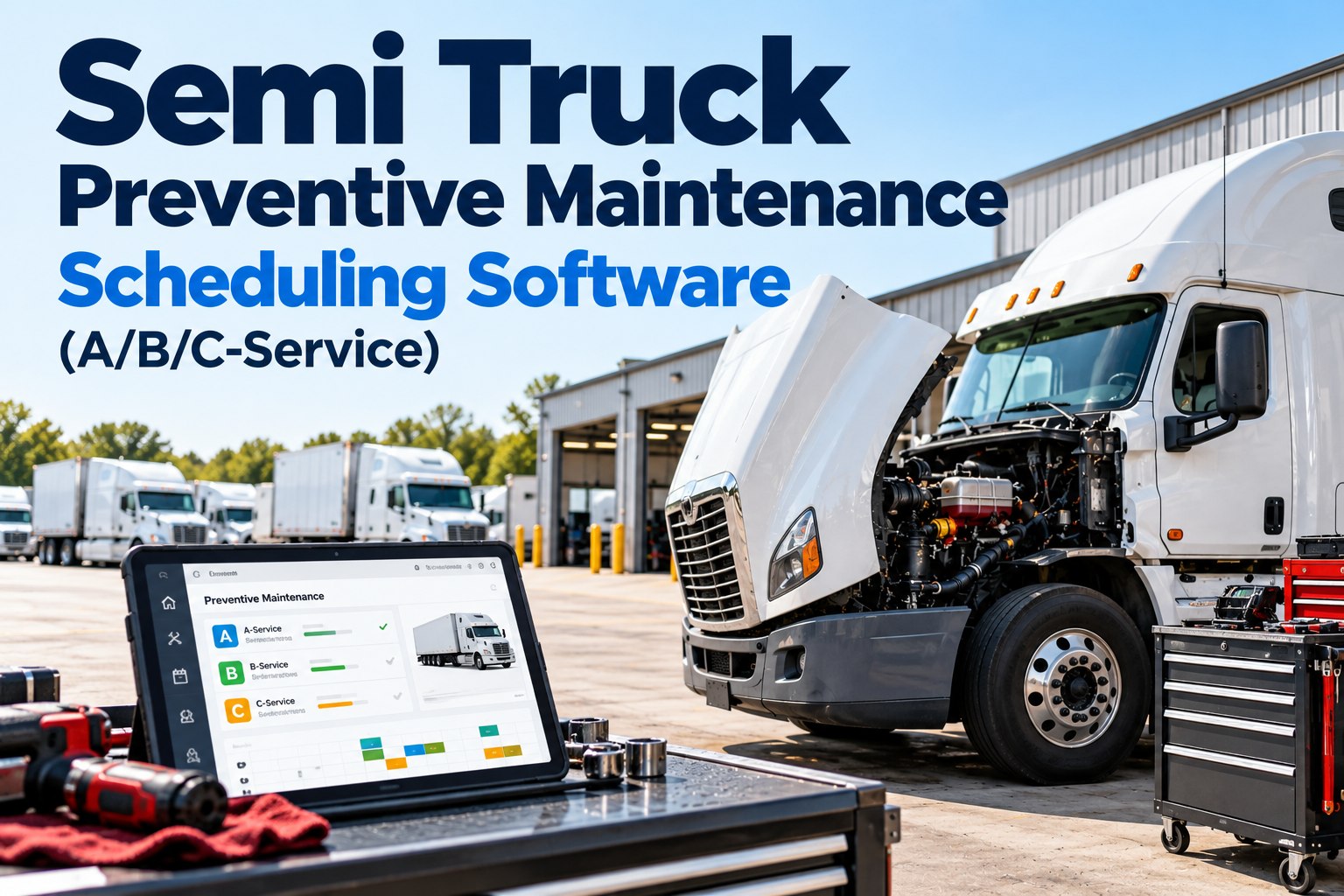
| Systematic inspection and maintenance records | 396.3(b) | 1 Year + While Vehicle Operated | Date of inspection | Must follow vehicle while in carrier's possession — move with vehicle at sale |
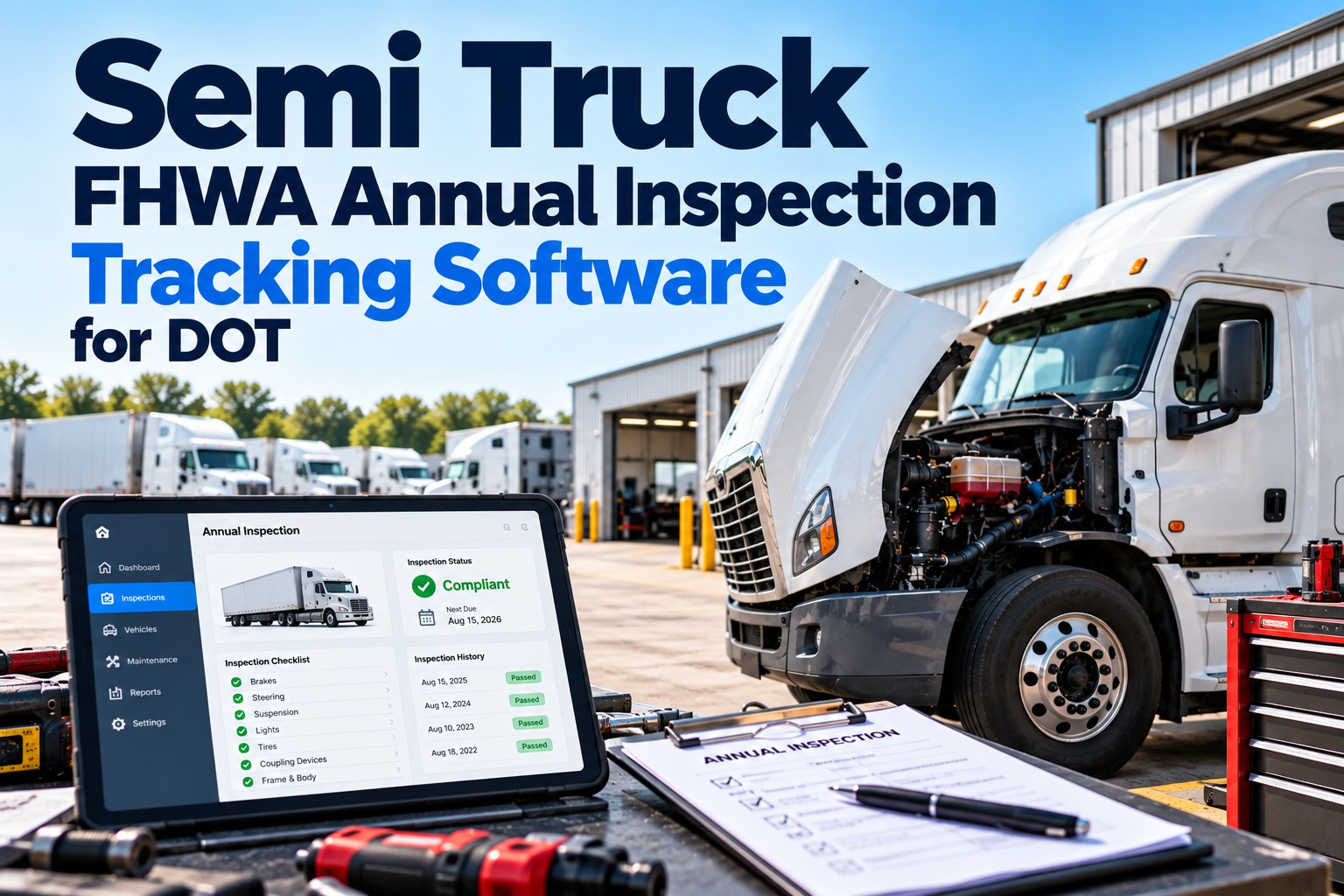
| Annual vehicle inspection | 396.21 | 14 Months | Date of inspection | Current and immediately prior inspection retained — 14 months ensures overlap coverage |
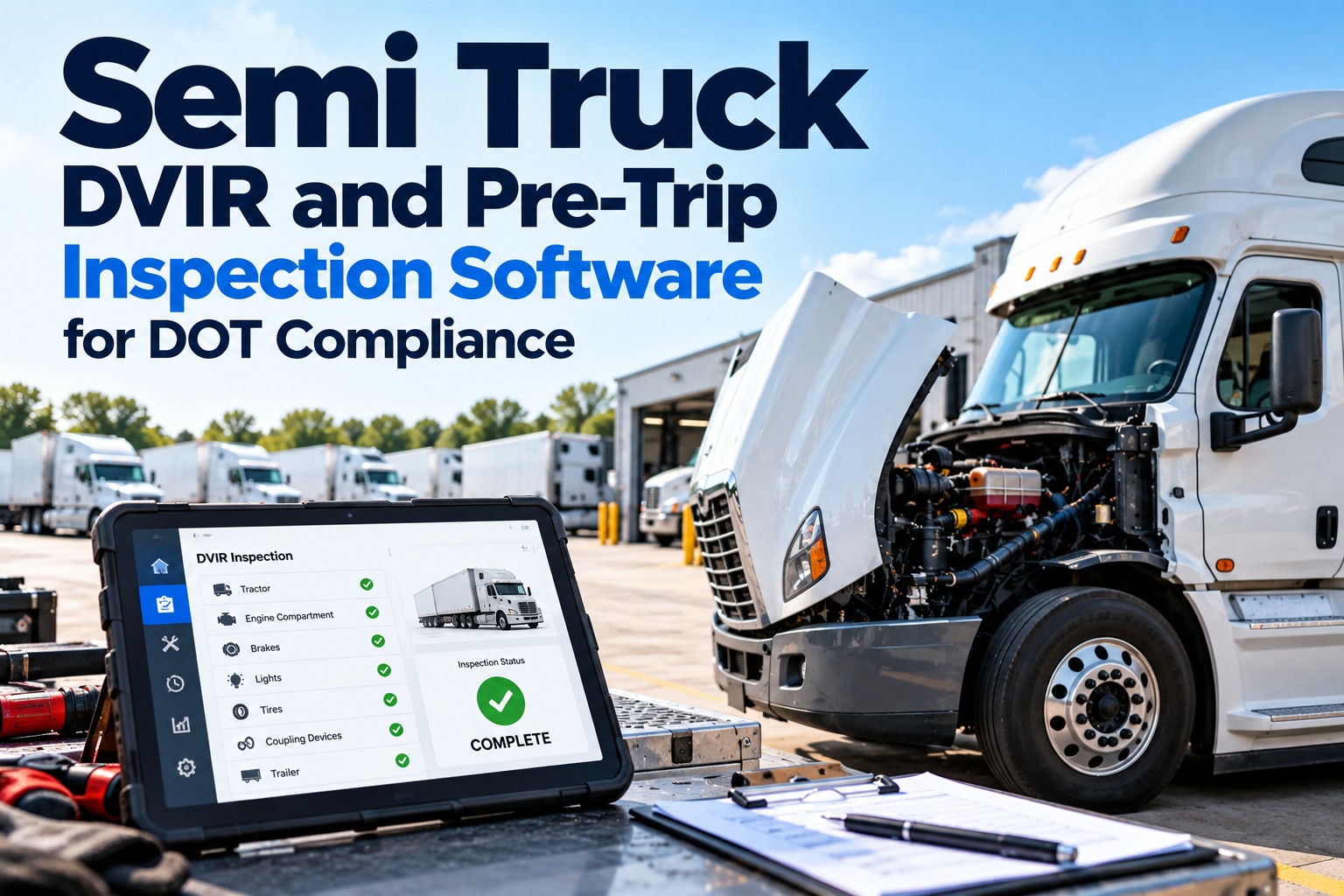
| Driver vehicle inspection reports (DVIR) | 396.11(c) | 3 Months | Date of report | Pre-trip and post-trip reports — defect certification signature included |
| Leased vehicle inspection records | 396.3(b) | 1 Year | Date of inspection | Inspection responsibility follows operating carrier — lessor records may not satisfy lessee obligation |
| Record Type | CFR Citation | Retention Period | Period Counts From | Key Notes |
|---|---|---|---|---|
| Accident register | 390.15(b)(2) | 3 Years | Date of accident | All FMCSA-recordable accidents — register must be immediately available at principal office |
| Accident documentation and supporting records | 390.15(b)(1) | 3 Years | Date of accident | Photos, witness statements, police reports, testing records linked to each accident |
| Post-accident drug and alcohol testing | 382.401(b)(1) | 5 Years (positive) / 1 Year (negative) | Date of test | Positive and refusal records follow standard 5-year drug and alcohol retention rule |
Storage Standards: Physical, Digital, and Hybrid Records
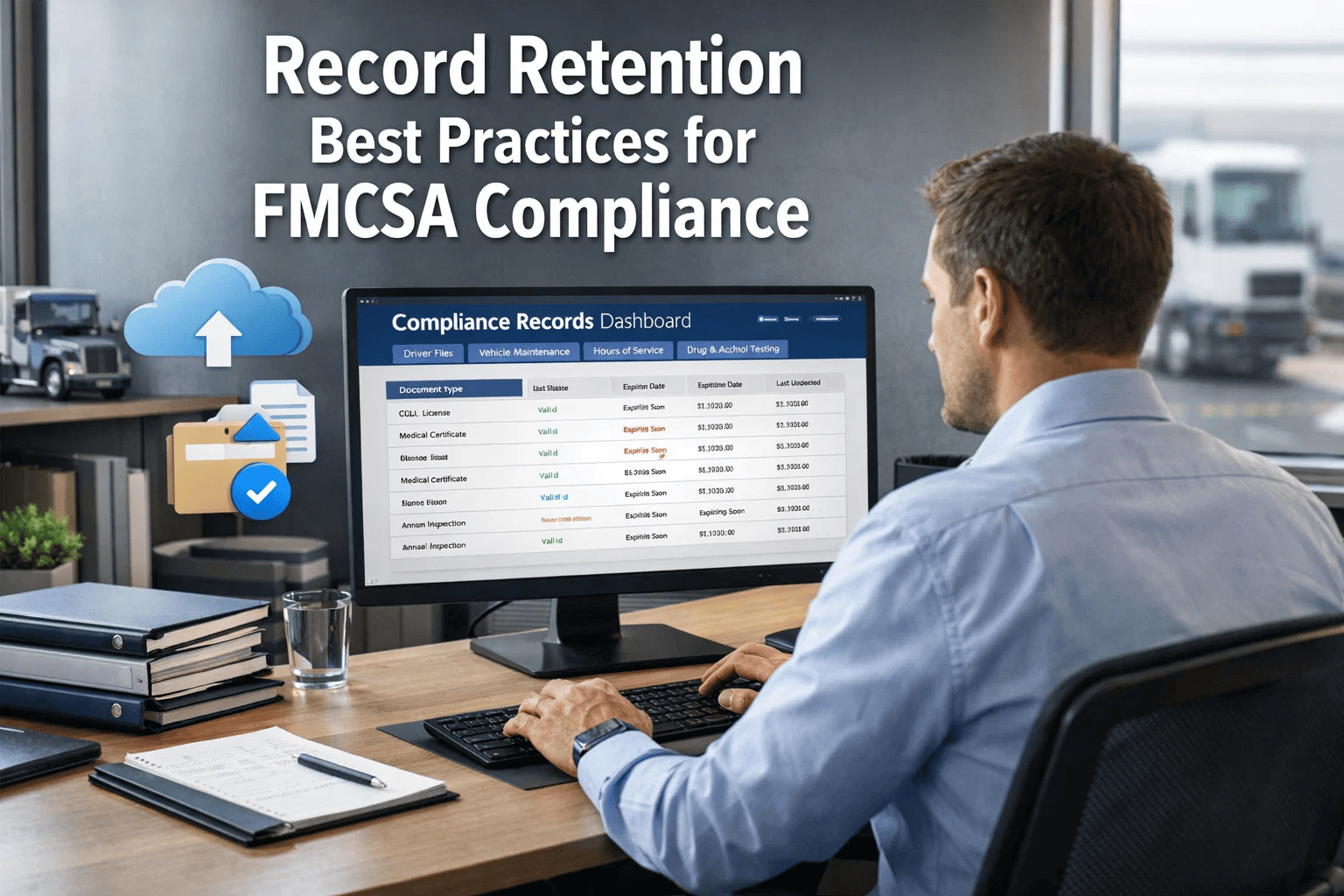
FMCSA regulations do not specify whether records must be maintained in physical or electronic form — they specify that records must be maintained in a manner that allows their retrieval and production in a readable format upon request by an authorized official. This technology-neutral standard means carriers can satisfy retention requirements with physical filing systems, electronic document management systems, fleet management software with document storage capabilities, or hybrid approaches that use digital records for active records and physical backup for long-term retention categories. The practical advantage of electronic record systems — immediate retrieval by any search parameter, elimination of physical storage cost, protection against physical record loss through redundant backup, and audit production speed — makes digital record management the operationally superior approach for most carriers of meaningful scale.
FleetRabbit generates and retains digital records for vehicle maintenance work orders, DVIR inspection reports, PM service records, and corrective action documentation — the primary vehicle maintenance and inspection record categories that 49 CFR 396 requires. These records are retained within the Fleet Rabbit platform with the vehicle asset and driver records they relate to, enabling immediate production of any specific record or comprehensive export of all records in a record category for auditor review without requiring manual file retrieval from physical locations. For record categories that FleetRabbit does not generate directly — driver qualification files, drug and alcohol testing records, and HOS documentation managed through ELD platforms — the carrier's record management system should maintain these in either dedicated document management software or organized physical files that satisfy the regulatory production requirements.
Maintain FMCSA-Compliant Records Without the Physical File Infrastructure
FleetRabbit's digital maintenance records, DVIR documentation, and inspection history provide the vehicle maintenance and inspection record retention compliance that 49 CFR 396 requires — searchable, immediately retrievable, and stored with the asset records they document. Book a demo to review FleetRabbit's record retention capabilities for your fleet's specific compliance categories.
Building an Audit-Ready Record Management System
FMCSA compliance reviews — whether initiated as safety audits, compliance reviews triggered by adverse SMS data, or investigative reviews following accidents — require carriers to produce specified records within timeframes that do not accommodate multi-day file searches. The standard compliance review allows carriers 14 days to produce requested records for off-site review, and roadside enforcement requests must be satisfied immediately or within the brief window law enforcement allows at the inspection location. Carriers whose record management systems require manual file searches across physical filing systems at multiple locations — or worse, whose records are stored in departed employees' email archives and personal computers — consistently fail to produce records within required windows and receive additional citation charges for records unavailability separate from the underlying compliance issues being reviewed.
An audit-ready record management system has three characteristics: completeness (all required records for all applicable employees and vehicles exist within the required retention period), accessibility (records are retrievable by record type, date range, driver name, or vehicle identifier within minutes), and organization (records are maintained in a defined structure that allows rapid production of any record category without requiring reconstruction from source documents). FleetRabbit's vehicle maintenance and inspection records satisfy all three characteristics for the records the platform generates — but carriers must apply the same discipline to the driver qualification and drug and alcohol testing records that are managed outside the fleet management platform.
Driver Qualification File: The Most Commonly Deficient Record Category
Driver qualification files (DQ files) are consistently among the most frequently cited record categories in FMCSA compliance reviews — both for missing required documents and for documents present but with regulatory deficiencies (incomplete forms, missing signatures, incorrect lookback periods). Every commercial carrier must maintain a qualification file for each driver it employs, containing specific documents defined in 49 CFR 391.51. The DQ file requirement begins at the application stage — before employment — and continues throughout the driver's employment and for three years after the driver's last day of service.
FleetRabbit's team management module maintains driver credential and certification records — medical certificate expiration tracking, license expiration alerts, and training documentation — that support the compliance monitoring function of the DQ file, though the full DQ file with regulatory documents must be maintained in the carrier's designated qualification file system. As medical certificates approach expiration, FleetRabbit's compliance alerts notify fleet managers before the expiration date — ensuring drivers do not operate CMVs on expired medical certificates, which appears in the Driver Fitness BASIC and can trigger automatic disqualification in broker carrier programs.
Frequently Asked Questions
Build Record Retention Compliance Into Your Fleet Operations — Not Your Audit Preparation
FleetRabbit generates, stores, and makes immediately retrievable the vehicle maintenance, inspection, and corrective action records that FMCSA compliance reviews examine — creating the digital maintenance record foundation that auditors expect to find during compliance reviews.