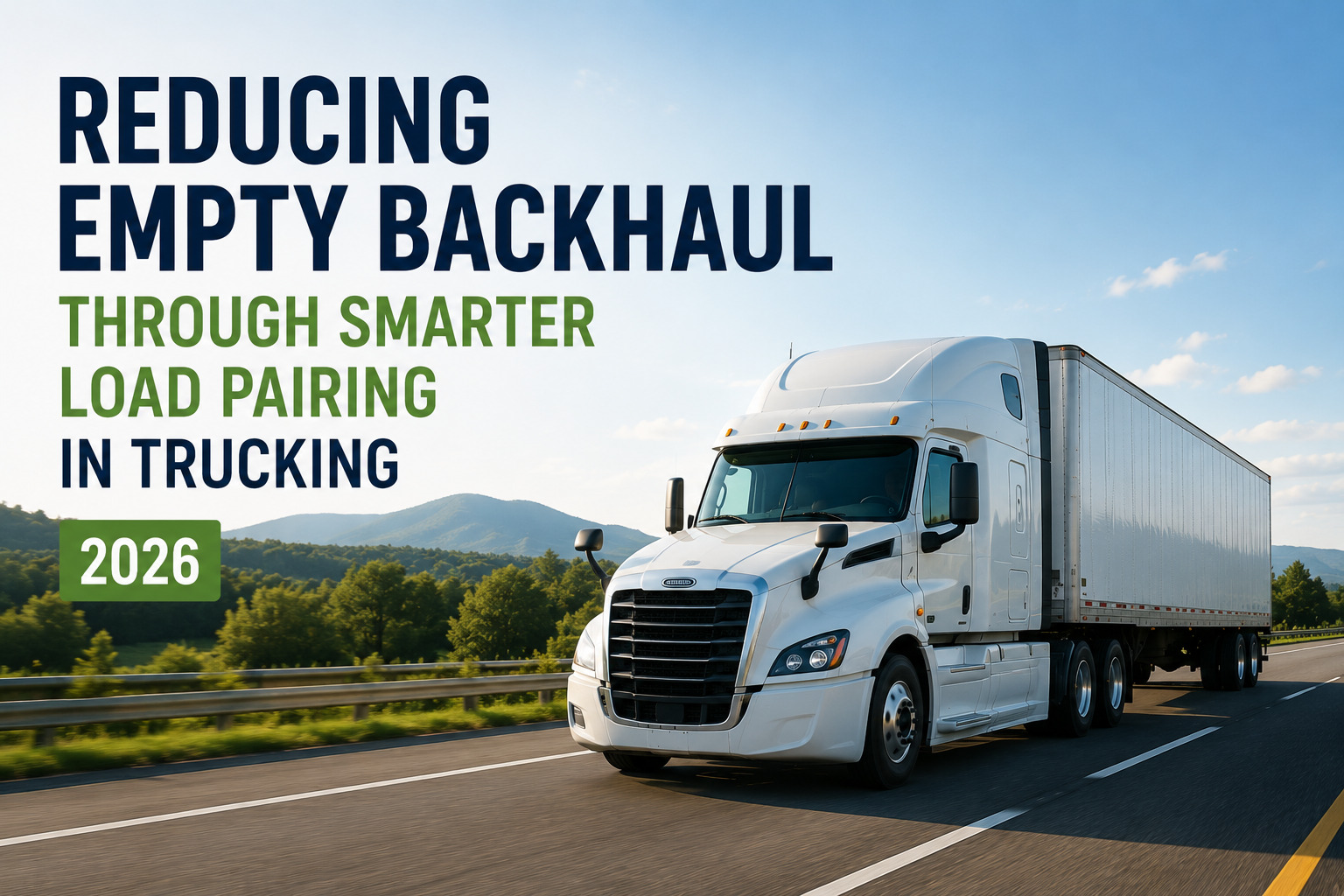
Empty miles are the silent profit killer in trucking. A truck rolls out fully loaded, delivers on time, and then drives back with nothing in the trailer. That return trip still burns fuel, still wears tires, and still pays the driver, but it earns nothing. Industry research puts empty miles at roughly 15 to 35 percent of all trucking miles nationwide, and every one of those miles is a cost with no revenue attached. Smarter load pairing changes that equation by matching outbound deliveries with profitable return freight before the truck ever leaves the dock.
Why Empty Backhaul Miles Are Draining Your Margins
A deadhead mile is any mile a truck drives without a paying load. Fuel still gets consumed, the engine still accrues hours, and the driver's clock still runs, but none of it generates income. Lane imbalance is the root cause. Freight rarely flows evenly in both directions between two points, so a truck that drops a load in a freight-light region often finds nothing to carry back. Over a full year, this adds up fast. A truck running 100,000 miles annually at a 20 percent deadhead rate logs 20,000 unpaid miles, and at a typical operating cost near 1.85 dollars per mile, that is roughly 37,000 dollars spent with zero revenue to show for it.
The damage does not stop at fuel and wear. Every empty mile is also an opportunity cost, since that same mile could have carried freight at 1.50 dollars per mile or more. Multiply the lost revenue and the wasted operating cost together, and a single truck running consistently high deadhead can quietly cost a fleet well over six figures a year. For a 50-truck operation, that gap can climb into the millions. Sign up free to see exactly where your fleet is leaking miles.
What Smarter Load Pairing Actually Means
Load pairing is the practice of matching an outbound delivery with a specific return load before the truck even reaches its destination. Instead of waiting until a driver is empty and searching reactively, dispatch teams and software systems work backward from the delivery point, scanning nearby shippers, lane history, and rate data to line up the next paying mile in advance. The goal is simple: a truck should rarely, if ever, move without freight in the trailer.
See Your Real Deadhead Percentage
Most fleets underestimate how many miles they actually run empty until they see the number broken out by lane. FleetRabbit surfaces it automatically. Sign up for free and get visibility into every empty mile across your fleet this week.
Manual Backhaul Hunting vs. Systematic Load Pairing
Most small and mid-size fleets still find return loads the same way they did a decade ago: a dispatcher waiting for a driver to call in empty, then scrambling through load boards and phone calls to find anything that fits. This reactive approach works occasionally, but it caps out fast as a fleet grows past a few dozen trucks, and it consistently leaves profitable freight on the table simply because nobody had time to look for it sooner.
- Search for return freight only after the truck is already empty
- Dispatcher relies on memory and a handful of regular brokers
- No visibility into which lanes consistently run empty
- Rate negotiation happens under time pressure, often at a loss
- Deadhead typically sits at 16 to 20 percent of total miles
- Return freight search begins while the truck is still loaded outbound
- Every lane is scored using historical rate and freight density data
- Recurring dead zones are flagged and priced into outbound rates
- Matches are ranked by profitability before a driver ever calls in
- Deadhead typically drops to 8 to 12 percent of total miles
The Lane Imbalance Problem Nobody Plans Around
Freight does not move symmetrically across the country. Agricultural regions ship heavy outbound but receive comparatively little. Port markets import far more than they export. Manufacturing corridors often send out more freight than comes back in. A fleet that does not track these patterns keeps getting surprised by the same dead zones over and over, sending trucks into markets where a paying return load barely exists.
Tracking lane imbalance turns a recurring surprise into a planning input. Once a fleet knows that a particular delivery market consistently produces weak outbound freight, that knowledge can be priced directly into the outbound rate, or the truck can be rerouted toward a market with stronger backhaul potential. Either way, the loss stops repeating itself month after month.
What a Smart Load Pairing System Actually Tracks
Pairing loads profitably requires juggling several variables at once, which is exactly why manual dispatch struggles to keep up once a fleet grows past a handful of trucks. A pairing system needs to weigh proximity, timing, equipment compatibility, and profitability simultaneously, for every truck, every day.
Turning the Numbers Into Real Savings
The financial case for load pairing becomes clear once it is broken down per truck. A single empty return leg of 300 miles at typical operating costs runs roughly 550 dollars in fuel, wear, and driver pay with zero revenue. Pair that same leg with freight paying even a modest 1.50 dollars per mile, and the truck earns 450 dollars instead, a swing of around 1,000 dollars on one leg alone. Multiply that across hundreds of legs a year, across an entire fleet, and the gap between reactive dispatch and systematic pairing becomes one of the largest controllable cost factors a carrier has.
| Fleet Size | Deadhead Reduced From | Deadhead Reduced To | Estimated Annual Recovery |
|---|---|---|---|
| 10 trucks | 18% | 9% | $95,000 - $135,000 |
| 25 trucks | 18% | 9% | $240,000 - $340,000 |
| 50 trucks | 18% | 9% | $480,000 - $680,000 |
| 100 trucks | 18% | 9% | $960,000 - $1,360,000 |
Estimates based on 100,000 average annual miles per truck and a blended operating cost of approximately 1.85 dollars per mile. Actual recovery varies by lane mix, equipment type, and regional freight density.
Building a Load Pairing Process That Actually Sticks
Technology alone does not fix deadhead miles. The fleets that see the biggest improvement pair the right tools with a few consistent habits that keep return freight top of mind at every stage of a trip, not just after the truck goes empty.
Build return-load search into dispatch the moment an outbound load is confirmed. Waiting until the driver calls in empty hands the advantage to every other carrier already searching that market.
If your fleet runs the same corridors repeatedly, document which destination markets consistently produce weak backhaul freight. Plan around them instead of relearning the lesson every trip.
Carriers running the same lane several times a week benefit from knowing shippers near the delivery point directly. Direct relationships consistently beat spot-market load boards on rate and reliability.
Treat deadhead percentage with the same weight as revenue per mile. What gets measured gets managed, and a rising deadhead trend is often the earliest warning sign of a pricing or planning problem.
Let Pairing Happen Automatically
FleetRabbit watches every outbound delivery and surfaces the best return-load matches before your truck is even empty. Book a free demo and walk through your own lanes with our team.
How FleetRabbit Supports Smarter Load Pairing
FleetRabbit brings lane history, rate data, and hours-of-service tracking into a single view so dispatchers are not piecing the decision together from five different tools. As soon as an outbound load is confirmed, the platform begins surfacing return-freight candidates near the delivery point, ranked by realistic profitability rather than just proximity. Dispatchers see the deadhead-to-pickup distance, the rate per mile, and how much drive time the driver has left, all in one place, before they make the call.
Over time, the same data builds a picture of which lanes consistently pair well and which destinations turn into dead zones. That history feeds directly back into route and rate planning, so the fleet stops repeating the same costly mistakes trip after trip. Create a free account to connect your existing data and see your current deadhead percentage broken out by lane within minutes.
Getting Started Without Disrupting Current Operations
Fleets do not need to overhaul their entire dispatch process to begin improving backhaul rates. Most start by connecting existing telematics and load data, letting the system establish a baseline deadhead percentage for the current fleet, then gradually shifting return-load searches earlier in the trip cycle as dispatchers get comfortable with the new workflow. Within the first few weeks, the lanes that were quietly losing the most money usually become obvious.
Frequently Asked Questions
The Bottom Line on Empty Miles
Empty backhaul miles are one of the few major cost drains in trucking that do not require adding trucks, raising rates, or expanding into new markets to fix. The freight to fill most of those empty miles already exists; it simply gets found too late, if it gets found at all. Shifting the search earlier, tracking lane patterns over time, and scoring matches by real profitability rather than convenience turns a chronic cost center into recovered revenue, often within the same quarter a fleet starts paying attention to it.
The fleets that treat deadhead percentage as seriously as revenue per mile are the ones consistently protecting margin when freight markets tighten. The tools to make that shift no longer require a large enterprise budget or a dedicated optimization team.
Stop Paying For Miles That Earn Nothing
FleetRabbit surfaces profitable return loads before your truck goes empty, turning deadhead miles into recovered revenue automatically. Get started in minutes with no credit card required, or talk through your specific lanes with our team.