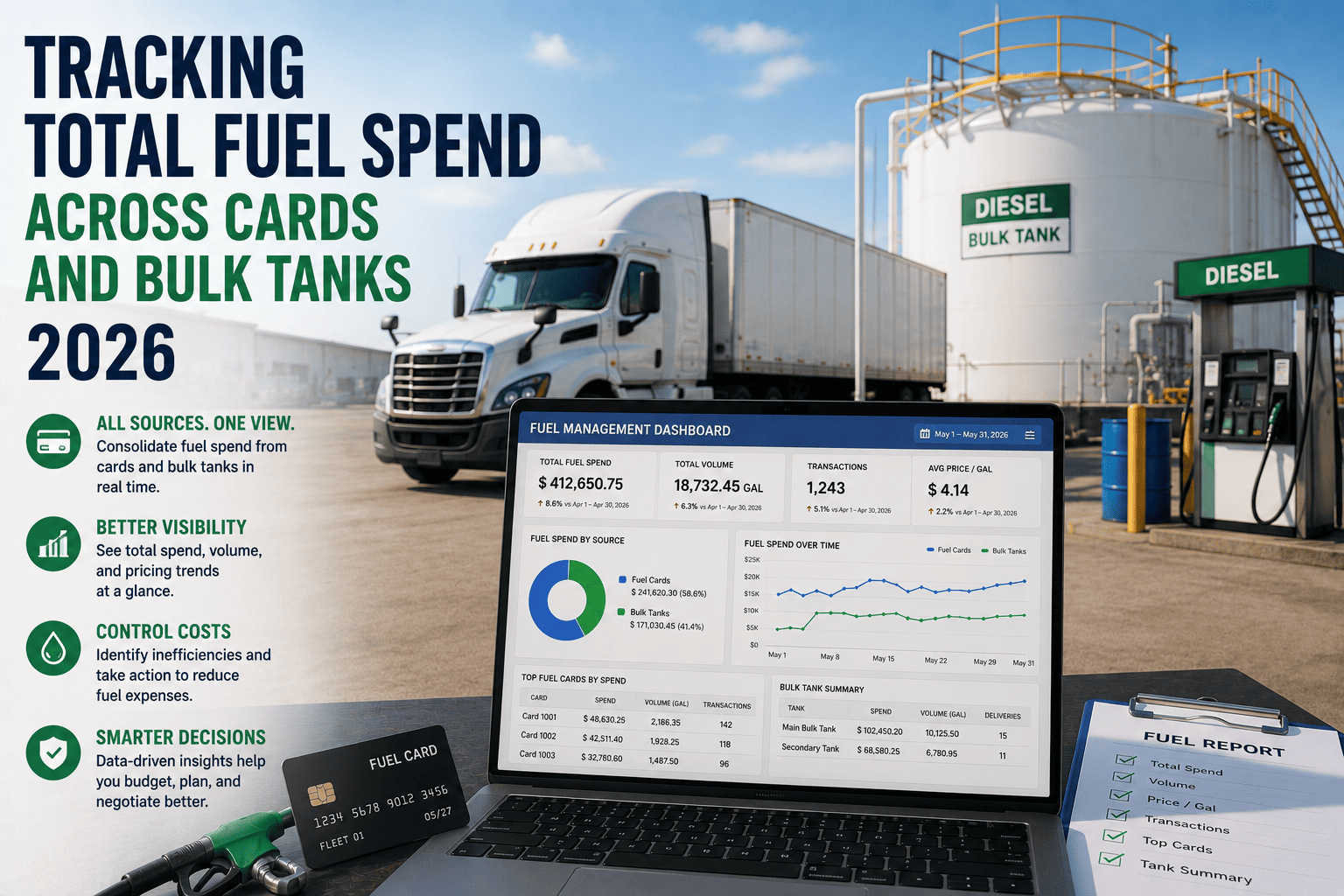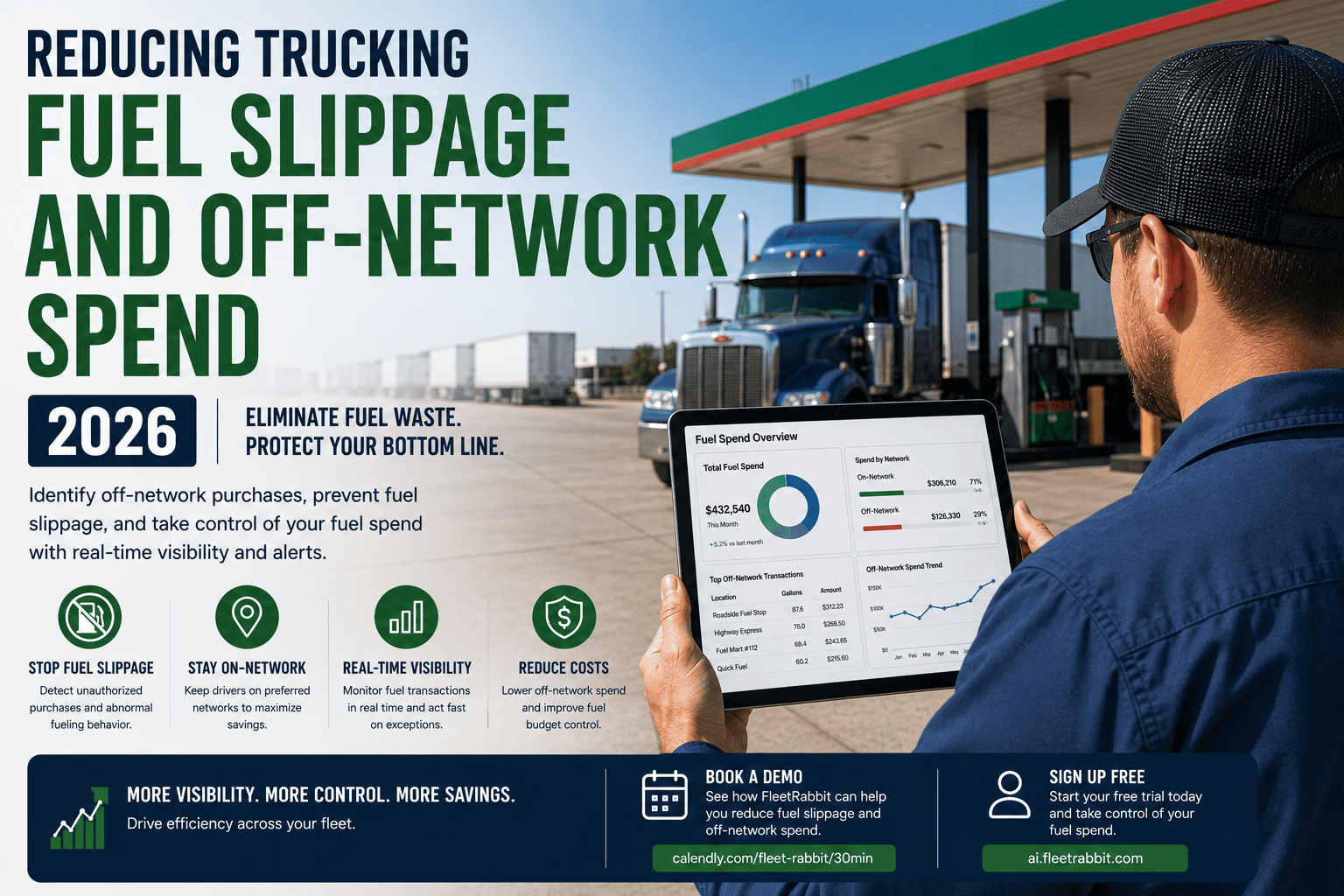
Fuel is usually the largest controllable expense on a trucking fleet's books, and it is also the easiest one to lose without noticing. A card swiped at an approved station, for a reasonable amount, during normal hours passes every basic check a bookkeeper runs. The problem is that reasonable-looking transaction can still be someone filling a personal truck, splitting a fill with a container, or fueling 40 miles from where the company vehicle actually was. Sign up for FleetRabbit to start matching every fuel transaction against real vehicle data automatically, or book a demo to see exactly how much slippage your fleet may already be absorbing.
Fleets without GPS cross-referenced fuel controls typically lose 5 to 15 percent of their annual fuel budget to slippage, off-network purchases, and card misuse, and most of it never shows up as a red flag because each transaction looks legitimate on its own. On a fleet spending 500000 dollars a year on diesel, that range represents 25000 to 75000 dollars quietly disappearing before a single loaded mile is driven.
What Fuel Slippage Actually Looks Like in 2026
Fuel slippage rarely shows up as one obvious theft. It shows up as a pattern of small, plausible-looking transactions that only become visible when compared against where the truck actually was and how much fuel it actually needed. Understanding the specific patterns is the first step to catching them.
The Patterns Behind the Losses
Side fueling happens when a driver uses the company card to fill a personal vehicle or a fuel container instead of the assigned truck. Split-transaction fraud divides one legitimate fill into two purchases at the same pump, with the second quietly going to a personal vehicle. Off-route fueling means a purchase made far outside the assigned route or delivery schedule, often at a station with no operational reason to be visited. Card and PIN sharing lets a spouse or friend use fleet credentials for unrelated fuel purchases. Odometer and mileage inflation is used to justify fuel volumes that do not match actual distance traveled. Each pattern on its own can look like a rounding error. Together, across a fleet running dozens of trucks, they compound into a real and recurring cost.
Why Monthly Reconciliation Misses Most of It
Traditional fuel oversight relies on reviewing card statements once a month, long after the transaction has cleared and the opportunity to question it has passed. By the time a finance team notices an unusual pattern, it has often repeated for weeks. Fleets that switch to real-time, telematics-matched fuel tracking commonly uncover thousands of dollars in losses within the first week simply because nobody was looking at the daily data before. The losses were not new. They were just never visible in a monthly summary.
FleetRabbit cross-references every fuel card transaction against GPS location, odometer readings, and tank capacity so mismatches surface the same day, not next month. Sign up to connect your fuel cards, or book a demo to see your exception report before you commit.
Where the Fuel Budget Actually Leaks
Breaking slippage down by category shows where the biggest losses concentrate and which controls close the gap fastest.
| Loss Category | Typical Share of Fuel Spend | How It Happens | Detection Method |
|---|---|---|---|
| Side Fueling and Split Transactions | 2 to 5 percent | Personal vehicle or container filled on the company card, sometimes split across two transactions | GPS location and tank capacity cross-check per transaction |
| Off-Network and Off-Route Purchases | 1 to 4 percent | Fueling at retail price outside the contracted network or planned route | Geofencing and route comparison alerts |
| Card and PIN Sharing | 1 to 3 percent | Credentials used by someone other than the assigned driver or vehicle | Unique driver PINs with transaction-level identity matching |
| External Skimming and Card-Not-Present Fraud | Under 1 percent, but high per-incident cost | Skimming devices at pumps or stolen card details used online | EMV chip and contactless card migration |
| Odometer and Volume Inflation | 1 to 2 percent | Reported mileage does not match fuel volume purchased for the route | Automated route and fuel-efficiency variance reports |
Building a Closed-Loop Fuel Verification System
Stopping slippage is less about catching individual bad actors and more about building a system where every transaction automatically checks itself against reality. Fleets that make this shift stop reviewing fuel spend after the fact and start managing it in real time.
Match Every Transaction to GPS and Odometer Data
The highest-value control is simple in concept: compare the location and timestamp of every fuel purchase against where the vehicle's GPS says it actually was. A transaction posted 40 miles from the truck's real position is an immediate red flag rather than a line item buried in next month's statement.
Set Spend Limits and Geofenced Boundaries
Daily and weekly spending limits calculated against actual route fuel needs prevent excess purchases before they happen. Geofencing restricts card use to a defined operating area, so a purchase far outside normal routes gets blocked or flagged instantly instead of discovered weeks later.
Run Exception Reports, Not Just Monthly Statements
Automated exception reporting catches patterns a single transaction would never reveal on its own, off-hours purchases, repeated small transactions at the same station, or a driver whose fuel volume consistently runs higher than the route justifies.
Move to EMV and Contactless Card Technology
Magnetic stripe cards remain common at truck stops and are a known target for skimming devices. Migrating to EMV chip or contactless fuel cards removes much of that external fraud exposure without changing how drivers use the card day to day.
The Math Behind Fixing It
Closing even a portion of the slippage gap pays for itself quickly. A fleet spending 500000 dollars annually on fuel that reduces slippage from 10 percent down to 3 percent recovers roughly 35000 dollars a year, often more than covering the cost of the monitoring platform itself many times over. Because the losses were already baked into the existing fuel budget, the savings show up immediately as recovered margin rather than requiring any change to routes, rates, or driver headcount.
Frequently Asked Questions
The losses are already built into your fuel budget, quietly labeled as normal variance. FleetRabbit brings every transaction, every route, and every gallon into one closed-loop view so nothing slips through unnoticed. Start your free trial with no credit card required, or book a demo to see your own fleet's exception report.