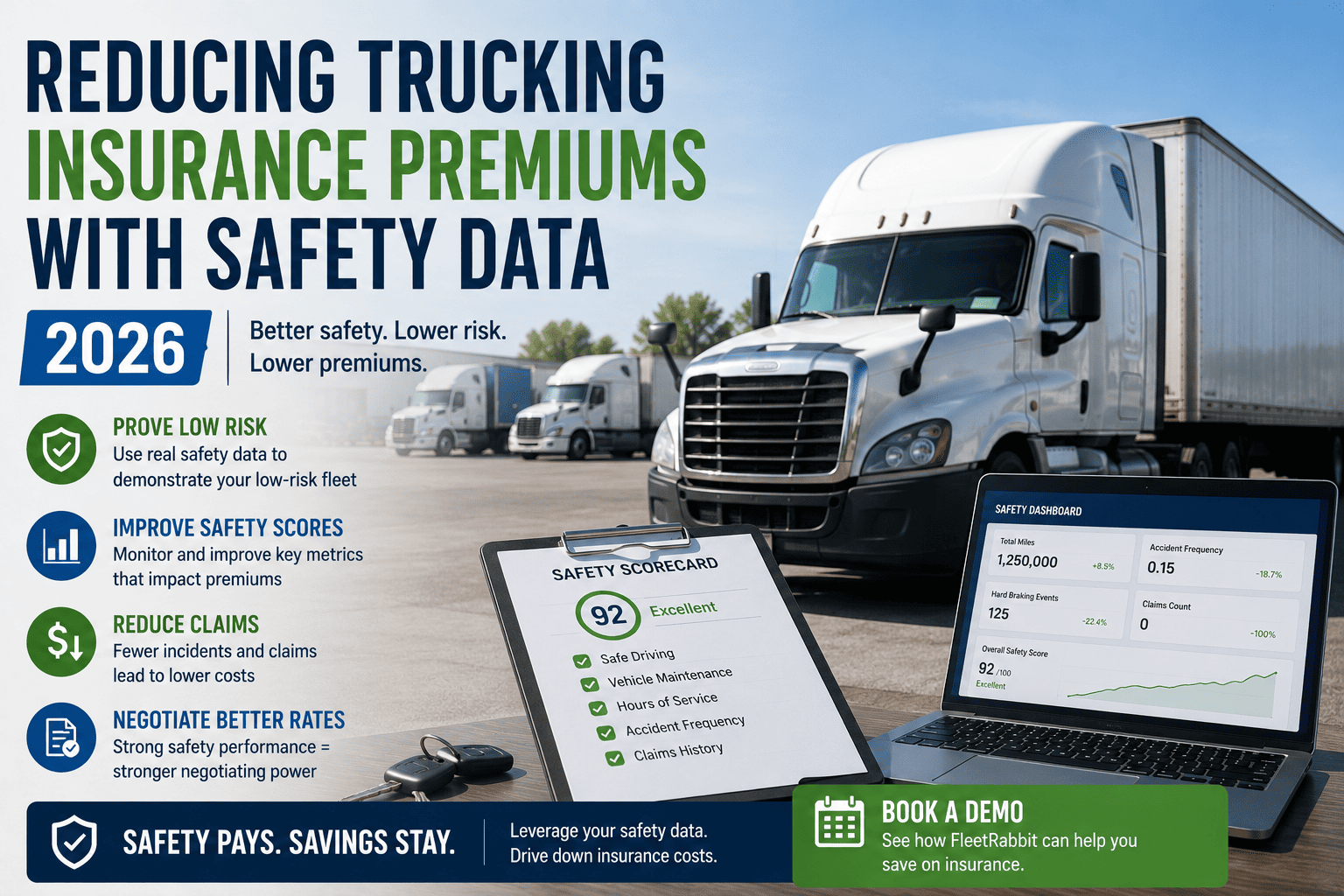
Every fleet manager who has sat through a commercial auto renewal in 2026 knows the feeling. The broker calls, and before the numbers even land, you already suspect it is going to hurt. Fleet insurance premiums hit a record 10.2 cents per mile in 2024 and kept climbing through 2025, while nuclear verdicts against trucking companies reached 4.1 billion dollars across just 15 cases that same year. Yet in the middle of that pressure, a real split has opened up. Telematics-equipped fleets are securing 15 to 30 percent premium reductions at renewal while fleets without the data face steeper increases. The difference is not luck. It is evidence, and insurers now have the tools to see exactly who has it.
Trucking fleets lower insurance premiums by documenting driver safety with telematics, AI dash cams, and hours-of-service compliance data, then presenting it to underwriters as a consistent trend rather than a one-time snapshot. Roughly 60 percent of insurers already factor telematics into underwriting, and fleets that pair data collection with active driver coaching commonly see 15 to 30 percent premium reductions within their next one or two renewal cycles.
What Underwriters Are Actually Looking For Now
Commercial auto underwriting used to run on a handful of blunt inputs: years in business, claims history, vehicle count, zip code. None of that told an insurer whether a driver tailgates at highway speed or brakes hard through every intersection. That has changed. Underwriters now look past simple mileage tracking into specific behavioral signals that correlate directly with claim probability, and they can tell the difference between a fleet with a genuine safety program and one that installed hardware and never looked at the data again.
Why Collecting Data Isn't The Same As Lowering Your Premium
Plenty of fleets install telematics and dash cams and still see flat or rising premiums at renewal. It is rarely the hardware's fault. A device that records events but never triggers a coaching conversation produces no behavior change, and underwriters can tell the difference between monitored data and ignored data. The fleets capturing the larger end of the 15 to 30 percent discount range are not necessarily the ones with the most expensive equipment. They are the ones who can show a clean, consistent safety trend over time, because a risky event that gets coached and corrected within days reads very differently to an underwriter than one that repeats unaddressed for months.
The Coaching Loop That Actually Moves Pricing
One documented fleet achieved a 40 percent reduction in hard braking events within six months through a weekly coaching cycle, and AI dash cam programs paired with structured coaching workflows have shown crash rate reductions of up to 73 percent. That is the difference between a fleet that owns cameras and a fleet that runs a safety program.
How long before the data actually changes your premium
Most underwriters need at least 90 days of consistent, high-quality data before factoring it into pricing, and most fleets see the improvement reflected at their next annual renewal, typically 6 to 12 months after starting comprehensive data collection. Building a credible safety trend takes months, not days, so the conversation needs to start well before the policy comes up for renewal.
FleetRabbit tracks the exact signals underwriters reward, hard braking, speeding, distraction, and HOS compliance, and packages them into a renewal-ready report. Start your free trial and start building your documented safety trend today.
How Telematics Discounts Actually Stack Up
Telematics discounts are rarely one flat number. They typically stack across a few distinct categories, and understanding the structure helps you see exactly where your fleet's effort translates into savings at renewal.
| Safety Program Element | What It Proves To Underwriters | Typical Impact |
|---|---|---|
| Driver Behavior Scoring | Documented reduction in harsh braking and speeding events | Core input for most telematics discount programs |
| AI Dash Cam Footage | Genuine safety culture, not just a policy on paper | 5 to 20 percent additional savings from participating carriers |
| HOS Compliance Records | Lower fatigue-related claim severity | Heavily weighted in predictive risk models |
| Documented Coaching | Events get corrected within days, not repeated | Separates fleets from industry-average pricing |
From Raw Data To A Renewal-Ready Safety Story
The fleets that walk into renewal with leverage are not the ones with the most sensors. They are the ones who can hand their broker a clear, documented narrative instead of a folder of raw telematics exports.
Turning Events Into Evidence
Knowing where a truck is doesn't tell an underwriter anything about risk. Behavior events are what actually move pricing, which is why the most effective safety programs focus reporting on hard braking, speeding severity, distraction alerts, and HOS violations rather than mileage or location history alone.
Protecting Against Disputed Claims
Dash cam and behavior data can also provide evidence that exonerates a driver in a disputed claim, which matters significantly given that the average commercial truck accident lawsuit can run from 150,000 dollars into the millions when liability is contested. A clean exoneration on a single severe claim can offset years of a fleet's camera program cost on its own.
Is this worth it for a smaller fleet
Often more so. A smaller fleet has less buffer to absorb a bad renewal increase, and even a basic setup tracking location, speed, and a driver score can meaningfully support a safety story with an underwriter, without needing a dedicated safety analyst on staff.
How FleetRabbit Helps You Build That Evidence
FleetRabbit continuously captures hard braking, speeding, distraction alerts, and HOS compliance data, then routes flagged events into a structured coaching workflow so risky behavior gets addressed within days instead of resurfacing at the next renewal. The platform packages this documented trend into a renewal-ready report your broker can bring directly to underwriters, showing exactly how your fleet's risk profile has improved over time. If you want to see what your own fleet's safety data could look like packaged for your next renewal, you can book a free demo with the FleetRabbit team.
Frequently Asked Questions
Insurance carriers are not going to stop asking for evidence, and premiums are not going to drift back down on their own in 2026's market. What has changed is that fleets now have a real way to answer the question underwriters are asking. The data your trucks generate every day is already the proof. The only question is whether anyone is turning it into a story your broker can bring to the negotiating table.
FleetRabbit turns your fleet's everyday driving data into a documented safety trend your broker can use at every renewal. Start your free trial with no credit card required, or book a short demo to see your renewal-ready safety report.