.png)
Starting a trucking company in 2026 requires navigating a complex landscape of federal regulations, insurance requirements, fleet infrastructure, and technology decisions. Most new trucking entrepreneurs underestimate the compliance burden and operational complexity that comes with managing a commercial fleet. This comprehensive startup checklist covers every essential requirement from obtaining DOT authority and FMCSA registration to selecting fleet software that prevents violations and keeps your new business audit-ready from day one.
Starting a trucking business requires coordination across federal agencies, state licensing bodies, insurance providers, and technology platforms. This checklist covers DOT authority, FMCSA registration, fleet setup, insurance, driver requirements, and fleet management software selection. Use this as your roadmap to launch a compliant, efficient trucking operation in 2026.
Skip months of setup complexity with fleet software that handles compliance automation, digital inspections, and regulatory documentation from day one. FleetRabbit gives you enterprise-grade fleet management for startups.
Phase 1: Legal Entity and Federal Authority Setup
Establishing your trucking company legally is the first and most critical step. You must form a business entity, obtain an Employer Identification Number from the IRS, and apply for DOT authority which authorizes you to operate commercial vehicles across state lines. This phase typically takes 4 to 8 weeks from application to approval. The federal Motor Carrier Safety Administration processes DOT applications and maintains the SAFER database where all motor carriers are registered and tracked for compliance.
Choose a legal structure (LLC, S-Corp, or C-Corp) based on tax implications and liability protection. Register with your state and file articles of incorporation or organization. Obtain an EIN from the IRS within minutes online at irs.gov. Allow 2 weeks for processing.
Register with the FMCSA for a USDOT number. Apply for Motor Carrier Authority if operating across state lines. Complete the MCS-150 form through the FMCSA website. Approval takes 3 to 6 weeks. Interstate authority costs around $100 application fee.
Develop written safety policies covering accident reporting, driver qualification, maintenance procedures, and hours of service compliance. DOT auditors require documented safety procedures. Include substance abuse policy and driver training requirements. Maintain records for 3 years minimum.
If transporting hazardous materials, apply for Hazmat Authority through FMCSA. Requires additional background checks and safety certifications. Processing takes 4 to 8 weeks. Not needed for general freight operations.
Obtain intrastate operating permits in each state you plan to operate. Requirements vary by state. Commercial vehicle registration and fuel tax permits required. Some states charge annual operating fees of $100 to $500 per vehicle.
Appoint a registered agent in each state where your company operates. Receive legal documents and regulatory notices. Many companies use third-party registered agent services for $50 to $150 annually. Required for FMCSA compliance.
Phase 2: Insurance and Liability Protection
Commercial trucking insurance is mandatory and represents one of your largest operating expenses. Federal regulations require minimum liability coverage of $750,000 for general freight operations and up to $5 million for hazardous materials. Insurance companies evaluate risk based on driver experience, safety records, vehicle conditions, and your company's safety management plan. Startup trucking companies typically pay higher premiums until you establish a clean claims history.
| Insurance Type | Coverage Amount | Typical Cost Range | Requirement |
|---|---|---|---|
| General Liability | $750,000 to $1,000,000 | $3,000 to $8,000 per year | Mandatory federal minimum for interstate |
| Cargo Coverage | $5,000 to $50,000 | $400 to $1,500 per year | Required by freight brokers and shippers |
| Physical Damage | Replacement value of fleet | $1,200 to $2,500 per vehicle annually | Required if leasing vehicles for financing |
| Trailer Coverage | Replacement value | $600 to $1,200 per trailer annually | Mandatory if operating trailers |
| Workers Compensation | As required by state law | $1,500 to $5,000 per employee annually | Mandatory if you have employees (varies by state) |
| Hired Non-Owned Auto | $750,000 to $1,000,000 | $500 to $1,500 per year | Recommended if drivers use personal vehicles |
Phase 3: Vehicle Acquisition and Maintenance Planning
Your fleet represents your primary capital investment and directly impacts your service capability and profitability. You can purchase new trucks, buy used vehicles, or lease equipment depending on your capital availability and business model. The average new commercial truck costs $100,000 to $150,000, while used 2 to 5 year old trucks cost $40,000 to $80,000. Maintenance planning begins immediately with preventive maintenance scheduling and compliance documentation systems.
New trucks offer warranty protection but higher upfront costs. Used trucks provide cost savings but require mechanical inspections and warranty verification. Lease options provide flexibility without ownership obligations. For startup fleets, starting with 2 to 5 vehicles allows you to manage operations manually until scaling requires additional infrastructure.
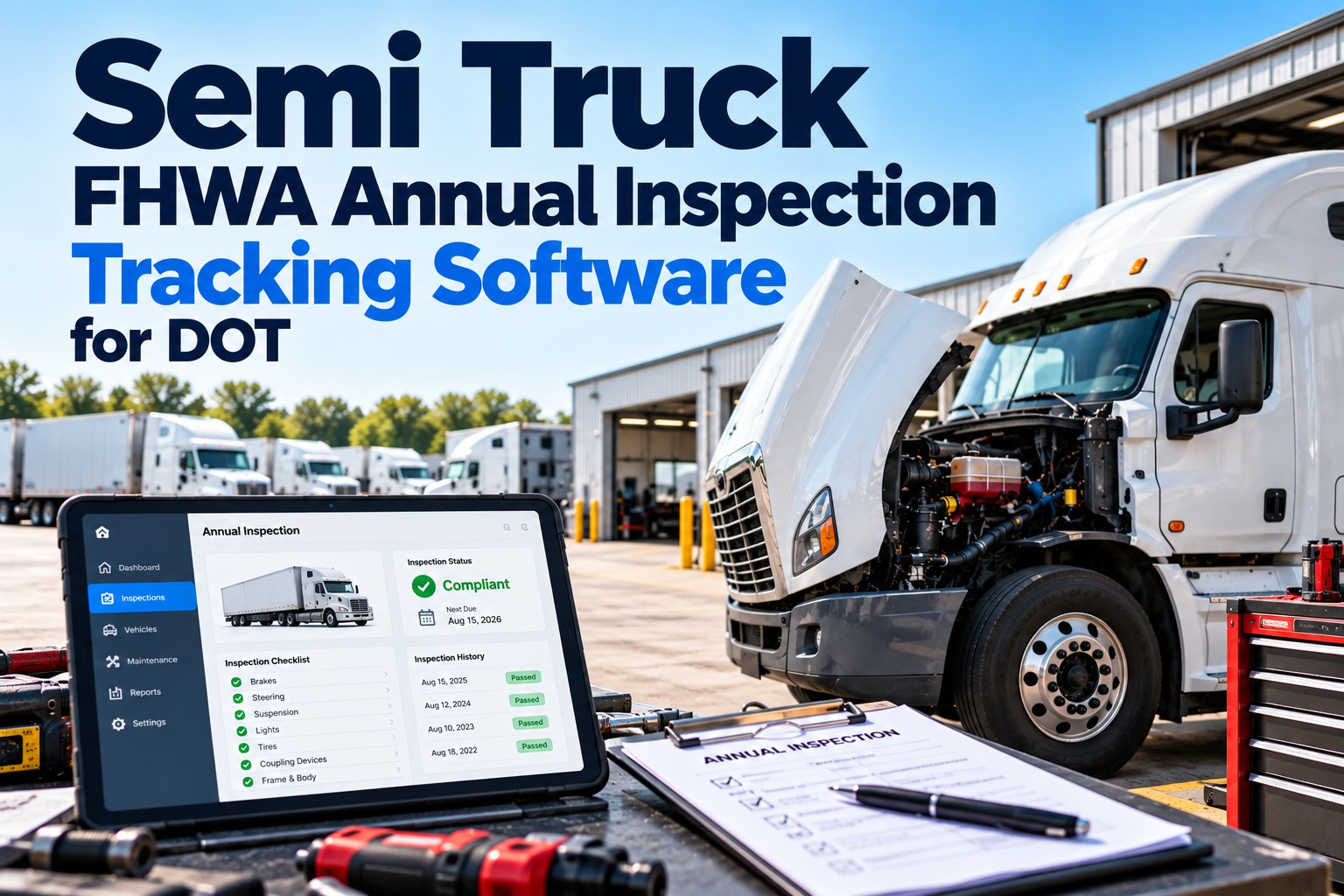
Federal regulations require documented maintenance records per 49 CFR Part 396. Oil changes every 15,000 miles, tire rotations every 10,000 miles, brake inspections every 6 months. DVIR daily inspections required before each trip. Establish maintenance intervals with a mechanic or service facility. Digital maintenance tracking eliminates manual record-keeping.
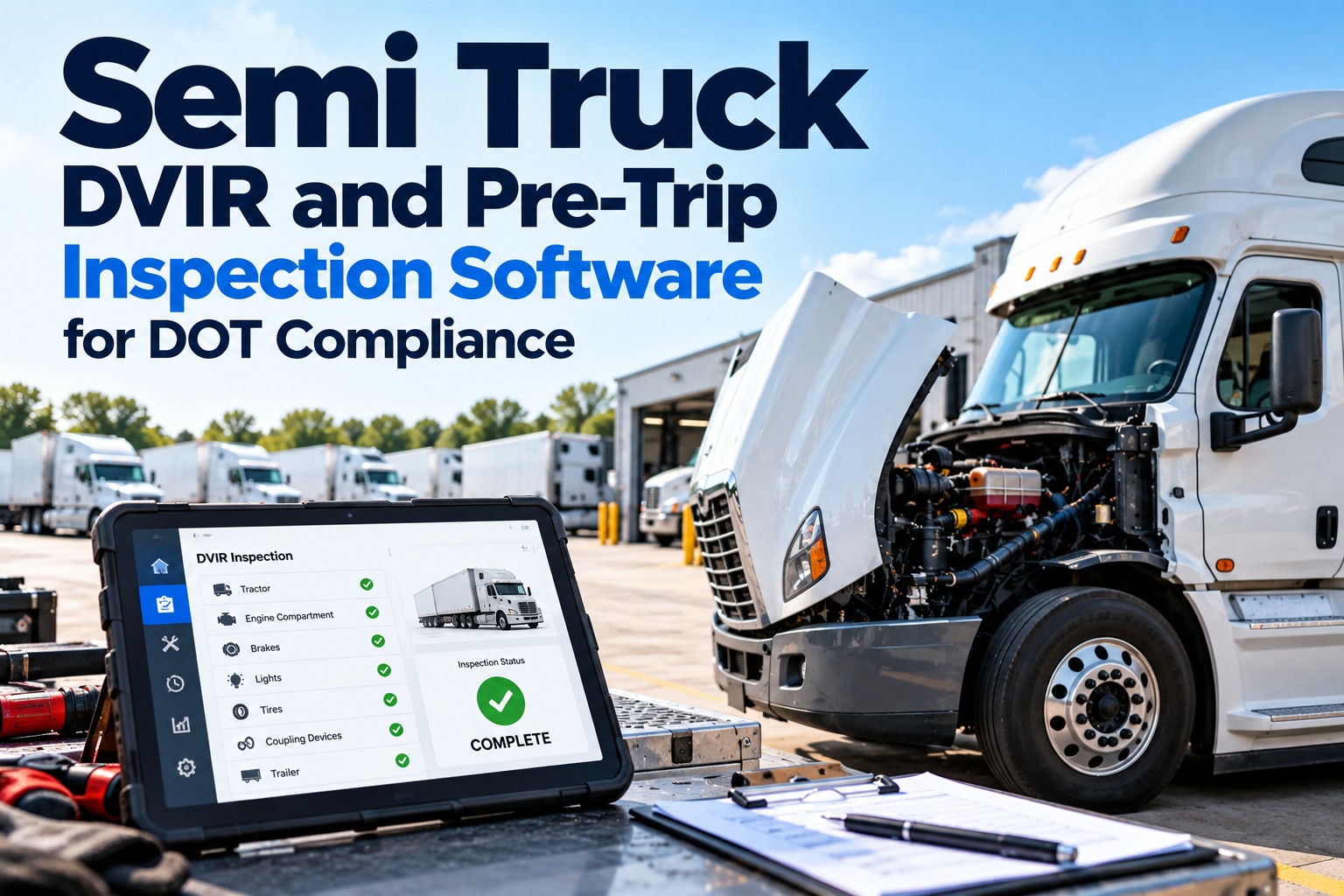
Drivers complete pre-trip and post-trip inspections documenting vehicle condition. DOT regulations require written inspections per 49 CFR 396.11. Digital DVIR software timestamps inspections and auto-generates maintenance work orders from defects. Reduces inspection time from 20 minutes to 3 minutes per vehicle.
Maintain spare parts inventory for critical repairs (brake pads, filters, belts). Establish relationships with trusted service vendors and parts suppliers. Track vendor performance and maintenance costs. Centralize parts ordering to reduce equipment downtime.
Install GPS tracking systems to monitor vehicle location, fuel consumption, and driver behavior. Telematics data integrates with maintenance software to predict failures before they occur. Helps with dispatch optimization and load management. Most systems cost $50 to $100 per vehicle monthly.
Monitor open safety recalls against your fleet VINs. Establish process for scheduling recall service before vehicles operate. Operating trucks with open critical safety recalls results in out-of-service orders and FMCSA violations. Automated recall alerts prevent compliance risk.
Phase 4: Driver Recruitment, Qualification, and Compliance
Your drivers are the face of your company and directly determine your safety record, customer satisfaction, and compliance status. Federal regulations require extensive driver qualification documentation including background checks, medical examinations, and training certification. The driver shortage in trucking means competitive driver recruitment is critical, but hiring decisions must prioritize safety and regulatory compliance.
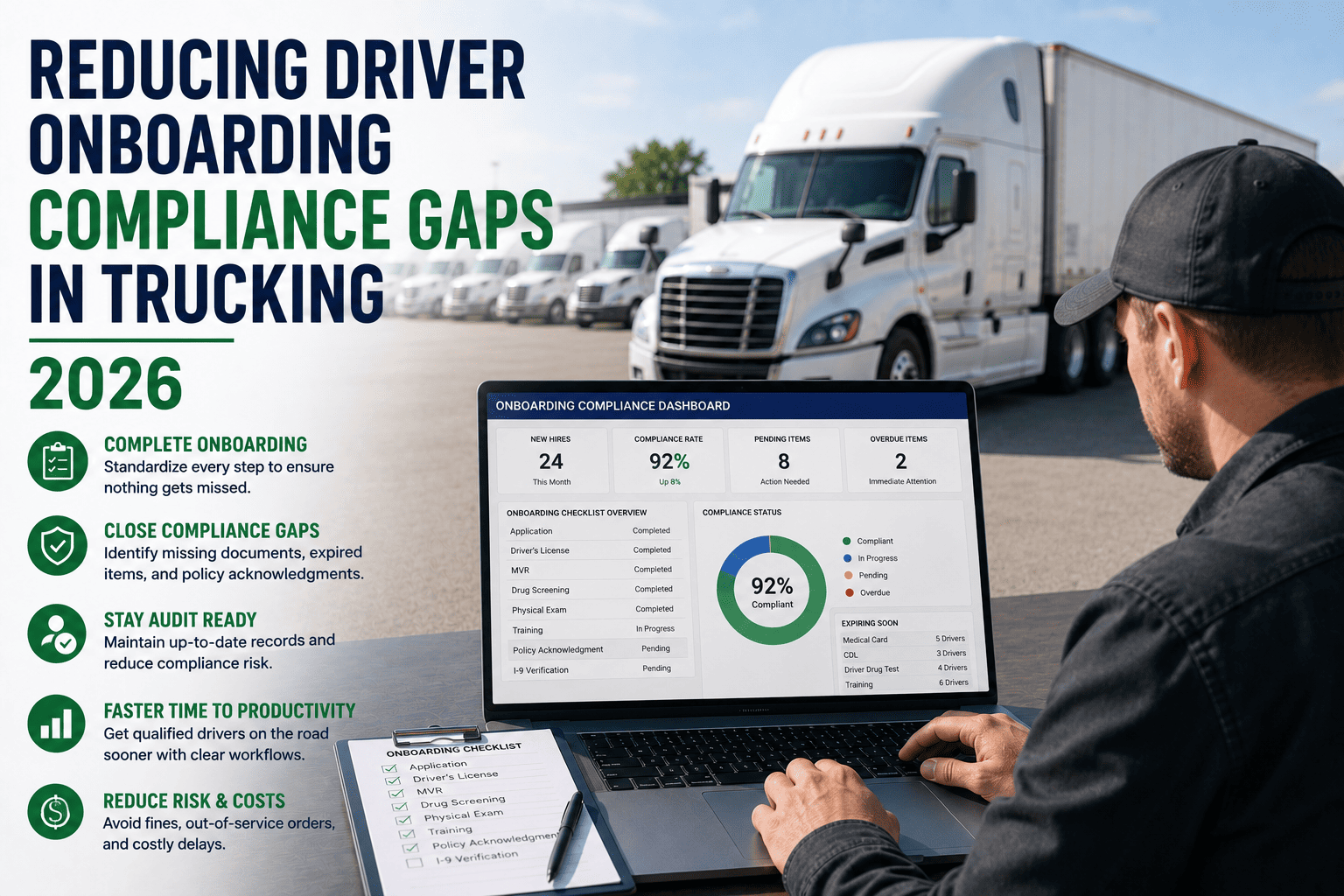
Maintain a DQF (Driver Qualification File) for every driver documenting application, background check, medical examinations, CDL verification, and safety training. FMCSA regulations require specific documents in each file. DOT inspectors review DQF files during safety audits. Incomplete files result in out-of-service orders.
Verify each driver holds a valid Class A CDL with appropriate endorsements. Request 10-year driving history and previous employer verification. Cross-reference against national register for violations and suspensions. Maintain copies in DQF. Ineligible drivers cannot operate your vehicles.
Every driver must pass a DOT medical examination within 12 months of hire. Requires certified medical examiner and DOT medical certificate. Covers vision, hearing, cardiovascular health, and substance abuse screening. Medical certificate valid for 24 months. Keep current in DQF.
Conduct criminal background checks and previous employer verification for all drivers. Screen for drug-related convictions and traffic violations. Some carriers use commercial screening services ($30 to $50 per driver). Establish minimum standards for hiring and document all screening decisions.
Provide initial safety training on company policies, vehicle operation, defensive driving, and hours of service compliance. Document training attendance and completion dates. Annual refresher training required. Some drivers require hazmat training or tanker endorsement training depending on cargo type.
Establish substance abuse testing program per federal regulations (49 CFR Part 382). Pre-employment testing, random testing, and post-accident testing required. Use SAMHSA certified testing lab. Maintain testing records for 5 years. Critical for maintaining safety record and insurance rates.
Phase 5: Hours of Service and Compliance Software Implementation
Hours of Service regulations are among the most frequently cited violations in DOT audits. FMCSA mandates Electronic Logging Devices for tracking driver hours starting December 2017, replacing manual paper logs. ELDs automatically record driving time, on-duty time, and required rest periods. A single HOS violation costs an average of $16,000 in fines and triggers a full safety audit. Fleet software that automates HOS tracking prevents violations and keeps your startup compliant from day one.
| Violation Type | What It Is | Startup Prevention Approach |
|---|---|---|
| 11-Hour Driving Limit Exceeded | Driver operates more than 11 hours in single duty cycle. Requires 10+ hours off-duty to reset. | Use fleet software with real-time hour tracking. Prevent dispatch assignments that exceed remaining hours. Set alerts at 10 hours driving. |
| 14-Hour Duty Window Violation | Driver remains on-duty more than 14 consecutive hours after off-duty period. Counts driving and non-driving work. | Implement automated duty window countdown. No driving allowed after 14 hours on-duty. Manual tracking creates errors. |
| Missing 30-Minute Break | Driver continues driving after 8 cumulative hours without documented 30-minute off-duty break. Most common violation. | Set mobile alerts at 7.5 hours. Require break documentation before allowing additional driving. Most frequently cited violation. |
| 60/70 Hour Weekly Limits | Cumulative driving exceeds 60 hours in 7 days or 70 hours in 8 days without 34-hour restart period. | Track weekly hours across all drivers. Schedule 34-hour restarts automatically. Software prevents violations that manual tracking misses. |
| Insufficient Off-Duty Time | Driver begins next duty cycle with less than 10 consecutive hours off-duty. Violates federal minimum rest requirement. | Require 10+ hour gaps between duty periods in dispatch system. Prevent driver scheduling errors that cause violations. |
| Paper Log Recordkeeping | Manual logs susceptible to errors, alterations, and audit scrutiny. Difficult to defend in DOT audits. | Implement ELD immediately. Digital records with timestamps survive audit scrutiny. Automated alerts prevent violations before they occur. |
Phase 6: Choosing Fleet Management Software for Your Startup
Fleet management software is not optional for startups. Most small trucking companies attempt to manage operations using spreadsheets and manual processes, creating compliance risk and administrative burden. A comprehensive fleet platform automates compliance documentation, prevents violations through real-time alerts, and generates audit-ready reports in seconds. For startup trucking companies, investing in proper software from day one saves time, prevents costly violations, and creates a scalable foundation as you grow.
Drivers complete pre-trip and post-trip inspections on mobile app. Photo documentation of defects. Automatic work order generation from inspection findings. Reduces inspection time by 60% and eliminates paper DVIR management. Digital records comply with FMCSA requirements and survive DOT audits.
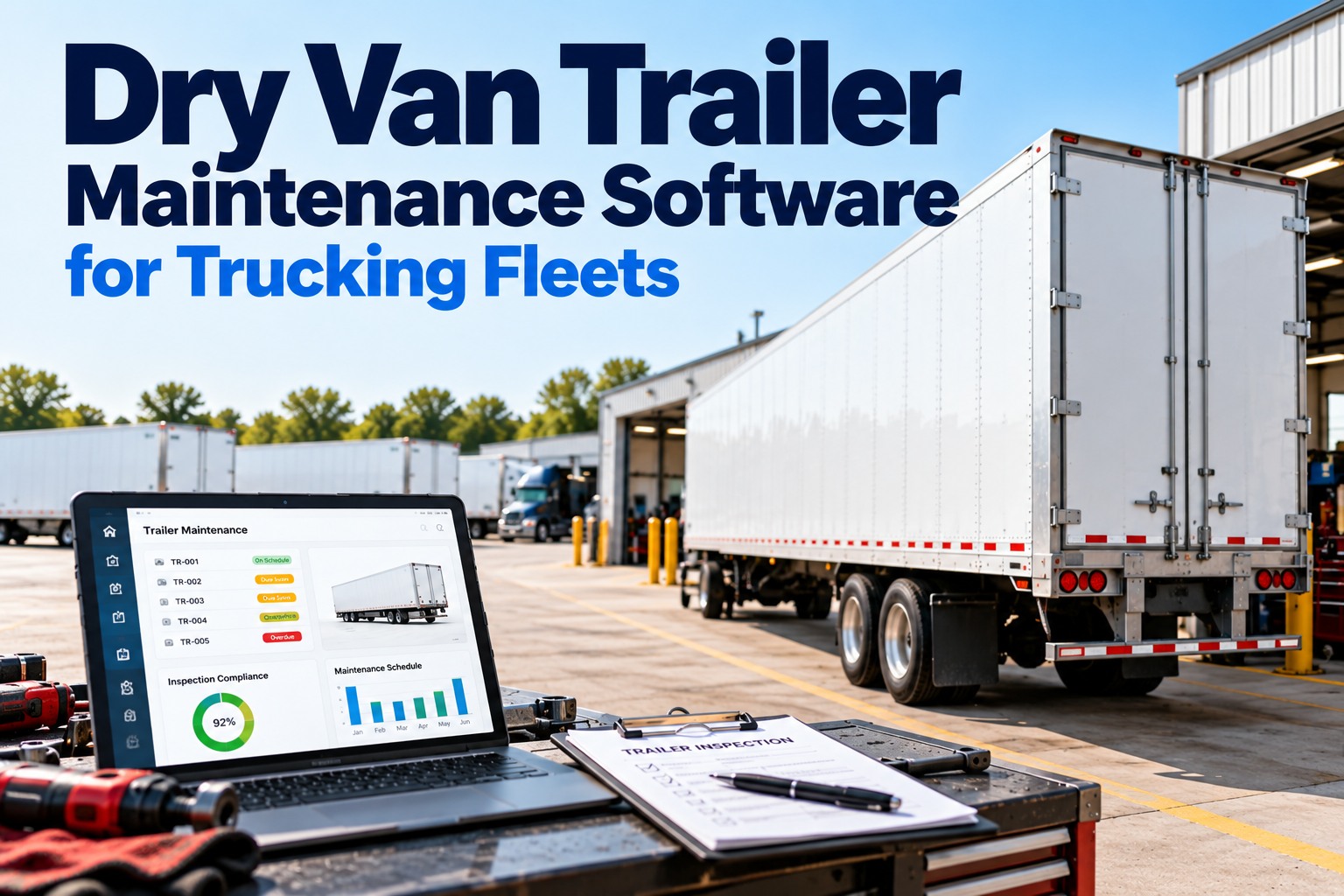
Set PM intervals based on mileage or time. System automatically generates work orders when service is due. Tracks parts usage and maintenance costs. Reduces downtime by preventing breakdowns. Maintenance history instantly available for inspections.
Continuous tracking of driver hours against all FMCSA limits. Alerts at 30, 15, and 5 minutes before violations. Prevents dispatch errors that cause violations. Integration with existing ELD devices means no hardware replacement needed.
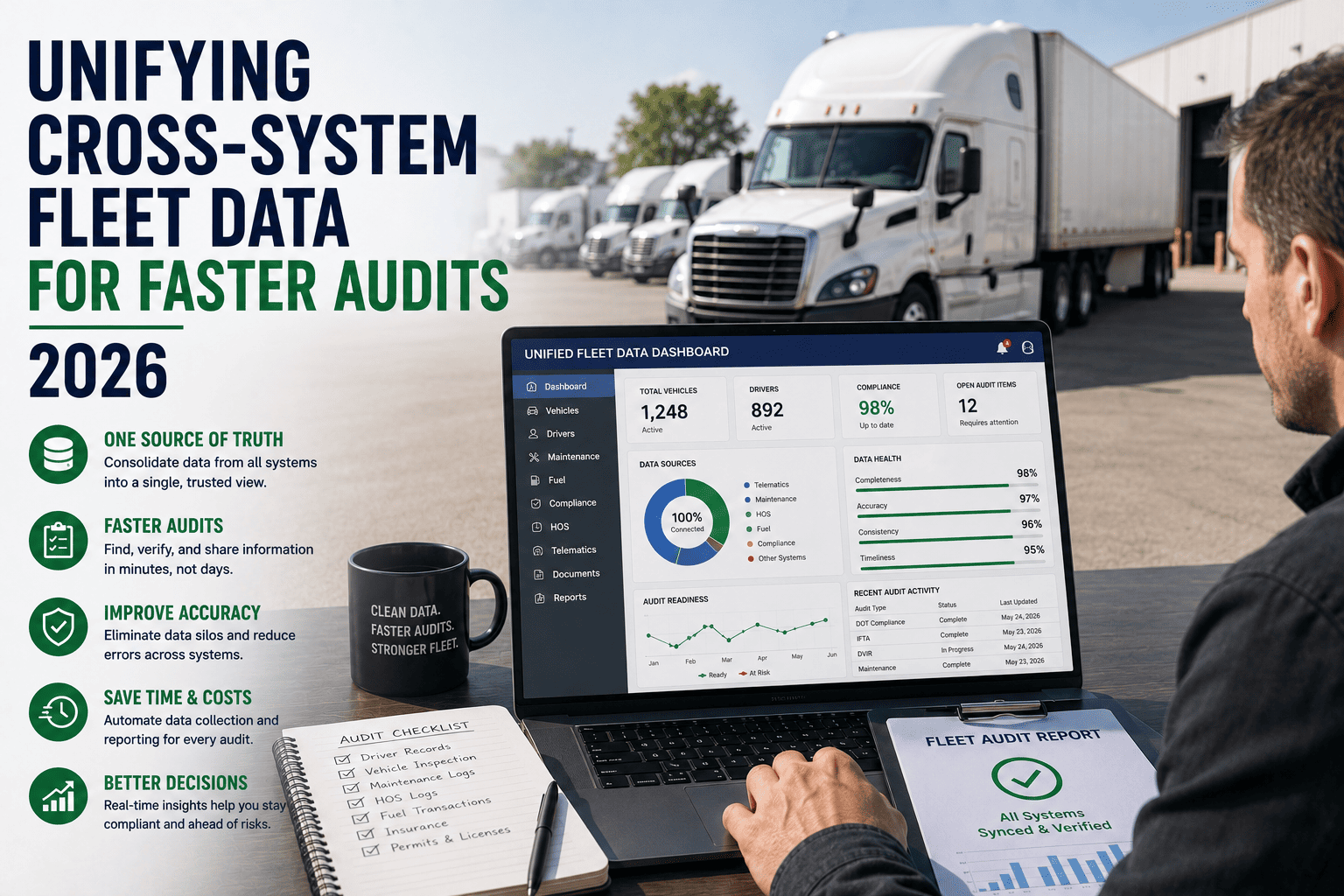
Generate audit-ready reports covering all FMCSA audit factors within 60 seconds. Centralize driver files, maintenance records, and safety documentation. Export compliance packets for DOT inspections. Reduces audit response time by 82% compared to manual documentation.
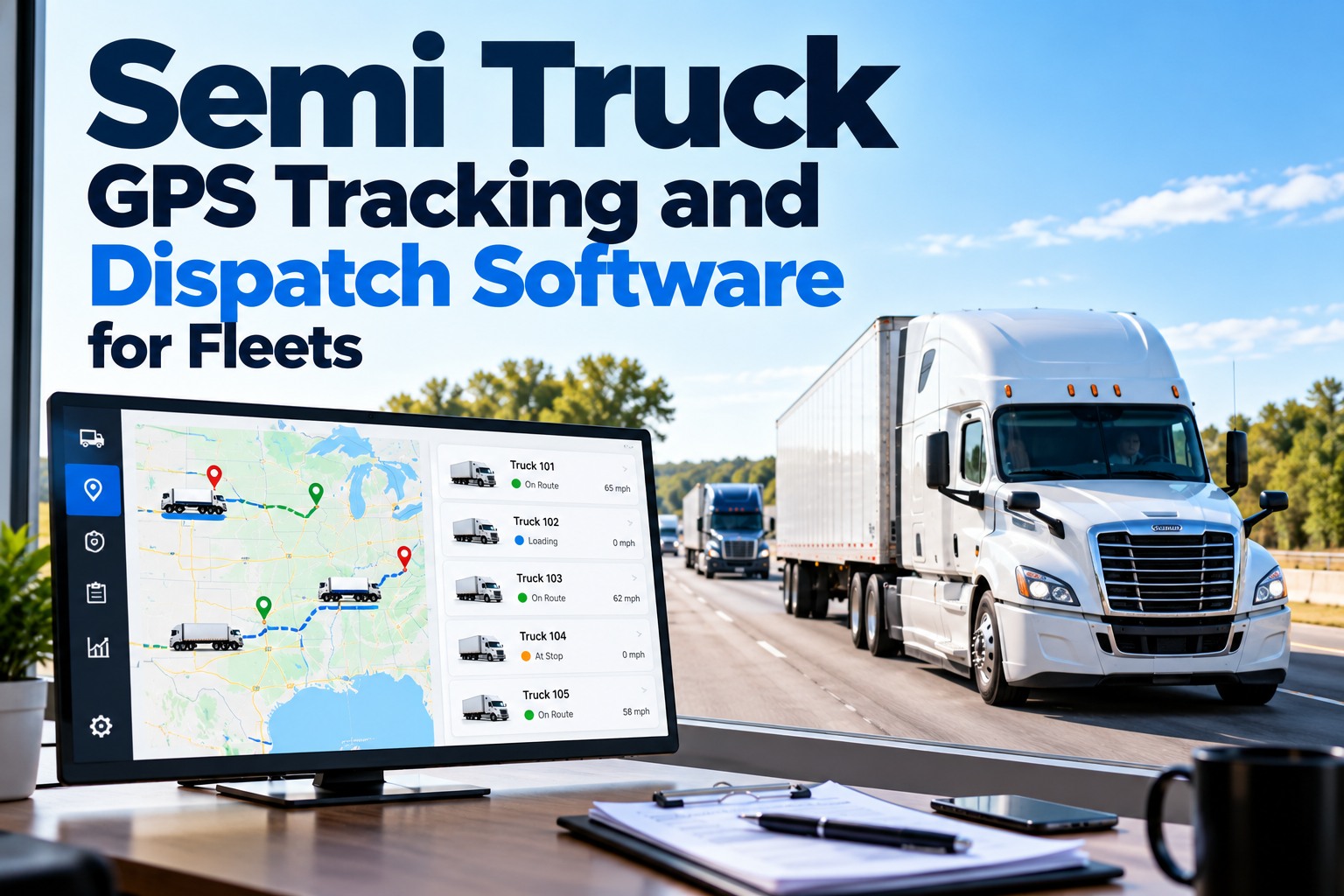
Real-time vehicle locations and telematics data. Optimize routes for fuel efficiency and delivery time. Load assignment based on driver hours remaining. Visibility into fleet operations and driver location at all times.
Track fuel consumption per vehicle and per driver. Identify excessive idling and fuel waste. Fuel represents 25% to 35% of operating costs. Analytics show improvement opportunities and fuel efficiency trends over time.
Phase 7: Financial Planning and Operational Setup
Proper financial planning determines whether your startup survives the critical first 12 to 24 months. Many new trucking companies fail because they underestimate operating costs and run out of capital before establishing consistent revenue. You must secure adequate startup capital covering vehicle down payments, insurance, initial fuel costs, driver wages, and 3 to 6 months operating expense reserves.
| Cost Category | Per Vehicle (1 Truck) | Fleet Size 5 Vehicles | Fleet Size 10 Vehicles |
|---|---|---|---|
| Vehicle Acquisition (down payment) | $25,000 to $50,000 | $125,000 to $250,000 | $250,000 to $500,000 |
| Insurance Premiums (annual) | $5,000 to $12,000 | $25,000 to $60,000 | $50,000 to $120,000 |
| Fuel and Maintenance (annual) | $18,000 to $25,000 | $90,000 to $125,000 | $180,000 to $250,000 |
| Driver Salaries and Benefits (per driver annually) | $55,000 to $75,000 | $275,000 to $375,000 | $550,000 to $750,000 |
| Fleet Management Software (annual) | $36 per year (free for 3 vehicles) | $180 per year (5 vehicles at $3/mo) | $360 per year (10 vehicles at $3/mo) |
| Operating Reserve (3-6 months) | $30,000 to $60,000 | $150,000 to $300,000 | $300,000 to $600,000 |
Essential Startup Checklist: Complete Task List
Use this checklist to track your startup progress. Completion typically spans 8 to 16 weeks depending on approval timelines and your preparation. Prioritize federal authority and compliance documentation, as these are time-critical and gating items for operations.
Form business entity (LLC or Corp). Obtain EIN from IRS. Open business bank account. File assumed name registration if needed. Establish business address for legal documents and registration.
Apply for USDOT number and Motor Carrier Authority. Register with FMCSA for DOT authority. Obtain Motor Carrier Operating Authority certificate. Apply for state intrastate operating permits. Establish registered agent in each operating state.
Obtain General Liability insurance quotes (minimum $750,000). Secure Cargo coverage insurance. Arrange Physical Damage coverage if leasing vehicles. Get Workers Compensation insurance if hiring employees. Obtain proof of insurance for registration.
Evaluate and purchase or lease initial fleet vehicles. Register vehicles with state and obtain commercial plates. Install GPS tracking and telematics hardware. Arrange vehicle maintenance and service relationships. Establish vendor accounts with fuel suppliers.
Post CDL driver positions and recruit candidates. Conduct background checks and DQF documentation. Schedule DOT medical examinations. Verify CDL status and 10-year driving history. Provide initial safety training and documentation. Conduct drug screening per federal requirements.
Select and implement fleet management platform. Configure DVIR checklists and inspection workflows. Set up preventive maintenance schedules. Integrate ELD devices with fleet software. Train drivers and staff on mobile apps and dashboard. Verify compliance documentation automation.
Manual processes create compliance risk and waste time. FleetRabbit automates HOS tracking, digital inspections, maintenance scheduling, and DOT audit reporting. Free for your first 3 vehicles with no credit card required.
Frequently Asked Questions About Starting a Trucking Company
Starting a trucking company requires coordinating federal authority, insurance, vehicles, drivers, and compliance systems simultaneously. This checklist covers every requirement from legal entity formation through operational launch. FleetRabbit eliminates manual compliance work with automated digital inspections, real-time HOS monitoring, and audit-ready reporting. Start with 3 free vehicles and scale to unlimited vehicles at $3 per vehicle monthly. No credit card required. Book a demo or start your free trial today to build a compliant, efficient operation from day one.