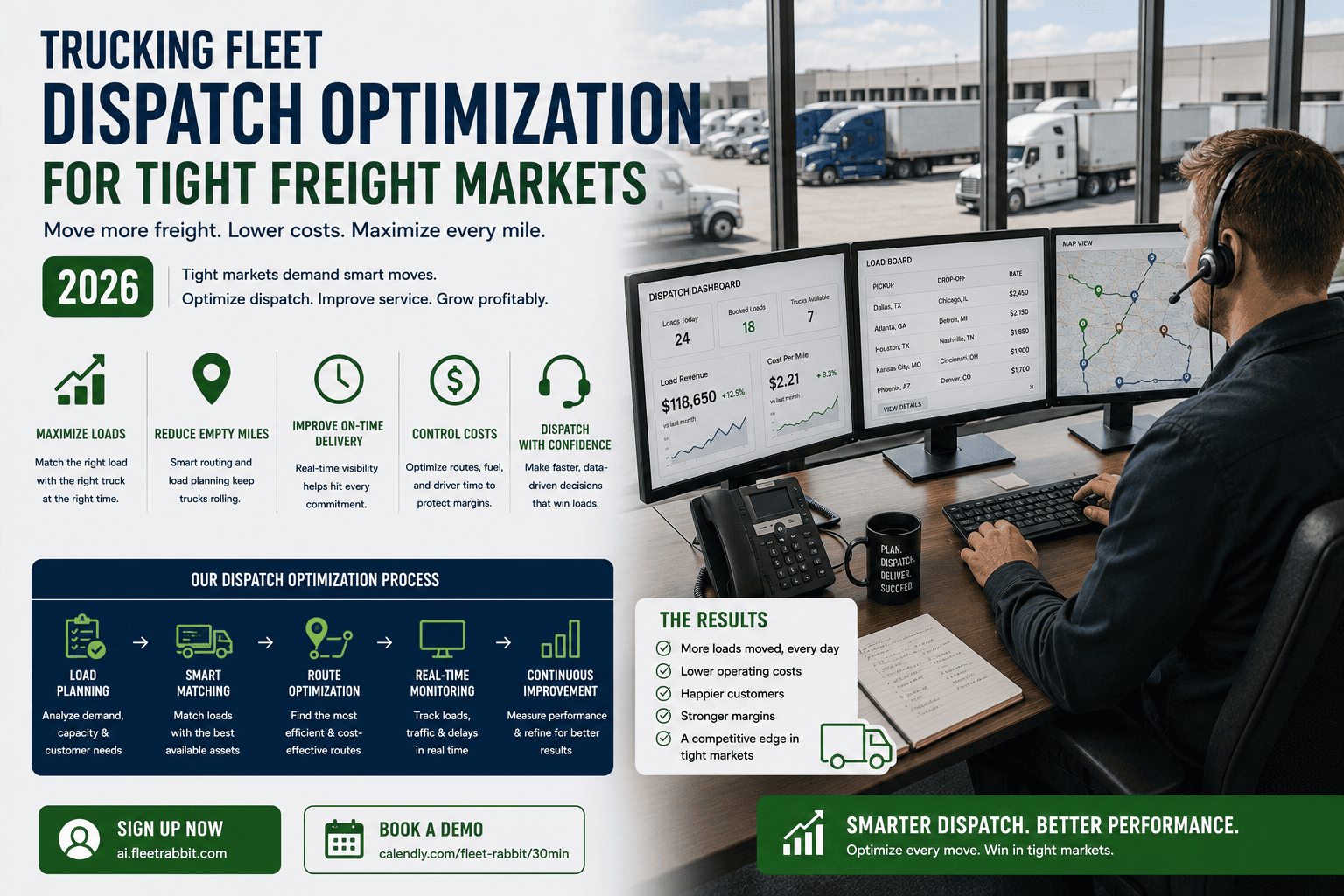
A dispatcher working from memory and phone calls cannot see what a dispatcher working from a live map can see. In a freight market where the truckload sector has been running negative operating margins, that gap is no longer a minor inefficiency. It is the difference between a truck earning revenue and a truck burning fuel with nothing to show for it. Dispatch optimization in 2026 is not about working harder on the phone. It is about giving every dispatch decision the data it needs before the truck is already empty.
Average fleet operating costs have climbed past 2.25 dollars per mile, while the truckload sector has averaged a negative operating margin in recent industry reporting. Manual dispatch processes commonly run 18 to 20 percent deadhead, while planned, data-driven dispatch typically brings that down to 8 to 12 percent. On a truck running 10,000 miles a month, that gap alone is worth roughly 1,900 dollars in recovered revenue every single month.
Why Dispatch Decisions Matter More in a Tight Market
When freight rates were loose and capacity was scarce, a slightly inefficient dispatch process was survivable. A truck running an extra 15 percent deadhead still turned a profit because rates covered the gap. That cushion is gone. With spot rates recovering unevenly across lanes and operating costs still climbing, every empty mile now competes directly against the fleet's margin instead of simply eating into a comfortable buffer.
The Real Cost of a Reactive Dispatch Process
Reactive dispatch waits until a truck is empty before searching for the next load. By that point, the dispatcher is working against the clock and the map, often accepting a lower rate or a longer deadhead just to keep the truck moving. A 100-truck fleet running 120,000 miles per truck annually at a 30 percent deadhead rate puts more than 3 million miles on the road generating zero revenue. Cutting that rate even modestly recovers real money at scale.
Why "More Miles" Is Not the Same as "Better Miles"
Chasing total mileage without regard to lane quality often makes the deadhead problem worse, not better. A high-paying load that strands a truck 300 miles from the next available freight can cost more in repositioning than it earned in the first place. The fleets protecting margin in 2026 are prioritizing predictable, well-paired lanes over raw mileage.
Four Levers That Move Dispatch Performance
FleetRabbit gives dispatchers real-time vehicle position, hours of service, and delivery timing so backhaul search can start before a truck ever sits idle. You can sign up for FleetRabbit and connect your fleet in minutes, or book a demo to see live dispatch visibility on your own lanes.
Manual Dispatch Versus Optimized Dispatch, Side by Side
The clearest way to see the value of dispatch optimization is to line up the same fleet under both approaches. The gap below reflects patterns seen consistently across mid-size carriers moving from phone-and-spreadsheet dispatch to a connected, data-driven process.
| Metric | Manual Dispatch | Optimized Dispatch | What Changes |
|---|---|---|---|
| Deadhead Rate | 18 to 20 percent | 8 to 12 percent | Backhaul search starts before delivery, not after |
| Load Assignment Basis | Memory and phone calls | Live position and hours of service data | Closest truly available truck gets the load |
| Rate Evaluation | Loaded miles only | Full round-trip, all-mile rate | Fewer loads that look good but net a loss |
| Idle Trailer Detection | Discovered on check-in calls | Automatic alerts on schedule deviation | Delays caught in hours instead of a full day |
| Mileage Efficiency | Baseline | 10 to 15 percent reduction in total miles driven | Fewer wasted miles across fuel, wear, and driver hours |
Building an Optimized Dispatch Process in Three Steps
Step One: Get One Screen That Shows the Whole Fleet
Before any optimization strategy works, dispatch needs a single view of every truck's location, hours, and delivery status. Piecing that picture together from separate systems and phone calls is where most of the delay in backhaul search actually happens.
Step Two: Set a Rate Floor and Stick to It
Know the fleet's true breakeven cost per mile and set a minimum acceptable rate above it. A load that looks attractive on paper but leaves a truck deadheading hundreds of miles to the next pickup often costs more than a lower-paying load with a strong reload nearby.
Step Three: Track Deadhead as a Core Metric, Not an Afterthought
Deadhead percentage deserves the same attention as revenue per mile. Fleets that review it weekly catch drift early, before a quiet increase in empty miles turns into a real dent in quarterly profitability.
FleetRabbit brings load assignment, route planning, and driver availability into one dashboard, so every dispatch decision is backed by current data instead of a guess. Book a free demo to see exactly where your fleet is leaking miles, or sign up now to start optimizing dispatch today.
Frequently Asked Questions
In a market this tight, the fleets protecting margin are the ones giving dispatch real-time visibility instead of a phone and a guess. FleetRabbit puts truck location, hours, and load economics in one place so every assignment is the right one. Explore the platform with a free sign-up or see your fleet's dispatch data live with our team.