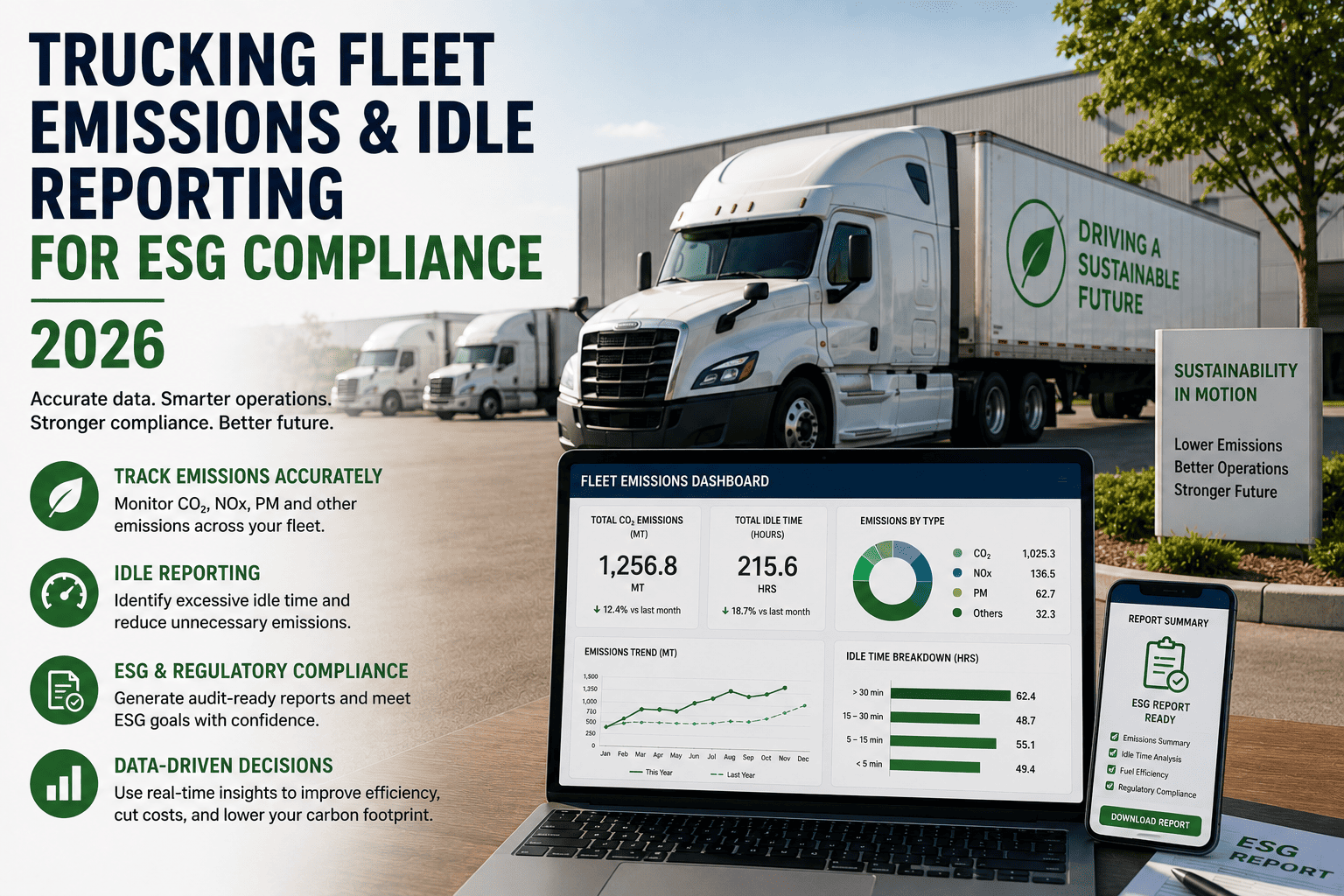
Somewhere on your fleet report, buried between fuel spend and maintenance logs, sits a number that now decides whether you win the next shipper contract. Emissions and idle reporting used to be a nice-to-have sustainability slide. In 2026, it is a line item that shippers, insurers, and regulators all want to see, and most fleet managers still cannot produce it without days of manual spreadsheet work.
Fleet emissions reporting tracks Scope 1 diesel combustion output, typically 400 grams of CO2 per mile for a standard commercial truck, while idle reporting tracks the 1,500 to 2,400 hours a year a long-haul truck spends burning fuel while parked. Together they form the backbone of ESG compliance. Regulations like California's Climate Corporate Data Accountability Act and the EU's Corporate Sustainability Reporting Directive now require detailed, auditable disclosure, and over 60 percent of freight spending already comes from shippers demanding emissions data from carriers. Fleets that automate this reporting cut idle-related fuel waste by up to 35 percent and avoid five and six figure penalties for missing or inaccurate disclosures.
Why Emissions and Idle Reporting Became Non-Negotiable in 2026
For years, sustainability reporting in trucking was a voluntary gesture, a paragraph in an annual report written to satisfy a handful of environmentally conscious customers. That era is over. A wave of overlapping regulations now treats fleet emissions data the way tax filings are treated: incomplete or inaccurate, and it carries real financial and contractual consequences.
California's Climate Corporate Data Accountability Act requires large companies operating in the state to disclose Scope 1, 2, and 3 emissions annually, with penalties reaching into the hundreds of thousands of dollars for non-compliance. The EU's Corporate Sustainability Reporting Directive pulls in any company with meaningful European operations, and mining and industrial sector standards like GRI 14 have already set a precedent that transportation frameworks are following closely. On top of government mandates, shippers themselves have become the loudest enforcers, since a growing share of freight contracts now require carriers to submit verified emissions figures before a bid is even considered.
The Compliance Stack Fleet Managers Are Now Expected to Navigate
Fleet operators rarely deal with just one framework. A single mid-size carrier might need to satisfy a state disclosure law, a shipper's sustainability audit, and an internal ESG target simultaneously, each with slightly different formatting and calculation requirements. Manually reconciling fuel card data, telematics feeds, and route logs into three different report formats is where most fleets lose weeks every quarter.
| Framework or Rule | Who It Applies To | What It Requires |
|---|---|---|
| California Climate Corporate Data Accountability Act | Companies with over 1 billion dollars in revenue operating in California | Annual public disclosure of Scope 1, 2, and 3 emissions with third-party assurance starting 2026 |
| EU Corporate Sustainability Reporting Directive | Companies with significant EU operations or trade exposure | Structured emissions and sustainability disclosure aligned to GRI and CSRD standards |
| Shipper Sustainability Audits | Any carrier bidding on contracts with large retail, manufacturing, or logistics shippers | Verified fuel and emissions data per mile, per route, or per shipment before contract award |
| SmartWay and GHG Protocol | Fleets seeking certification or investor-grade sustainability credibility | Consistent, auditable CO2e data collected continuously rather than estimated quarterly |
Connect your fuel cards and telematics to FleetRabbit and generate an audit-ready Scope 1 emissions report before your next shipper review. Sign up free and see your fleet's carbon footprint calculated automatically, or book a demo to walk through your specific compliance requirements with our team.
The Hidden Cost of Idle Time Inside Your Emissions Number
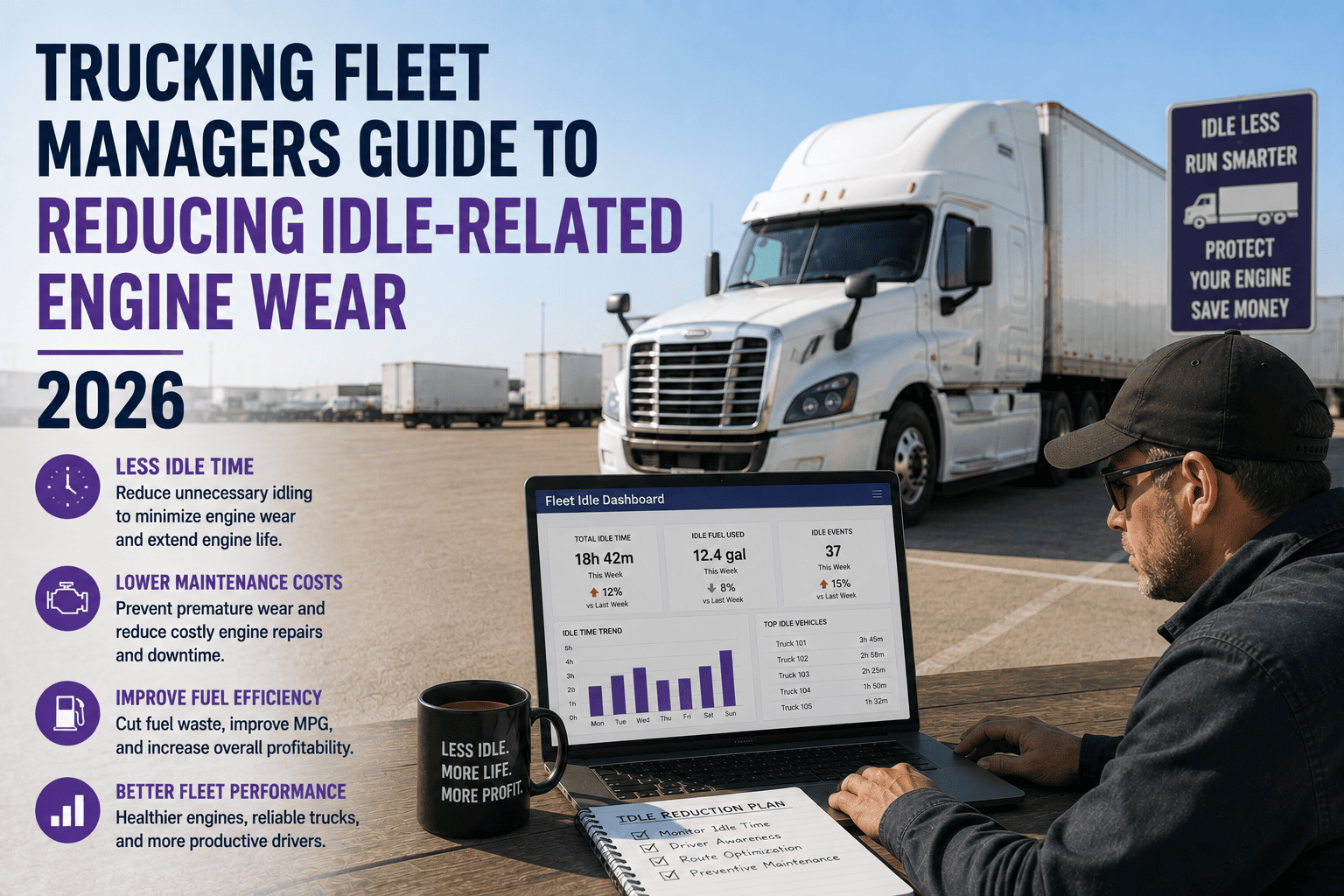
Idle time is the quiet twin of your emissions problem. Every hour a truck idles burns fuel and produces CO2 exactly the same as an hour of highway driving, except there is no mile of revenue to show for it. A single Class 8 truck idling one hour burns approximately 0.8 gallons of diesel, and across a 100-vehicle fleet that adds up to tens of thousands of dollars a year in fuel that never appears on an odometer.
The U.S. Department of Energy estimates long-haul trucks idle between 1,800 and 2,400 hours annually. At current diesel prices, that translates to roughly 4,000 to 8,000 dollars in wasted fuel per truck every year, and every one of those gallons adds directly to your Scope 1 emissions total. Fleets that cannot separate necessary idling, such as reefer units keeping cargo cold, from avoidable idling at rest stops and loading docks end up reporting inflated emissions numbers and missing an easy reduction opportunity at the same time.
Where Idle Time Actually Comes From
Idle events cluster around a handful of predictable causes, and identifying the pattern is the first step toward cutting both cost and emissions.
Driver Comfort During Rest Periods
Drivers running the engine overnight for heat, air conditioning, or cabin power account for a large share of total idle hours, especially on long-haul routes with extended layovers.
Loading Dock and Customer Site Waits
Trucks left running while waiting to load or unload rack up idle minutes that vary widely by customer location and can be flagged separately from policy violations.
Refrigerated and Auxiliary Equipment
Reefer trailers and onboard equipment sometimes require engine-on time that looks identical to wasted idling on a basic fuel report, which is why context-aware tracking matters for accurate reporting.
Building an Emissions and Idle Reporting Framework That Holds Up to Audit
A credible ESG report is not a single spreadsheet pulled together once a year. It is a continuous data pipeline that connects fuel consumption, telematics, and route data into a single, consistent source of truth. Here is the practical sequence fleets are using to get there.
Step One: Connect Your Fuel and Telematics Data
Emissions calculations are only as reliable as the fuel data behind them. Linking fuel card transactions and telematics feeds from your existing GPS hardware eliminates the manual reconciliation that introduces errors into Scope 1 figures, and it means you do not need to replace any existing equipment to get started.
Step Two: Separate Necessary Idle From Preventable Idle
Context matters. A reefer trailer keeping produce cold is not the same compliance issue as a truck idling unnecessarily at a rest stop. Geo-fenced, context-aware alerts let dispatch teams tell the difference automatically, so idle reporting reflects real waste rather than flagging every engine-on minute equally.
Step Three: Generate Structured, Framework-Aligned Reports
Whether you need output formatted for the GHG Protocol, SmartWay certification, a shipper's sustainability audit, or a state disclosure filing, the underlying data should be the same. Structuring reports to match each framework automatically removes the need to rebuild spreadsheets from scratch every time a new request lands on your desk.
What an Audit-Ready Report Actually Includes
A defensible emissions report shows CO2e per mile, per vehicle, and per route, alongside a clear year-over-year comparison and documented calculation methodology. Idle data should be broken out separately, with fuel cost and emissions equivalents shown side by side so reviewers can see exactly where reductions came from.
FleetRabbit pulls fuel, telematics, and idle data into one continuous pipeline, then formats it for GHG Protocol, SmartWay, and shipper audits without manual rework. Start your free trial today, or book a demo to see how your existing telematics data can be turned into an audit-ready report this week.
Turning Compliance Into a Competitive Advantage
Fleets that treat emissions and idle reporting purely as a defensive compliance task miss half the opportunity. The same data that satisfies a regulator also wins contracts, since shippers increasingly favor carriers who can hand over verified sustainability numbers without delay. Reduced idle time lowers fuel spend directly, extends engine life by cutting hours of unnecessary wear, and strengthens driver retention when coaching is based on clear, specific data rather than vague reminders to shut off the engine.
Insurance carriers have started to notice too. Fleets with documented emissions performance and lower mechanical failure rates linked to reduced idle wear are seeing modest premium reductions, turning a compliance exercise into a measurable line of savings that compounds year over year.
Frequently Asked Questions
Shippers are asking for verified numbers now, not next year. FleetRabbit builds the audit-ready Scope 1 emissions and idle report your fleet needs, straight from the fuel and telematics data you already have.