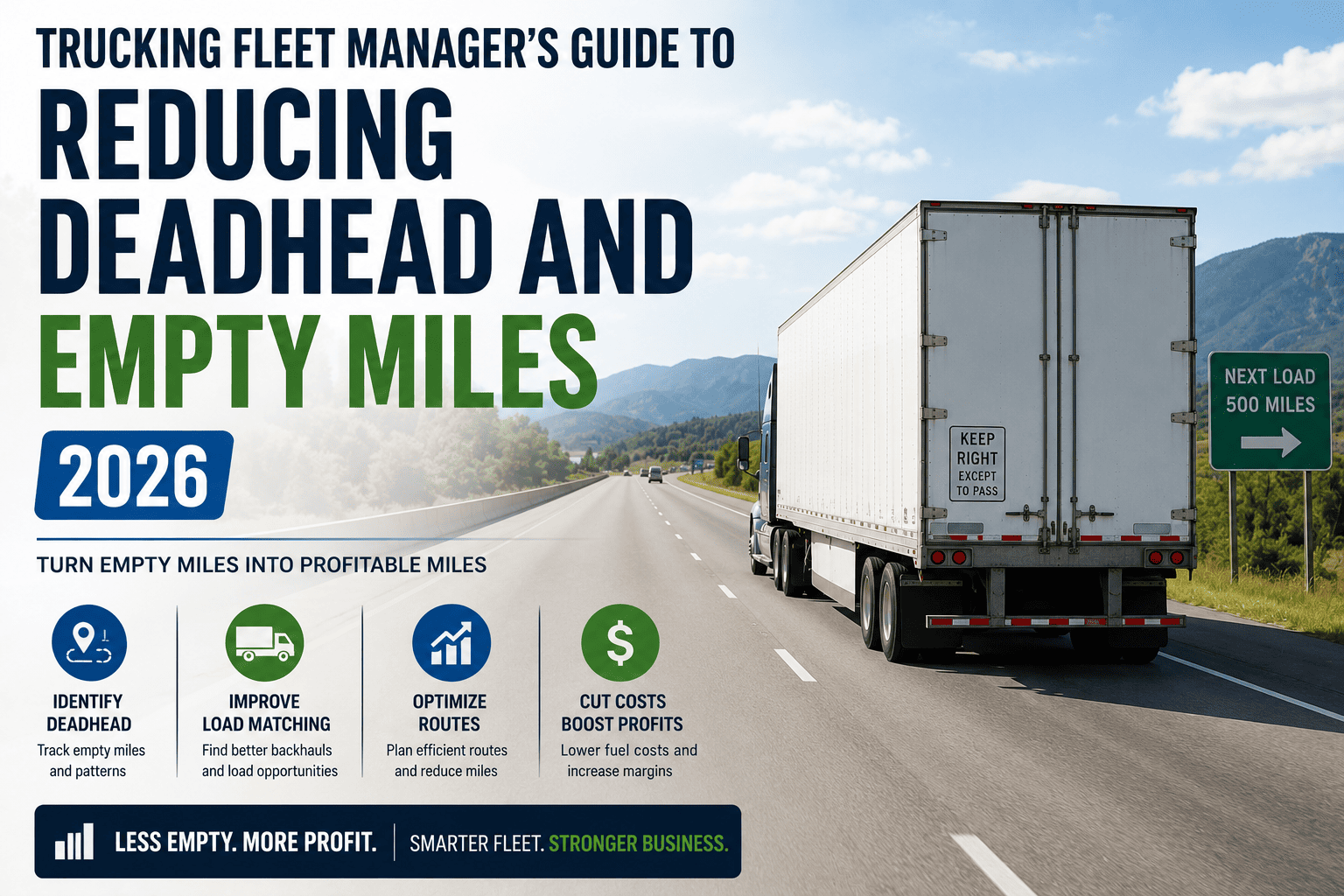
Somewhere between the last delivery and the next pickup, a truck is running empty right now, burning fuel, racking up driver hours, and earning exactly zero dollars for it. Deadhead miles don't show up as a dramatic loss on any single trip. They show up as a slow, steady drain that most fleets underestimate until they actually put a number on it, and that number is almost always bigger than expected.
Deadhead miles are the distance a truck travels without a paying load, between a delivery and the next pickup, or back to domicile. Industry-wide, deadhead typically runs 15 to 22 percent of total miles for well-run fleets, with weaker operations running 28 percent or higher. At an all-in cost of roughly 1.50 to 2.50 dollars per empty mile, even a modest reduction recovers real money fast. Sign up for free to see your fleet's deadhead percentage broken out by lane.
Where Does Your Fleet's Deadhead Rate Actually Stand?
Deadhead percentage is the single clearest signal of how efficiently a fleet is running, yet most fleets never calculate it beyond a rough guess. Here's how your current rate compares against the market.
The Real Cost Of Running Empty
The math on deadhead is simple, and that simplicity is exactly why it's so easy to overlook until someone sits down and does it.
One Empty Mile, Multiplied Across A Fleet
A single deadhead mile costs somewhere around 1.50 to 2.50 dollars once fuel, driver pay, maintenance, and depreciation are all factored in. That figure feels small in isolation. A 100-truck fleet running 120,000 miles per truck a year at a 25 percent deadhead rate is putting 3 million empty miles on the road annually, translating into several million dollars spent on miles that generated zero revenue.
Why The Damage Stays Hidden
Revenue per mile calculated only on loaded miles hides the real picture. A load paying a strong rate looks profitable in isolation, but once the deadhead required to reach that pickup is factored into the total trip, the actual return often looks much thinner.
FleetRabbit tracks deadhead automatically across every truck and lane, so it stops hiding in a rough estimate and becomes a number you can actually manage. Sign up for free and see your fleet's number this week.
The Patterns That Quietly Drive Deadhead Up
Deadhead rarely comes from one dramatic cause. It builds from a handful of recurring habits that are each easy to overlook individually but expensive in total.
| Pattern | Why It Happens | The Fix |
|---|---|---|
| Late Backhaul Search | Dispatcher waits until the truck is already empty to start looking | Begin the search while the outbound delivery is still in progress |
| Domicile Returns | Driver heads home for scheduled time off with no backhaul checked | Flag home-time legs for backhaul search just like any other trip |
| Poor Truck Visibility | Load gets assigned to a driver who isn't actually closest to pickup | Real-time position data across the whole fleet, not just one truck |
| No Standing Metric | Nobody tracks deadhead consistently, so it never gets prioritized | Report deadhead percentage by lane and driver as a routine KPI |
Building A Deadhead Reduction Habit, Not A One-Time Fix
Cutting deadhead isn't about a single software purchase, it's a handful of consistent habits layered on top of better visibility.
Start The Backhaul Search Before The Truck Is Empty
Even an hour of head start meaningfully shrinks the radius of available return freight. Waiting until a driver calls in empty hands every nearby opportunity to a competitor who's already searching.
Compare Total-Trip Revenue, Not Just The Outbound Rate
A high-paying load into a market with weak return freight can end up less profitable than a modest load on a balanced lane. Calculating revenue across the full round trip, loaded and empty miles combined, is the only way to see which decision actually protects margin.
A Quick Way To Check This
Divide total trip revenue by total trip miles, including the deadhead leg. If that number is lower than a comparable balanced-lane load, the higher headline rate wasn't actually the better decision.
Give Dispatchers One Clear View, Not Several Disconnected Ones
When truck position, upcoming deliveries, and available backhaul freight all live in separate tools, dispatchers optimize for the truck in front of them instead of the fleet as a whole. A single, real-time view changes that.
Track Deadhead As Seriously As Revenue Per Mile
A metric that isn't measured consistently never gets prioritized. Reviewing deadhead percentage by lane and by driver on a regular cadence turns an invisible cost into a managed one.
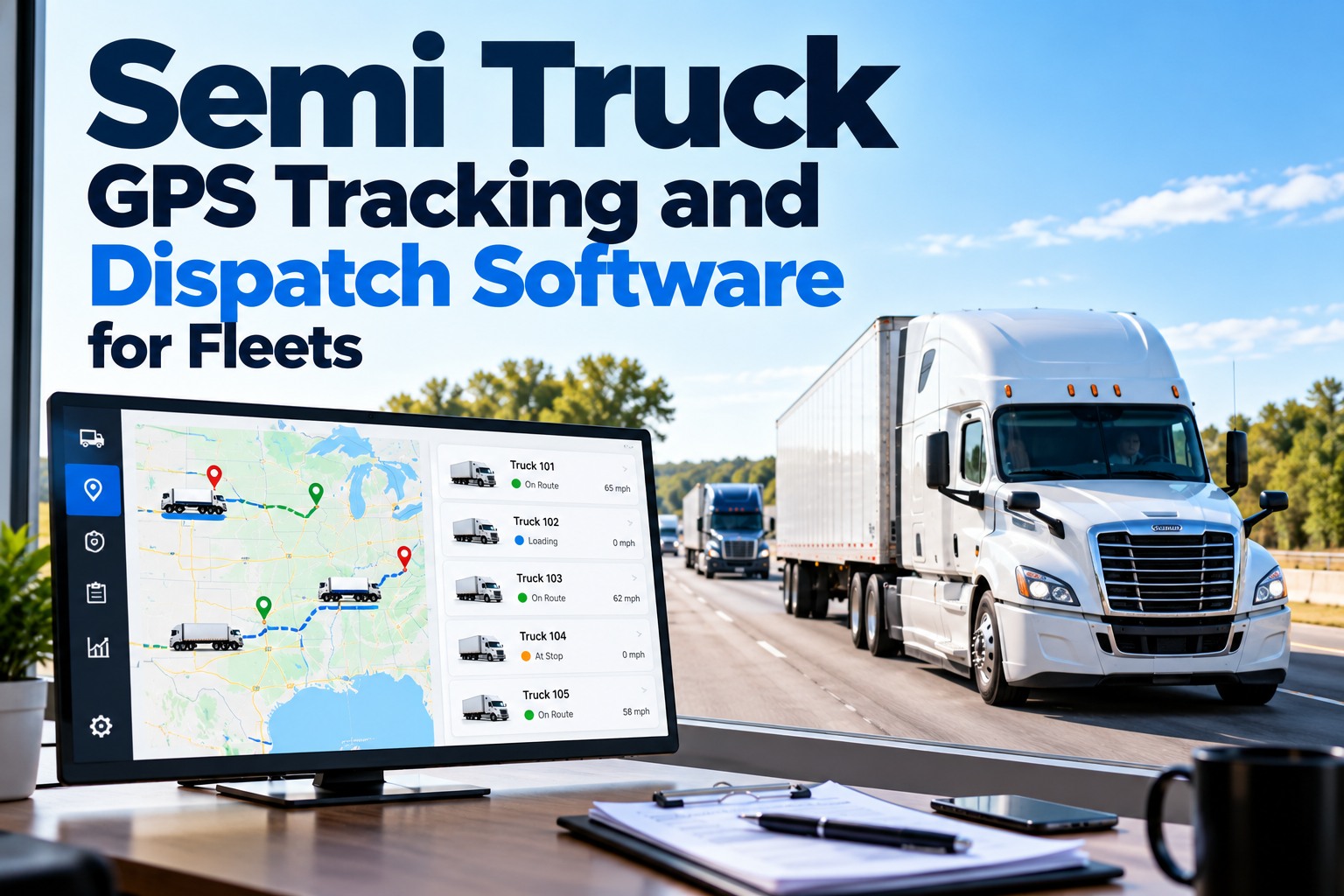
FleetRabbit gives dispatchers a single view of vehicle position and delivery timing, so backhaul search starts hours earlier than a phone call ever could. Book a free demo to see it applied to your network.
A Modest Improvement Adds Up Fast
Reducing deadhead doesn't require restructuring an entire network. A fleet moving from a 25 percent deadhead rate to 18 percent, well within reach through better timing and visibility alone, recovers a meaningful share of previously empty miles as paying freight. Across a fleet running six figures worth of annual mileage, that kind of shift routinely translates into hundreds of thousands of dollars in recovered margin without adding a single truck.
Frequently Asked Questions
Every deadhead mile is a mile you paid for and didn't get paid on. FleetRabbit gives dispatchers the real-time visibility to start the backhaul search earlier, fill more miles with paying freight, and track deadhead as the standing metric it deserves to be.