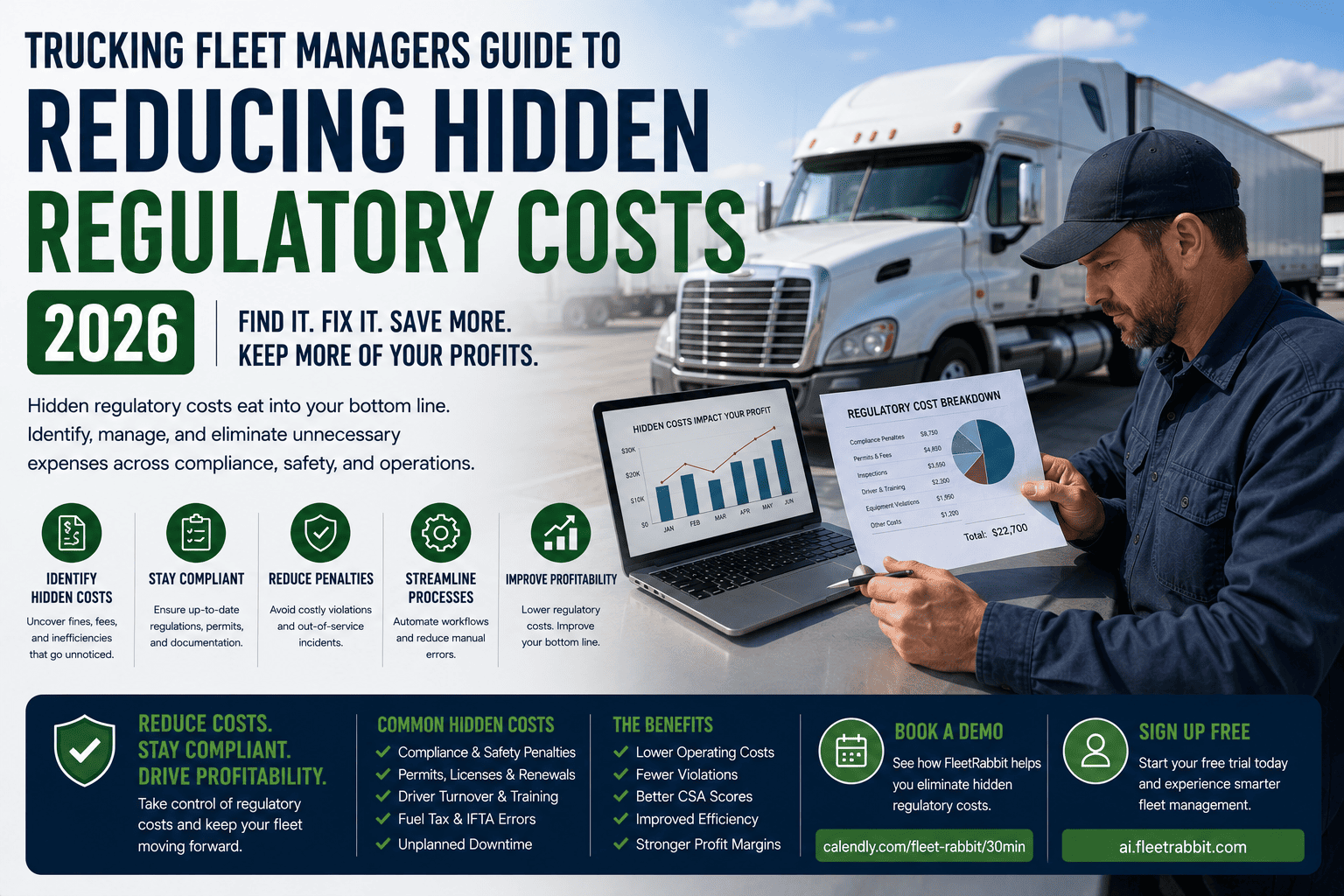
Ask a fleet manager what compliance costs them and most will quote a number close to the visible fine on the last violation notice. That number is almost never the real cost. Only 7 percent of motor carriers pass a DOT audit without a single violation, and for the remaining 93 percent, the fine on the page is just the tip of a much larger financial iceberg sitting below the surface, one made of audit escalation, insurance increases, and operational disruption that never shows up on the citation itself.
The average settlement from a closed FMCSA investigation runs approximately 7,155 dollars per case, with penalties for serious gaps reaching 125,000 dollars. Out-of-service violations alone can trigger fines up to 19,277 dollars. Nearly three out of five FMCSA audits target carriers with fewer than seven power units, meaning small fleets carry disproportionate exposure, not less.
The Iceberg Beneath Every Compliance Fine
A single violation notice is the small, visible portion of a much larger cost structure. Below the surface sits everything the fine itself triggers: the audit that follows repeated findings, the insurance premium increase that lasts for years, the out-of-service disruption to freight, and the emergency repair required to restore compliance on the spot.
Where The Real Money Actually Goes
Breaking these hidden costs into categories makes the true financial exposure much clearer than any single fine schedule can show on its own.
| Hidden Cost Category | Typical Financial Impact | Why It Compounds |
|---|---|---|
| Average FMCSA Settlement | Approximately 7,155 dollars per case | Serious gaps push penalties as high as 125,000 dollars |
| Out-Of-Service Violation | Fines up to 19,277 dollars | Vehicle grounded mid-route, freight delayed on top of the fine |
| Drug And Alcohol Testing Gaps | Over 16,000 dollars per violation | Random testing enforcement holds at 50 percent for drugs in 2026 |
| CSA Score Damage | Elevated insurance premiums for up to 24 months | Every violation stays on record, compounding with each new citation |
| Repeat Audit Risk | Increased on-site audit frequency | Carriers with prior findings are flagged for closer future scrutiny |
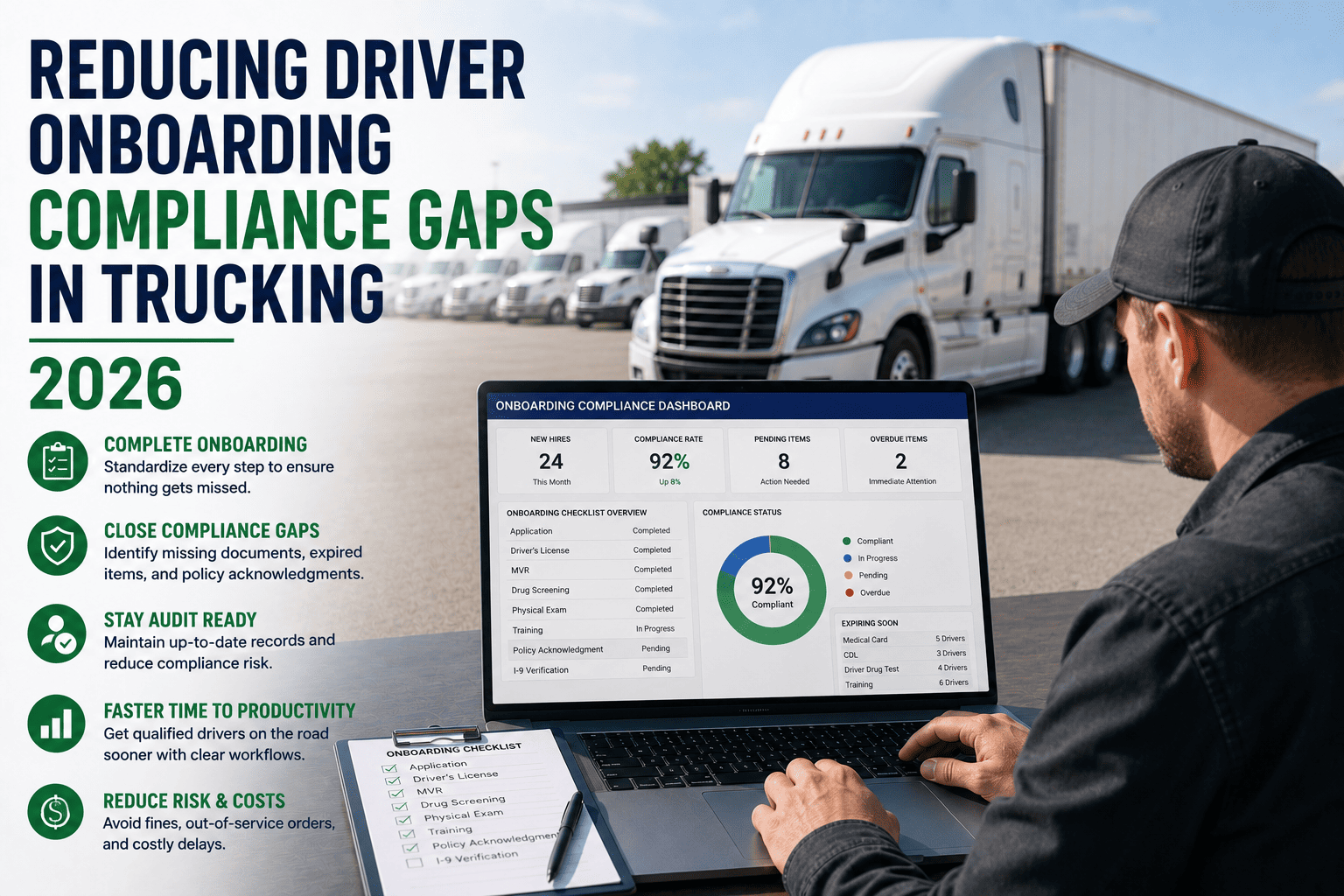
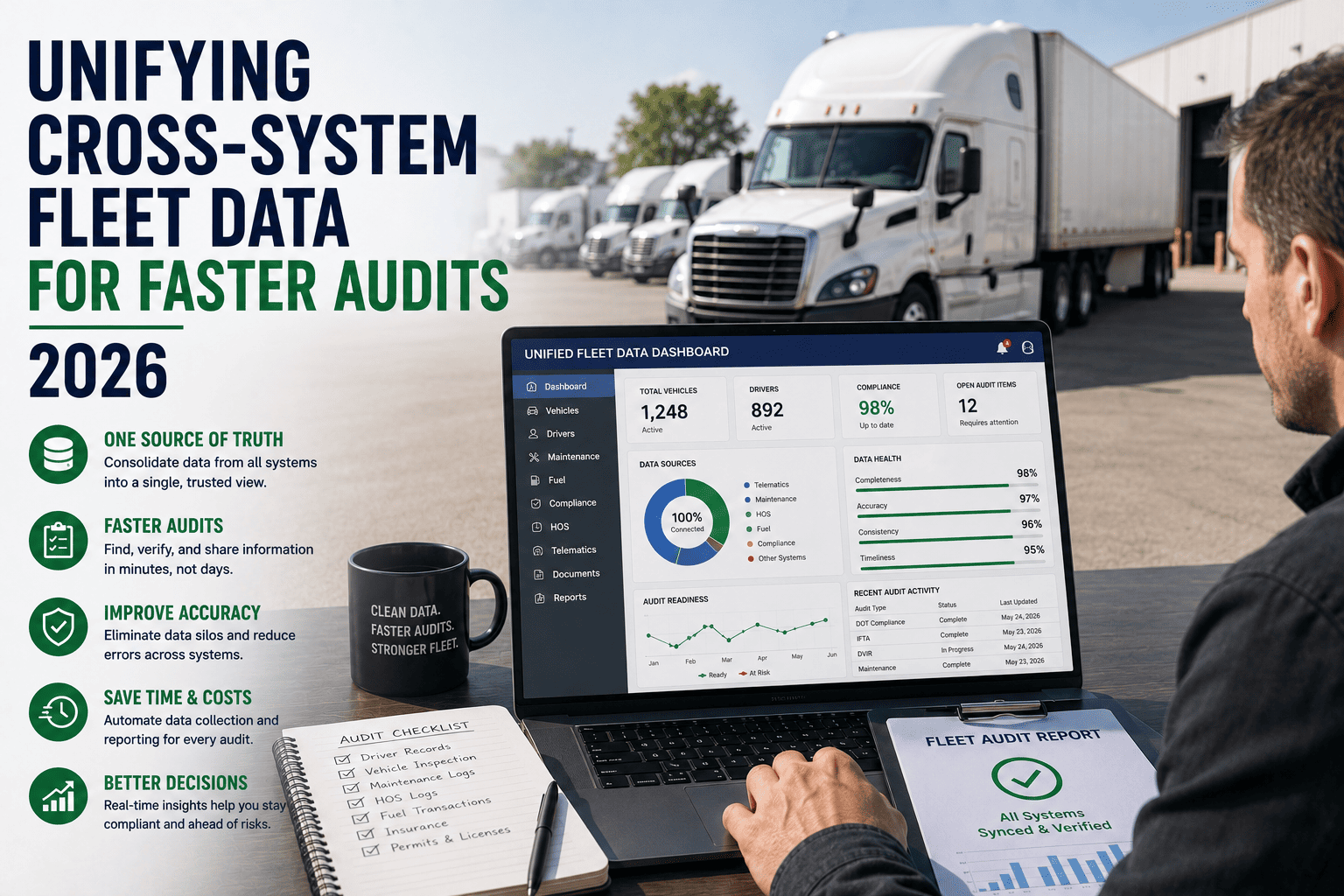
FleetRabbit tracks driver qualification files, DVIRs, maintenance records, and Clearinghouse status in one dashboard, flagging gaps before an auditor finds them. You can sign up for a free trial and see your own compliance exposure within a day.
The Six Areas Every Audit Actually Checks
Every DOT compliance review follows the same underlying structure, evaluating a fixed set of regulatory areas independently of each other. Knowing these areas in advance is the fastest way to find your own gaps before an auditor does.
Driver Qualification Files
Missing or expired license, medical certificate, or MVR records are among the most cited gaps.
Hours Of Service Records
HOS infractions now carry fines reaching 19,277 dollars per violation under current schedules.
Vehicle Maintenance Records
Recently split into two separate scoring categories, doubling the exposure from a single missed inspection.
Drug And Alcohol Clearinghouse
Pre-employment and annual queries are mandatory, with over 190,000 CDL holders currently under prohibited status nationwide.
Why This Matters More For Smaller Fleets
Nearly three out of five FMCSA audits in recent enforcement data targeted carriers with fewer than seven power units. Small fleets are not below the radar, they are disproportionately represented in audit results, largely because they lack the administrative staff to keep every one of these six areas current at all times.
What Prevention Actually Costs Versus What Enforcement Costs
Insurance premiums for commercial fleets reached a record 0.102 dollars per mile in recent industry data, a figure directly connected to compliance records that insurers treat as evidence in every liability discussion. A structured compliance system, by contrast, typically costs a small fraction of a single serious enforcement action, while removing the recurring exposure that drives those premiums higher year after year.
A Simple Gap Check
Pull one driver qualification file and one vehicle maintenance record at random right now. If either one is missing a required document or an expiration date has already passed, that single gap is a preview of what a real audit would find across your entire fleet. Fleets that book a demo often start with exactly this exercise before deciding what to fix first.
FleetRabbit automates driver qualification tracking, DVIR documentation, maintenance records, and Clearinghouse monitoring into one audit-ready dashboard. Stop discovering compliance gaps during an audit and start catching them the moment they appear.