One driver, one route, one missed 30-minute break. On paper it looks like a single line item on a roadside inspection report. In practice, that one HOS violation sets off a chain reaction that follows a carrier for up to two years, long after the citation itself is forgotten. The fine gets paid, the driver gets back on the road, and most fleet managers move on without ever calculating what that single moment actually cost once CSA scoring, insurance renewals, and lost freight opportunities are added to the bill. In 2026, with civil penalties rising and enforcement data flowing into FMCSA's systems faster than ever, that miscalculation is getting more expensive every year.
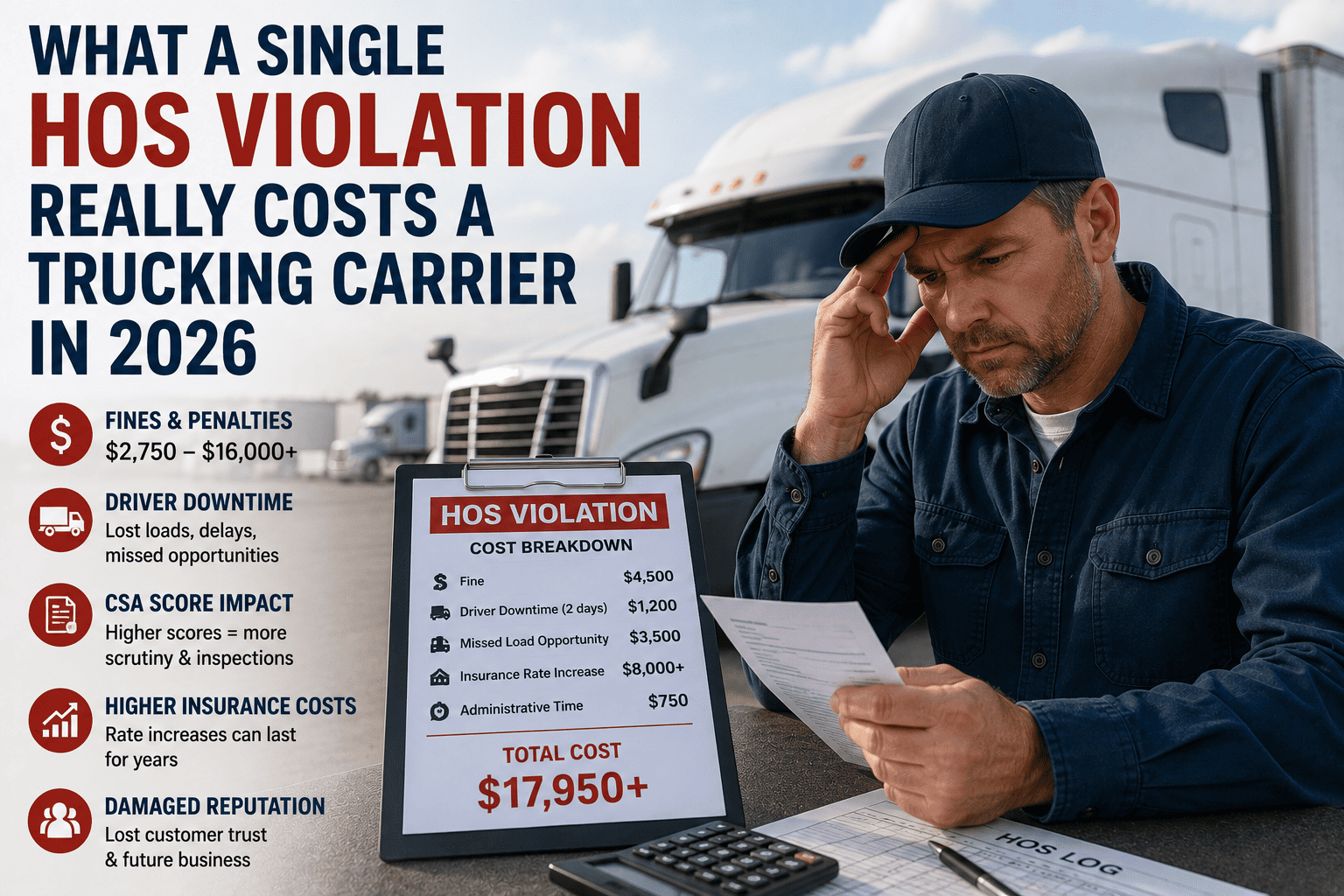
A single HOS violation can carry a direct civil penalty of up to roughly $19,000, but the real cost stacks on top of that: out-of-service downtime, a CSA score hit that lingers for up to 24 months, insurance premium increases of 20 to 40 percent, and driver turnover costs averaging over $8,000 per replacement. The total financial exposure of one violation routinely reaches $15,000 to $75,000 once every layer is counted, which is why proactive HOS monitoring costs less than a single incident.
Layer One: The Fine You See on the Citation
The number printed on the citation is the smallest part of the story. Under the FMCSA penalty schedule, which is adjusted annually for inflation, a single hours of service violation can carry a maximum civil penalty of close to $19,000 per driver. Multiple violations discovered during a single audit compound quickly, with fleets facing $25,000 to $75,000 in direct fines when several citations are found at once. That number is the floor of the cost, not the ceiling.
What an Out-of-Service Order Actually Costs
A serious HOS violation frequently results in an out-of-service order that stops the truck immediately until the rest requirement is satisfied. Every day that truck sits idle represents lost revenue, commonly estimated around $264 per day in direct lost income, plus towing or roadside assistance if the vehicle can't safely reach a rest location on its own. A two or three-day disruption from a single OOS event can quietly erase a week's worth of margin on that route.
FleetRabbit tracks driver hours in real time so dispatch never assigns a route a driver can't legally finish. Sign up free and see your fleet's current HOS exposure today.
How One Violation Follows a Carrier for Two Years
The fine gets paid within weeks. The consequences don't stop there. Every violation recorded at roadside flows into FMCSA's Safety Measurement System, where it stays active in the carrier's safety profile for a full 24 months, influencing insurance renewals, broker qualification, and shipper relationships long after the original incident is resolved.
Why Insurance Underwriters Treat CSA Scores as Risk Signals
Commercial trucking insurance premiums are priced against a carrier's Safety Measurement System record, and an elevated Hours of Service score is read as a direct risk indicator. Carriers with compliance gaps or a recent out-of-service order can see premiums climb sharply, and in some cases get pushed out of preferred insurance markets entirely into more expensive excess and surplus coverage. A single compliance event earlier in the year can noticeably change the insurance conversation months later at renewal.
The Driver Turnover Cost Nobody Budgets For
A serious violation, an out-of-service order, or a disqualification doesn't just cost the carrier in fines and premiums. Replacing an experienced driver averages roughly $8,000 or more once recruiting, onboarding, and lost productivity are factored in, an expense that rarely makes it into anyone's violation cost estimate but hits the balance sheet just as hard.
Why HOS Violations Keep Rising Industry-Wide
Hours of service citations have climbed sharply in recent years, driven partly by tighter enforcement and more consistent ELD-to-audit data matching. Carriers still relying on manual log review instead of proactive dispatch tools are the ones most exposed to this growing enforcement trend.
| Cost Category | Typical Impact | How Long It Lasts |
|---|---|---|
| Civil Penalty | Up to roughly $19,000 per driver per violation | One-time, paid within weeks |
| Out-of-Service Downtime | Lost revenue plus towing and recovery costs | Days, but disrupts the whole route schedule |
| CSA Score Impact | Elevated BASIC score, possible investigation threshold | Up to 24 months on the public safety record |
| Insurance Premium | 20 to 40 percent increase at the next renewal | Full policy term, often 12 months or more |
| Driver Turnover | Roughly $8,000+ per replacement if driver is disqualified | Recruiting and onboarding cycle, often 30-60 days |
FleetRabbit's automated HOS tracking flags developing violations before dispatch, protecting your CSA score and your next insurance renewal in one move. Book a free demo to see your fleet's real exposure.
Frequently Asked Questions
FleetRabbit gives dispatch real-time visibility into every driver's available hours, so your fleet avoids the fines, downtime, CSA damage, and insurance hikes that come with a single preventable violation.