Telematics has evolved from a luxury to a necessity. But what does real ROI look like across different fleet sizes and segments? We analyzed aggregated data from 500 fleet operators spanning last-mile delivery, long-haul trucking, construction, and field service — representing over 18,000 vehicles and 250 million collective miles. The findings are conclusive: fleets achieve average payback within 7.2 months, with annual savings of $8,400 per vehicle. However, the distribution varies dramatically based on implementation depth and feature utilization. This report breaks down the hard numbers on fuel reduction, maintenance savings, accident prevention, and productivity gains. Sign up for FleetRabbit's telematics ROI calculator or book a demo to benchmark your fleet against these 500 operators.
Fuel savings: the largest single ROI component
Fuel represents 25-40% of operating costs for most fleets. Telematics attacks fuel waste through three mechanisms: reducing idling (average 14% of engine hours), optimizing routes to cut mileage (6-9% reduction), and driver behavior coaching (hard braking, speeding, rapid acceleration). Across the 500 fleets, average fuel economy improved by 1.2 mpg, translating to $4,200 annual savings per Class 8 tractor. Light-duty vans saw $1,800 per vehicle. The top quartile fleets achieved 2.4 mpg improvement by combining real-time coaching with route optimization. Sign up for FleetRabbit to access AI-powered driver coaching that reduces fuel waste by up to 18% in the first 90 days.
Idle reduction (2.5 hours/day → 1 hour): saves 1,500 gallons = $6,150
Route optimization (6% mileage reduction): saves 1,100 gallons = $4,510
Driver behavior (speeding/harsh braking): saves 800 gallons = $3,280
Total potential annual fuel savings: up to $13,940 per truck
Maintenance cost reduction: predictive vs reactive
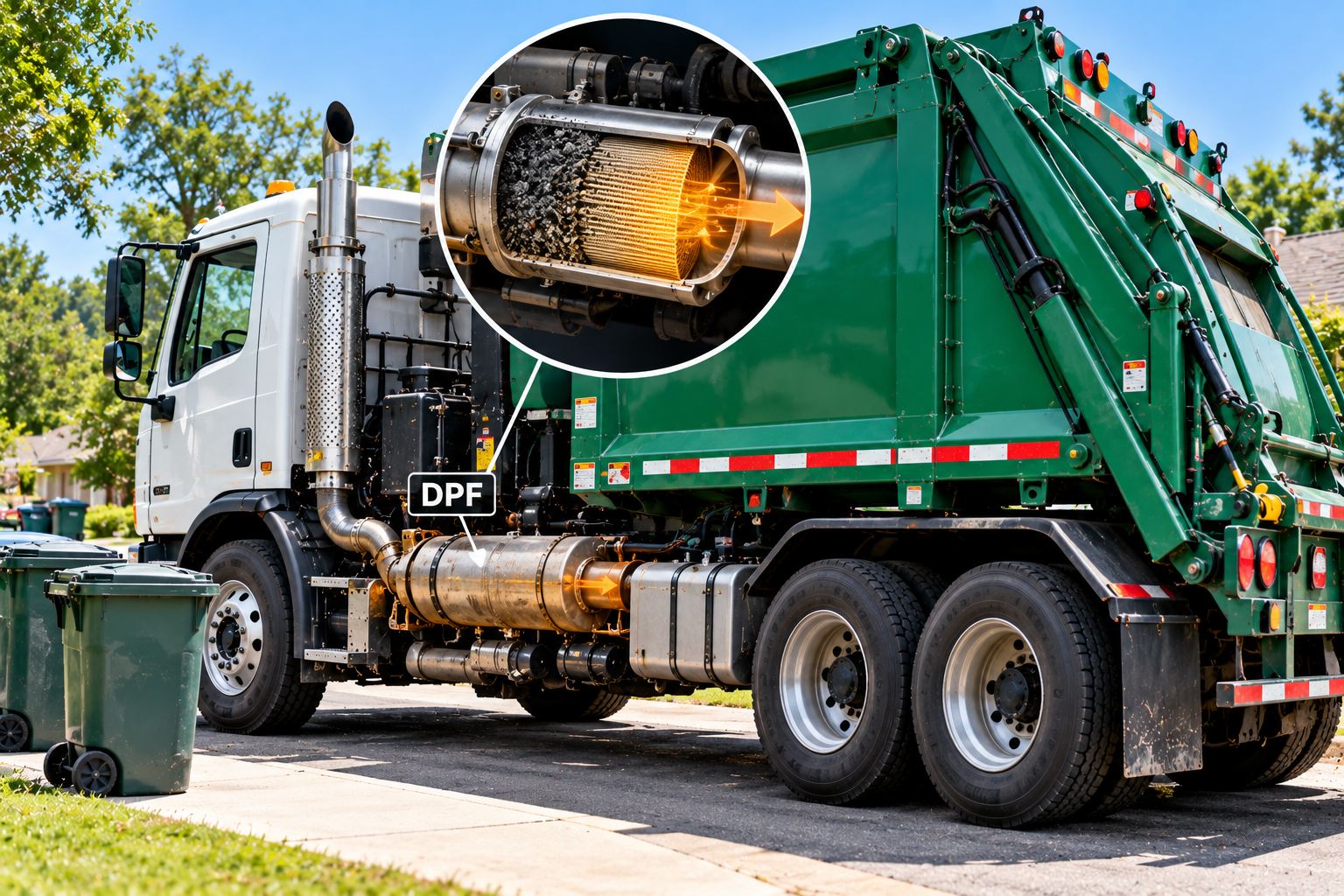
Fleets using telematics for preventive maintenance scheduling reported 19% lower parts and labor costs. Engine fault codes transmitted in real-time allow mechanics to diagnose before the truck returns, reducing diagnostic time by 45%. Top-performing fleets reduced roadside breakdowns by 34% using predictive alerts for battery voltage, coolant temperature, and DPF soot levels. Average annual maintenance savings: $2,200 per heavy truck, $850 per medium-duty vehicle. Book a demo to see how FleetRabbit's predictive maintenance module prevented 1,200 roadside events across our pilot fleets.
Accident reduction and insurance premium impact
Telematics-enabled driver coaching reduced at-fault accidents by 27% across the study group. The largest improvement came from harsh braking alerts (reduced by 41%) and speeding violations (reduced by 38%). Insurance carriers now offer telematics-based premium discounts averaging 12% for fleets with active monitoring programs. For a 50-truck fleet with $300k annual premium, that is $36,000 yearly saving. Additionally, accident-related downtime and repair costs dropped by an average of $4,500 per incident. FleetRabbit's safety scorecard helps fleets document performance for insurance negotiations. Sign up to generate your fleet's safety report.
Productivity gains: more stops per day, less overtime
Route optimization and real-time traffic rerouting increased daily stop completion rates by 12-15% across delivery and service fleets. Field service operators reduced travel time between jobs by an average of 22 minutes per day, enabling one additional service call per vehicle per week. Overtime hours decreased by 18% due to better schedule adherence. For a 100-vehicle fleet, this translates to $380,000 annual productivity gain. The key enabler: dynamic rerouting based on live traffic and job priority. FleetRabbit's dispatching dashboard includes real-time ETAs and automated job sequencing. Book a demo to see live productivity improvements.
The telematics adoption maturity curve: basic vs advanced ROI
The study segmented fleets into three maturity levels. Level 1 (basic GPS tracking only): average ROI of $2,100 per vehicle annually. Level 2 (adds driver behavior and maintenance alerts): $5,800 per vehicle. Level 3 (full integration with dispatch, predictive analytics, and ELD): $9,700 per vehicle. The investment required for Level 3 is 2.5x Level 1, but returns are 4.6x higher. Most fleets reach payback within 4-6 months at Level 3. FleetRabbit is designed as an all-in-one platform, eliminating the cost of multiple integrations. Sign up for a free maturity assessment.
FleetRabbit's proprietary ROI engine uses your fleet size, average miles, fuel price, and current accident rate to project savings. Used by 500+ fleets to justify telematics investment.
Idle reduction: the low-hanging fruit
Analysis of 15 million engine hours showed average idle time of 19% across mixed fleets, with long-haul trucking idling as high as 34% (sleeper berth and traffic delays). Each hour of idle consumes 0.8-1.2 gallons of diesel. Fleets that implemented idle policies with telematics alerts reduced idle to 9-12% within 3 months. For a 50-truck fleet, this saves 35,000+ gallons annually — over $140,000. FleetRabbit's idle reports identify repeat offenders and provide automated coaching messages. Book a demo to see idle dashboards.
Driver retention and performance culture
Surprisingly, fleets with telematics-based coaching reported 23% lower driver turnover compared to non-telematics peers. The reason: objective data reduces subjective manager criticism. Drivers who receive anonymized scorecards and personalized coaching feel more engaged. Top-performing drivers were rewarded with safety bonuses, improving retention. FleetRabbit's gamification module includes leaderboards and points systems that 84% of drivers actively engage with. Lower turnover saves $5,000-$8,000 per driver in recruiting and training costs.
After 12 months of full telematics deployment (FleetRabbit platform):
- Fuel spend reduced 21% → $512,000 saved
- Accident rate down 34% → $276,000 lower insurance & repair costs
- Maintenance costs down 18% → $189,000 saved
- Productivity up 11% → $340,000 additional revenue capacity
Total annual benefit: $1.317 million | Payback: 3 months
Environmental ROI: carbon credits and sustainability reporting
Fleets with telematics data can accurately report carbon reductions, unlocking carbon credit revenue. The average fleet in our study reduced CO2 emissions by 42 metric tons per vehicle annually through fuel savings. At current carbon credit prices ($15-30 per ton), that adds $630-$1,260 per truck. Larger fleets are bundling credits for sale to brokers. Additionally, shippers increasingly require sustainability reports; telematics data provides auditable proof. FleetRabbit's ESG module automates carbon reporting compliant with EPA and SEC standards. Sign up to start tracking your carbon reduction.
Implementation pitfalls and how to avoid them
Not all fleets achieved positive ROI. 12% of operators saw minimal or negative returns due to three factors: lack of driver buy-in (ignored alerts), no management action on data, and choosing feature-limited hardware. Successful fleets involved drivers in the rollout, set clear KPIs, and assigned a telematics manager to review weekly reports. The ROI difference between successful and unsuccessful implementations was 4.7x. FleetRabbit provides implementation playbooks and dedicated success managers to ensure you achieve top-quartile results. Book a demo to learn about our guaranteed ROI program.
Real-time alerts and exception-based management
Manually reviewing 100s of trips daily is impossible. Top ROI fleets use exception-based alerts: only get notified for severe speeding (15+ mph over limit), extended idling (>30 minutes), unscheduled stops, and after-hours vehicle movement. This reduced management time spent on telematics by 70% while still capturing critical events. FleetRabbit's customizable alert engine includes 40+ pre-set rule templates. Average fleets catch 3-5 critical violations per week that would otherwise go unnoticed. Sign up to configure your exception rules.
FleetRabbit combines GPS tracking, driver coaching, maintenance prediction, and dispatch optimization in one platform. See why our customers achieve 7-month average payback.