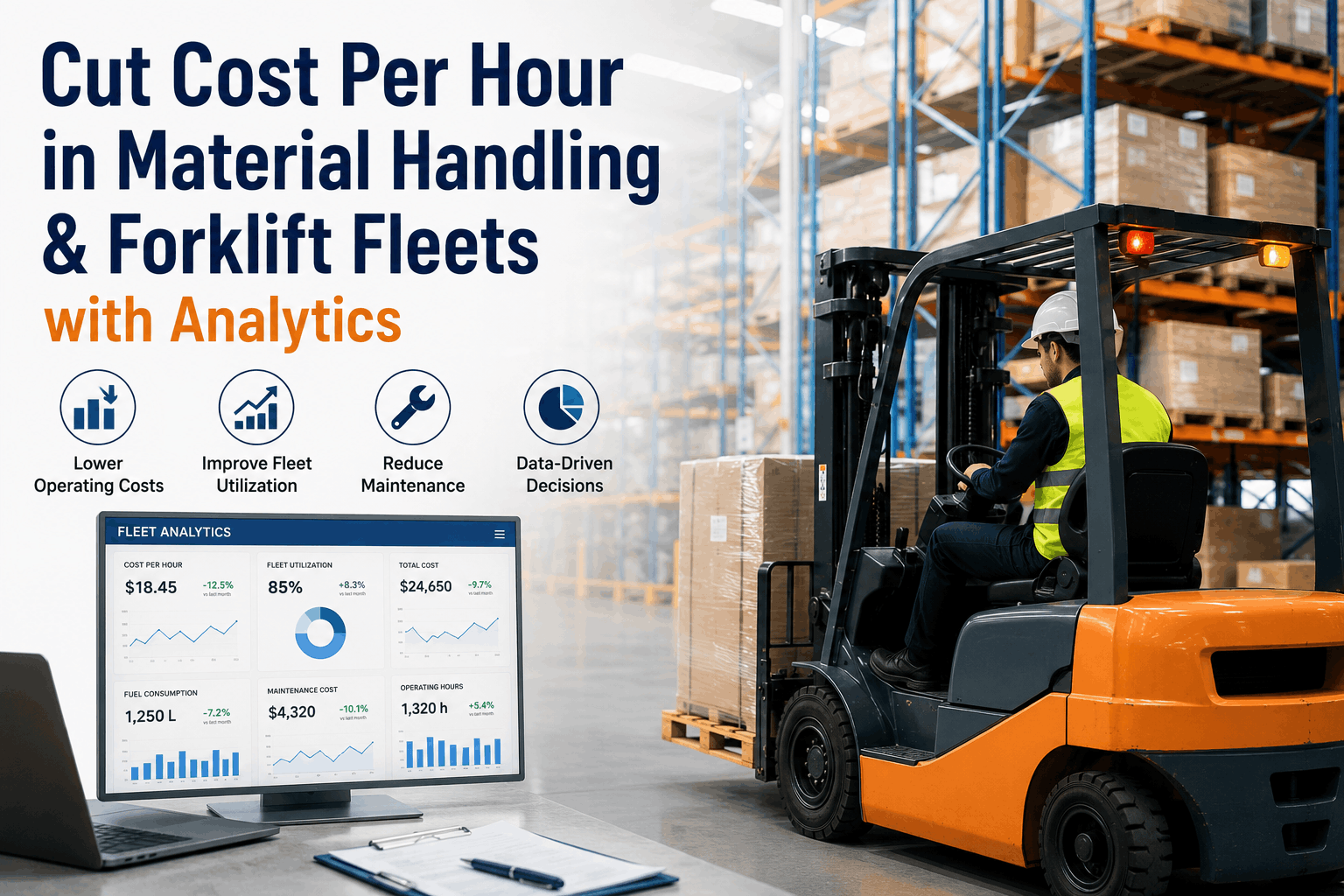
In the material handling industry, every operating hour carries a cost. For forklift fleets and other plant equipment, the cost per hour encompasses fuel or electricity, maintenance labor, parts, depreciation, insurance, and operator wages. While this number may seem straightforward, it is often miscalculated or overlooked entirely in day-to-day operations. Yet understanding and actively managing cost per hour is one of the most powerful levers available for improving fleet profitability. With real-time data and analytics, manufacturers can move beyond rough estimates to precise tracking, uncovering opportunities to reduce costs, optimize utilization, and significantly improve return on investment for their material handling equipment.
Understanding the True Cost Per Hour
The true cost per hour of operating a forklift or other material handling equipment extends far beyond the purchase price. A comprehensive calculation includes fixed costs like depreciation, lease payments, and insurance, which remain relatively constant over time, and variable costs that fluctuate with usage, including fuel or electricity, maintenance, repairs, tires, and operator compensation. According to industry benchmarks, the average forklift operating cost ranges from $15 to $25 per hour, but this figure can vary significantly depending on equipment type, age, application, and maintenance practices.
Many organizations underestimate their actual cost per hour because they fail to capture all relevant expenses. Maintenance costs, in particular, are often undercounted because they may be spread across multiple budgets or departments. Similarly, depreciation is frequently treated as an accounting exercise rather than an operational metric. Analytics tools that consolidate cost data from multiple sources into a single dashboard provide the visibility needed to calculate cost per hour accurately and identify the specific factors driving cost increases.
Key Cost Drivers in Material Handling Fleets
Several factors influence the cost per hour of material handling equipment, and understanding these drivers is the first step toward effective cost control. The most significant cost drivers include:
- Maintenance and Repairs: Reactive maintenance is consistently more expensive than preventive maintenance. Emergency repairs often require overtime labor, expedited parts shipping, and cause production delays. Analytics-driven preventive maintenance reduces these costs by scheduling work during planned downtime and addressing issues before they cause failures.
- Equipment Utilization: Underutilized equipment still incurs fixed costs, which drives up the cost per operating hour. Conversely, overutilization accelerates wear and leads to premature failure. Optimal utilization balances equipment usage to maximize productivity without excessive wear.
- Operator Behavior: Harsh braking, rapid acceleration, and rough handling increase fuel consumption, tire wear, and component stress. Telematics data that tracks operator behavior enables targeted coaching and training, reducing both immediate operating costs and long-term maintenance expenses.
- Energy Costs: For internal combustion forklifts, fuel costs fluctuate and represent a significant variable expense. Electric forklifts have lower energy costs but require careful battery management to maximize efficiency and battery life. Analytics help identify energy waste and optimize charging schedules.
- Fleet Age and Composition: Older equipment generally has higher maintenance costs and lower efficiency. Analytics that track maintenance spend by equipment age help inform replacement decisions, balancing capital investment against ongoing operating costs.
Leveraging Analytics to Reduce Cost Per Hour
Data analytics provides the foundation for systematic cost reduction in material handling fleets. By collecting and analyzing real-time data from equipment telematics, maintenance systems, and operational logs, manufacturers can identify opportunities to reduce cost per hour across every dimension of fleet operations.
Analytics-Driven Cost Reduction Strategies
Implementing these strategies requires a data infrastructure that captures information from all equipment and integrates it into a single analytics platform. FleetRabbit provides this infrastructure, consolidating data from telematics, maintenance records, and operational logs to deliver actionable insights that drive cost reduction. Sign up to see how FleetRabbit can help you reduce cost per hour in your material handling fleet.
Practical Steps to Lower Cost Per Hour
Reducing cost per hour is not a one-time initiative but a continuous process of measurement, analysis, and improvement. The following steps provide a practical framework for achieving sustainable cost reduction:
- Establish a Baseline: Calculate your current cost per hour for each equipment class, capturing all fixed and variable costs. This baseline provides a reference point against which to measure improvement.
- Deploy Real-Time Tracking: Equip your fleet with telematics solutions that track hour meters, fuel consumption, impacts, and operator behavior. This data is the foundation for all subsequent analytics.
- Implement Digital Inspections: Replace paper-based inspections with digital checklists that capture data electronically. Digital inspection data helps identify issues early, reducing expensive reactive maintenance.
- Schedule Maintenance Proactively: Use analytics to schedule maintenance based on actual equipment usage and condition, rather than fixed calendar intervals. This optimizes maintenance frequency and reduces unnecessary service.
- Monitor and Coach Operator Behavior: Share performance data with operators in a constructive manner, focusing on improvement opportunities rather than fault-finding. Recognize operators who demonstrate safe, efficient practices.
- Review Fleet Composition Regularly: Use TCO analysis to identify equipment that should be retired or replaced. Consider whether owned, leased, or rental equipment provides the best cost structure for your operation.
These steps are most effective when supported by a unified fleet management platform that automates data collection, provides intuitive analytics dashboards, and integrates maintenance and operations workflows. Book a demo to learn how FleetRabbit supports each of these steps with integrated tools and real-time visibility.
Building a Cost-Conscious Culture
Technology alone is not enough to sustain cost reduction — it must be accompanied by a culture that values cost awareness and continuous improvement. Operators who understand the cost implications of their behavior are more likely to drive carefully and report issues early. Supervisors who have visibility into fleet cost metrics can make better scheduling and maintenance decisions. Management teams that track cost per hour as a key performance indicator can allocate resources more effectively and demonstrate accountability for fleet performance.
Creating this culture requires leadership commitment, clear communication, and incentives tied to cost performance. Sharing cost data transparently across the organization helps build a shared understanding of financial objectives and encourages collaboration toward common goals. Regular reviews of cost per hour trends, combined with recognition of improvement achievements, reinforce the importance of cost-conscious operations and maintain momentum over the long term. Sign up to access FleetRabbit's analytics tools and build a data-driven cost management culture in your manufacturing operation.
As material handling operations evolve with new technologies and increasing sustainability pressures, the ability to manage cost per hour effectively will become even more critical. Electrification, automation, and changing regulatory requirements will introduce new cost variables while also creating new opportunities for efficiency. Manufacturers who establish robust cost-tracking and analytics capabilities now will be best positioned to navigate this evolving landscape and maintain competitive advantage. Book a demo to explore how FleetRabbit can help you build a future-ready cost management strategy.
CTA section 1Ready to Cut Your Cost Per Hour?
Real-time analytics, predictive maintenance, and utilization optimization — all in one platform.
Frequently Asked Questions
Cost per hour is calculated by dividing total operating costs (including depreciation, maintenance, fuel/energy, tires, parts, insurance, and operator wages) by total operating hours over a specific period. Analytics tools automate this calculation by consolidating cost data from multiple sources and tracking equipment usage in real time.
Industry benchmarks typically range from $15 to $25 per hour for internal combustion forklifts and $10 to $20 per hour for electric models. However, targets vary significantly based on equipment type, application, and operating environment. Analytics help you establish realistic targets based on your specific fleet composition and usage patterns.
Predictive maintenance reduces cost per hour by preventing unplanned breakdowns, which are significantly more expensive than scheduled maintenance. It also extends equipment life, reduces emergency repair costs, and minimizes production disruption caused by equipment failure.
Operator behavior significantly impacts fuel consumption, tire wear, component stress, and maintenance frequency. Harsh braking, rapid acceleration, and rough handling increase operating costs and shorten equipment life. Telematics-based coaching can reduce these behaviors and lower cost per hour.
FleetRabbit provides real-time visibility into equipment utilization, maintenance costs, and operator behavior. Its analytics engine identifies cost reduction opportunities, automates maintenance scheduling, and supports data-driven decisions about fleet composition and replacement. These capabilities collectively reduce cost per hour across the entire material handling fleet.
Join 800+ Operations Using FleetRabbit
From real-time cost tracking to predictive analytics — FleetRabbit helps you optimize every dollar spent on material handling.