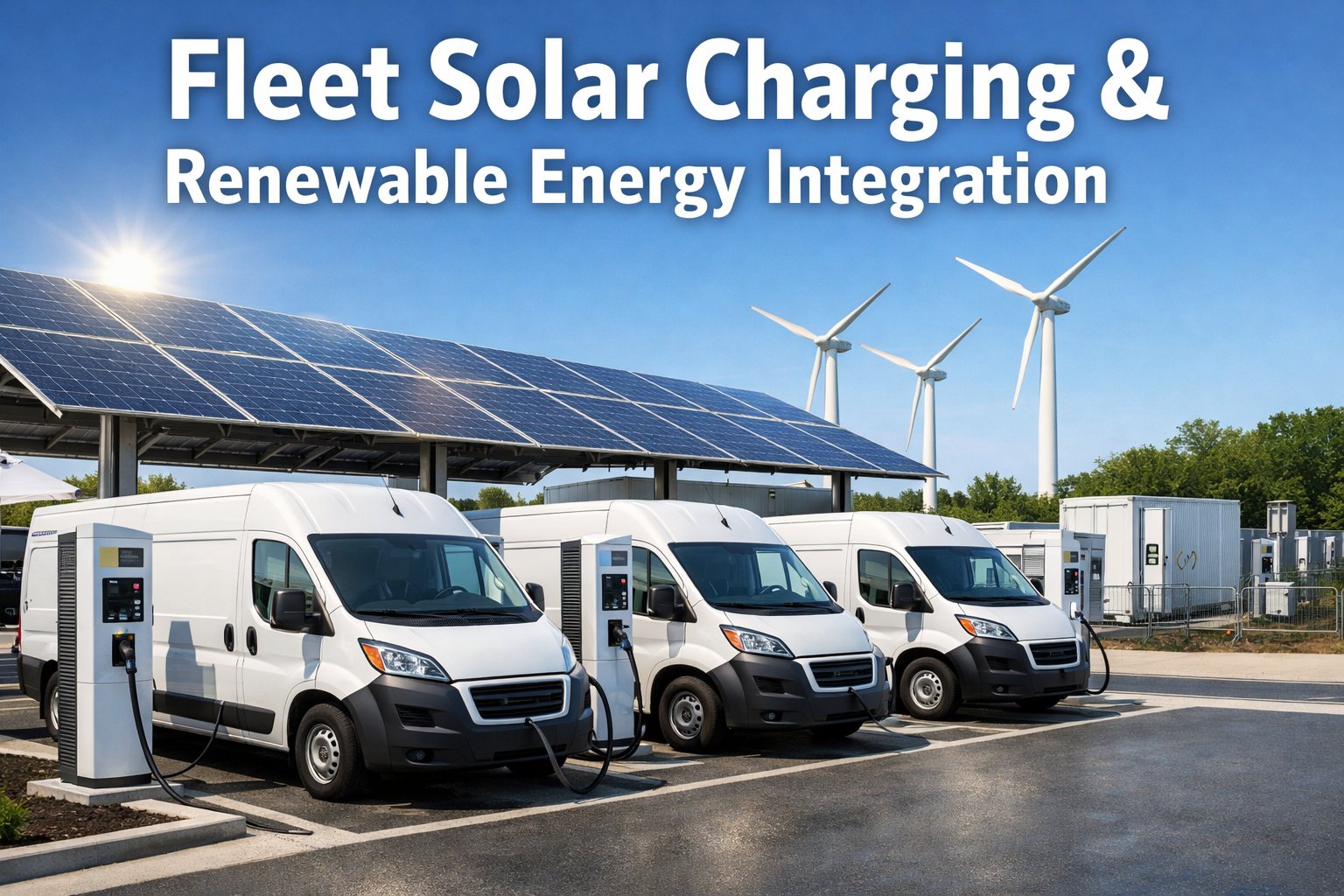
Your electricity bill doubled. Demand charges are eating 40% of your charging costs. The utility wants $50,000 for a transformer upgrade. Meanwhile, your depot's parking lot sits under the sun all day, generating nothing but heat.
Solar-powered fleet charging isn't just an environmental statementit's becoming a financial necessity. Fleets installing solar carports and battery storage are locking in energy costs at $0.03-0.05/kWh while grid-dependent operators face $0.15-0.25/kWh and rising. The math is shifting fast.
This guide covers how to integrate solar generation, battery storage, and smart charging to achieve carbon-neutral fleet operations at lower costs.
Calculate Your Solar Charging Savings
See how solar + battery storage can reduce your fleet's energy costs by 40-60%. Get a personalized ROI analysis.
Why Fleet Charging Costs Are Rising
EV fleet operators are discovering that electricity isn't just cheaper than diesel—it's more complicated. Charging costs involve multiple rate components that can triple your expected energy bill. Track your true charging costs with FleetRabbit →
Demand Charges
Utilities charge based on your peak power draw—not just total energy. A 15-minute spike when all chargers run simultaneously can add $2,000-5,000/month to your bill.
Time-of-Use Rates
Peak electricity rates (4-9 PM) can be 3x higher than off-peak. If your vehicles return during peak hours and need immediate charging, costs spike dramatically.
Infrastructure Upgrades
High-power charging often requires transformer upgrades, new service panels, and utility interconnection fees. These can cost $25,000-100,000+ before you charge a single vehicle.
Rate Volatility
Commercial electricity rates are increasing 3-8% annually in most markets. What costs $0.12/kWh today could cost $0.18/kWh in five years—eliminating your EV savings.
Solar Charging for EV Fleets
Solar fleet charging transforms your depot from an energy consumer into an energy producer. Instead of paying rising utility rates, you generate electricity on-site at a fixed cost for 25+ years. Talk to our solar integration specialists →
Solar Carports
Elevated solar structures over parking areas. Dual benefit: generate electricity while providing shade and weather protection for vehicles and charging equipment.
- 100-200 kW typical depot installation
- Integrated EV charger mounting
- Protected charging in all weather
- $2.50-4.00 per watt installed
Rooftop Solar
Solar panels installed on warehouse, maintenance facility, or office rooftops. Lower cost than carports but doesn't provide vehicle coverage.
- Uses existing building footprint
- 50-500 kW typical installation
- $1.50-2.50 per watt installed
- May require roof reinforcement
Ground-Mount Arrays
Large-scale solar installations on available land adjacent to depot operations. Best for high-energy fleets with available acreage.
- 500 kW - 5 MW installations
- Requires available land
- $1.00-1.80 per watt installed
- Optimal panel orientation
How Solar + Battery Storage Works for Fleet Depots
The real power of solar fleet charging comes from combining solar generation with battery storage. This combination solves the fundamental timing mismatch: solar generates during daytime, but many fleets charge overnight.
Daytime Solar Generation
Solar panels generate electricity during daylight hours. A 200 kW system produces 800-1,200 kWh on a sunny day—enough to charge 8-12 delivery vans.
Battery Storage
Excess solar energy charges on-site battery systems (typically 100-500 kWh capacity). Batteries store daytime generation for overnight or peak-period use.
Smart Charging Distribution
Energy management software coordinates when each vehicle charges based on solar availability, battery state, utility rates, and vehicle schedules.
Grid Backup
When solar + battery can't meet demand, the system draws from the grid—prioritizing off-peak hours and avoiding demand charge triggers.
Optimize Your Solar + Fleet Integration
FleetRabbit coordinates charging schedules with solar production, battery storage levels, and utility rates to minimize your energy costs automatically.
Solar Fleet Charging Architecture
A complete solar fleet charging system integrates multiple components that must work together seamlessly. Understanding the architecture helps you plan infrastructure investments effectively.
Solar Panels
Photovoltaic modules convert sunlight to DC electricity. Commercial installations use 400-600W panels with 20-25% efficiency.
Inverters
Convert DC solar power to AC electricity compatible with chargers and grid. String inverters or microinverters depending on system design.
Battery Storage
Lithium-ion battery systems store solar energy for later use. Sized to cover overnight charging or peak demand periods.
EV Chargers
Level 2 (7-19 kW) or DC fast chargers (50-350 kW) connected to the solar/battery system. Charger selection based on fleet schedule needs.
Energy Management System
Software that coordinates solar production, battery state, charging demand, and grid interaction. The brain of the entire system.
Grid Connection
Bidirectional utility meter enabling net metering, grid backup, and potential energy export revenue during peak periods.
Solar Fleet ROI Calculation
The economics of solar fleet charging depend on your current electricity rates, solar resource, and charging patterns. Here's a comparison for a typical 20-vehicle fleet depot:
| Cost Component | Grid-Only Charging | Solar + Battery | Savings |
|---|---|---|---|
| Energy Cost (per kWh) | $0.14 | $0.04 | 71% |
| Demand Charges (monthly) | $3,500 | $800 | 77% |
| Annual Energy Cost | $84,000 | $38,400 | $45,600 |
| Infrastructure Investment | $45,000 | $320,000 | — |
| Federal Tax Credit (30%) | $0 | -$96,000 | — |
| Net Infrastructure Cost | $45,000 | $224,000 | — |
| Simple Payback Period | — | 4.9 years | 20+ yr system life |
Key ROI Factors:
Sustainability and Carbon-Neutral Fleet Operations
Beyond cost savings, solar-powered fleet charging enables true carbon-neutral operations—a requirement for companies with ESG commitments and customers demanding sustainable logistics.
Zero-Emission Charging
Solar-charged EVs produce zero operational emissions. Unlike grid electricity (often 40-60% fossil fuel), on-site solar is 100% renewable.
Carbon Footprint Reduction
A 20-vehicle EV fleet with solar charging eliminates approximately 200-300 tons of CO2 annually compared to diesel operations.
ESG Reporting
Track and document renewable energy usage for sustainability reports, customer requirements, and regulatory compliance.
Green Certifications
Solar fleet operations support certifications like SmartWay, ISO 14001, and Science Based Targets initiative compliance.
Your Fleet's Environmental Impact
A typical 20-vehicle EV fleet charging with solar eliminates:
Net Metering and Energy Arbitrage
Smart fleets don't just use solar energy—they optimize when energy flows between solar, batteries, grid, and vehicles to maximize financial returns. Track energy flows with FleetRabbit →
Net Metering
Export excess solar generation to the grid and receive credits on your utility bill. When solar produces more than vehicles need, you bank credits for later use.
Time-of-Use Arbitrage
Charge batteries during low-rate periods (overnight, midday solar), then use stored energy during high-rate peak periods (4-9 PM) instead of grid power.
Demand Charge Management
Use battery storage to "peak shave"—limit maximum grid draw to avoid demand charge spikes. Batteries discharge when charging load would exceed thresholds.
Grid Services Revenue
Some utilities pay fleet batteries to provide grid stabilization services—frequency regulation, demand response, and capacity markets.
Challenges of Solar Fleet Charging
Solar fleet charging offers compelling economics, but implementation requires careful planning around several key challenges.
High Upfront Investment
Solar carports + battery storage can cost $200,000-500,000+ for a 20-vehicle depot. Even with incentives, this requires significant capital or financing arrangements.
Grid Interconnection
Utility approval for solar + battery systems can take 3-12 months. Large installations may require grid studies and infrastructure upgrades on the utility side.
Energy Timing Mismatch
Solar produces during daytime, but many fleets charge overnight. Without adequate battery storage, you're still dependent on grid power during charging hours.
Space Requirements
A 200 kW solar carport requires approximately 15,000-20,000 sq ft. Depots with limited space may not accommodate sufficient solar capacity for full fleet charging.
How Fleet Management Software Optimizes Solar Charging
The complexity of coordinating solar production, battery storage, vehicle schedules, and utility rates requires intelligent software. Manual management leaves significant savings on the table. See how FleetRabbit handles solar integration →
Solar-Aware Scheduling
Automatically shifts charging loads to align with solar production peaks. Vehicles with flexible schedules charge when solar is abundant.
Battery Optimization
Manages battery charge/discharge cycles to maximize solar self-consumption, minimize demand charges, and extend battery life.
Demand Charge Control
Monitors real-time grid draw and automatically throttles charging or discharges batteries to stay under demand thresholds.
Energy Analytics
Tracks solar production, battery performance, charging costs, and grid usage. Reports show exactly where every kWh comes from and goes.
Track Solar + Fleet Energy in One Dashboard
FleetRabbit integrates with solar inverters and battery systems to give you complete visibility into energy production, storage, and charging consumption.
Start Tracking Energy Free →Frequently Asked Questions
How much solar capacity do I need for my EV fleet?
A rough estimate: each EV driving 100 miles/day needs about 35-40 kWh. A 10 kW solar system produces 40-50 kWh/day in good conditions. So a 20-vehicle fleet might need 150-200 kW of solar to offset daytime charging, plus battery storage for overnight use.
Do I need battery storage with solar fleet charging?
Not required, but highly recommended. Without batteries, you can only use solar power when vehicles are charging during daylight hours. Batteries let you store daytime solar for overnight charging and provide demand charge management benefits.
What incentives are available for fleet solar charging?
The federal Investment Tax Credit covers 30% of solar + battery costs through 2032. Many states offer additional rebates. MACRS depreciation provides further tax benefits. Some utilities offer commercial EV charging incentives that can stack with solar incentives.
How long does solar fleet charging installation take?
Timeline varies significantly: 2-4 months for rooftop solar, 4-8 months for solar carports (due to structural requirements), and 6-12 months for large ground-mount systems. Utility interconnection approval often determines the timeline.
Can I finance solar fleet charging infrastructure?
Yes. Options include solar loans, Power Purchase Agreements (PPAs) where a third party owns the system and sells you power, solar leases, and PACE financing. Many fleets achieve positive cash flow from year one with proper financing structures.
What happens on cloudy days or at night?
Battery storage covers short-term gaps. For extended cloudy periods, the system automatically draws from the grid—prioritizing off-peak rates. A well-designed system provides 60-80% of annual charging from solar, with grid backup for the remainder.
Ready to Power Your Fleet with Solar?
FleetRabbit helps you optimize charging schedules around solar production, track energy costs, and maximize your renewable energy ROI. Start with 3 vehicles free.