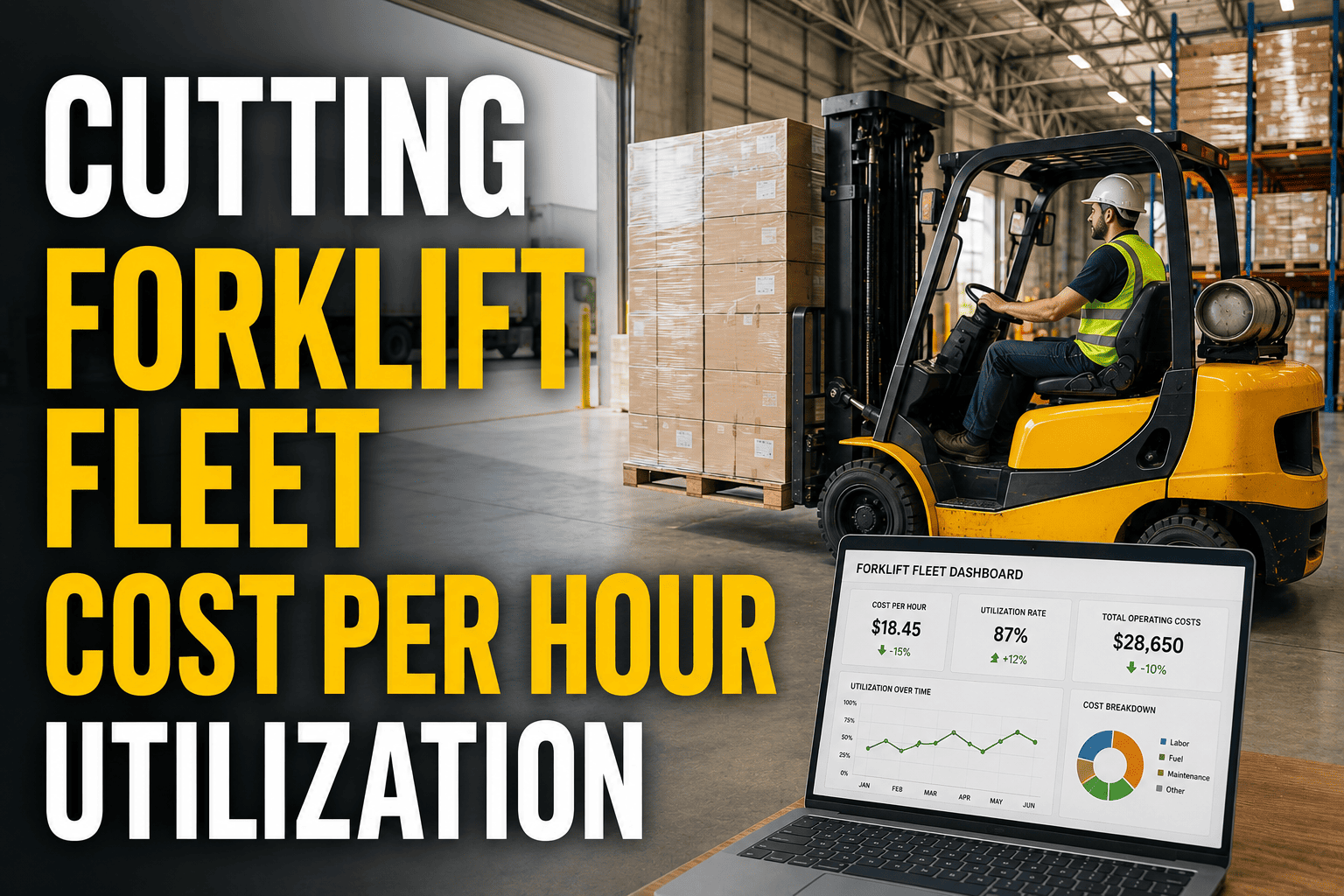
Most plants know exactly what they pay for fuel, leases, and repairs. Far fewer know their actual cost per operating hour, and almost none know how much of that cost is being paid for forklifts that sit idle most of the shift. Utilization is the quiet variable behind cost per hour, and it's usually the first place a plant can cut spend without buying or removing a single truck.
The math is simple once you see it: a forklift's lease payment, insurance, and depreciation don't shrink because it sat idle for six of eight hours. Those fixed costs get spread across whatever productive hours actually happened, which means a low-utilization fleet pays full price for a fraction of the output. Here's how to find that gap in your own fleet and close it.
Industry average
Why Cost Per Hour Climbs When Utilization Drops
Cost per hour looks like a simple number, but it's built from fuel or electricity, maintenance labor and parts, depreciation, insurance, and operator wages, divided across the hours the truck actually worked. When utilization falls, the denominator shrinks while nearly every cost in the numerator stays fixed.
The Fixed Cost Trap
A forklift that runs at 30 percent utilization still accrues its full lease payment, insurance premium, and scheduled depreciation regardless of how many pallets it actually moved. That means a plant isn't just wasting capacity when utilization drops, it's actively paying more per productive hour for the same truck. Industry benchmarks put internal combustion forklift cost per hour between 15 and 25 dollars, and electric models between 10 and 20 dollars, but those figures only hold at healthy utilization. Below that, effective cost per hour climbs fast.
What Cost Per Hour Actually Includes
Plants that only track fuel and repair invoices are missing most of the picture. A complete cost-per-hour figure includes depreciation or lease cost, insurance, scheduled and unscheduled maintenance, energy, and operator wages, all divided by actual productive hours rather than hours the truck was simply available. Material handling typically represents 15 to 40 percent of total manufacturing operating cost, which makes this one of the largest controllable line items most plants have. If you want to see your own fleet's real cost per hour instead of an estimate, you can book a demo and walk through your utilization data with a FleetRabbit specialist.
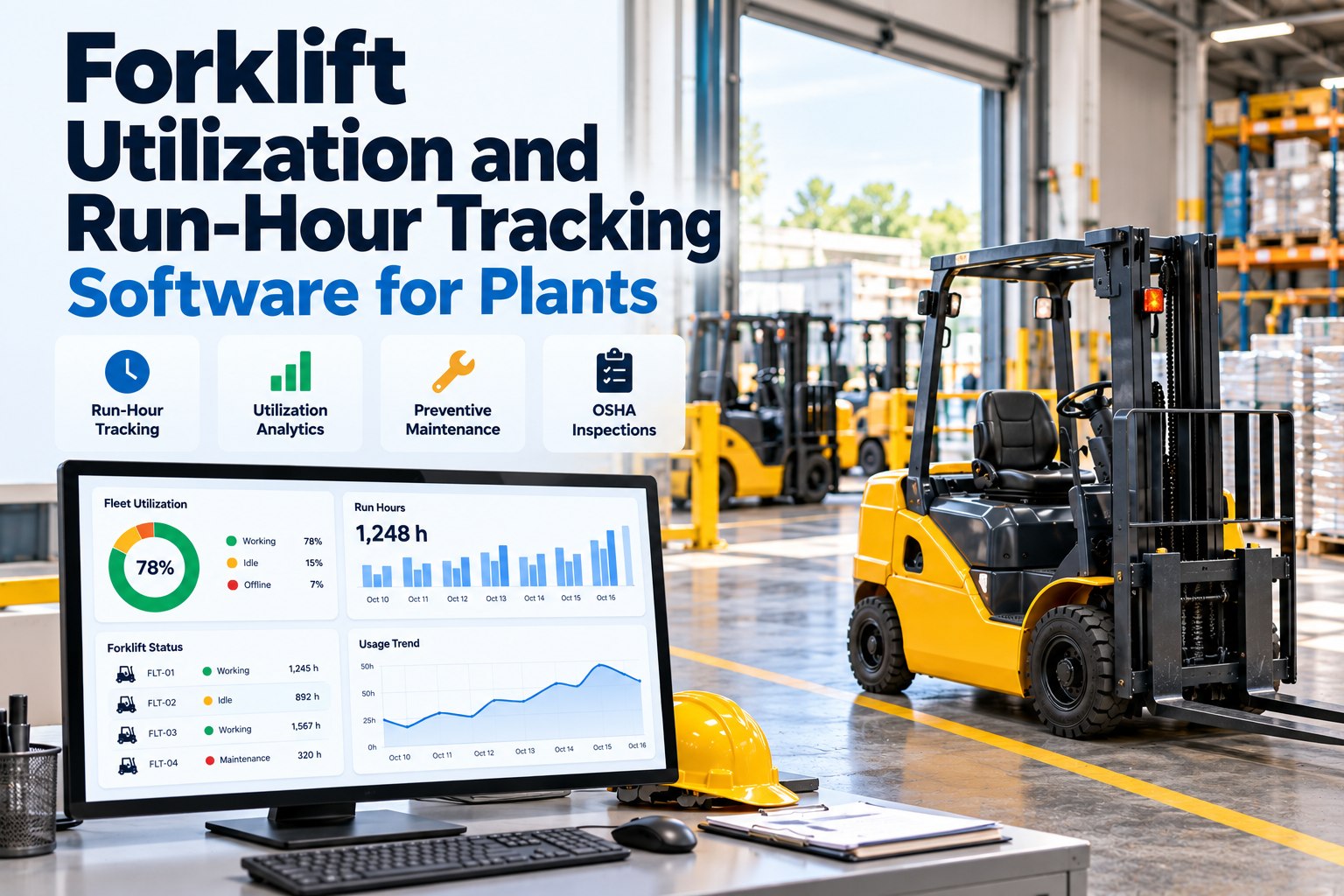
FleetRabbit tracks real-time utilization across every unit in your fleet, so you know exactly which trucks are earning their cost per hour and which ones aren't.
Finding the Forklifts Quietly Draining Your Budget
Fleet-wide utilization averages hide the real problem. A fleet averaging 60 percent utilization can still include two or three units running below 25 percent, and those outliers are usually where the savings live.
| Signal to Watch | What It Usually Means | Action to Take |
|---|---|---|
| Sustained utilization below 40% | The unit is likely a right-sizing candidate, not a demand problem | Reassign to a higher-demand zone or remove from the active fleet |
| One truck consistently below fleet average | A pattern, not a one-off slow day, points to a scheduling or zone mismatch | Rebalance zone assignments across shifts before assuming demand is fixed |
| Utilization above 85% on a single unit | Overutilization accelerates wear and shortens the truck's useful life | Redistribute load to underused units nearby instead of running one truck into the ground |
| Rented units below the 60% utilization threshold | The unit isn't earning back its rental cost at current demand | Return the rental or convert high-use rentals to a purchase decision |
Three Moves That Cut Cost Per Hour Without Adding Equipment
Right-size before you buy or lease anything new
Once utilization data shows which units are chronically underused, eliminating or reassigning them removes their lease, maintenance, and depreciation cost from your total spend without touching your actual output.
Reassign, don't just retire
An underused forklift in one zone is often a fully-loaded truck in another. Utilization data by zone and shift shows where demand actually is, so a chronic idler can become someone else's overworked unit's relief instead of a write-off.
Apply the 60 percent rule to rent-versus-buy decisions
The industry standard for forklift fleets is the 60 percent utilization rule: if a unit is projected to run at 60 percent or more of standard working hours, roughly 1,200 hours a year in a single shift, purchasing typically beats renting on cost per hour. Below that threshold, renting usually wins.
A 40-Forklift Plant Closes the Gap
A plant running 40 forklifts at the North American average of roughly 47 percent utilization identifies six units running below 25 percent through fleet analytics. Reassigning four of those to higher-demand zones and removing two from active service lifts fleet-wide utilization toward the 65 to 75 percent target range, without a single new truck on the floor. The lease, insurance, and maintenance cost tied to the two retired units comes off the books immediately, while the same total output continues across a smaller, better-utilized fleet.
None of this requires guessing which trucks to move. It requires seeing utilization by unit, shift, and zone in one place. Plants ready to find their own hidden capacity can sign up and start tracking utilization across their fleet today.
Frequently Asked Questions
FleetRabbit's utilization data shows exactly which trucks to redeploy, right-size, or retire, so your plant moves more freight with the fleet you already have.