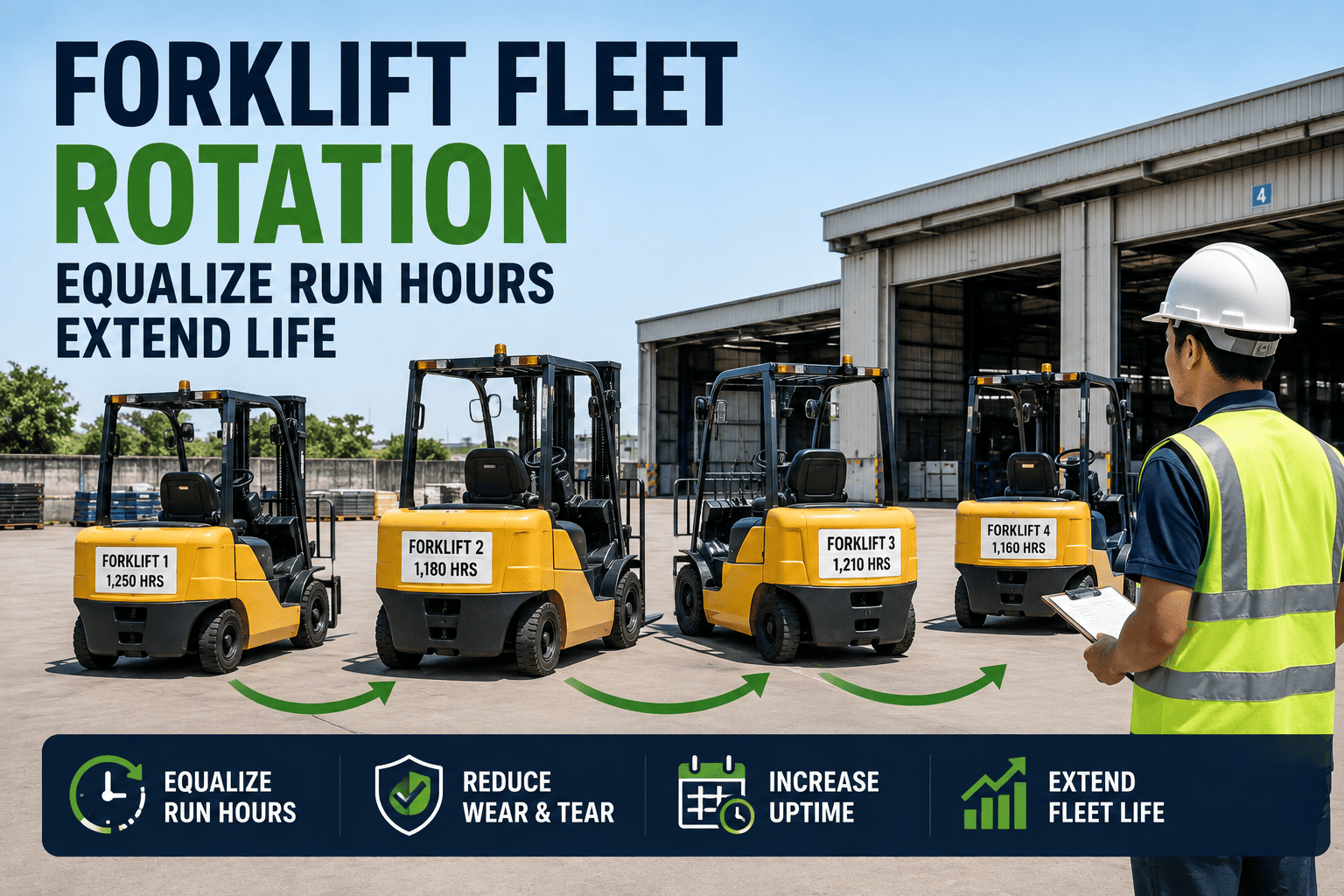
Walk any plant floor for a week and you'll notice a pattern. Operators gravitate toward the same forklift shift after shift, usually the newest one, the smoothest one, or whichever truck happens to be parked closest to their station. It feels harmless. It isn't. That truck is quietly racking up thousands of extra hours while others in the same fleet class sit comparatively idle, and by the time anyone notices, one forklift is nearing replacement while its twin from the same purchase order still has years of service life left.
Forklift fleet rotation is the practice of deliberately redistributing which trucks operators use, so run hours accumulate evenly across vehicles of the same class instead of concentrating in a handful of favorites. Equalizing hours through rotation smooths component wear, spreads maintenance workload more predictably, and defers the capital expense of replacing high-hour trucks years ahead of their peers. Most fleets rotate assignments every few months, guided by actual hour-meter data rather than guesswork.
The 10,000-Hour Clock Every Forklift Is Running On
A forklift's usable life is measured in hours, not years, and industry data puts the average lifespan around 10,000 operating hours, roughly five years at 2,000 hours of annual use. That number sounds like a fixed ceiling, but it's really a shared budget. Two forklifts purchased on the same order, in the same fleet class, are each drawing down that same 10,000-hour budget at whatever rate they happen to be used. Left unmanaged, one truck can burn through its share in three years while its counterpart is barely halfway there after five.
Why Operators Naturally Create Imbalance
Nobody sets out to overwork one forklift. It happens because operators develop preferences, dispatchers grab whichever truck is closest, and nobody is tracking cumulative hours in a way that surfaces the imbalance until a truck is already deep into major-component wear. Without a deliberate rotation policy, the fleet organizes itself around convenience, not longevity.
What Rotation Actually Fixes
A structured rotation policy addresses three compounding problems at once, each of which gets more expensive the longer it goes unmanaged.
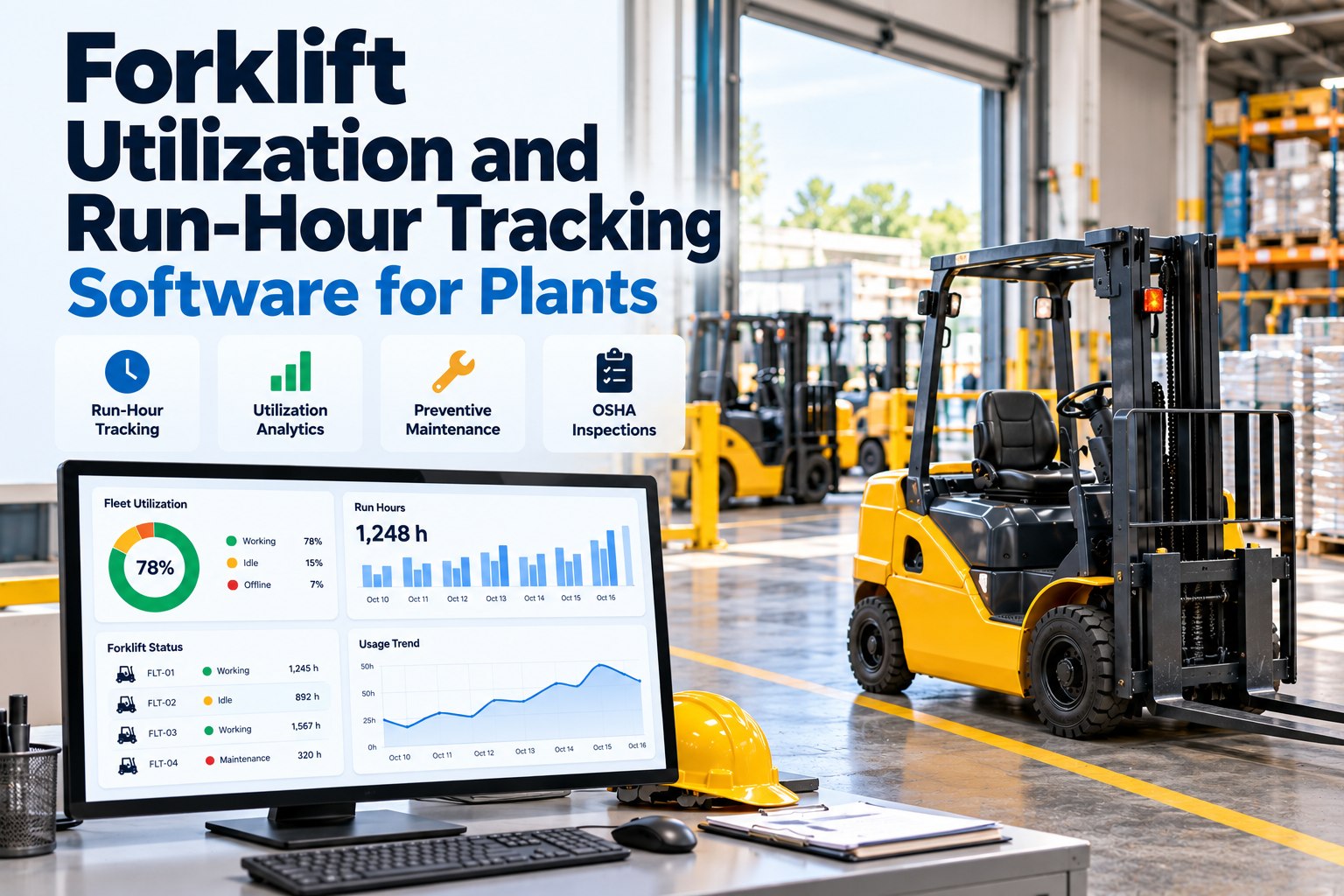
FleetRabbit tracks run hours per truck in real time and flags the imbalances building inside your fleet before they turn into an early replacement bill. Sign up free and see your fleet's hour spread today.
Building A Rotation Policy That Actually Works
Rotation doesn't mean shuffling trucks at random. A working policy is built on real usage data and applied consistently enough that it actually changes the hour distribution across the fleet.
A Note On Batteries And Electric Fleets
Rotation matters for electric forklifts too, just with an added layer. Battery cells that are consistently overworked degrade faster than the rest of the pack, so rotating trucks and coordinating equalized charging together protects both the vehicle and its power system rather than one at the expense of the other.
The Math Behind Deferred Replacement Capital
The economic case for rotation is straightforward once you frame it around ownership cost per hour. Ownership cost is calculated as the purchase price minus trade-in value, divided by total engine hours. A truck retired early because it hit 10,000 hours in three years instead of five delivers far fewer hours against the same purchase price, which pushes its true cost per hour up even before maintenance is factored in. Rotation is one of the few levers that directly protects that denominator across the whole fleet.
| Scenario | Time To 10,000 Hours | Fleet Impact |
|---|---|---|
| Unrotated, Operator Favorite | As little as 3 to 4 years at heavy use | Early replacement capital while fleet-mates still have years of usable life |
| Unrotated, Rarely Chosen | 7 years or more at light use | Underutilized asset tying up capital that could support a smaller fleet |
| Actively Rotated Fleet | Close to the 5-year average across the class | Predictable, staggered replacement schedule instead of surprise capital spikes |
Rotation doesn't eliminate replacement spending, but it turns an unpredictable cluster of early failures into a schedule you can actually budget around. If you want to see how wide your own fleet's hour spread already is, a quick demo call can map it out against your current trucks in a few minutes.
Frequently Asked Questions
FleetRabbit gives you real-time run-hour distribution across every forklift class, so rotation decisions are based on actual data instead of a hunch. Book a demo to see your fleet's hour spread, or sign up and start tracking today.