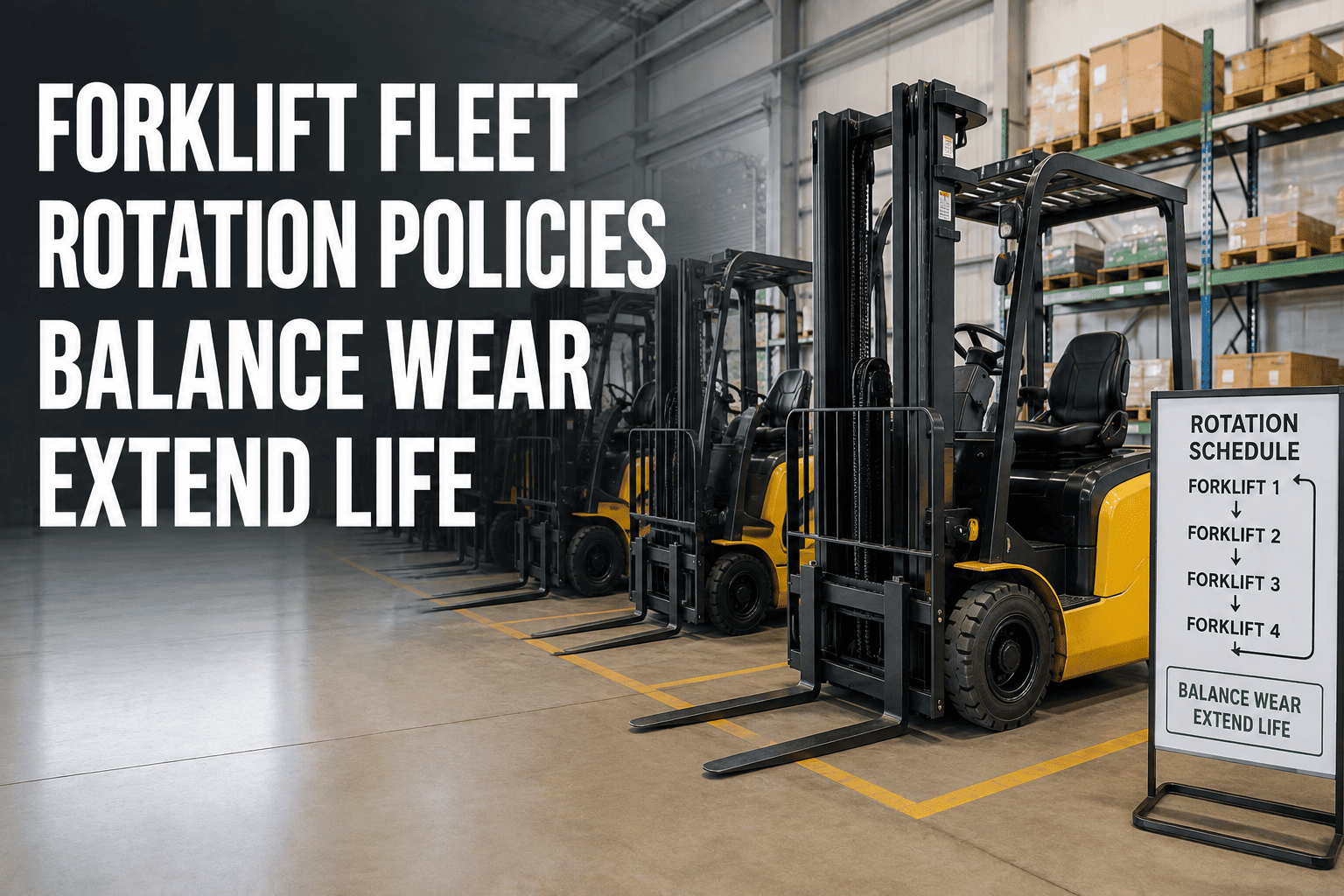
Most manufacturing facilities own a forklift fleet where a handful of trucks carry the workload while the rest coast through their shifts barely breaking a sweat. The favorite forklift that every operator grabs first because it starts faster, steers smoother, or just happens to be parked closest to the staging area accumulates 3000 to 4000 hours while its identical fleet mates sit at 800 to 1200 hours. When replacement time arrives, that heavily-used forklift needs replacing years before the others, creating a staggered replacement cycle that fragments capital budgets and leaves fleet managers explaining why three identical forklifts purchased in the same year have radically different remaining useful lives. Forklift rotation policies solve this problem by systematically equalizing hours across the fleet so every truck reaches end-of-life at roughly the same time, enabling bulk replacement that simplifies budgeting, standardizes the fleet, and defers capital expenditure by extracting maximum life from every unit.
Without rotation policies, the most-used forklift in a fleet typically accumulates 2.5 to 4 times the hours of the least-used unit. This imbalance forces early replacement of overworked trucks while underused trucks retain thousands of unused hours at replacement time. Facilities implementing structured rotation equalize fleet hours within 10 to 15 percent variance, deferring replacement capital by 18 to 30 months and reducing total fleet cost of ownership by 12 to 20 percent over a 10-year period.
Why Forklift Wear Imbalance Happens Naturally
Wear imbalance is not the result of bad management. It is the natural outcome of human behavior in environments where operators have choices about which equipment to use. Several predictable patterns drive the imbalance in virtually every manufacturing facility. Proximity bias occurs when operators select the forklift parked nearest to their first task of the shift rather than walking to a less-convenient unit. Operator preference develops when individual operators discover a specific forklift that fits their driving style, has a comfortable seat, or features controls they prefer. Shift assignment rigidity happens when the same forklift is assigned to the same shift or operator for months or years without any mechanism to redistribute usage. Application specialization occurs when certain forklifts are used for the heaviest or most frequent tasks while others handle lighter duty, often because of where they are parked relative to the high-demand work areas rather than any intentional assignment.
These patterns compound over time in ways that are invisible without hour tracking. A forklift that averages 2 extra hours per day due to proximity bias accumulates 500 extra hours per year. Over a 5-year ownership period, that single forklift carries 2500 additional hours compared to the fleet average. At an average forklift replacement cost of 35000 to 60000 dollars, those extra hours may advance its replacement date by 12 to 24 months, meaning you spend replacement capital years earlier than necessary while other forklifts in the same fleet still have thousands of hours of remaining life. The wasted value is not just the early replacement cost. It is the unused hours on the underworked forklifts that you paid for but never utilized before replacing the entire fleet cohort.
The Hidden Cost of Staggered Replacement
When forklift hours diverge significantly, replacement does not happen as a single fleet transaction. Instead, you replace forklift A in year four, forklift B in year six, and forklift C in year eight. Each individual replacement carries overhead costs that a bulk replacement avoids. Purchase negotiations lose leverage when buying one or two units instead of a fleet order. Delivery timelines, operator retraining, and fleet configuration management repeat multiple times instead of once. Maintenance parts inventories must stock components for two generations of forklift technology simultaneously. Fleet management software must track two different model generations with different maintenance schedules, different parts catalogs, and different operating characteristics. These overhead costs typically add 8 to 15 percent to the total cost of a staggered replacement cycle compared to a single bulk replacement event. A 10-forklift fleet that replaces units individually over 5 years may spend 15000 to 30000 dollars more in cumulative overhead than the same fleet replacing all 10 units simultaneously.
Building a Forklift Rotation Policy From Scratch
An effective rotation policy requires four components. A measurement system that tracks hours on each forklift accurately and in real-time. A target variance range that defines acceptable hour differences between fleet units. A rotation trigger mechanism that initiates reassignment when variance exceeds the target. A reassignment protocol that specifies how forklifts are rotated without disrupting operations. Each component must be documented and communicated to all supervisors and operators so the policy functions consistently regardless of which shift or which supervisor is managing the floor.
Component One: Hour Measurement and Tracking
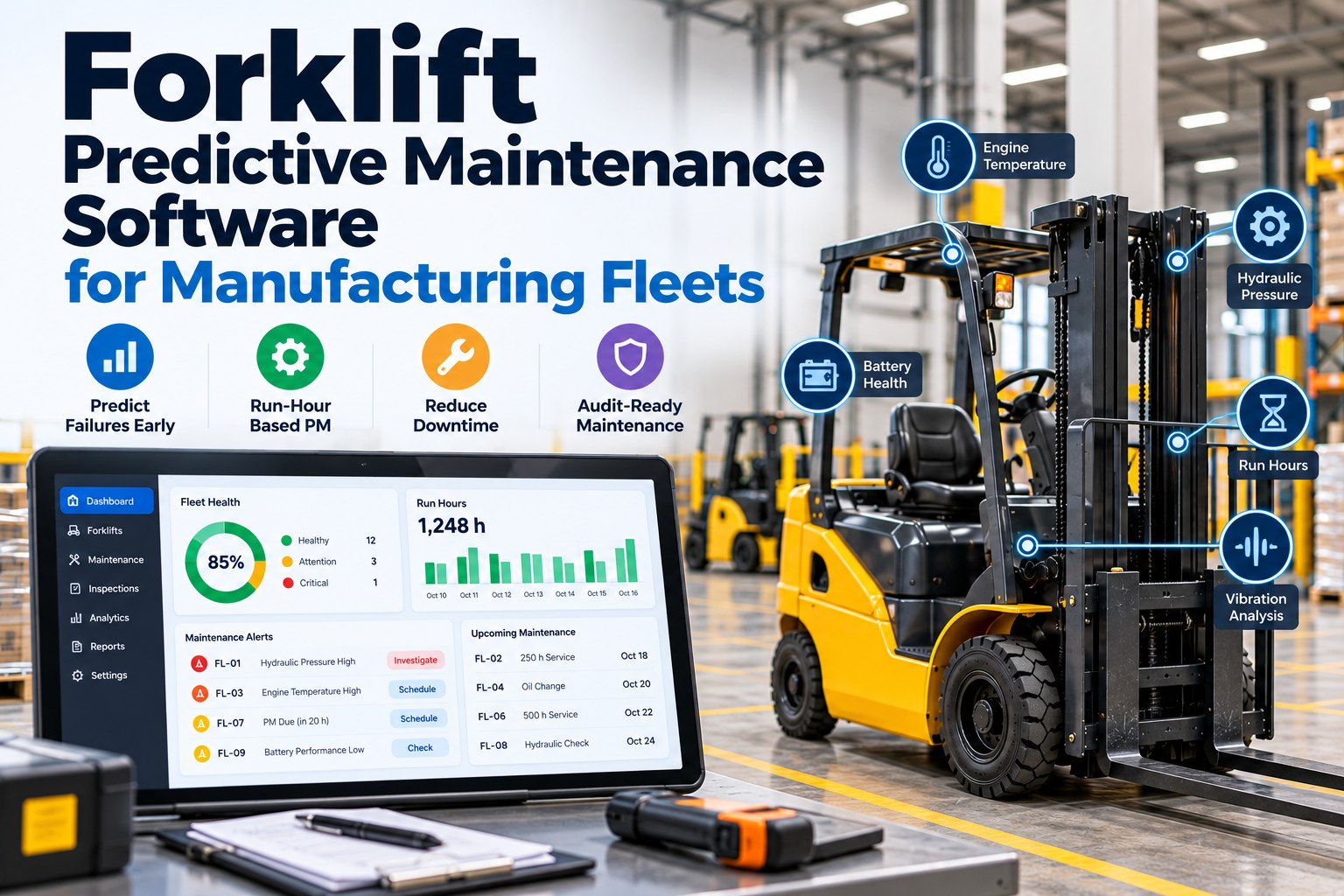
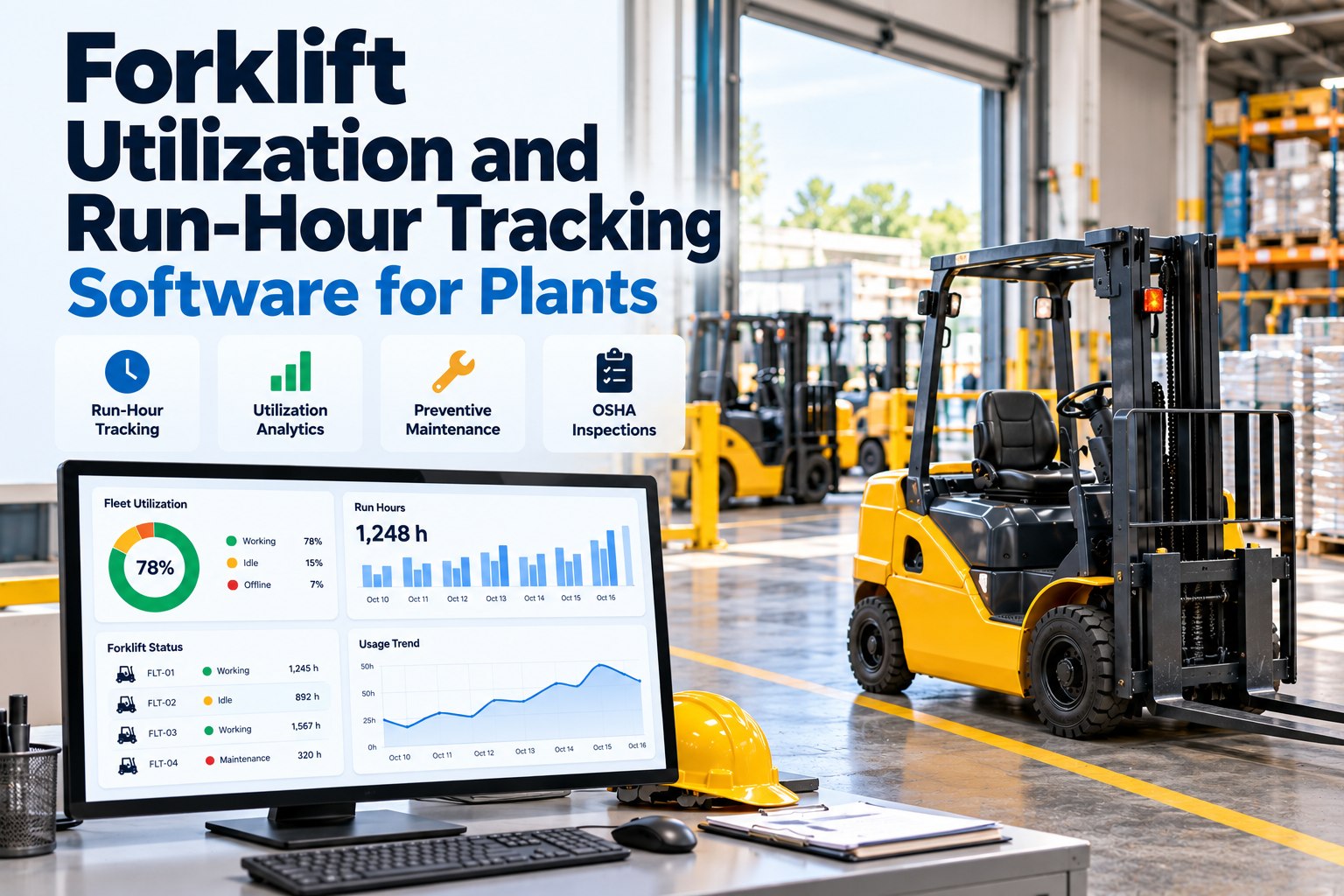
Accurate hour tracking is the foundation without which nothing else works. Manual hour logs where operators write down their start and end times are unreliable because operators forget, estimate inaccurately, or deliberately round numbers. Key-switch hour meters on the forklift itself provide better accuracy but require someone to physically walk to each forklift and record the reading, which typically happens weekly at best and misses the daily data needed for responsive rotation. Telematics-based hour tracking captures actual engine-run or motor-run hours automatically and transmits them to a central dashboard in real-time. This is the only method that provides the granularity needed for effective rotation because it reveals hour accumulation patterns as they develop rather than discovering them weeks after the damage is done. You can sign up for FleetRabbit to get automated hour tracking on every forklift with variance alerts that flag when any unit deviates from the fleet average by more than your configured threshold.
What to Track Beyond Simple Run Hours
Run hours alone provide an incomplete picture of wear. Two forklifts with identical 2000-hour readings may have experienced dramatically different wear patterns depending on how those hours were accumulated. A forklift that accumulated 2000 hours moving 2000-pound pallets at moderate speed in a climate-controlled warehouse has experienced significantly less component stress than a forklift that accumulated 2000 hours moving 5000-pound loads at maximum lift height in a cold-storage environment. Your tracking system should capture load weight distribution, lift height distribution, travel speed patterns, and operating environment conditions alongside raw hours. This richer data set enables load-factor-adjusted rotation where forklifts in heavy-duty applications are rotated more frequently than forklifts in light-duty applications, even if their raw hour counts are similar. Without this adjustment, rotation equalizes hours but not actual wear, which is the metric that truly determines remaining useful life.
FleetRabbit tracks actual run hours on every forklift in real-time, calculates fleet average and variance for each unit, and sends alerts when any forklift deviates beyond your configured threshold. Get the visibility you need to start rotating before imbalance becomes a replacement timing problem.
Component Two: Setting Your Target Variance Range
The target variance range defines how much hour difference you will tolerate between the most-used and least-used forklift in a comparable group before triggering rotation. The appropriate range depends on your fleet size, application diversity, and operational flexibility. Smaller fleets of 3 to 5 forklifts in the same application should target tight variance of 5 to 10 percent because the impact of imbalance is magnified with fewer units. Larger fleets of 10 or more forklifts can tolerate 10 to 15 percent variance because the statistical average smooths individual variations. Fleets with mixed applications where some forklifts handle heavier duty than others should group comparable units together and set variance targets within each group rather than across the entire fleet.
Grouping Forklifts for Fair Variance Comparison
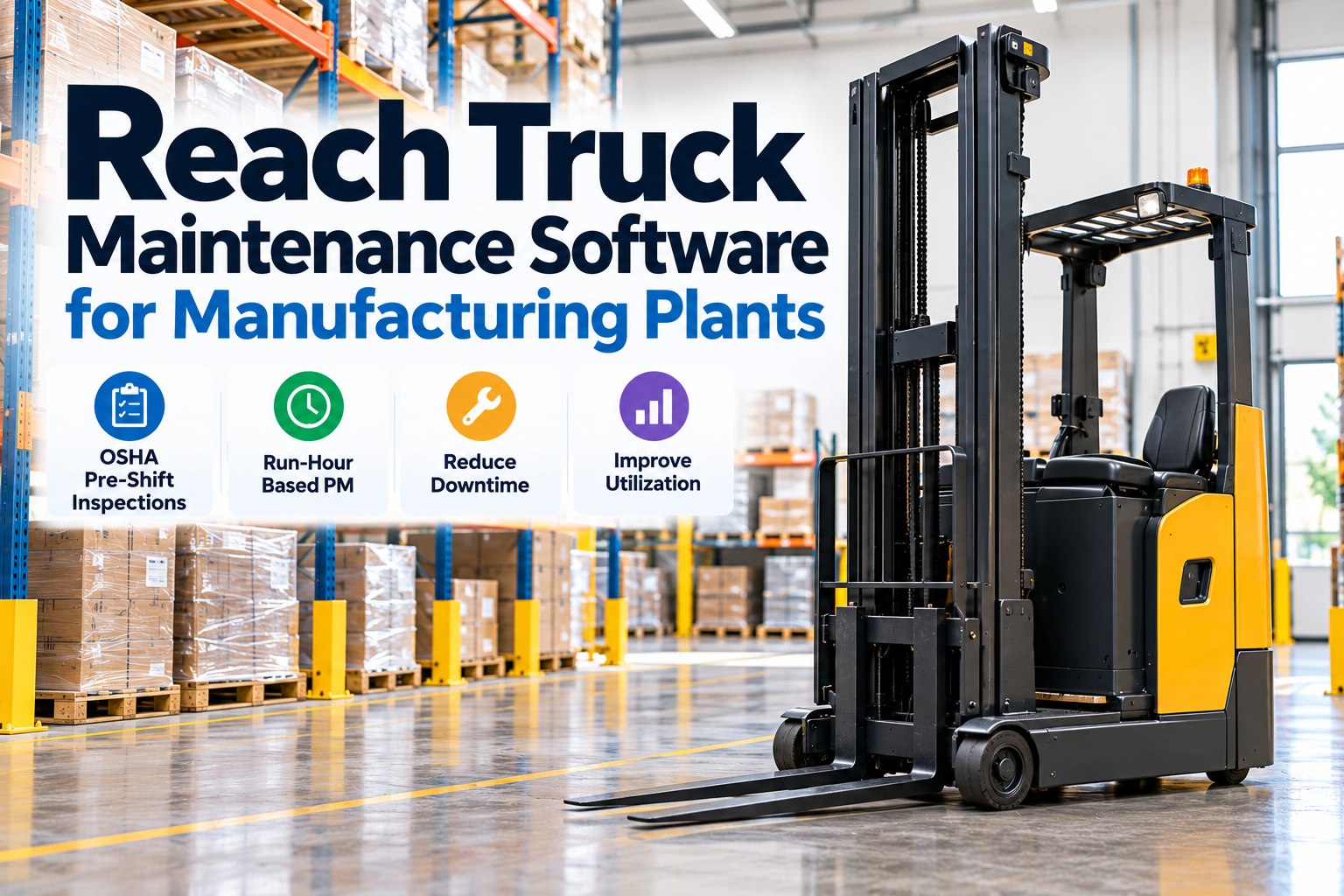
Comparing hours across your entire fleet without grouping produces misleading variance calculations. A 5000-pound capacity electric forklift used for dock-to-stock transport and a 12000-pound capacity internal combustion forklift used for container unloading serve fundamentally different applications. Their hour accumulation rates will naturally differ regardless of rotation efforts, and forcing them into the same variance calculation creates impossible targets. Group forklifts by capacity class, power type, and primary application. A typical manufacturing facility might have three to five groups such as light-duty electric sit-downs for warehouse aisles, medium-duty electrics for production line supply, heavy-duty IC forklifts for dock and yard, and reach trucks for high-rack storage. Each group gets its own variance target and rotation schedule that reflects the realistic hour accumulation rate for that application type.
Accounting for Shift Patterns in Variance Targets
Multi-shift operations require shift-adjusted variance tracking. A forklift assigned to first shift for three weeks and then rotated to second shift may appear to have low hours if you only look at weekly totals, but the actual daily utilization during each shift may be consistent. The variance calculation should normalize hours to a per-shift basis so comparisons are fair regardless of how many shifts each forklift worked during the measurement period. A forklift that worked 5 first-shift days at 7 hours each accumulates 35 hours. A forklift that worked 3 second-shift days at 8 hours each accumulates 24 hours. The raw numbers suggest significant variance, but the per-shift averages of 7.0 and 8.0 hours reveal minimal actual difference. Without shift normalization, rotation decisions based on raw weekly or monthly totals will overcorrect for shift assignment differences rather than actual usage imbalance.
Component Three: Rotation Trigger Mechanisms
The rotation trigger defines what event causes a forklift to be reassigned from its current application or shift to a different one. Three trigger mechanisms work effectively depending on your operational complexity. Threshold triggers activate rotation when a specific forklift's hours exceed the fleet group average plus the variance allowance. If your 5-forklift group averages 1500 hours with a 10 percent variance target, any forklift exceeding 1650 hours triggers rotation to a lower-utilization assignment. Schedule triggers rotate forklifts on a fixed calendar interval regardless of current hour variance, such as rotating one forklift out of the primary assignment every two weeks. This approach is simpler to administer but less responsive to actual usage patterns. Hybrid triggers combine both approaches by using schedule triggers for routine rotation and threshold triggers for corrective rotation when schedule-based rotation fails to maintain variance within target.
Component Four: Reassignment Protocol
The reassignment protocol specifies exactly how forklifts move between assignments when rotation triggers activate. A poorly designed reassignment protocol creates more operational disruption than the wear imbalance it aims to correct. The protocol must address four practical questions. Which forklift moves and which replaces it. How operators are notified and transitioned. What happens to attachments, chargers, and accessories. How the rotation is documented for tracking purposes. The most common reassignment approach is swap rotation where the highest-hour forklift in a high-utilization assignment swaps positions with the lowest-hour forklift in a lower-utilization assignment. This approach directly addresses the imbalance by moving the overworked unit to lighter duty while giving the underworked unit more hours.
Managing Operator Resistance to Rotation
Operators often resist rotation because they lose access to the specific forklift they prefer. This resistance is the most common reason rotation policies fail in practice. Address it through three strategies. First, ensure all forklifts in the rotation group are maintained to the same standard so no unit is objectively worse to operate than another. A forklift with a worn seat, sticky hydraulics, or intermittent electrical issues will generate justified operator resistance to being assigned to it. Second, rotate frequently enough that no operator becomes deeply attached to any single unit. A two-week rotation cycle prevents the emotional attachment that forms over months of exclusive use. Third, communicate the business rationale clearly. Operators who understand that rotation keeps the fleet younger and defers replacement are more accepting than operators who perceive rotation as arbitrary reassignment. Some facilities tie rotation compliance to operator performance metrics or incentive programs to reinforce the behavior until it becomes habitual.
Attachment and Accessory Management During Rotation
Forklifts with specialized attachments like side shifters, fork positioners, clamps, or paper roll grabs require additional coordination during rotation. If the attachment stays with the forklift, the incoming operator may not be trained or certified on that attachment. If the attachment transfers to the replacement forklift, the attachment mounting, hydraulic connections, and electrical wiring must be compatible with the replacement unit. The reassignment protocol should specify whether attachments rotate with the forklift or stay with the assignment. In most cases, keeping attachments with the assignment and ensuring all forklifts in the rotation group have compatible mounting and connection points is the simpler approach. This requires that fleet procurement specifies compatible attachment interfaces across all forklifts in the same rotation group, which is a specification that should be included in purchase orders for new equipment.
Truck B: Low-Duty
Truck B: High-Duty
Truck B: Mid-Duty
with hour check
Set your variance threshold, define your rotation groups, and FleetRabbit handles the rest. Automatic hour tracking, variance calculations, rotation alerts when thresholds are exceeded, and documentation of every rotation event. No spreadsheets, no manual hour readings, no forgotten rotations.
Load-Factor-Adjusted Rotation for Mixed-Application Fleets
Standard hour-based rotation assumes all hours are equal, which is only accurate when forklifts in the rotation group perform similar work. Manufacturing fleets often have units that serve mixed applications where one week a forklift handles light pallet movement and the next week it handles heavy container unloading. Simple hour tracking misses the wear difference between these two modes. Load-factor adjustment assigns a multiplier to hours based on the severity of the work performed. Hours accumulated moving loads above 75 percent of rated capacity might carry a 1.3 multiplier, meaning 100 actual hours count as 130 adjusted hours for rotation calculations. Hours at maximum lift height might carry an additional 1.2 multiplier on top of the load multiplier. Hours in extreme temperature environments might carry a 1.15 multiplier for component stress acceleration.
| Operating Condition | Wear Multiplier | Rationale | Example Impact |
|---|---|---|---|
| Light load, low height | 0.8x | Reduced stress on mast, drivetrain, and tires | 100 actual hrs = 80 adjusted hrs |
| Normal operation | 1.0x | Baseline wear rate per manufacturer specifications | 100 actual hrs = 100 adjusted hrs |
| Heavy load, 75%+ capacity | 1.3x | Increased stress on hydraulics, mast structure, and drivetrain | 100 actual hrs = 130 adjusted hrs |
| Frequent max height operation | 1.2x additional | Mast and chain wear accelerates at full extension under load | Stacks with heavy load multiplier |
| Extreme temperature environment | 1.15x | Battery degradation, hydraulic fluid stress, component fatigue | 100 actual hrs = 115 adjusted hrs |
| Rough surface or outdoor operation | 1.2x | Accelerated tire wear, chassis stress, bearing loads | 100 actual hrs = 120 adjusted hrs |
Implementing Load-Factor Tracking
Load-factor tracking requires telematics systems that capture weight, height, and environmental data alongside hour meters. The telematics system applies multipliers in real-time as operating conditions change, producing an adjusted-hour total that reflects actual wear rather than just time in operation. This adjusted-hour total becomes the basis for rotation decisions, variance calculations, and remaining-life estimates. A forklift with 2000 actual hours but 2400 adjusted hours due to heavy-duty operation is further through its useful life than a forklift with 2000 actual hours accumulated in light duty. Without load-factor adjustment, rotation would treat these two forklifts identically and fail to address the actual wear difference. If you want to see how load-factor tracking works with your specific application mix, book a demo with FleetRabbit and we will demonstrate the adjusted-hour calculations using data profiles from manufacturing environments similar to yours.
Measuring Rotation Policy Effectiveness
A rotation policy that is not measured cannot be improved. Three metrics reveal whether your rotation policy is achieving its goals. Hour variance trend shows whether the gap between highest and lowest hours in each group is narrowing, stable, or widening over time. A well-functioning rotation policy produces a narrowing variance trend during the first three to six months as initial imbalances are corrected, then maintains a stable variance within your target range thereafter. A widening variance trend indicates the rotation policy is not being followed or the trigger mechanisms are not activating appropriately. Replacement concentration index measures how tightly grouped your fleet's projected replacement dates are. A fleet where all units project to replacement within a 12-month window has a high concentration index, which is the goal. A fleet where replacement dates span 4 or more years has a low concentration index, indicating the rotation policy is not achieving its primary objective of synchronized replacement.
Quarterly Rotation Policy Review
Conduct a formal review of your rotation policy every quarter using the three metrics above. The review should also examine rotation compliance rate, which is the percentage of scheduled rotations that actually occurred on time. Low compliance rates indicate either operational barriers to rotation that need to be removed or a policy that is too aggressive for your operational reality. If compliance falls below 80 percent, investigate the root causes. Common barriers include operator resistance, supervisor non-enforcement, insufficient compatible forklifts in the rotation group to allow swapping, and production scheduling conflicts that make rotation timing inconvenient. Each barrier has a specific solution, but only if you identify it through compliance tracking rather than assuming the policy is working because it exists on paper.
Rotation Is the Simplest Fleet Investment You Will Ever Make
Of all the fleet management strategies available to manufacturing facilities, rotation requires the least capital investment and delivers among the highest returns. It does not require new equipment. It does not require infrastructure changes. It does not require new technology, though technology makes it dramatically easier. Rotation requires a policy document, a measurement method, and the discipline to follow through. The policy document takes a few hours to write. The measurement method is a telematics system you may already have or can implement in days. The discipline comes from leadership commitment and supervisor accountability, which cost nothing but produce everything. A fleet that replaces 10 forklifts simultaneously in year seven instead of replacing them one or two at a time between years four and eight saves tens of thousands of dollars in capital efficiency alone. Add the bulk purchase leverage, the simplified maintenance inventory, the single training event, and the elimination of multi-generation fleet complexity, and rotation becomes one of the highest-ROI fleet management practices available to any manufacturing operation.
The data to start is already sitting in your fleet. Every forklift has an hour meter. The question is whether you are reading it frequently enough and doing anything with what it tells you. If the answer is no, your fleet is accumulating the exact kind of wear imbalance that rotation prevents. The hours are passing regardless. The only question is whether they pass equally or whether a few forklifts carry the burden while others coast. The forklifts do not care either way. They will wear out based on how they are used, not how they are planned for. The planning is entirely up to you, and the cost of not planning is paid in early replacements, fragmented capital budgets, and fleet complexity that compounds every year you let the imbalance grow.
Your fleet has a wear imbalance problem right now. Some forklifts are burning through their useful life while others sit underutilized. FleetRabbit shows you the exact hour variance across every forklift, alerts you when rotation is needed, and documents every rotation event for compliance and planning. Start balancing your fleet wear today and defer your next replacement round by months or years.