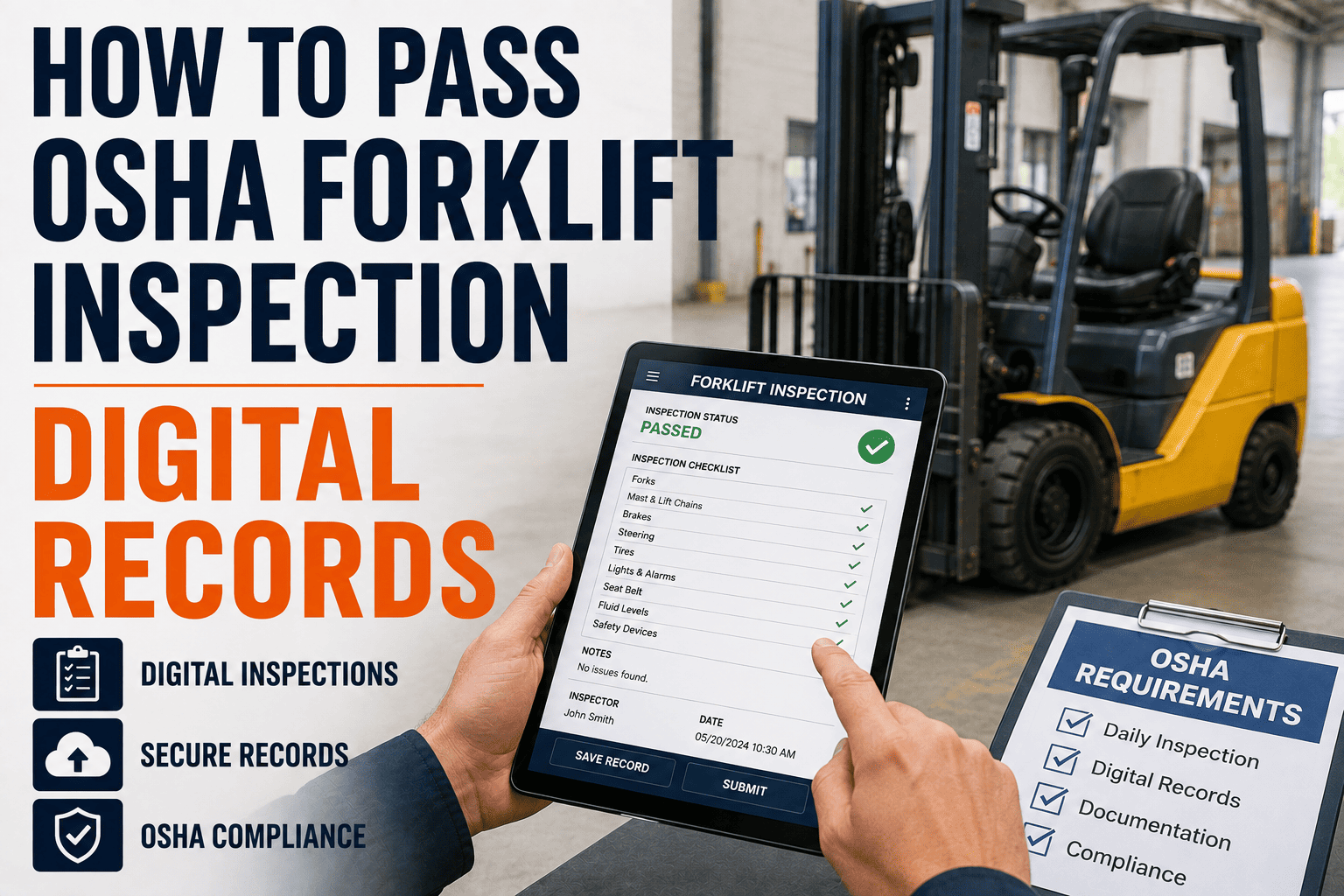
An OSHA compliance officer does not need to watch a forklift accident happen to write a citation. A missing certification record, a gap in your daily inspection log, or a defect that was never corrected is enough on its own, and serious violations under 29 CFR 1910.178 now carry penalties up to 16,550 dollars per instance, with willful or repeat violations reaching 165,514 dollars. Passing an OSHA forklift inspection has less to do with your equipment being perfect and everything to do with whether you can hand over the right document the moment it is requested. Sign up free and FleetRabbit will keep every one of those documents ready before an inspector ever walks in.
Passing an OSHA forklift inspection means being able to produce four things on demand: operator certification records under 29 CFR 1910.178(l)(6), daily pre-shift inspection logs, maintenance and repair history, and evidence that any defect found was corrected before the truck went back into service. Only the operator certification record is a strictly mandated document under the standard, but inspectors routinely request the others as evidence, and being unable to produce them quickly is what turns a routine walkthrough into a longer investigation.
What an Inspector Actually Asks to See
A compliance officer's forklift walkthrough moves through the same four document types almost every time, whether the facility is a distribution center or a manufacturing plant. Knowing what each one needs to contain, before the visit happens, is most of the battle.
Mandatory Paperwork Versus Strong Evidence
Not every document an inspector asks for is legally required, and understanding the difference matters, because it changes what "compliant" actually looks like on paper.
What the Standard Actually Requires
The operator training certification under 1910.178(l)(6) is the one piece of documentation 1910.178 mandates outright. It must identify the operator, the type of equipment covered, the training and evaluation dates, and the person who conducted them, and it has to be accessible to a compliance officer during an inspection, even if the operator was assigned by a staffing agency.
What Strengthens Your Case Without Being Mandated
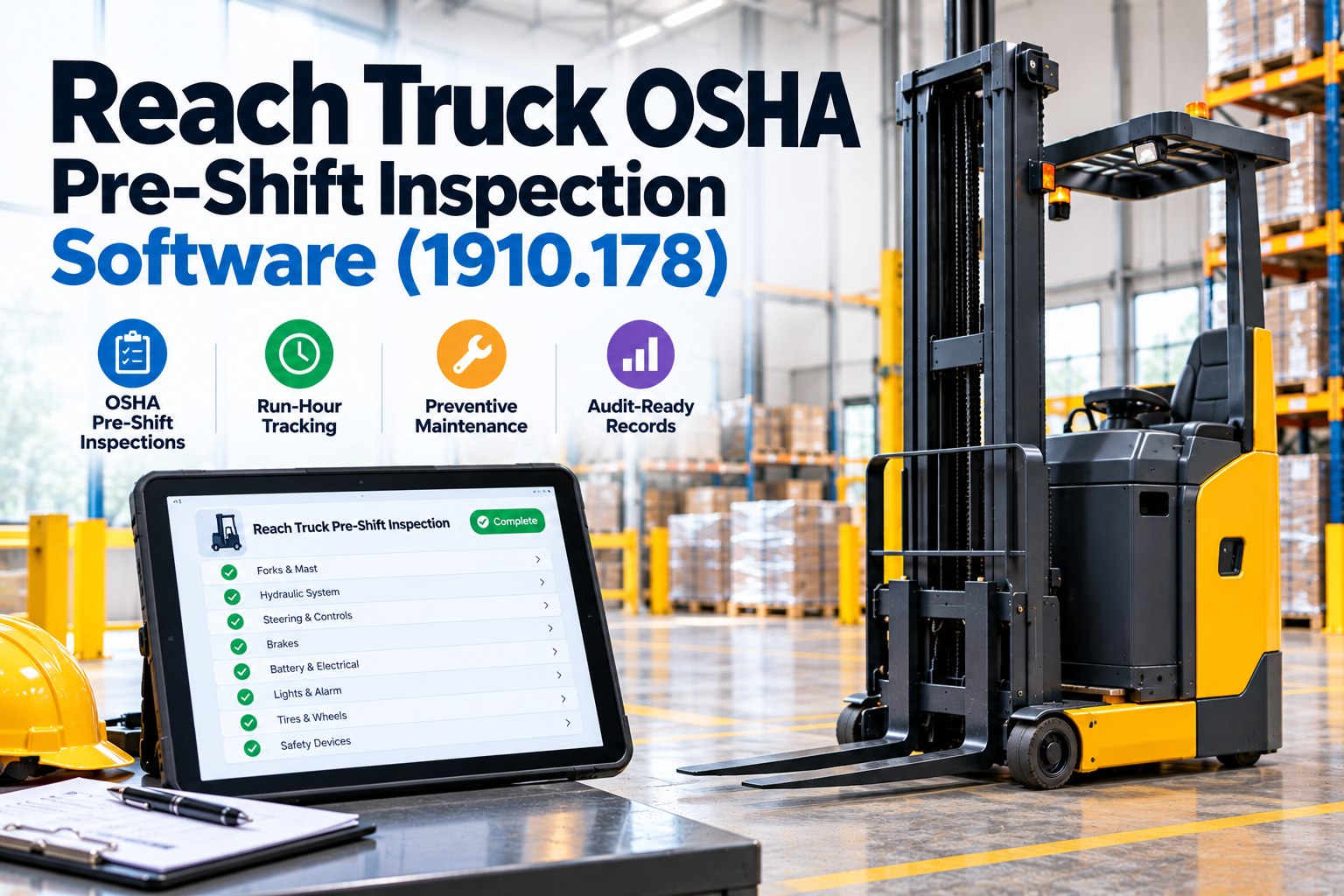
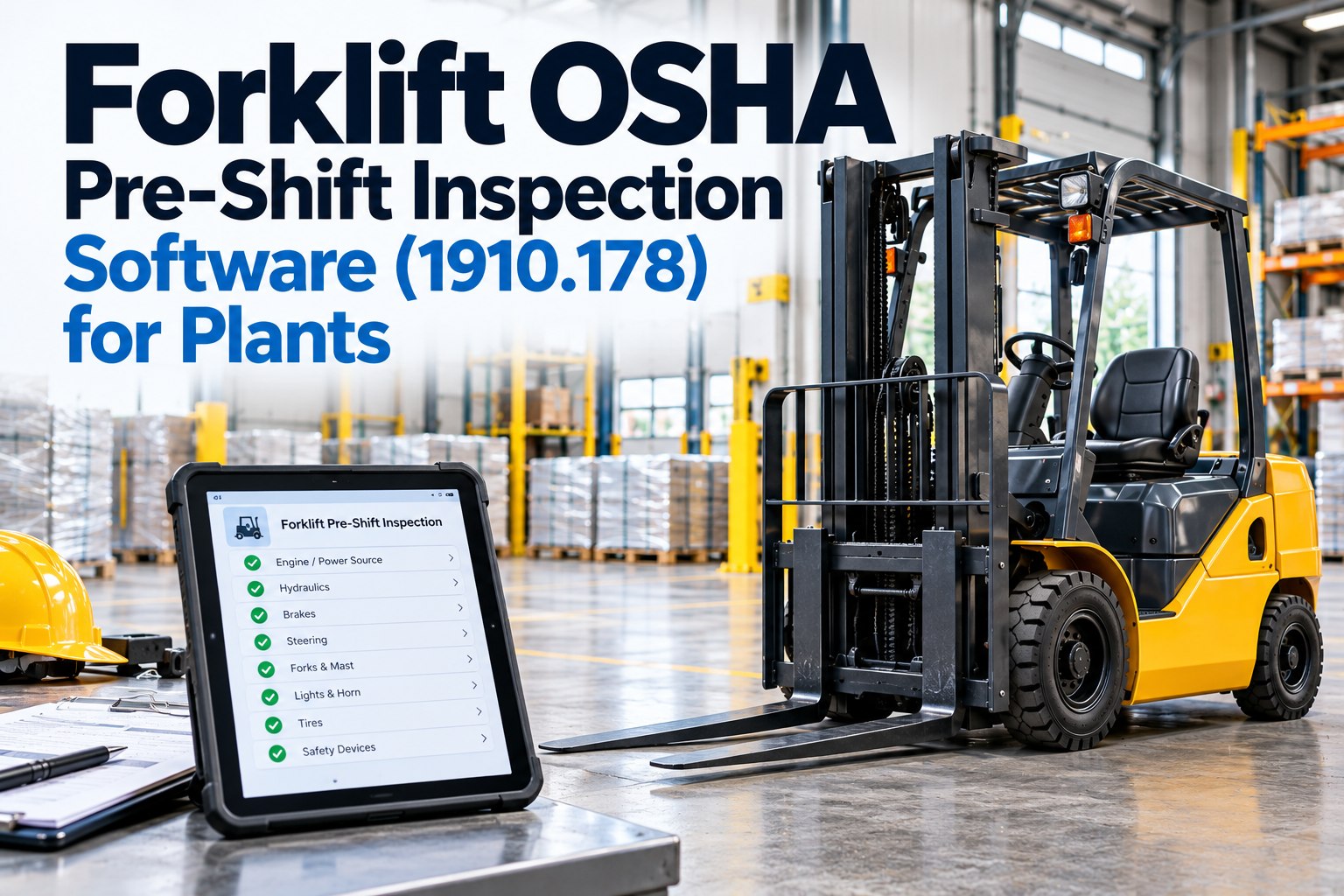
The daily examination itself is required, but a written record of it is not spelled out in the standard. In practice, a documented log is still what separates a fleet that can prove compliance in minutes from one that is asking an inspector to take its word for it. The same logic applies to maintenance history and defect correction records.
Where Citations Actually Come From
Missing or incomplete certification records are treated as their own serious violation, independent of whether an incident ever occurred. Inspection gaps, ignored defects, and unsafe pedestrian routes near active forklift traffic round out the most common findings during a walkthrough.
| Violation Type | Maximum Penalty | Common Trigger |
|---|---|---|
| Serious | Up to $16,550 per instance | Missing certification record, undocumented defect, uncorrected hazard |
| Willful or Repeated | Up to $165,514 per instance | Known hazard left unaddressed, or a prior citation for the same issue |
| Recordkeeping Gap | Cited independently of any incident | Certification record missing a required field or unavailable on request |
FleetRabbit keeps operator certifications, daily inspections, maintenance history, and defect logs organized by truck and instantly exportable, so your team never has to search a filing cabinet mid-inspection. Sign up free and get every truck's record audit-ready.
Getting Ready Before an Inspector Ever Arrives
Most facilities that pass an OSHA forklift inspection cleanly did not scramble the week before. They built a habit of keeping records current as part of daily operations, not as a project that gets rushed once a visit is announced.
Audit Your Certification Records First
Pull every active operator's file and confirm it has a name, training date, evaluation date, and trainer identity on record. This single document type is where recordkeeping citations concentrate, and it is also the fastest one to fix if you find a gap.
Close Any Defect Loop That Is Still Open
Check for any truck flagged with a defect that was never formally closed out. An open defect with no corrective action on file is one of the clearest findings a compliance officer can point to, and it is entirely within your control to fix before that happens.
Building Records Into the Everyday Routine
The plants that pass inspections without a scramble are the ones where certification, daily checks, and defect correction are logged the moment they happen, not reconstructed from memory afterward. Book a demo and FleetRabbit's team will show you how every one of these records builds itself in the background of your normal operation.
FleetRabbit keeps operator certifications, daily inspections, maintenance history, and defect correction logs organized and instantly retrievable, so passing an inspection stops depending on how well someone remembers to file paperwork.