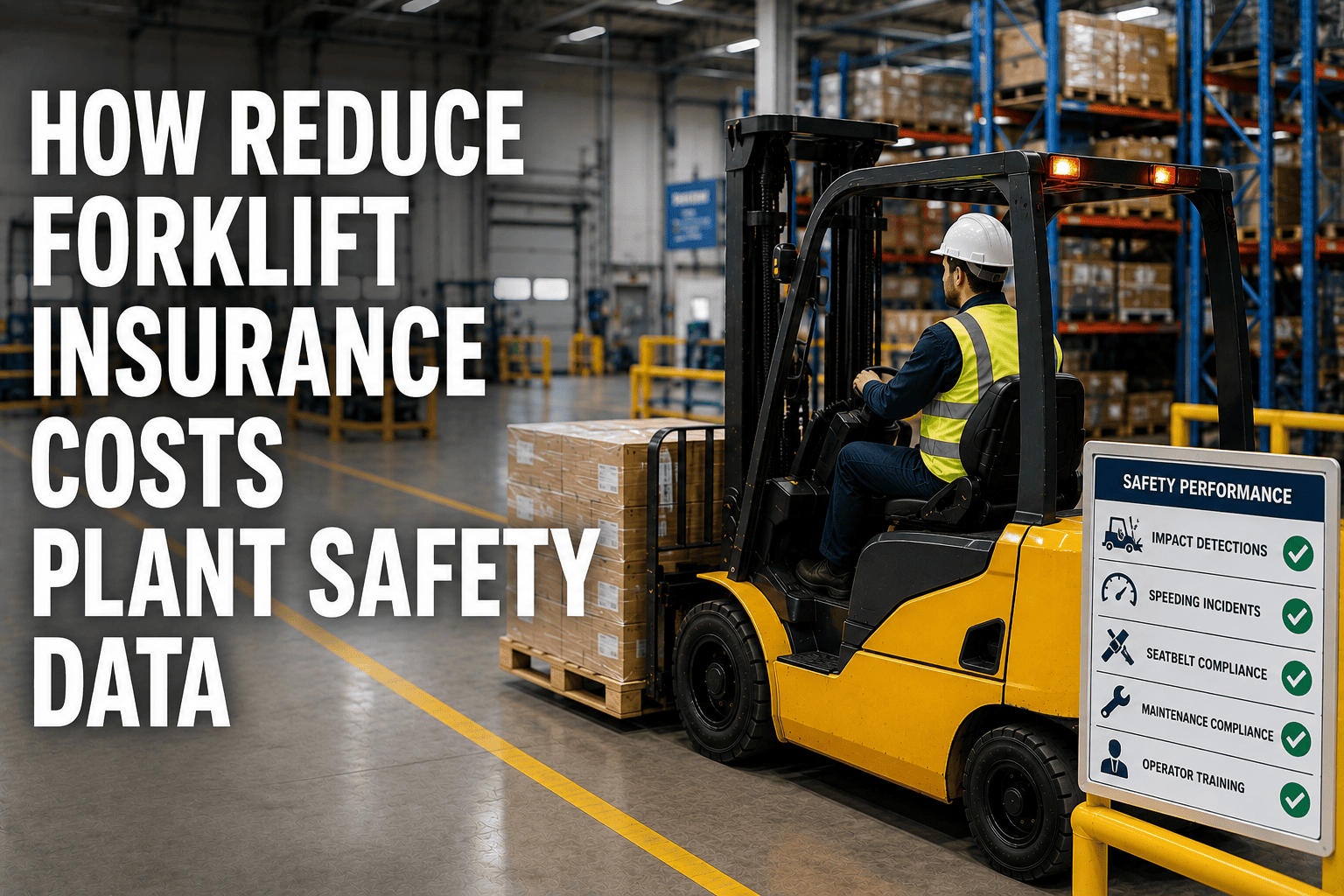
Ask most plant managers what their forklift insurance premium is based on, and the honest answer is usually "the same as last year, plus whatever the carrier decided to add." That is exactly the problem. Underwriters price forklift risk using claims history and industry averages when a plant cannot hand them anything better, which means a genuinely safe operation ends up paying the same conservative rate as a plant with a drawer full of undocumented near-misses. Reducing forklift insurance costs in 2026 comes down to one shift: replacing vague safety claims with documented, retrievable evidence that an underwriter can actually verify. This guide covers exactly which plant safety data moves the needle on premiums, how to package it for renewal, and how a platform like FleetRabbit turns everyday inspection and maintenance activity into that evidence automatically. You can sign up for a free trial to start building your safety data record today, or book a demo to see a renewal-ready report built from your current fleet.
Forklift insurance premiums drop when a plant can document operator certification under OSHA 1910.178(l), daily pre-shift inspection compliance, impact and near-miss history, and preventive maintenance records in a retrievable format. Carriers increasingly treat the absence of this data as an absence of risk management and price accordingly. FleetRabbit captures all four data points automatically and packages them into a renewal-ready report your broker can hand directly to underwriters.
What Underwriters Are Actually Looking For
Forklift insurance has moved away from pricing risk purely on revenue and claims count. Carriers now want proof of the controls behind the number, and plants that can produce that proof are increasingly moving into preferred underwriting tiers while plants that cannot are priced more conservatively by default.
The Safety Data That Actually Moves Your Premium
Collecting data by itself earns minimal credit with most carriers. The plants seeing real premium movement are the ones actively using their data to catch and correct problems, then keeping a record of that correction. Four categories consistently carry the most weight in a forklift risk submission.
Operator Certification and Training
An underwriter reviewing a forklift program wants to see certification dates, refresher training after any incident or equipment change, and a system that flags an operator whose certification is about to lapse before that operator is assigned to a truck. A spreadsheet that nobody checks weekly does not count as an active control.
Pre-Shift Inspection Discipline
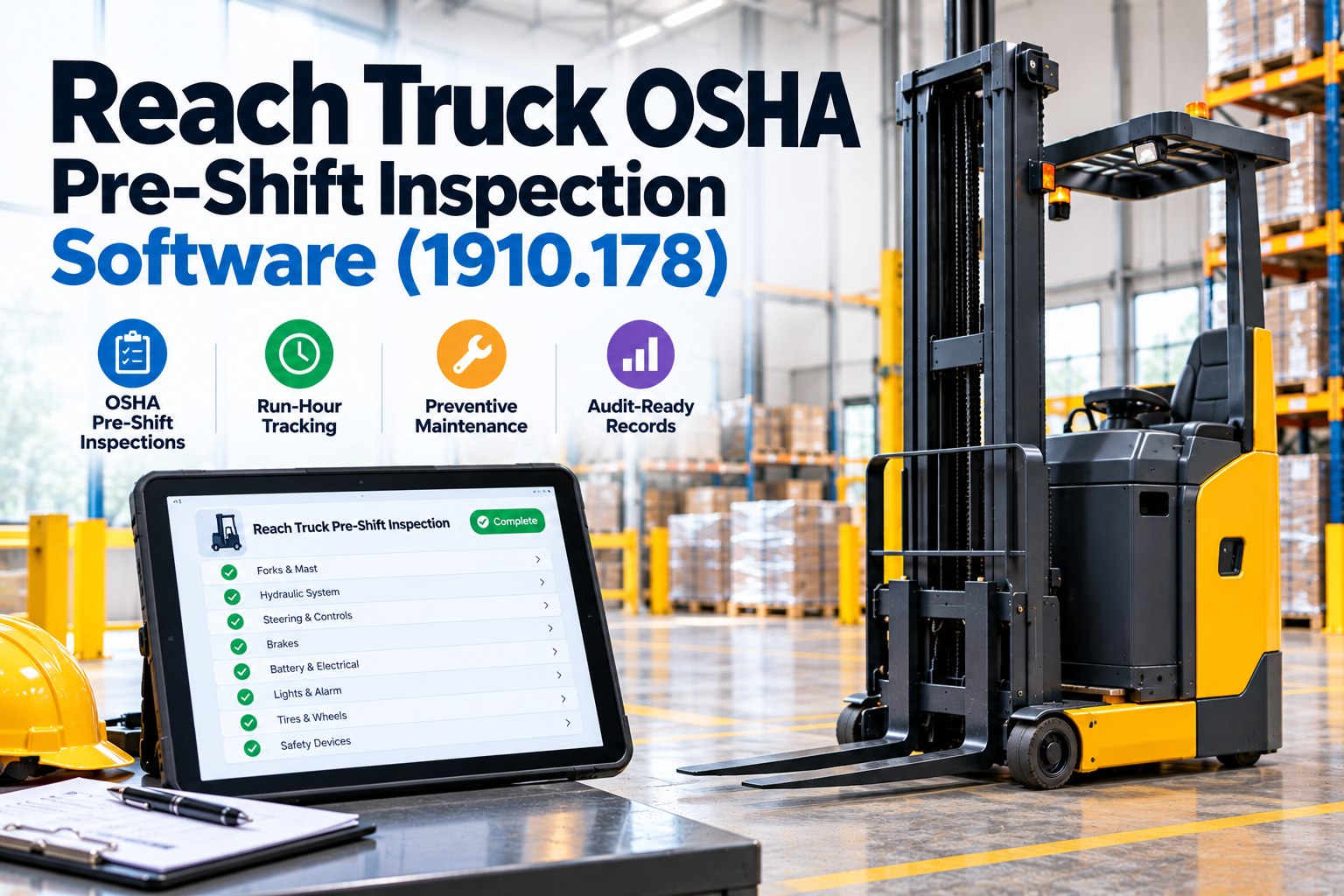
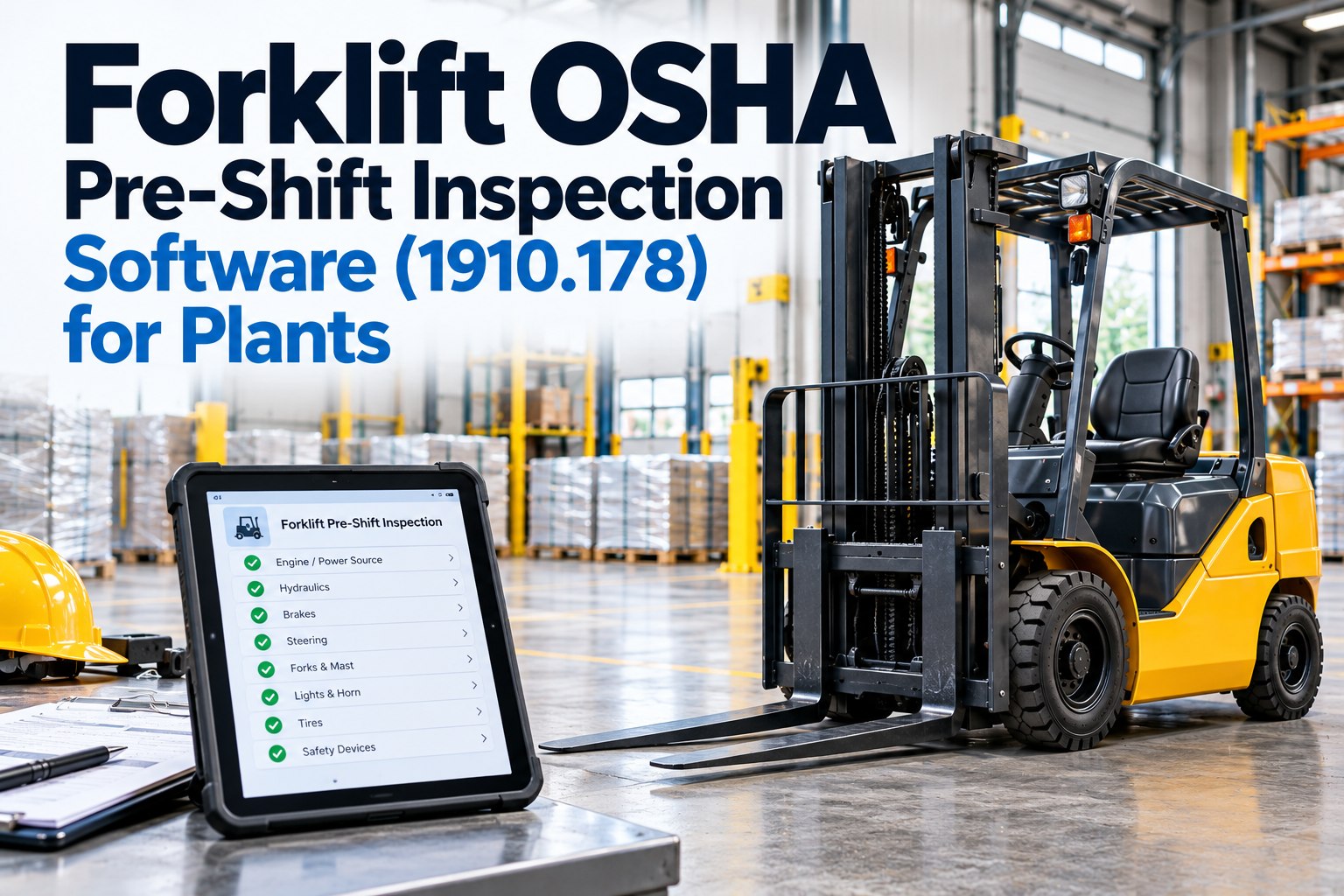
Paper checklists get lost, backdated, or skipped under deadline pressure, and underwriters know it. A digital pre-shift inspection tied to the operator and the specific truck, timestamped automatically, is far more defensible evidence than a clipboard in a drawer.
Impact Detection and Corrective Action
Underwriters respond well to impact sensor data that shows a downward trend, especially when it is paired with proof that each flagged event triggered coaching or a documented follow-up, not silence. A single bad month is far less damaging when the record shows it was addressed within days.
Preventive Maintenance Records
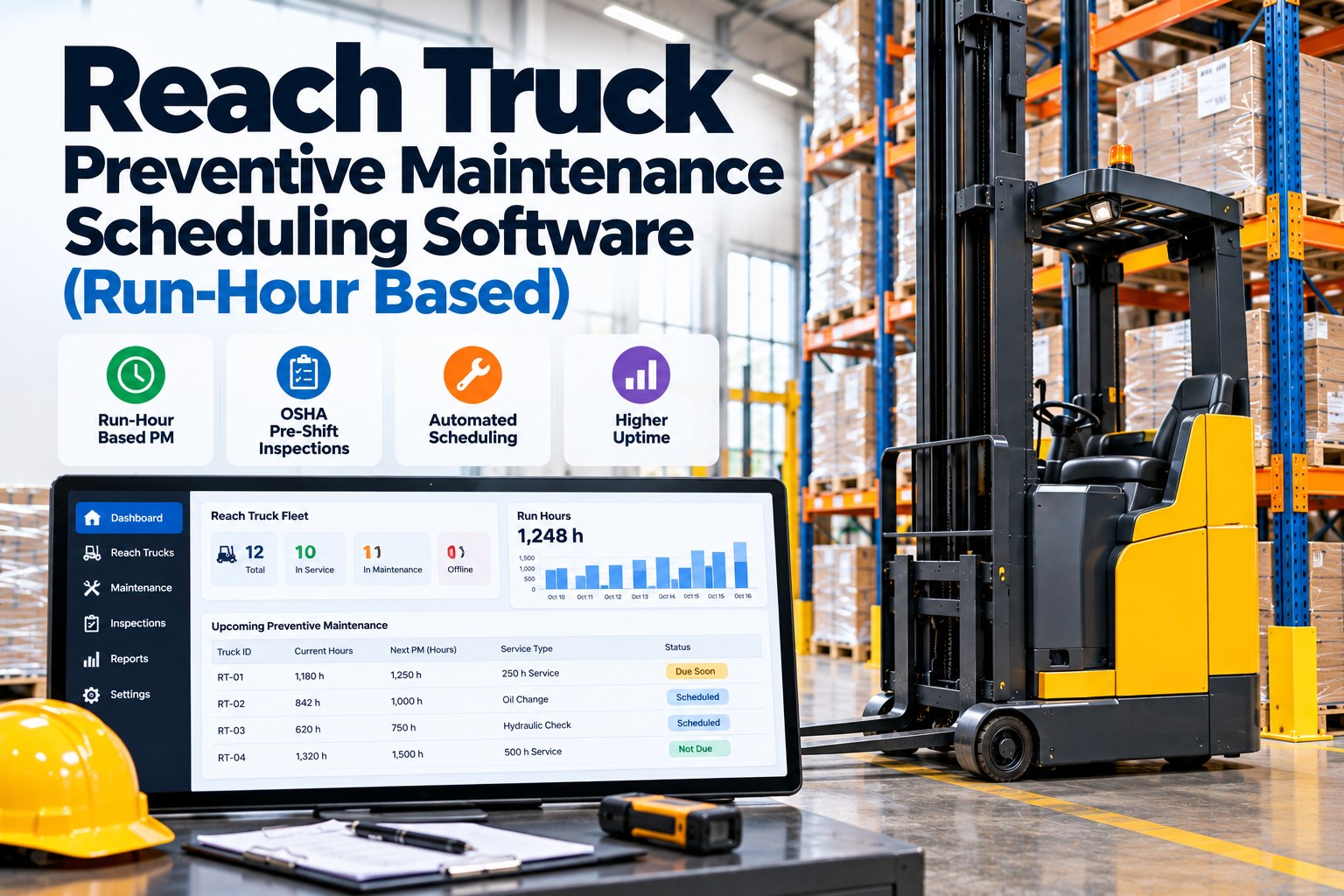
A forklift with a documented preventive maintenance history and unaltered digital service records signals lower mechanical failure risk than one with a folder of handwritten work orders that may or may not be complete.
FleetRabbit captures certification, inspection, impact, and maintenance data automatically and packages it into a renewal-ready report. Sign up to start your record today, or book a demo to see a sample report built from your fleet.
Comparing Documentation Approaches
How a plant stores its safety data matters almost as much as collecting it. Underwriters need to trust that records are complete, timestamped, and were not edited after the fact.
| Approach | Retrievable at Renewal | Underwriter Confidence | Limitation |
|---|---|---|---|
| Paper checklists and binders | Slow, often incomplete | Low, easy to question authenticity | Records get lost, backdated, or skipped under pressure |
| Shared spreadsheets | Moderate, requires manual compiling | Moderate, editable after the fact | No timestamp integrity, hours spent compiling before renewal |
| FleetRabbit digital records | Instant, always current | High, timestamped and unalterable | Requires initial fleet and operator data onboarding |
Building a Renewal-Ready Safety Portfolio
Most underwriters want to see several months of consistent data before weighing it heavily in a risk assessment, so the earlier a plant starts, the more usable that record becomes at the next renewal.
Start Capturing Data Immediately
Digitize pre-shift inspections, certification tracking, and impact detection now, since the data becomes valuable at renewal only once it covers a meaningful stretch of consistent history.
Document Every Corrective Action
Every time an inspection flags an issue or an impact sensor triggers an alert, save the record of what was done about it. A flagged event with a documented fix reads as a controlled operation, not a liability.
Package the Report Before Your Broker Asks
Waiting for a broker to request safety data is how plants leave savings on the table. Presenting an organized report proactively, ahead of the renewal conversation, positions the plant as the account underwriters want to keep.
Share the Data With Your Carrier
Insurers cannot reward risk controls they cannot see. A plant running strong inspection and maintenance discipline internally but never sharing it with the carrier gets priced the same as a plant with no program at all.
What Premium Movement Actually Looks Like
Forklift insurance in 2026 typically runs from a few hundred to a few thousand dollars per year per truck depending on value, indoor versus outdoor use, and claims history. Within that range, the plants documenting training, inspection, impact, and maintenance data consistently see meaningfully better renewal terms than plants relying on claims history alone, since carriers increasingly treat verified safety documentation as an active underwriting factor rather than a nice extra.
Frequently Asked Questions
Forklift insurance pricing rewards plants that can prove their safety program, not just describe it. A verbal claim that operators are trained and trucks are inspected daily means very little to an underwriter compared to a timestamped record covering months of consistent activity. Building that record does not require a separate insurance initiative, it requires digitizing the inspections, certifications, and maintenance work most plants are already doing, then keeping it organized enough to hand over before renewal instead of scrambling to reconstruct it after the fact. FleetRabbit was built to make that record automatic.
Turn your daily inspections, certifications, and maintenance records into evidence your insurer can actually use. FleetRabbit builds a renewal-ready safety report automatically, so you walk into your next negotiation with proof, not promises. Start your free trial today with no credit card required.