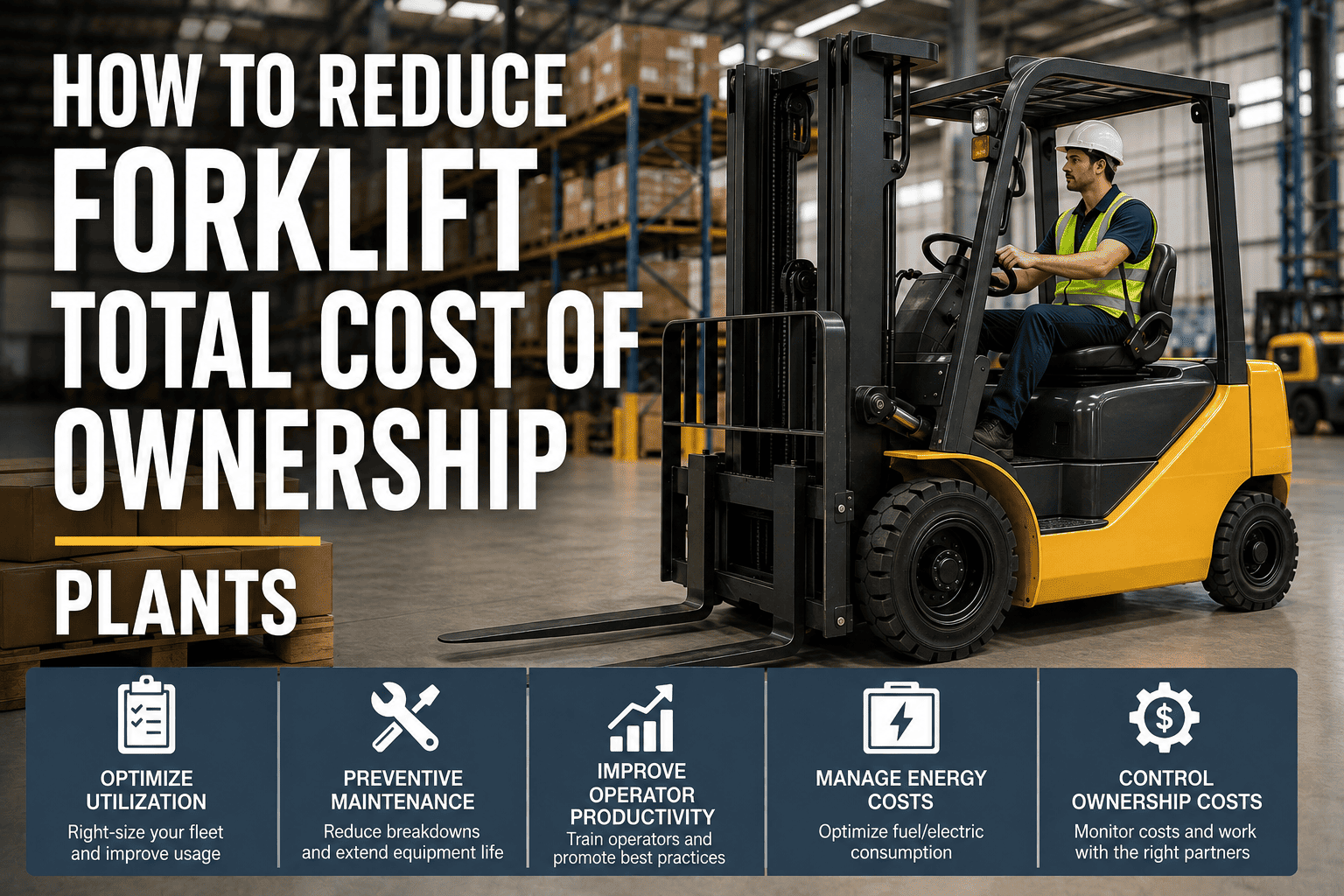
Most manufacturing plants judge a forklift purchase by the number on the invoice. That single decision quietly sets the stage for years of hidden spending that never shows up in the original budget. Fuel or electricity, tires, batteries, unplanned repairs, operator wages, and idle time on the shop floor all pile onto the purchase price long after the truck rolls off the sales lot. Plant managers who only track acquisition cost are working with a tiny fraction of the real picture, which is exactly why forklift total cost of ownership keeps climbing even when the fleet looks "under budget" on paper.
The sticker price of a forklift covers only a small slice of what it actually costs to own. Operator labor alone can account for up to three-quarters of lifetime spend, while the purchase price itself typically represents somewhere between one-fifth and one-third of total lifecycle cost across an 8 to 10 year lifespan. Plants that actively manage maintenance scheduling, energy use, utilization, and leasing structure routinely cut forklift TCO by a noticeable margin without touching output.
What Actually Makes Up Forklift Total Cost Of Ownership
Forklift TCO is the complete sum of every dollar a truck consumes across its working life, from the day it arrives on the floor to the day it is sold, scrapped, or traded in. It includes the purchase or lease payment, financing interest, energy or fuel, tires, planned maintenance, unplanned repairs, operator wages and training, insurance, compliance costs, and the residual value the plant recovers at disposal. Viewed side by side, these categories tell a very different story than the invoice total ever could.
Purchase Price Is A Minority Share
Across a typical 8 to 10 year lifecycle, the acquisition cost of the truck usually represents only about 20 to 30 percent of everything the plant will eventually spend on it. Everything else accumulates quietly during daily operation.
Labor Dominates The Ledger
Operator wages, shift coverage, and training can make up as much as 77 percent of lifetime forklift cost. This single line item is often the largest and least scrutinized part of any plant's forklift budget.
Energy Costs Vary Widely By Power Type
Internal combustion trucks typically run 1,500 to 6,000 dollars a year in fuel, while an electric forklift on a well-managed charging routine can cost as little as 500 to 2,000 dollars a year to power.
Why Purchase-Price Thinking Backfires On The Plant Floor
Buying decisions built only around the sticker price tend to favor the cheapest truck on the lot, which is frequently the most expensive truck to run. A discounted forklift with an underpowered motor, an older hydraulic system, or a battery nearing the end of its useful cycle life will eat back its initial savings within the first eighteen months through higher energy draw, more frequent part replacement, and additional unplanned downtime. Manufacturing plants that shift the conversation from purchase price to forklift total cost of ownership consistently make better long-term fleet decisions.
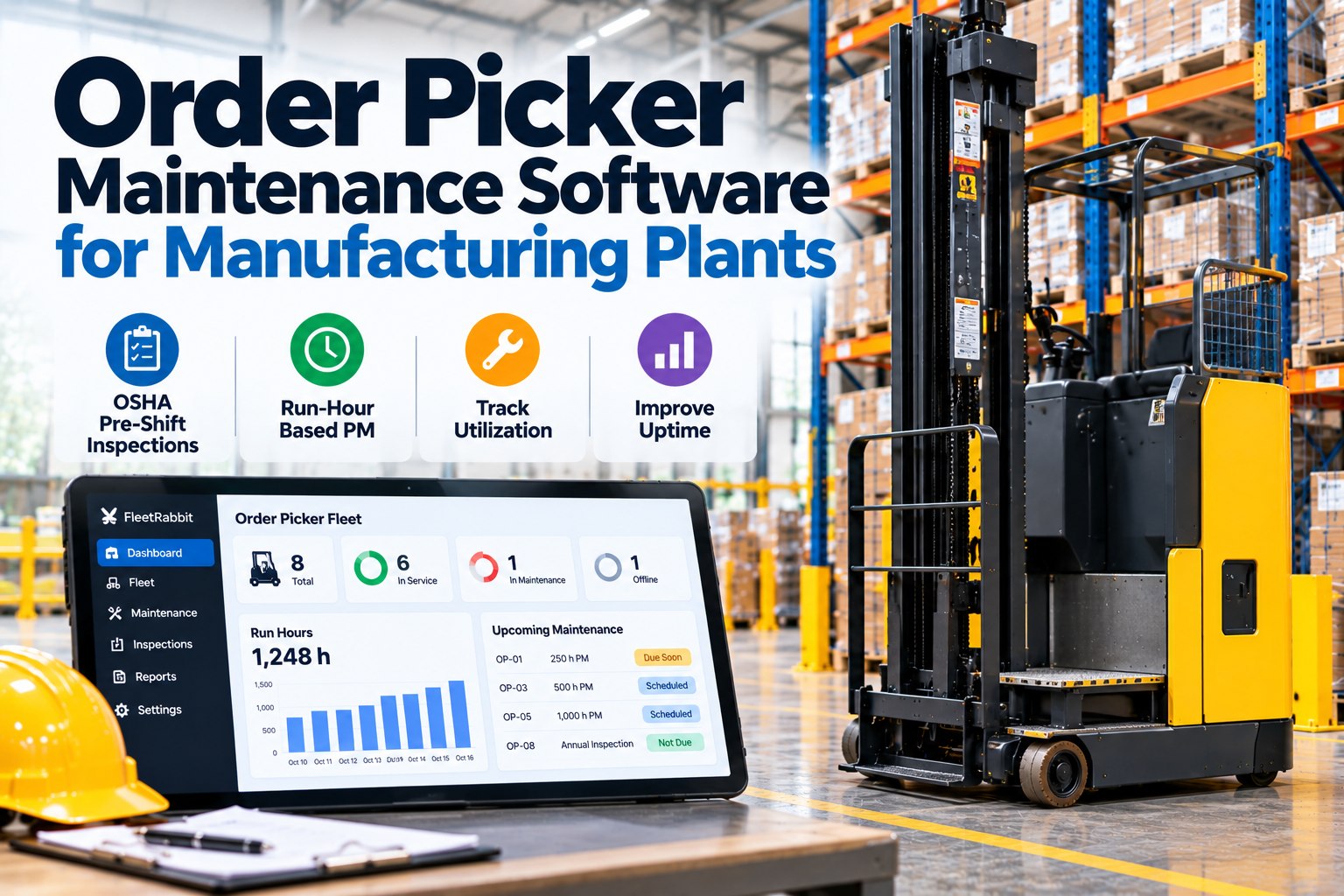
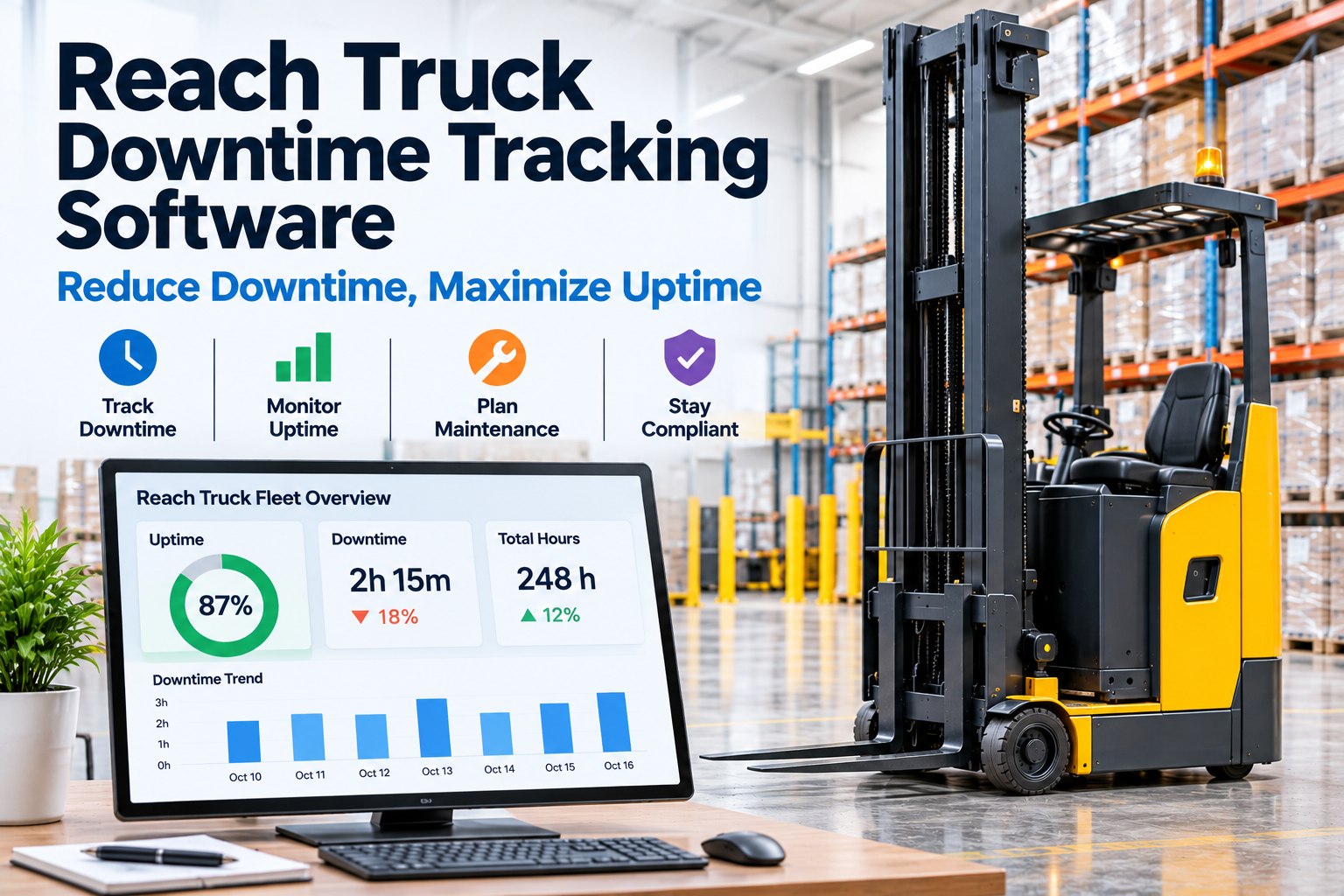
FleetRabbit pulls maintenance history, energy usage, utilization, and downtime into a single view so plant managers can see exactly where forklift TCO is building up and act before small costs become big ones. Set up your fleet and see the numbers within minutes.
Cost Category Breakdown: Where Manufacturing Plants Actually Spend
Breaking forklift TCO into individual line items shows plant managers exactly where their attention delivers the biggest return. Some categories are largely fixed once the truck is purchased, while others respond quickly to better management practices on the floor.
| Cost Category | Typical Share Of TCO | What Drives It | How Plants Reduce It |
|---|---|---|---|
| Acquisition Or Lease | 20% to 30% | Truck class, capacity, new versus used, financing interest of 5 to 10 percent annually | Right-size capacity to actual load requirements instead of buying for peak scenarios |
| Operator Labor | Up to 77% | Wages, shift coverage, training, idle operator time between tasks | Improve utilization scheduling so operators and trucks are matched to real workload |
| Energy Or Fuel | Single digit to low double digit percent | Power type, hours run, charging discipline, engine load | Standardize charging routines or evaluate electric conversion where usage supports it |
| Maintenance And Repair | Single digit to low double digit percent | Age of truck, parts quality, unplanned versus scheduled service | Move to condition-based maintenance scheduling instead of reactive repair calls |
| Downtime And Idle Cost | Grows with truck age | Breakdown frequency, part availability, technician response time | Track uptime by unit and flag trucks trending toward chronic failure early |
| Disposal And Residual Value | Offsets total cost | Depreciation of 15 to 20 percent annually, resale timing, condition at trade-in | Sell or trade before major component failure erodes resale value |
Electric Versus Internal Combustion: A Quick Cost Comparison
Power type is one of the biggest levers a plant can pull on forklift TCO, particularly for multi-shift operations. Internal combustion trucks are usually cheaper to buy but carry meaningfully higher lifetime fuel and maintenance spend. Electric AC trucks cost more upfront and require battery infrastructure, but they tend to run cheaper across the full ownership period for plants with predictable, high-utilization workloads.
Internal Combustion
Lower purchase price, faster refueling, and simpler infrastructure. Fuel typically runs 1,500 to 6,000 dollars a year and maintenance tends to run higher over the truck's life due to engine and transmission wear.
Electric AC
Higher purchase and battery cost upfront, but charging can run as low as 500 to 2,000 dollars a year, fewer moving parts to service, and stronger residual value at the end of the truck's working life.
Five Hidden Cost Drains Inside Most Manufacturing Plants
Forklift TCO rarely spikes from one dramatic failure. It usually leaks out through small, repeated inefficiencies that never make it into a monthly report. These five areas are where plants lose the most without realizing it.
Oversized Fleets For Actual Demand
Plants often keep more trucks in rotation than current production volume requires, simply because removing a unit feels riskier than leaving it idle. Every underused truck still accrues insurance, inspection, and depreciation cost while producing nothing.
Reactive Instead Of Scheduled Maintenance
Waiting for a warning light or a breakdown call means paying emergency labor rates and rush parts pricing instead of routine service pricing. The repair bill is only part of the loss, the production delay behind it usually costs more.
Poor Charging And Fueling Discipline
Opportunity charging lead-acid batteries or letting fuel tanks run near empty accelerates wear on both batteries and engines, shortening replacement cycles and quietly inflating the energy line of forklift TCO.
Mismatched Truck Class And Task
Running a heavy-duty truck on light, short-distance tasks burns more energy and accelerates component wear than the job requires, while underpowered trucks on heavy loads fail faster and need more frequent part replacement.
No Visibility Into Per-Unit Cost
Without unit-level tracking, plants cannot tell which specific truck in the fleet is quietly becoming a cost sink. Fleet-wide averages hide the two or three trucks that are dragging total forklift TCO upward every month.
FleetRabbit flags the specific trucks driving up your forklift TCO, whether it's excessive idle time, repeated repair visits, or poor charging habits, so you can act on the two or three units actually hurting your budget instead of guessing across the whole fleet.
How To Calculate Your Plant's Forklift TCO
Putting a real number on forklift total cost of ownership does not require a finance degree, just consistent data across the categories that matter most. Work through these steps for each truck class in the fleet, then roll the totals up to a plant-wide figure.
Pull Twelve Months Of Spend Per Truck
Gather lease or financing payments, energy or fuel bills, parts, labor hours, and any rental backfill costs for each individual unit rather than the fleet as a whole.
Separate Planned From Unplanned Repairs
Tag every repair as scheduled maintenance or emergency response. Emergency repairs typically cost several times more per incident once rush labor and expedited parts are included.
Add Operator Labor Allocated To Each Truck
Since labor can represent the majority of lifetime cost, allocate operator wages and training hours against the specific truck or task they support for an accurate picture.
Factor In Downtime Hours
Multiply hours the truck sat idle for repair by the production value lost during that window, using your plant's standard throughput rate for that station.
Subtract Expected Residual Value
Estimate current resale or trade-in value based on age and condition, and subtract it from the running total to reach a net forklift TCO figure for that unit.
Four Proven Ways To Reduce Forklift TCO
Once the numbers are visible, plants have several practical levers available. These four consistently deliver the largest reductions in forklift total cost of ownership without requiring a full fleet replacement.
1. Shift To Condition-Based Maintenance
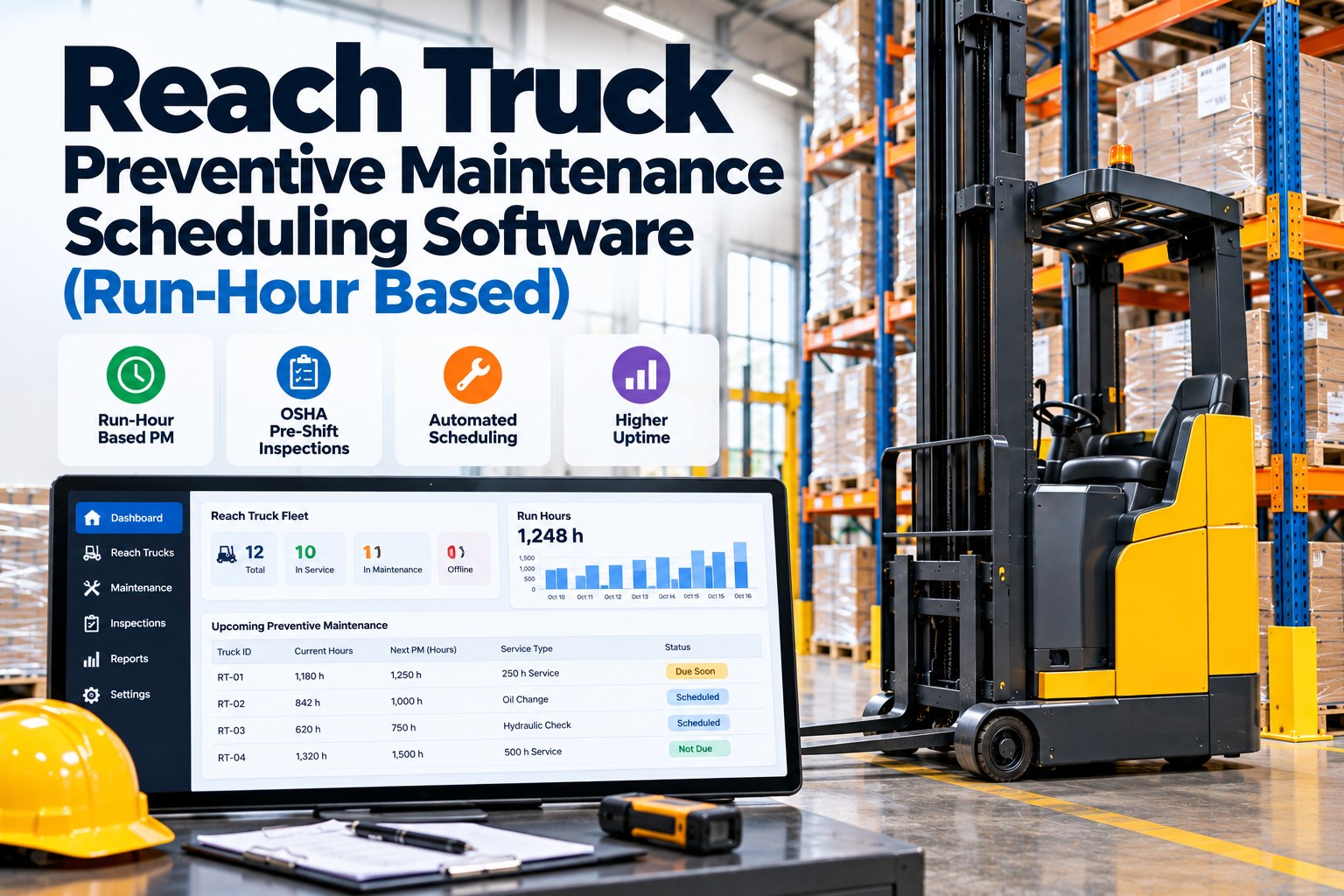
Instead of servicing every truck on a fixed calendar regardless of actual condition, use hour meters, inspection checklists, and repair history to schedule maintenance based on real wear. This catches developing issues while they are still inexpensive to fix and avoids paying for service a truck did not yet need.
Quick Tip
Trucks with a history of repeated part failures are strong candidates for upgraded components. A part that costs more upfront but lasts twice as long often lowers total forklift TCO even though the initial repair invoice looks larger.
2. Get Deliberate About Power Type And Charging
For multi-shift, high-utilization operations, electric AC trucks with a disciplined charging routine typically cost less to run over the full ownership period than internal combustion equivalents. For lower-utilization or outdoor applications, internal combustion may still make sense. The decision should be based on actual duty cycle, not habit.
Quick Tip
Avoid opportunity charging lead-acid batteries. Letting a battery run down fully before a complete charge, and allowing proper cooling time, extends battery life and keeps the energy line of forklift TCO in check.
3. Compare Leasing Structures Against Buying
Leasing shifts maintenance and depreciation risk in ways that can lower total forklift TCO for plants that upgrade equipment frequently or want predictable monthly costs. Buying can work out cheaper for plants that run trucks longer than the typical lease term and manage maintenance tightly in-house. Model both scenarios against your plant's actual usage pattern before committing.
Quick Tip
Financing interest on a purchased truck typically runs 5 to 10 percent annually. Include that figure in any buy-versus-lease comparison, since it is often left out of informal calculations.
4. Right-Size The Fleet To Real Utilization
Track actual hours run per truck against available shift hours. Units running well below plant average are candidates for redeployment, sale, or consolidation. A smaller, better-utilized fleet almost always produces lower forklift TCO than a larger fleet carrying idle capacity.
Quick Tip
Redeploying an underused truck to a higher-demand line instead of buying a new unit for that line is one of the fastest ways to lower acquisition spend without losing capacity.
Benchmarking Forklift TCO Across A Manufacturing Fleet
Tracking a handful of consistent metrics lets plant managers tell whether their forklift TCO is trending in the right direction, without waiting for an annual budget review to find out.
Well-managed manufacturing fleets keep trucks available and working at least this often, with the remainder covering planned maintenance windows.
A healthy maintenance program keeps the large majority of service work scheduled rather than reactive, which keeps repair costs predictable.
Trucks kept in strong condition through consistent maintenance regularly reach or exceed this range before replacement becomes cost-effective.
FAQ: Reducing Forklift Total Cost Of Ownership
Bringing It All Together
Forklift total cost of ownership is shaped far more by daily operating decisions than by the number on the original purchase order. Labor allocation, charging discipline, maintenance timing, and fleet sizing quietly determine whether a manufacturing plant's forklift program runs lean or bleeds money year after year. Plants that measure these categories consistently, rather than reviewing them once a year during budget season, catch cost creep early and correct it before it compounds across the whole fleet.
The plants seeing the biggest improvements are the ones treating forklift TCO as an ongoing operating metric rather than a one-time purchasing calculation. That shift in mindset, paired with the right visibility into per-unit performance, is usually what separates a fleet that quietly overspends from one that runs at its true lowest cost.
FleetRabbit gives manufacturing plants a live view of maintenance, energy, utilization, and downtime across every truck in the fleet, so lowering forklift total cost of ownership becomes a routine decision instead of a once-a-year guess. Get started free or walk through your fleet's numbers with our team.