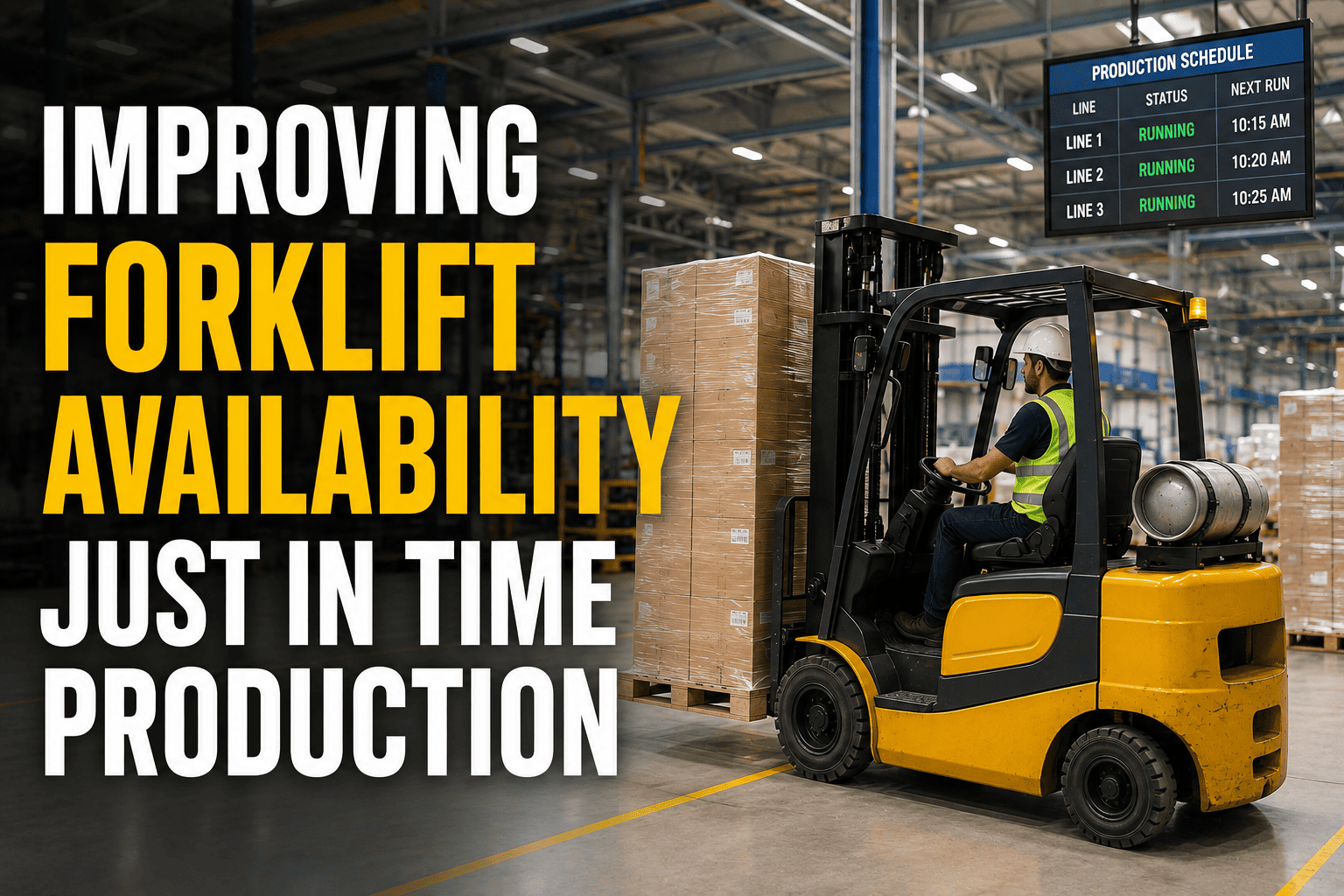
A just-in-time line doesn't run on inventory. It runs on timing. Parts arrive at the work cell minutes before they're needed, not hours, which means there's no buffer sitting on the floor to absorb a forklift that isn't where it's supposed to be. In a JIT plant, "the truck is in the shop" isn't a maintenance problem. It's a production problem, and it moves fast.
Most fleet maintenance programs are built around keeping trucks running eventually. JIT production needs something stricter: trucks available at the exact moments the schedule calls for them. That's a different design problem, and it's one most plants haven't actually solved, even when their maintenance numbers look fine on paper.
Why Standard Fleet Maintenance Doesn't Fit a JIT Schedule
Traditional maintenance scheduling asks one question: is this truck due for service? A JIT-ready maintenance program asks a second question that matters just as much: does this truck need to be running at 2:15 this afternoon, and does the maintenance calendar respect that?
Maintenance Windows vs. Takt Time
A forklift running milk-run loops feeding a work cell operates on a rhythm tied directly to the line's takt time, often every 15 to 60 minutes. Pulling that unit for a routine service check without checking the production schedule first is how a five-minute maintenance task turns into a stalled work cell. The fix isn't less maintenance, it's maintenance that's scheduled against the same calendar the production line runs on, not a generic weekly rotation.
The Cost of "Good Enough" Availability
A fleet running at 95 percent uptime sounds strong until you calculate what the remaining 5 percent costs on a JIT line. Unplanned maintenance events cost roughly 3 to 5 times more than the same repair performed on a planned schedule, and that gap doesn't include the line stoppage sitting on top of it. Across manufacturing broadly, unplanned downtime averages tens of thousands of dollars per hour, and JIT-dependent sectors like automotive routinely see that figure climb into the millions once a stoppage cascades through the schedule. If your plant is trying to quantify that exposure, you can book a demo and walk through your own fleet's availability data against your production calendar.
FleetRabbit schedules maintenance around your actual line schedule, not a generic calendar, so the truck the line needs is the one that's ready.
Building Forklift Availability Around the Production Plan
Time predictive maintenance to planned line stops
Every JIT line already has scheduled breaks, changeovers, and shift transitions. Routing preventive maintenance into those existing gaps, instead of a fixed weekly slot, keeps trucks off the line only when the line was already stopped anyway.
Map redundancy before you need it
Knowing which forklift can cover a critical route on short notice turns an unexpected fault code into a five-minute reassignment instead of a stalled work cell while someone scrambles to find a backup.
Catch faults before the truck misses its next run
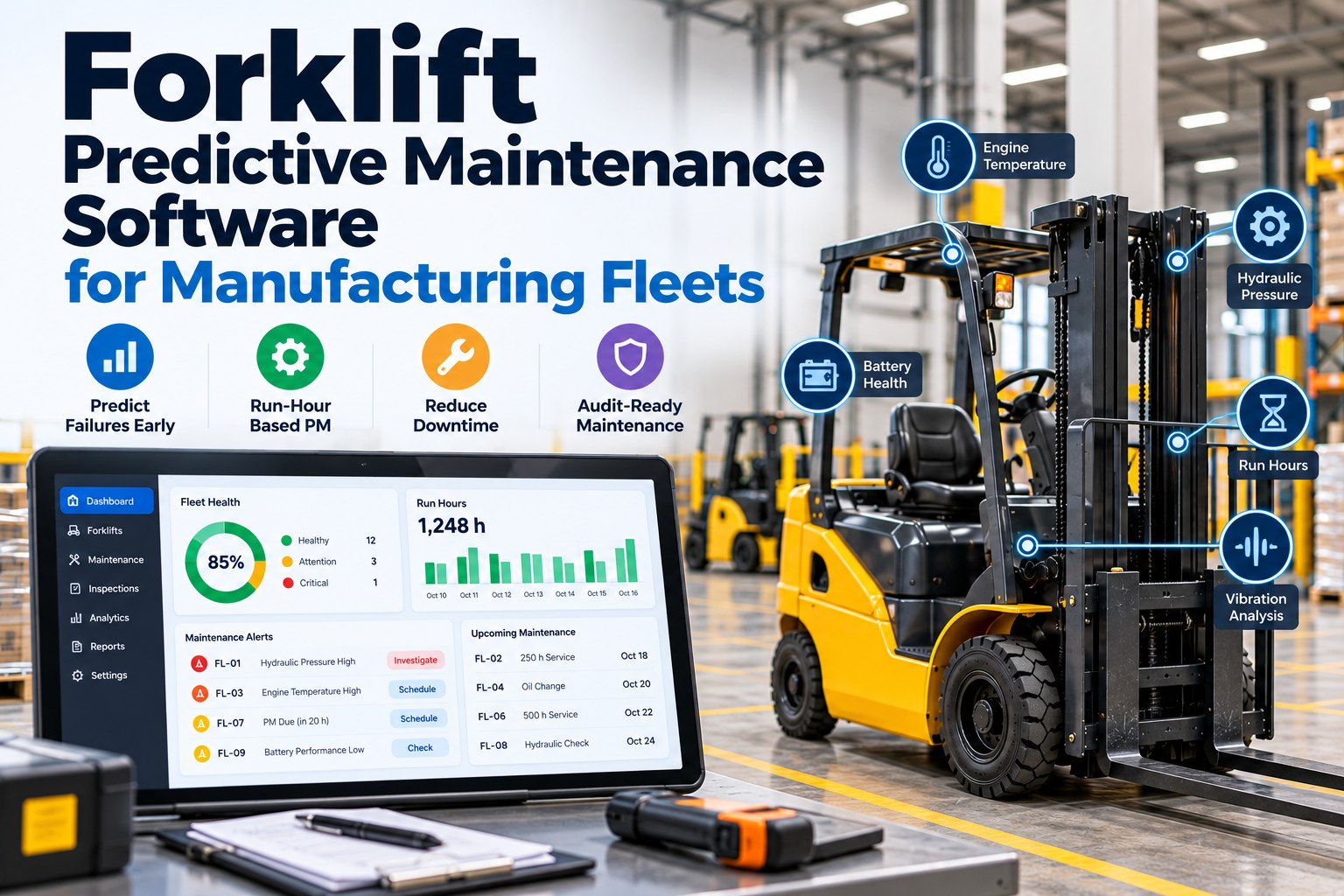
Predictive alerts on battery health, hydraulic pressure, and fault codes give the maintenance team a window to intervene between runs rather than mid-cycle, when the same repair costs far less and touches zero scheduled loops.
Track availability as an SLA, not a maintenance metric
Reporting "95 percent uptime" hides which 5 percent of downtime landed during a critical production window. Tracking on-time availability against the actual schedule shows the number that matters to the line, not just to the maintenance log.
| Production Environment | Typical Stoppage Cost |
|---|---|
| General Manufacturing | Roughly $39,000 per hour on average across the sector |
| Forklift-Fed Work Cells | $2,000 to $8,000 per hour once a material shortage stalls the line |
| Industrial Manufacturing (2026 avg.) | Approximately $260,000 per hour, factoring in lost margin, scrap, and logistics impact |
| Automotive JIT Lines | Can exceed $2 million per hour once contractual penalties and cascading stoppages are included |
A Tugger Loop, Five Minutes From Trouble
A tow tractor running a fixed milk-run loop every 20 minutes throws a low-battery warning mid-shift. Under a standard maintenance schedule, that unit runs until it fails, missing its next loop and leaving a work cell without parts within minutes. Under a JIT-aligned system, the alert triggers an automatic reassignment to a backup unit before the next scheduled run, and the flagged tugger goes in for service during the shift's next planned break. The parts still arrive on time. The line never knows anything happened.
Getting to that outcome doesn't require overhauling your maintenance program. It requires connecting your fleet's real-time condition data to the production schedule that already governs your plant. Plants ready to see their own availability against their line schedule can sign up and get a working view within days.
Frequently Asked Questions
FleetRabbit aligns forklift maintenance and availability to your actual production schedule, so the trucks your line depends on are ready exactly when they're needed.