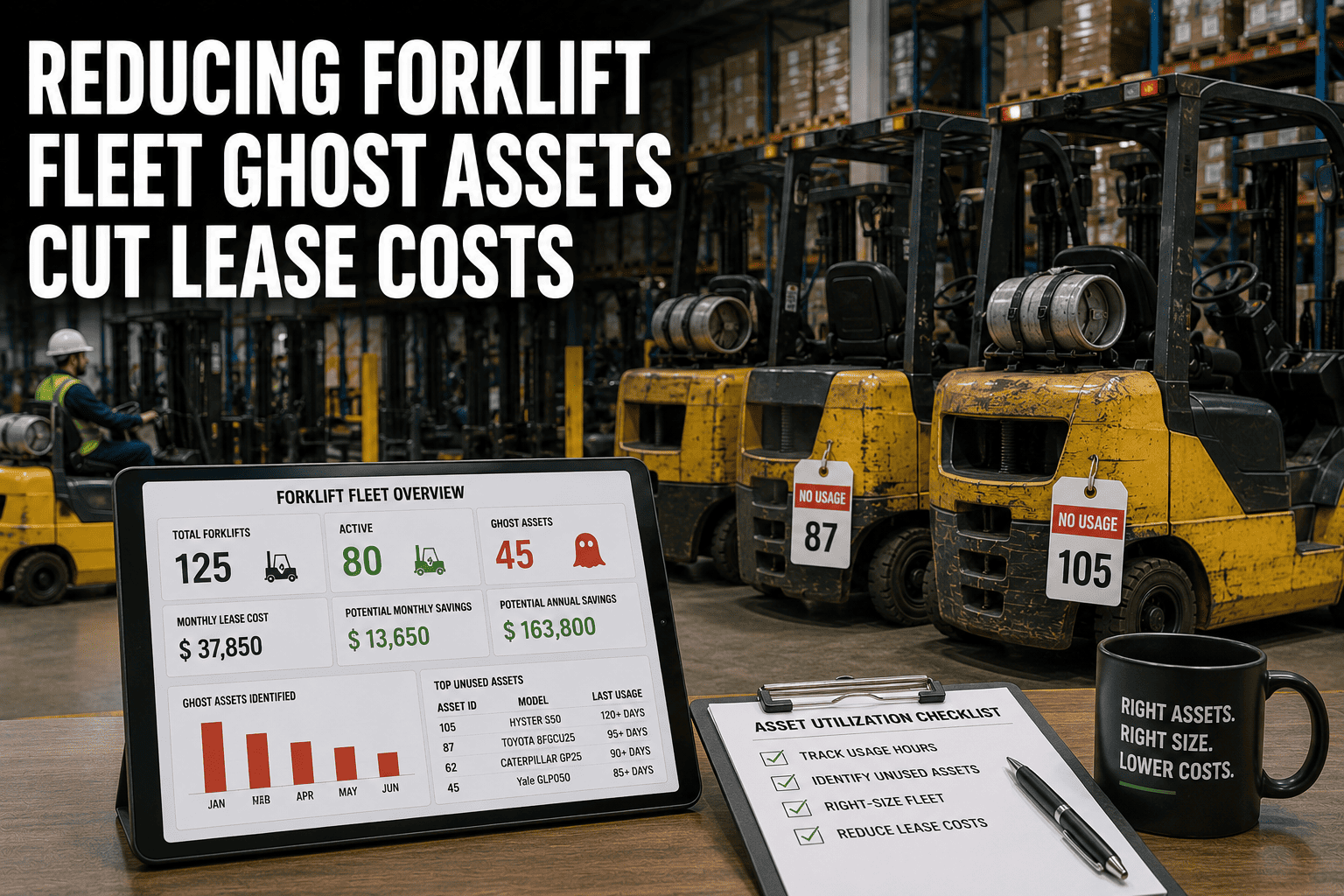
Somewhere in your forklift fleet, there's a truck that hasn't moved a meaningful load in weeks, and the lease payment for it still hits the books every single month. It isn't broken, it isn't missing, it's just sitting — parked in a corner of the yard or a rarely used dock, technically an asset, financially a liability. Fleet managers call this a ghost asset: equipment on the books that can't generate revenue because it's underused, misplaced, or stuck in status limbo between shifts. Most plants have more of these than they realize, and shedding them is one of the fastest ways to cut lease spend without touching a single production line. Finding out exactly how many ghost assets are sitting in your fleet right now is a five-minute conversation — you can book a demo to see your own utilization numbers.
A ghost asset is a leased or owned forklift that appears on your books but isn't earning its keep, usually because it's sitting underused, misplaced, or stuck between shifts with no clear owner. The North American manufacturing average for forklift utilization sits at just 46.9 percent, meaning more than half of a typical fleet's paid-for capacity goes unused. Identifying and shedding chronically underutilized units removes their lease, maintenance, and depreciation cost immediately, without changing production output at all.
What A Ghost Asset Actually Costs You Every Year
A single underused forklift rarely looks expensive on its own. It's the combination of three cost lines running quietly in the background, month after month, that adds up.
| Cost Line | Why It Keeps Billing | Impact When The Unit Is Underused |
|---|---|---|
| Lease Payment | Fixed monthly obligation regardless of actual hours run | Full payment continues whether the truck moves once a day or fifty times |
| Maintenance Contract | Scheduled service and inspection fees tied to the unit, not its usage | Paying for upkeep on a machine delivering little productive value |
| Depreciation | Book value declines on a fixed schedule regardless of hours logged | Capital tied up in an asset generating far below its potential return |
The 60 Percent Rule Most Fleets Ignore
Industry guidance for forklift procurement centers on a simple threshold: if a truck is projected to run at 60 percent or more of normal working hours, roughly 1,200 hours a year on a single shift, buying or leasing to own is typically the most cost-effective route. Below that threshold, the math tips toward renting only when needed, since the fixed lease cost stops paying for itself against the actual work being done.
Why This Rule Gets Broken Without Anyone Noticing
Fleets rarely start out below that line. Utilization erodes gradually as production shifts, a line gets automated, or a truck gets assigned as backup and quietly becomes permanent. Without ongoing visibility into actual hours, a forklift can spend a year drifting well under the 60 percent mark before anyone in finance notices the lease is still running at full price.
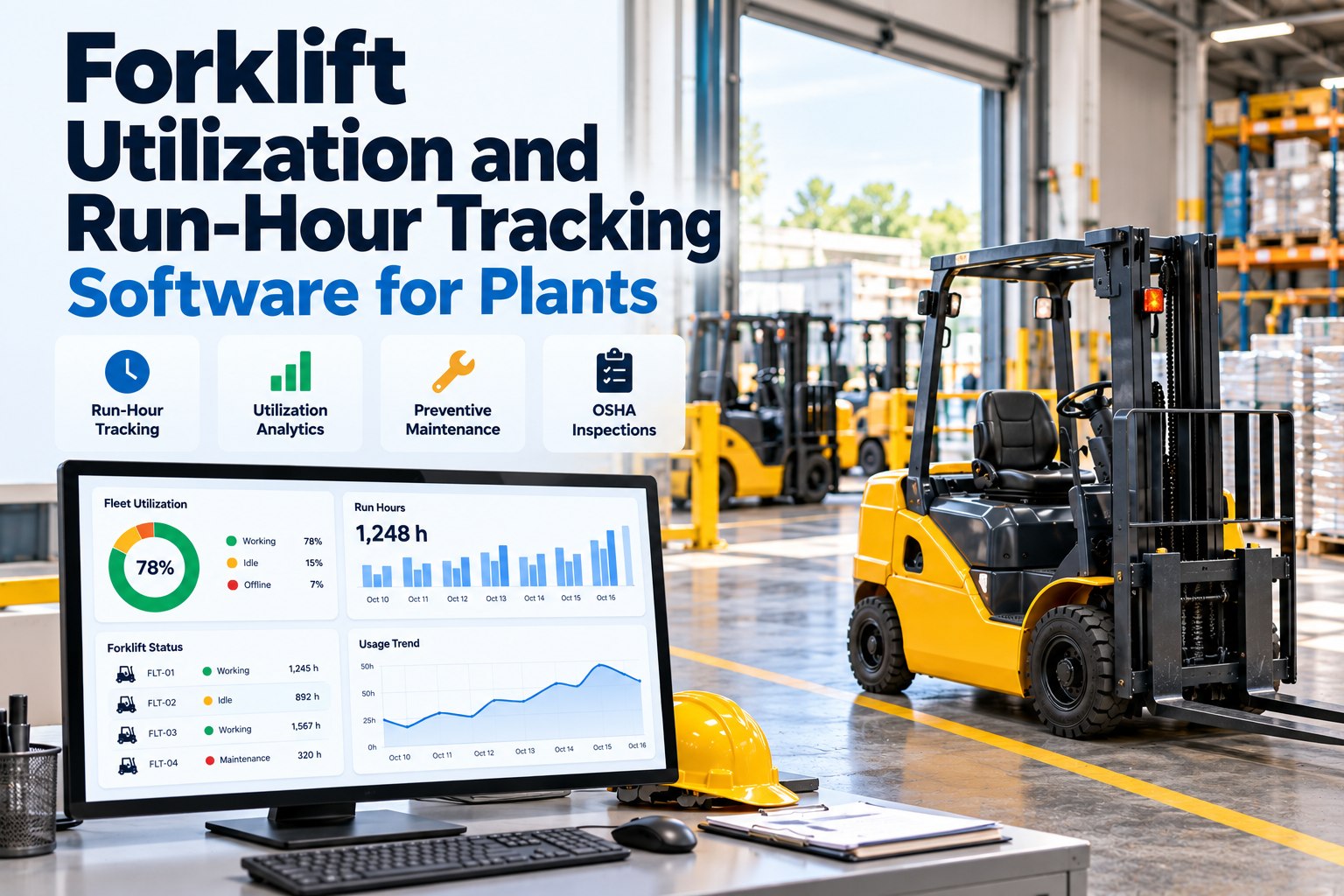
FleetRabbit tracks real operating hours per forklift across every shift and site, showing exactly which units have quietly dropped below the utilization level that justifies their lease cost.
Finding The Ghost Assets Hiding In Your Fleet
Ghost assets don't announce themselves. They hide inside averages, spreadsheets that go stale, and lease schedules nobody revisits after signing. Surfacing them takes a specific kind of look at the data.
Check utilization by unit, not fleet average
A fleet-wide average of 55 percent can easily hide three trucks running at 15 percent while others compensate above 80. The average hides exactly the units you need to find.
Compare hours logged to lease cost per unit
Lining up actual operating hours against what each unit costs monthly reveals cost-per-hour outliers immediately, and those outliers are almost always the ghost assets.
Look for status limbo, not just low hours
Some ghost assets aren't idle by design, they're stuck between "returned from one area" and "assigned to another," sitting unused simply because no one has reallocated them yet.
What To Do Once You've Found One
Identifying a ghost asset is only half the win. What happens next determines whether the savings actually land on the budget.
| Option | Best For | Financial Effect |
|---|---|---|
| Redeploy To Another Site | A unit that's underused at one location but needed elsewhere | Avoids a new lease at the receiving site while keeping the existing one productive |
| Return The Lease Early | A unit with no realistic use case across any site | Removes the monthly payment entirely, subject to early-termination terms |
| Convert To A Rental-On-Demand Model | Seasonal or occasional-use equipment below the 60 percent threshold | Pays only for actual hours needed instead of a fixed monthly obligation |
| Consolidate Into A Shared Pool | Multiple lightly used units across nearby departments or shifts | Fewer total units carrying the same workload, cutting overall lease count |
Plants that review utilization data on a regular schedule catch drifting units months before finance would ever spot it in a lease renewal review, which is exactly the gap that turns a productive truck into a ghost asset in the first place. If you want to see exactly which units in your fleet are below the line right now, you can sign up for a free trial and pull the data today.
FleetRabbit's utilization dashboards make it easy to spot chronically underused forklifts and decide whether to redeploy, return, or consolidate them, before the next lease renewal locks you in another term.
Frequently Asked Questions
Ghost assets hide inside fleet averages until someone looks unit by unit. FleetRabbit's utilization data shows exactly which forklifts are earning their lease cost and which ones are quietly draining your budget.