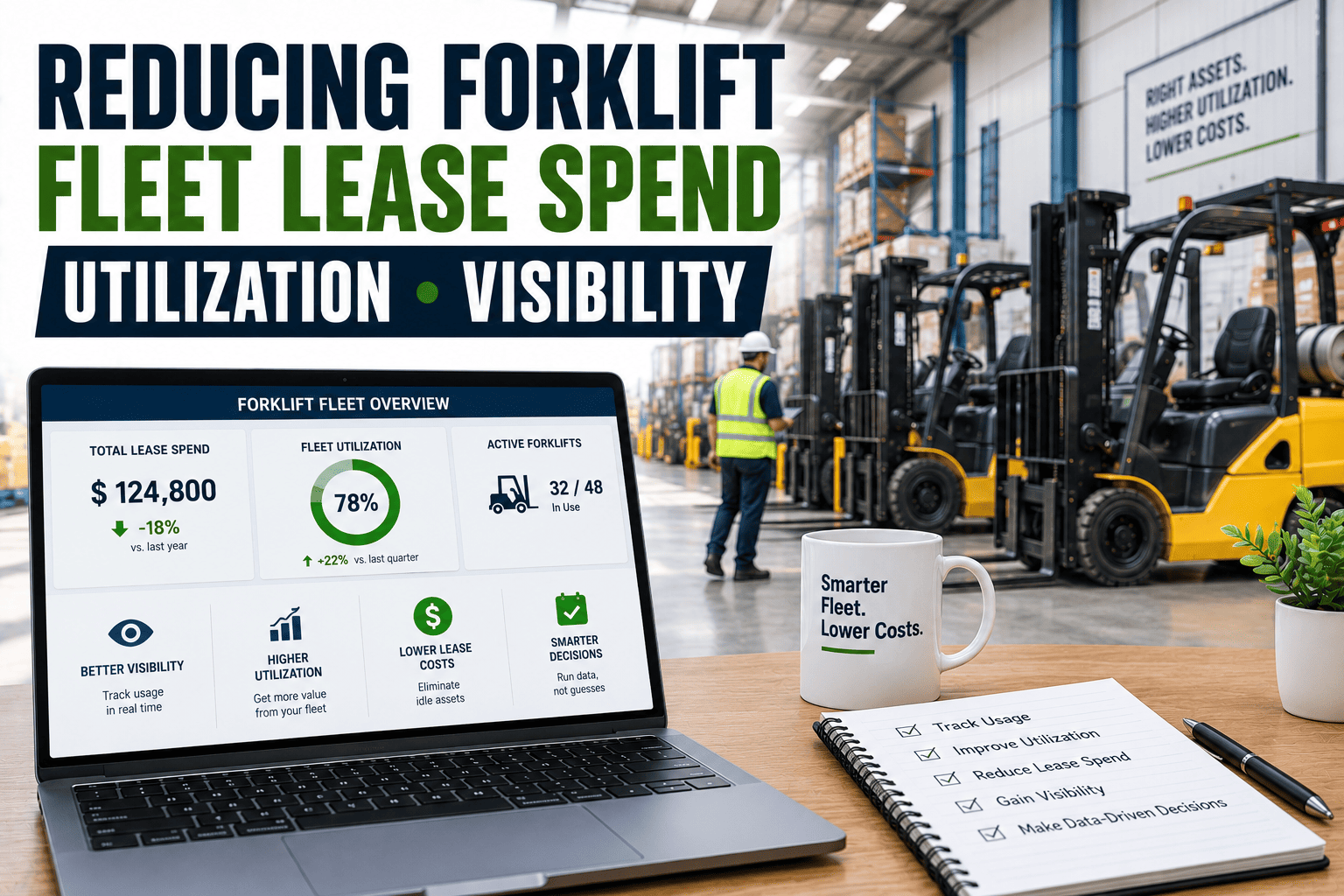
Most forklift leases are not negotiated badly. They are negotiated blind. A plant signs a lease based on how many trucks "feels right" for the floor, then spends the next three to five years paying a fixed monthly rate for capacity nobody is actually measuring. Some units run harder than the lease terms assumed and trigger overage fees. Others sit for half a shift, quietly costing $300 to $1,500 a month for work that never happens. Utilization visibility is what turns that guesswork into a lease portfolio sized to what the floor actually needs.
Forklift leases are priced against an assumed number of annual operating hours, typically capped around 2,000 hours a year. Plants that don't track real usage often end up paying for trucks that sit idle, or paying overage fees on trucks that run harder than the lease assumed. Utilization data lets you right-size the lease portfolio to actual demand instead of a guess made at signing.
Where Lease Spend Quietly Leaks Out
A lease payment is fixed the day it's signed, but usage on the floor changes constantly as seasons, product mix, and shift patterns shift. Without ongoing visibility into real motion-hours, the gap between what a plant is paying for and what it is actually using tends to widen every year the lease runs, and nobody notices until the renewal conversation.
A typical unmonitored fleet pays for capacity it never puts to work. The gap between the two bars is the part of every lease payment that utilization data can help recover.
Two Ways the Same Blind Spot Costs You Money
Low visibility into utilization creates cost in both directions at once, which is why the total impact is often larger than plants expect.
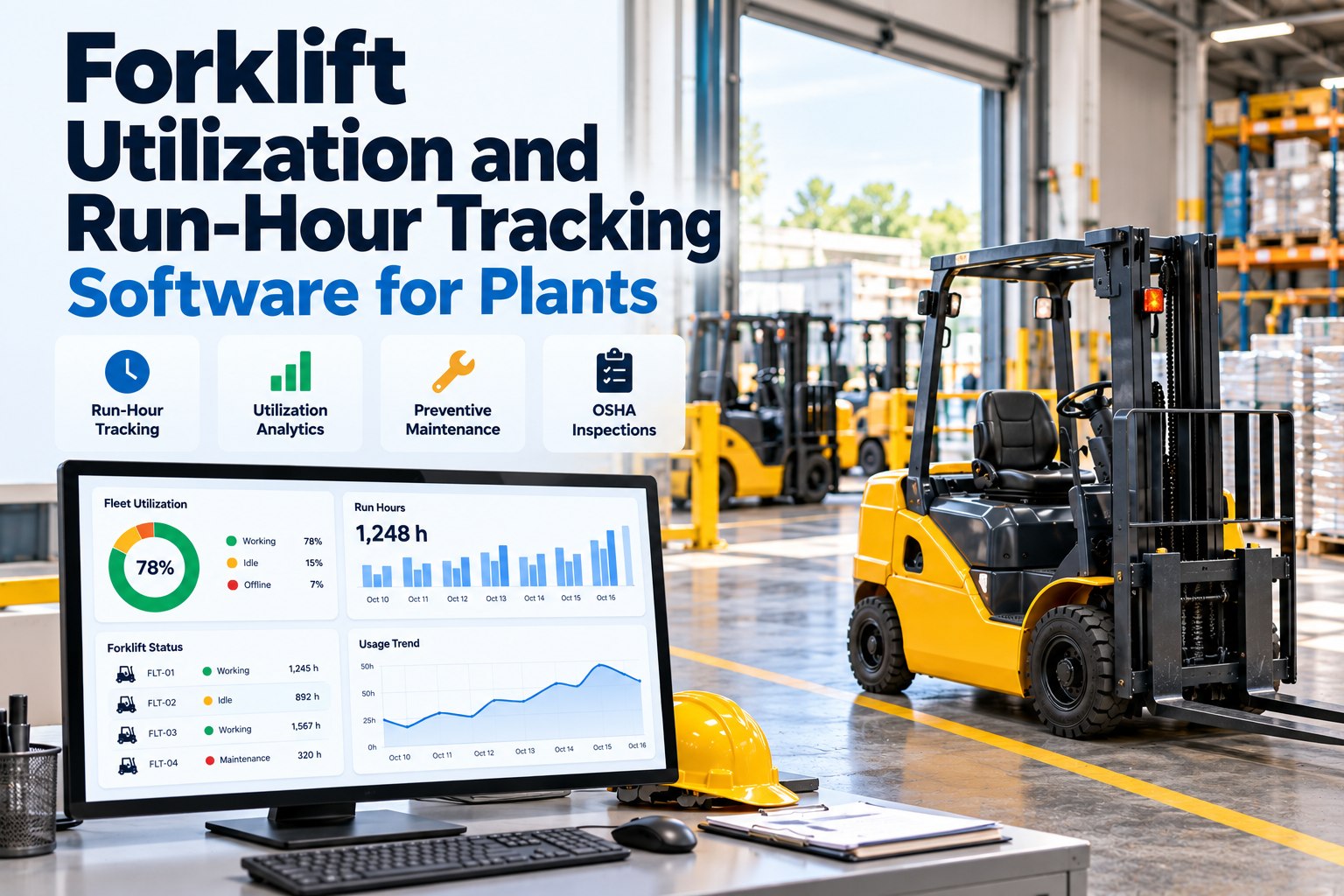
FleetRabbit tracks real motion-hours against your lease terms for every truck in the fleet, showing exactly which units are under-used and which are approaching overage. Start a free trial to see your own utilization gap, or book a demo to walk through your current lease portfolio.
Right-Sizing Your Lease Portfolio in Four Steps
Right-sizing is not about canceling leases in a panic at renewal time. It's a continuous process of matching what's on the floor to what the floor actually needs, which is far easier to negotiate from a position of data than from a guess.
Reading Your Lease Against Real Hours
Forklift lease pricing is built around an assumed number of hours a truck will run each year, and that single assumption drives the monthly rate more than almost any other factor. A truck leased against a 3,600-hour assumption costs meaningfully more per month than one leased against 1,200 hours, so a fleet that is quietly running under its assumed hours is paying a rate calculated for work it isn't doing.
When Underuse Is the Bigger Problem
Overage fees get noticed quickly because they show up as a surprise line item. Underuse rarely gets noticed at all, because the monthly bill looks exactly the same whether a truck ran 1,800 hours or 400. That silence is exactly why it tends to be the larger, longer-running cost across a full lease term.
| Scenario | What's Happening | Right-Sizing Action |
|---|---|---|
| Under-Leased | Truck consistently runs above its leased hour allowance, risking overage fees at renewal | Renegotiate to a higher hour tier or shorter term at signing |
| Right-Sized | Truck's actual usage closely matches its leased hour allowance | Maintain current term; use as the benchmark for similar units |
| Over-Leased | Truck runs well below its leased allowance, paying full rate for unused capacity | Redeploy to a higher-demand zone, return early, or extend the term to lower the rate |
FleetRabbit gives you the real hour-by-hour usage history every renewal conversation needs, so lease terms match how the fleet actually runs. Sign up free to start building that history today, or book a 30-minute demo to see it applied to your fleet.
Frequently Asked Questions
Lease spend rarely goes wrong all at once. It drifts, one under-used truck and one quiet overage charge at a time, until the whole portfolio is sized for a floor that no longer exists. Utilization visibility doesn't require ripping up existing leases. It simply gives you the real numbers to redeploy the idle units, catch the ones running hot before they trigger fees, and walk into the next renewal knowing exactly what the fleet should cost instead of guessing.
FleetRabbit shows you real motion-hours against every lease term in your fleet, so you know exactly where spend is leaking before your next renewal. Sign up free and connect your fleet today, or book a demo to see your lease portfolio mapped out.