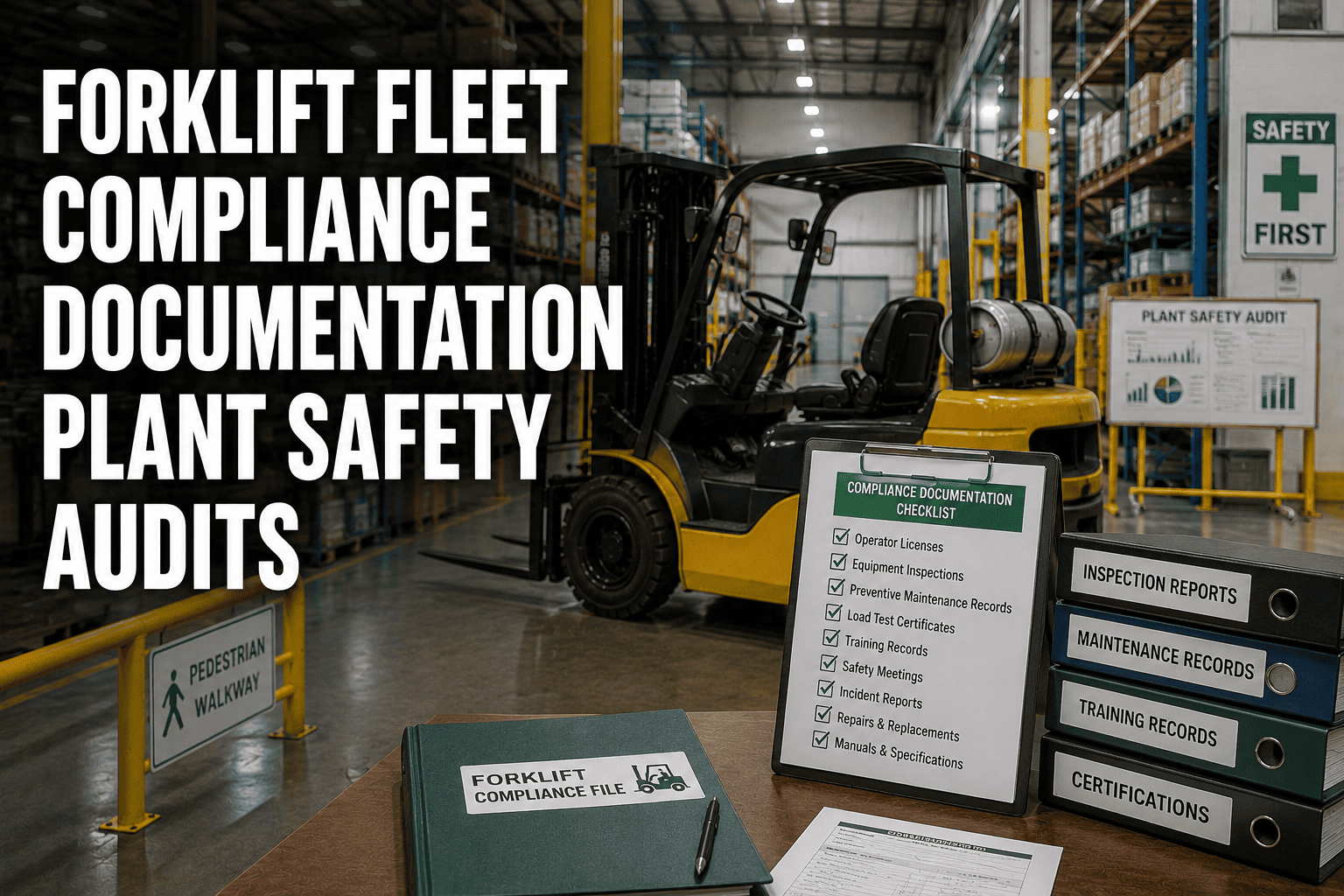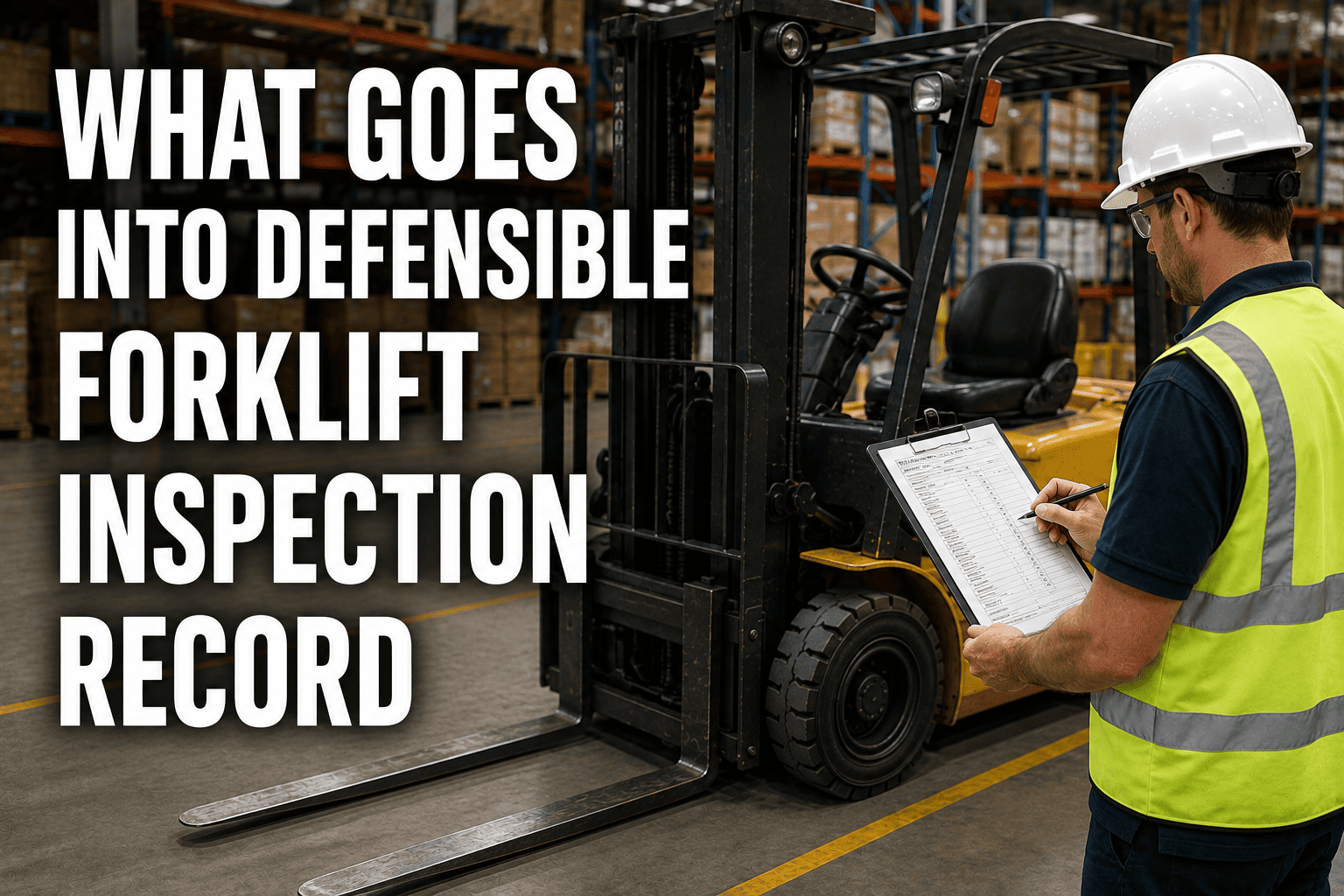
Most forklift inspection sheets say the same thing every day: brakes okay, tires okay, forks okay, signed at the bottom. That pattern is exactly what makes them fall apart when it matters most. An OSHA auditor or an attorney reviewing an incident isn't looking for a stack of identical checkmarks. They're looking for proof that a real, specific inspection happened on a specific truck at a specific time, and that whoever performed it actually knew what they were checking. A record that can't prove that isn't a safety record. It's a liability.
OSHA 29 CFR 1910.178(q)(7) requires every powered industrial truck to be examined before it is placed into service each shift, and a defective unit must be removed from service until it's corrected. A defensible record proves that happened: it names the operator, timestamps the check, lists each component checked, and documents any defect found. Citations for missing or incomplete inspection records can run from roughly 15,600 to over 156,000 dollars per violation.
Why "Inspected" Isn't Good Enough Anymore
A checklist that only records a pass or fail per item, with no further detail, creates what auditors call a plausible-but-unverifiable record. It looks complete on the surface, but it can't answer the follow-up questions that come after an incident: Who actually walked around the truck? Did they check the forks for cracks or just sign where the form told them to? Was the defect found on Tuesday ever actually fixed, or did the truck stay in service anyway? Incomplete documentation is treated by OSHA as functionally equivalent to no documentation at all, because it creates exactly the kind of doubt that undermines a compliance defense.
The Anatomy of a Record That Actually Holds Up
A defensible inspection record is built from a small set of specific elements, and missing any one of them weakens the whole document. Each field below exists because it answers a question an investigator or auditor will eventually ask.
FleetRabbit captures operator ID, timestamp, component results, and photos in one digital record every time a truck is checked. Sign up free and see your first fully documented inspection today.
The Gaps That Quietly Make a Record Indefensible
Most forklift inspection programs don't fail because nobody is inspecting the trucks. They fail because the record of that inspection has a hole in it that only becomes visible after something goes wrong.
| Common Gap | Why It Undermines the Record | What Fixes It |
|---|---|---|
| Backfilled Entries | Sheets filled out at the end of the week look identical to same-day records but carry no proof of timing. | A digital timestamp locked in at the moment of submission, not editable after the fact. |
| Blanket Pass Marks | A single "all okay" checkbox can't show which components were actually examined. | Individual pass, fail, or not-applicable status required for each listed component. |
| Defects Without Follow-Up | A noted defect that never links to a repair record suggests the truck kept running unsafely. | Automatic out-of-service flagging that blocks further use until the defect is cleared. |
| Illegible or Missing Signatures | Paper forms with unclear handwriting can't reliably prove who performed the check. | Digital sign-off tied to a unique operator login rather than a handwritten name. |
| Short Retention Windows | Records discarded too early can't support an investigation that surfaces weeks or months later. | Centralized digital storage retained well beyond the minimum required period. |
Backfilling Is the Most Common, and Most Dangerous, Habit
When a shift starts late or a supervisor asks for the week's paperwork all at once, it's tempting to fill in several days of forms from memory. Every entry looks complete, but none of them can prove the truck was actually checked before it moved a single pallet. This single habit accounts for a large share of the recordkeeping citations issued during OSHA reviews, because inspectors can often spot the pattern in handwriting, ink, or timing inconsistencies across a batch of forms.
What a Timestamp-Locked Record Prevents
Once an inspection is logged with a system-generated timestamp, it cannot be edited or backdated without leaving a visible trail. That single change removes the most common way paper records get quietly rewritten after the fact.
What Happens When a Record Fails Under Review
The cost of a weak inspection record rarely shows up on an ordinary day. It shows up during an OSHA inspection, an insurance claim, or a lawsuit following an incident, exactly the moments when the stakes are highest and there's no opportunity to go back and fix the paperwork. A facility with a documented history of thorough, specific inspections can demonstrate due diligence even when an unexpected mechanical failure occurs. A facility with vague, backfilled, or missing records has no such defense, regardless of how careful its operators actually were on the floor.
Insurance and Liability Exposure
Many insurers now request proof of a working inspection program before renewing a policy, and some adjust premiums based on the quality of that documentation. A digital audit trail that shows consistent, detailed inspections across the fleet is far more persuasive to an underwriter than a binder of handwritten sheets with obvious gaps.
Building a Recordkeeping System That Actually Holds Up
Moving from a paper checklist to a defensible digital record doesn't require replacing the inspection process itself, only how it's captured. A strong system requires the operator to complete every component check before the truck can be started, timestamps the entry automatically, and routes any defect straight to the maintenance queue instead of leaving it buried on a form in a binder. Photos attach directly to the defect, and the completed record is stored centrally where a supervisor, auditor, or insurer can retrieve it in seconds instead of digging through a filing cabinet.
FleetRabbit locks in timestamps, routes defects to maintenance instantly, and stores every inspection where you can pull it up in seconds. Book a demo to see how it fits your current fleet.
Key Takeaways
A defensible forklift inspection record is not defined by whether an inspection happened. It's defined by whether the paperwork can prove it happened, in detail, at the right time, by a specific person. Vague pass marks, backfilled sheets, and defects that never connect to a repair all create gaps that surface at the worst possible moment, during an OSHA review or after an incident, when there's no chance to go back and fix them.
Closing those gaps doesn't mean adding more paperwork. It means capturing the same inspection your operators already perform in a format that timestamps itself, documents specifics instead of blanket approvals, and routes defects straight into action. That shift turns a routine compliance task into real protection for the business and the people operating the equipment.
FleetRabbit captures the operator, the timestamp, the component results, and the photo evidence automatically, so your inspection records hold up whenever they're needed most.