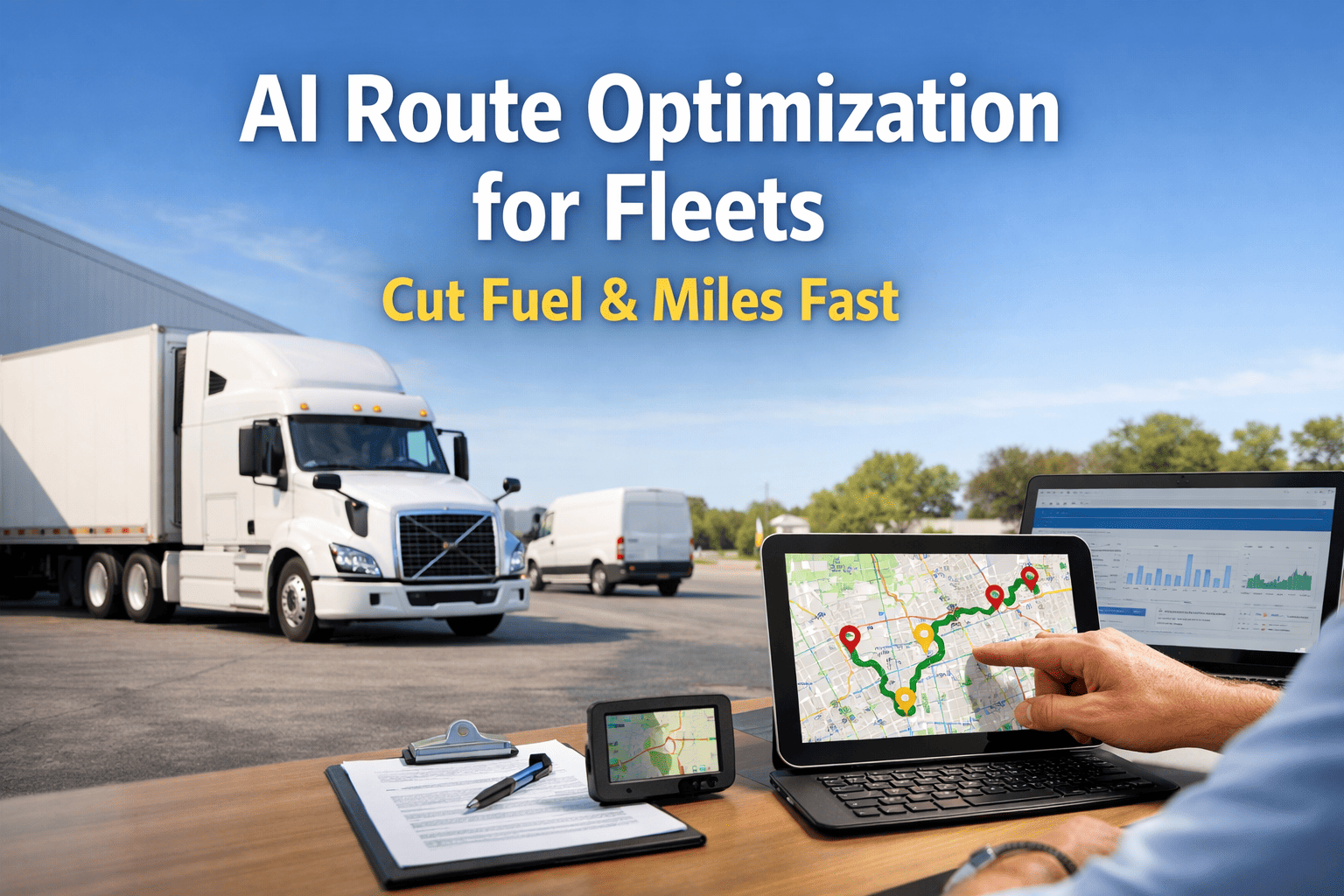
Fleet fuel costs hit record highs in 2026, with operators reporting 18% increases since last year. Yet the average commercial vehicle still travels 12-20% more miles than necessary on every route. That gap represents tens of thousands of dollars leaking from your operation annually—money that AI-powered route optimization recovers within the first quarter of deployment.
Smart route suggestions analyze traffic patterns, weather forecasts, delivery windows, and vehicle conditions in real-time. The system calculates optimal paths that human dispatchers simply cannot compute manually, then pushes turn-by-turn directions directly to drivers. When conditions change mid-shift—accidents, weather, schedule updates—routes adapt automatically without dispatcher intervention.
This isn't theoretical technology. Fleets deploying AI routing in 2025-2026 document 10-15% fuel savings within 90 days, with some reaching 20-25% as drivers adapt to optimized paths. For a 50-vehicle fleet spending $500,000 annually on fuel, that translates to $50,000-$125,000 recovered—before counting reduced overtime, fewer breakdowns, and improved on-time performance.
The following guide explains exactly how smart routing works what infrastructure you need (spoiler: less than you think), and how to evaluate whether AI optimization fits your operation. Every statistic comes from documented 2025-2026 fleet deployments, not vendor projections.
Smart Route Suggestions for Dispatch & Fuel Savings
Transform dispatch operations with AI-powered routing that cuts fuel costs 10-15%, eliminates unnecessary mileage, and adapts to real-world conditions in real-time.
The Real Cost of Inefficient Routing
Static route planning—building routes the night before and expecting them to hold—made sense when traffic was predictable and delivery windows were loose. In 2026, neither condition exists. Customer expectations demand tighter windows, fuel prices remain volatile, and the gap between a static plan and the optimal real-time path compounds every hour your fleet operates.
These costs compound silently. Every unnecessary mile accelerates wear on engines, brakes, and tires. Driver overtime accumulates from inefficient sequencing. Missed delivery windows trigger contract penalties. AI route optimization addresses all of these simultaneously by computing paths that account for variables human dispatchers cannot track manually.
How AI Route Optimization Works
Unlike consumer GPS that finds the shortest path, AI fleet routing finds the most cost-effective path for your specific vehicle, driver, and delivery requirements. The system processes multiple data streams simultaneously, recalculating routes as conditions change and pushing updates directly to drivers.
Documented Results: What Fleets Actually Achieve
The business case for AI routing is built on measurable outcomes from real deployments. Penske's 2025 survey found 40% of companies adopting AI reported at least 50% improvements in fuel savings and operational costs. Here's what the data shows:
The ROI compounds when route optimization integrates with your broader fleet management platform. Every mile eliminated reduces cumulative wear on engines, transmissions, brakes, and tires—feeding directly into lower maintenance costs and extended vehicle lifecycles.
Six Capabilities That Define Smart Routing
Dispatch Integration: Routing Meets Operations
FleetRabbit's platform connects route optimization with dispatch operations, filtering driver availability by HOS hours, vehicle maintenance status, and load requirements—preventing the assignment errors that generate violations and breakdowns.
Getting Started: What You Need
Frequently Asked Questions
Cut Fuel Costs 10-15% with Smart Routing
FleetRabbit combines AI route optimization with dispatch, compliance, maintenance, and real-time visibility. See it working with your fleet data.