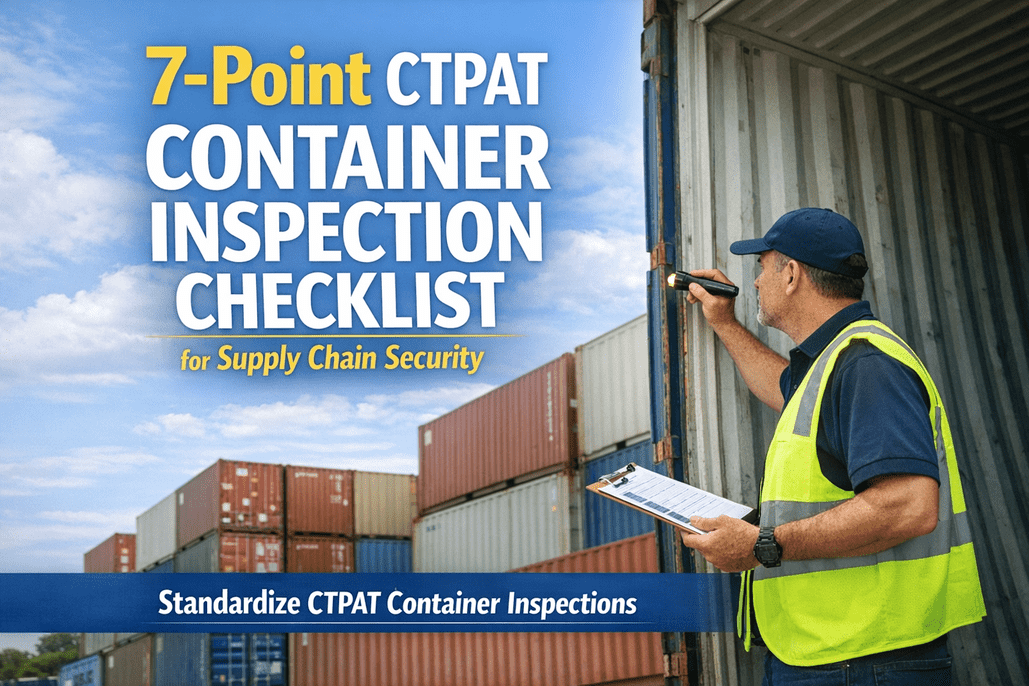
Secure your supply chain and maintain CTPAT compliance with our 7-Point Container Inspection Checklist. This essential guide helps shippers, carriers, and logistics providers verify the physical integrity of shipping containers before loading. By systematically inspecting the undercarriage, doors, walls, floor, and ceiling, you can detect tampering, hidden compartments, or structural defects that compromise cargo security. Start your free container security trial
7-Point CTPAT Inspection
Container Security & Integrity
Inspection Purpose
Supply Chain Security
- Verifying container integrity prevents the smuggling of contraband, weapons, or persons, ensuring your shipment reaches its destination without seizure or delay.
CTPAT Compliance
- The 7-point inspection is a mandatory requirement for CTPAT members. Digital logs provide the audit trail needed to prove due diligence during Customs validations.
Cargo Protection
- Identifying holes, leaks, or weak floors before loading prevents water damage, pest infestation, and cargo loss during ocean transit.
1. Exterior & Access Points
Start from the outside to verify structure and locking mechanisms:
1. Outside / Undercarriage
2. Doors (Int / Ext)
2. Interior Walls & Structure
Enter the container to check for false walls and hidden spaces:
3. Right Side Wall
4. Left Side Wall
5. Front Wall
3. Floor & Ceiling
Complete the inspection by checking the top and bottom bounds:
6. Ceiling / Roof
7. Floor
Standardize CTPAT Security
Fleet Rabbit's Container Security Benefits:
- ✓ Capture photo evidence of container condition for every shipment
- ✓ Digitally store 7-point inspection logs for CTPAT audits
- ✓ Track container numbers and seal verification automatically
- ✓ Mandate inspection completion before Gate Out is authorized
- ✓ Real-time alerts for failed inspections or damaged containers
Why the 7-Point Inspection Matters
False Walls
- Smuggling Risk: Hidden compartments in the front wall are the most common method for smuggling. Verifying container length and visible blocks is critical.
Door Hardware
- Tampering: Loose bolts or modified hinges allow thieves to remove doors without breaking the seal, stealing cargo undetected until final delivery.
Pest Contamination
- Agriculture Safety: Soil or organic matter found on the undercarriage or floor can cause shipments to be rejected border agencies, leading to massive delays.
Common Security Threats
Contraband Smuggling
- Risk: Criminals modify containers to hide drugs or weapons. Common spots include hollowed-out beams, false walls, or modified floorboards.
Human Trafficking
- Risk: Unsecured containers can be used to smuggle people. Inspecting for signs of life (scratches, waste) and ensuring air vents are not tampered with is crucial.
Agricultural Contamination
- Risk: Invasive species (seeds, insects) hidden in the undercarriage or floor cracks can cause entire shipments to be quarantined or destroyed by Customs.
Tools Required for Inspection
Ensure your security team comes equipped with the right tools:
Physical Tools
- Tap Hammer: To tap beams and walls; a "dull" sound indicates a hollow or filled deviation.
- Laser Range Finder / Tape Measure: To measure interior/exterior dimensions to detect false walls.
- Flashlight: High-lumen beam to inspect dark corners and undercarriages.
Documentation Tools
- Digital Camera / Tablet: To capture time-stamped photos of the empty container condition.
- Seal Cutter: To safely remove seals if reinspection is required.
- Chalk: To mark areas that need repair or closer inspection.
Inspection Best Practices
The "TTT" Rule
- If the container is not Tractor attached, Terminal located, or under Team surveillance, it must be locked and sealed.
Seal Integrity
- Always use high-security seals (ISO 17712 compliant). Verify the seal number matches the documentation immediately upon arrival and before departure.
View from Inside
- Step inside the container and have the doors closed (securely). Look for pinholes of light which indicate leaks or structural integrity issues.
Frequently Asked Questions
1. What is the "Block" check on the front wall?
On the interior front wall of a standard container, the top left and right corner blocks should be visible. If they are missing or obscured, it strongly suggests a false wall has been installed to hide contraband. This reduces the interior length of the container.
2. How do I detect a false floor?
Walk the entire length of the container. The floor should be flat and uniform. If the floor ramps up or feels raised in certain sections without a structural reason, measure the interior height. A discrepancy indicates a hidden compartment under the floorboards.
3. Who is responsible for the CTPAT inspection?
The empty container must be inspected by the shipper or their agent (e.g., trucking company) before loading begins. Additionally, the sealing process must be verified. Documenting this inspection is verifying compliance with the CTPAT Minimum Security Criteria.
4. What should I do if I find a defect during inspection?
Do NOT load the container. Immediately notify your facility's Security Officer or management. Document the anomaly with clear photos and quarantine the container. Loading a compromised container puts your entire CTPAT certification and supply chain at risk.
5. What is the difference between 7-point and 17-point inspections?
The 7-Point Inspection focuses strictly on the container (or trailer/ITT) itself. The 17-Point Inspection includes the container check plus a comprehensive inspection of the tractor (cab, engine, tires, chassis) that is hauling it. Both are essential for complete supply chain security.
Standardize CTPAT Inspections
Ensure supply chain security and pass Customs audits with digital container checklists.


