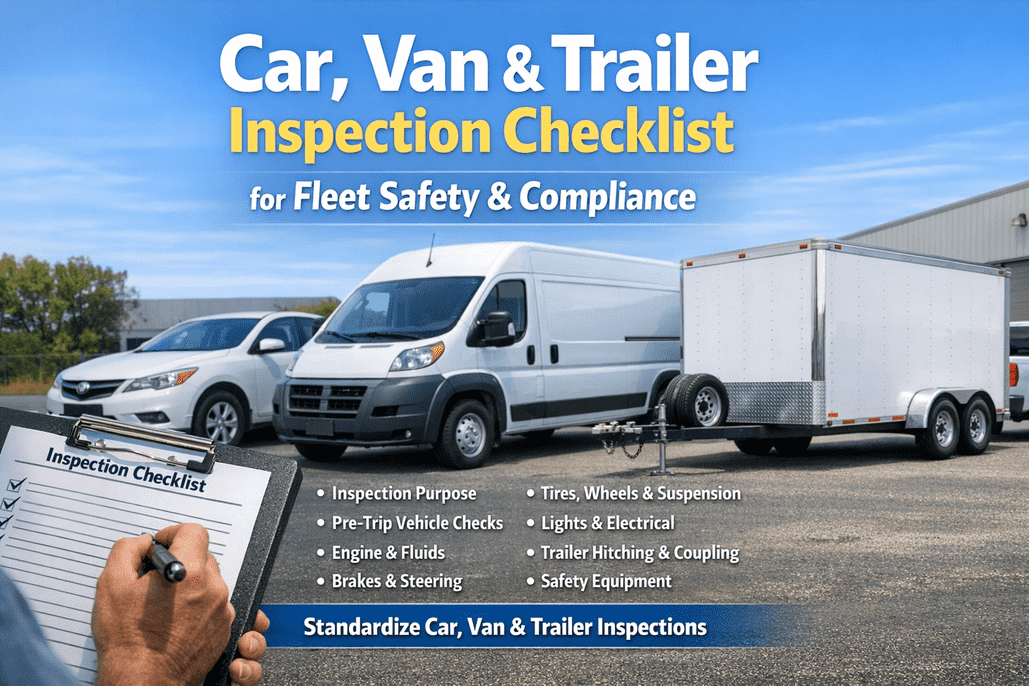
Standardize safety across your mixed fleet with our comprehensive Car, Van & Trailer Inspection Checklist. Designed for light commercial vehicles (LCVs) and utility trailers, this guide covers essential checks from engine fluids and brakes to hitch couplings and load security. By implementing this daily routine, fleets can prevent roadside failures, ensure towing compliance, and protect drivers from avoidable accidents. Start your free fleet safety trial
Car, Van & Trailer Inspection
Mixed Fleet Safety Checklist
Inspection Purpose
Towing Safety
- Towing a trailer significantly changes vehicle handling. Verifying the hitch connection, safety chains, and trailer brakes is critical to prevent separation or jackknifing.
Fleet Compliance
- Commercial vans and trailers are subject to DOT and roadworthiness regulations. Daily logs prove due diligence and help avoid liability in the event of an incident.
Asset Protection
- Regular checks on engine fluids and tires prevent minor wear from escalating into major engine failures or blowouts, reducing overall fleet maintenance costs.
1. Car & Van Vehicle Checks
Ensure the towing vehicle is roadworthy before hitching up:
Engine & Under Hood
Tires & Control
Safety & Cab
2. Trailer Hitching & Coupling
Verify the mechanical securement of the trailer:
Hitch Connection
Safety Backups
3. Trailer Condition & Load
Inspect the trailer itself and the cargo security:
Trailer Pre-Trip
Load Safety
Standardize Mixed Fleet Safety
Fleet Rabbit's Inspection Benefits:
- ✓ Unify inspections for cars, vans, and trailers in one app
- ✓ Require photo proof of hitch connections to prevent detachments
- ✓ Track tire replacement cycles for both vehicles and trailers
- ✓ Instant alerts for expired fire extinguishers or first aid kits
- ✓ Digital archives for DOT and insurance compliance
Why Trailer Inspections Matter
Detachments
- Runaway Trailers: A loose coupler or missing safety pin can cause a trailer to detach at highway speeds. Properly crossed safety chains are the last line of defense.
Load Balance
- Sway Control: Uneven weight distribution (too much weight in the rear) causes dangerous trailer sway (fishtailing), leading to loss of control.
Lighting Failures
- Rear-End Collisions: Trailers often block the towing vehicle's tail lights. If the trailer's brake lights aren't working via the electrical plug, rear-end accidents are highly likely.
Common Defects to Watch For
Catching these early prevents roadside failures and liability:
Coupler Wear
- Slop/Play: If the hitch coupler is worn or the adjustment nut is loose, it can pop off the ball when hitting a bump. Check for excessive movement when locked.
Lighting Corrosion
- Green Crust: Trailer plugs are exposed to road salt and moisture. Green corrosion on the pins causes flickering lights or brake light failure. apply dielectric grease regularly.
Tire Dry Rot
- Sidewall Cracks: Trailer tires often rot before they wear out from mileage. Inspect sidewalls for spiderweb cracking, which indicates the tire could blow out under load.
Essential Driver Tools
Frequently Asked Questions
1. Why must safety chains be "crossed"?
Crossing the safety chains under the trailer tongue creates a "cradle". If the hitch fails, the tongue will drop onto the crossed chains rather than digging into the pavement, preventing the trailer from catapulting or flipping.
2. How often should I check tire pressure on a trailer?
Trailer tires should be checked before every trip. Trailers often sit idle, leading to slow leaks. Under-inflated tires overheat rapidly under load, which is the #1 cause of trailer tire blowouts.
3. What is the "Tongue Weight" rule?
For stability, about 10-15% of the total trailer weight should press down on the hitch (tongue weight). Too little tongue weight causes sway; too much lifts the towing vehicle's front wheels, affecting steering.
4. Do I need extended mirrors for towing?
Yes, if the trailer is wider than your vehicle. You must be able to see down the entire length of the trailer and the lane behind you. Blind spots while towing are a major hazard for lane changes.
5. What if my trailer lights are flickering?
Flickering lights usually indicate a bad ground connection. The white wire on the trailer plug is the ground; ensure it is securely screwed to the trailer frame and free of rust. relying on the hitch ball for ground is unreliable.
6. Do I need a CDL to tow a trailer?
Generally, a CDL is required if the Gross Combination Weight Rating (GCWR) exceeds 26,000 lbs, AND the trailer is over 10,000 lbs. However, regulations vary by state and for commercial vs. private use. Always check local DOT rules.
Standardize Fleet Safety
Ensure every car, van, and trailer in your fleet is road-legal with digital inspection logs.


