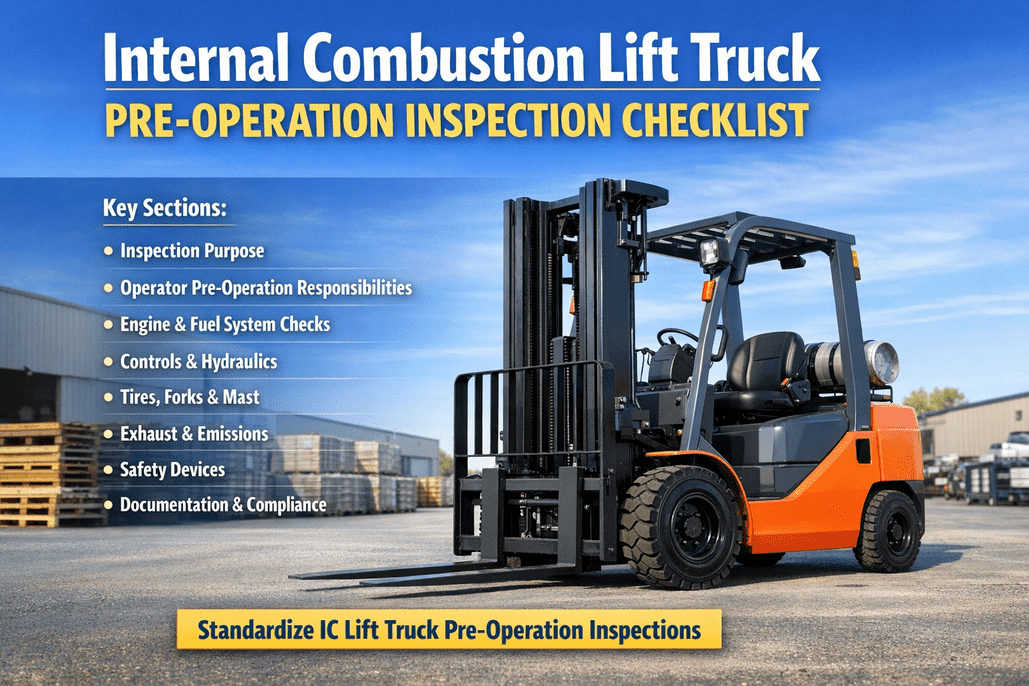
Maximize warehouse safety and equipment uptime with our Internal Combustion Lift Truck Pre-Operation Inspection Checklist. Designed for operators and fleet safety managers, this essential guide ensures every gas, LPG, or diesel forklift is safe to operate before the shift begins. By verifying critical systems—from fuel lines and engine oil levels to mast hosing and safety interlocks—you can prevent dangerous mechanical failures, ensure OSHA compliance, and extend the lifespan of your material handling assets. Start your free forklift inspection trial
IC Lift Truck Inspection
Pre-Operation Safety Checklist
Inspection Purpose
Operator Safety
- Verifying brakes, steering, and carbon monoxide risks (exhaust leaks) protects the operator and pedestrians from life-threatening accidents.
Fire Prevention
- Checking fuel lines and propane connections daily is critical to prevent engine fires and explosive gas leaks in enclosed warehouses.
OSHA Compliance
- OSHA standard 1910.178(q)(7) mandates that all forklifts be examined before being placed in service, and strictly prohibits the use of unsafe vehicles.
1. Engine & Fuel System (Key Off)
Inspect the power source and fluid levels before starting the engine:
Fuel System
Fluids & Power
2. Structure, Mast & Tires (Key Off)
Check the lifting mechanism and structural integrity:
Mast & Lifting Gear
Chassis & Tires
3. Operational & Controls (Key On)
Start the engine and test all functional systems:
Driving Controls
Lift & Attachments
Safety Devices
Standardize IC Forklift Safety
Fleet Rabbit's Forklift Inspection Benefits:
- ✓ Ensure 100% OSHA compliance with digital pre-shift logs
- ✓ Prevent expensive engine failures by catching low oil/coolant early
- ✓ Track tire wear to schedule replacements without downtime
- ✓ Identify high-risk forklifts with recurring brake or fuel issues
- ✓ Instant alerts for failed safety items (seatbelts, horns)
Why IC Lift Truck Inspections Matter
Carbon Monoxide
- Air Quality: A tuned engine and leak-free exhaust are vital for indoor air quality. Pre-shift checks help identify "rich" running engines or exhaust leaks immediately.
Hydraulic Safety
- Load Drops: Worn hoses or leaking cylinders can cause sudden loss of hydraulic pressure, risking dropped loads and severe injury to personnel.
Chain Failure
- Mast Integrity: Lift chains stretch over time. Daily visual checks for uneven wear or lack of lubrication prevent catastrophic chain snaps under load.
Frequently Asked Questions
1. What is the difference between "Key Off" and "Key On" checks?
"Key Off" checks are visual inspections performed before starting the engine to identify leaks, damage, or fluid issues safely. "Key On" checks verify the operational function of the engine, hydraulics, and safety systems while the forklift is running.
2. How often must IC forklifts be inspected?
OSHA requires that all forklifts be inspected at least daily, or before each shift if the vehicle is used around the clock. If any defect is found, the forklift must be removed from service until repaired.
3. Why check the "Overhead Guard"?
The overhead guard (OHG) protects the operator from falling objects. It should be inspected for structural damage, welds, or drilled holes that could compromise its strength rating. A damaged OHG is a mandatory lockout tagout defect.
4. How do I inspect an LPG tank properly?
For LPG forklifts, inspect the tank for dents, gouges, or rusting, and ensure the pressure relief valve is pointing up (usually at the 12 o'clock position). Verify that the hose and couplings are tight and not hissing. If you smell gas or see frosting on the lines, close the valve immediately and report it.
5. Why is the "Data Plate" important?
The data plate (or capacity plate) lists the forklift's load limits, lift height, and attachment deratings. It must be legible so the operator knows the safe working load. If unreadable or missing, the forklift cannot be safely operated according to OSHA standards and must be re-tagged.
Standardize IC Lift Truck Safety
Ensure every forklift in your fleet is compliant and safe with digital inspection workflows.


