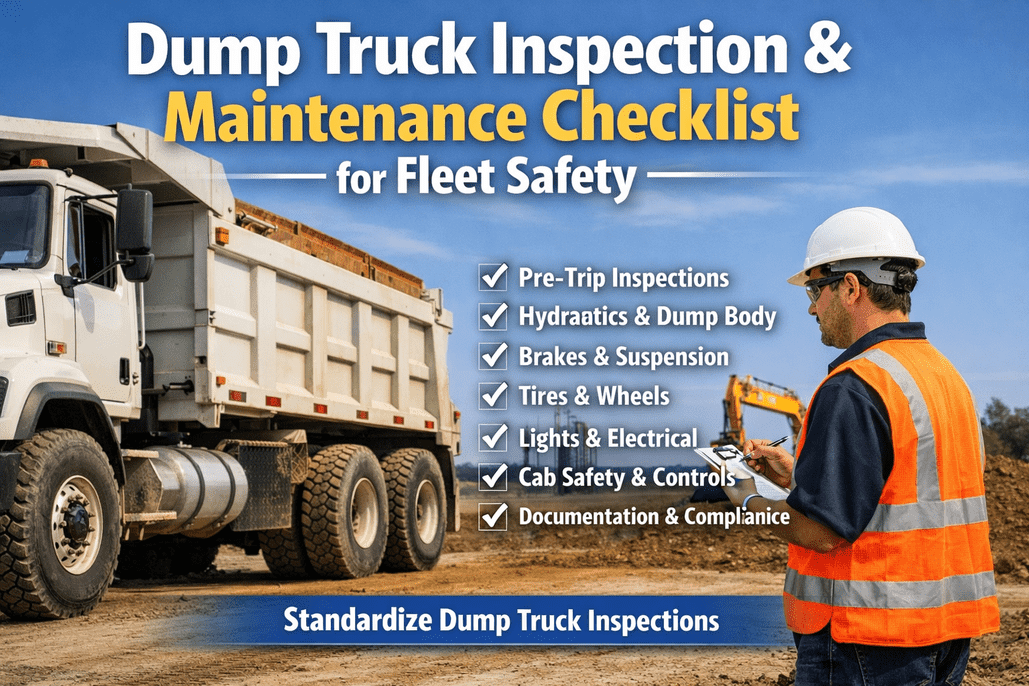
Operate your heavy-duty tippers safely with our comprehensive Dump Truck Inspection & Maintenance Checklist. Designed for construction professionals and feet managers, this guide covers every critical system—from hydraulic hoists and PTOs to air brakes and suspension. Routine checks verify the structural integrity of the dump body and ensure full compliance with DOT safety regulations, preventing costly downtime and job site accidents. Start your free fleet trial
Dump Truck Inspection
Daily Safety & Maintenance Checklist
Inspection Purpose
Hoist Safety
- The hydraulic hoist is the heart of a dump truck. Daily checks of the cylinders, hoses, and PTO operations prevent bed collapse and ensure safe dumping on uneven terrain.
Load Securement
- Loose cargo is a major liability. Inspecting tarps, tailgate latches, and bed integrity ensures that rock, gravel, and debris stay contained during transport.
Braking Power
- Hauling heavy loads demands peak braking performance. Verifying air pressure build-up, slack adjusters, and drum condition is non-negotiable for road safety.
1. Engine & Under Hood
Check vital fluids and mechanical components:
Fluid Levels
Belts & Hoses
Battery System
2. Dump Body & Hydraulics
Inspect the lifting mechanism and cargo containment:
Hydraulics & PTO
Dump Bed
Cargo Safety
3. Chassis, Brakes & Lights
Verify roadworthiness and structural safety:
Tires & Wheels
Air Brake System
Frame & Springs
4. Cab Safety & Lighting
Cab Interior
Emergency Gear
Exterior Lights
Standardize Dump Truck Safety
Fleet Rabbit's Dump Truck Benefits:
- ✓ Log PTO hours separately from engine hours for accurate maintenance
- ✓ Photographic proof of safe tarping to reduce liability claims
- ✓ Track tire wear across dual-axle and tri-axle configurations
- ✓ Instant alerts for air system failures or brake adjustment issues
- ✓ Unified platform for mixed fleets of dump trucks and trailers
Common Defects to Watch For
Spring Fracture
- Overloading Stress: Dump trucks undergo immense vertical stress. Check leaf springs daily for hairline cracks or shifting, especially near the U-bolts. A broken leaf can shift the axle and cause loss of steering control.
Tailgate Latch
- Spill Hazard: If the air-operated tailgate latch fails or gets clogged with debris, the gate may open unexpectedly on the road. Regularly clean the locking mechanism and test the air cylinder.
Hoist Stability
- Side-Loading: Inspect the hoist cylinder pins for wear. Excessive play allows the bed to lean during dumping, significantly increasing the risk of a rollover on uneven ground.
Essential Tools
Frequently Asked Questions
1. What is the "Slack Adjuster" limit?
For standard Type 30 brake chambers, the pushrod stroke should not exceed 2 inches. If it travels further relative to the face of the chamber, the brakes are out of adjustment and the truck is out of service (OOS). Auto-slacks should not be manually adjusted unless replacing parts. Continually adjusting auto-slacks masks the underlying mechanical issue (worn clevis pins, bad cam bushings) and allows the problem to persist until brake failure occurs.
2. How often should I grease the dump body pivots?
The dump body hinge pins and hoist cylinder bearings sustain massive loads. Grease them weekly or every 25-50 hours of operation. A dry pin can seize or snap, causing catastrophic bed separation. Use a high-pressure molybdenum disulfide (moly) grease that can withstand extreme pressure and shock loading without squeezing out.
3. Why must I tarp every load?
Most states mandate that loose aggregate loads be covered to prevent windshield damage to other vehicles. Even if not legally required for some materials, tarping reduces dust complaints and liability for debris "flying" off on the highway. Failure to tarp can result in substantial fines, points against your CDL, and increased insurance premiums if your debris causes an accident.
4. What is the procedure for a "bed up" inspection?
Unless absolutely necessary, inspect the hoist with the bed Down. If you must inspect underneath a raised bed, you are Legally Required (OSHA) to engage the factory-installed body prop or safety bar. Never trust the hydraulics alone. Hydraulic cylinders can drift due to internal leaks, or a hose could burst, dropping the mult-ton bed instantly. Wood blocks or makeshift props are strictly prohibited.
5. Why does my PTO whine when engaged?
A whining PTO usually indicates gear lash issues or a low hydraulic fluid level causing pump cavitation. If the noise is high-pitched, the pump is likely starved for oil (check suction strainers). If it's a grinding noise, the PTO backlash might be too tight against the transmission gear, which can destroy both the PTO and transmission housing if not shimmed correctly.
6. What are the signs of a cracked dump truck frame?
Frame cracks most often occur near the lift cylinder mounting point or behind the cab where the frame transitions stiffness. distinctive "rust trails" running vertically down the frame rail are a tell-tale sign of a hairline crack. Also, look for loose rivets or cross-members, which indicate the frame is twisting excessively under load.
Standardize Dump Truck Inspections
Ensure your dump trucks are roadworthy and compliant with digital logs for hydraulic and brake systems.


