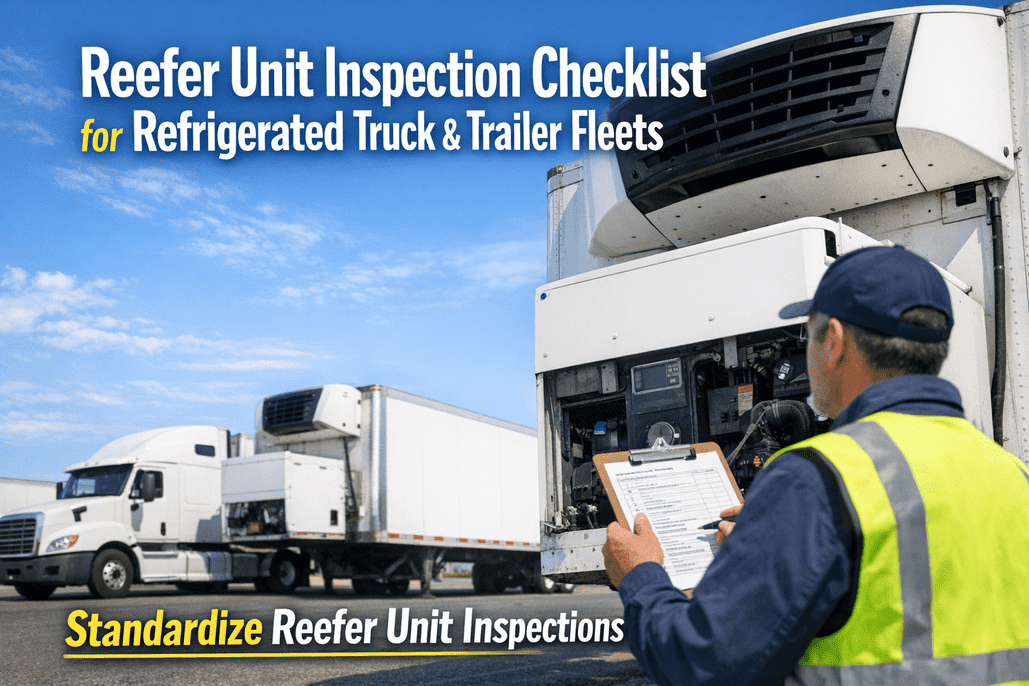
Protect your cold chain integrity with our comprehensive Reefer Unit Inspection Checklist. Designed for refrigerated fleet operators, this guide ensures your transport refrigeration units (TRUs) are prepped to maintain critical temperatures for food, pharmaceuticals, and other sensitive cargo. By verifying engine fluids, airflow obstructions, and electrical systems before every trip, you can prevent spoilage, avoid FDA/FSMA non-compliance, and reduce the risk of costly in-transit breakdowns. Start your free reefer maintenance trial
Reefer Unit Inspection
Cold Chain & Food Safety Checklist
Reefer Inspection Purpose
Load Integrity
- Maintaining precise temperatures is non-negotiable for perishable goods. Pre-trip inspections ensure the reefer unit can hold the required setpoint throughout the journey.
FSMA Compliance
- The Food Safety Modernization Act (FSMA) requires sanitary transport practices. Verifying clean floors, drains, and chutes is crucial for legal compliance.
Prevent Spoilage Claims
- A single reefer failure can result in a total load loss worth tens of thousands of dollars. Preventive checks on belts and fluids minimize this financial risk.
1. Refrigeration Unit & Fuel System
Inspect the mechanical heart of the cooling system:
Fluids & Filters
Compressor & Drive
Exhaust & Exterior
2. Airflow & Insulation
Ensure cold air can circulate freely to protect the cargo:
Trailer Interior
Ducts & Drains
3. Temperature Control & Electrical
Verify system operation, power sources, and sensors:
Electrical & Alarms
Operational Tests
Sensors & Controls
Standardize Reefer Content
Fleet Rabbit's Cold Chain Benefits:
- ✓ Real-time alerts for temperature excursions or reefer shutdowns
- ✓ Automate proof-of-delivery temperature reports for receivers
- ✓ Track reefer engine hours to schedule oil/belt services precisely
- ✓ Digital sanitary wash-out logs for FSMA compliance
- ✓ Driver mobile app for instant pre-trip reporting
Why Reefer Inspections Matter
Airflow Short-Cycling
- Cooling Efficiency: If the floor channels are blocked by debris or pallets, cold air short-cycles back to the unit without cooling the rear of the trailer, causing hot spots.
Battery Reliability
- Start/Stop Mode: Reefers running in cycle-sentry mode rely heavily on the battery to restart. A weak battery can cause the unit to stall and fail to restart during a sleep cycle.
Insulation Damage
- Heat Gain: Torn liner or water-saturated insulation significantly increases the reefer's workload, burning more fuel and risking temperature loss in extreme heat.
Frequently Asked Questions
1. What is "Short Cycling" in airflow?
Short cycling occurs when cold air discharged from the reefer unit is blocked by the cargo or a collapsed air chute, forcing it to return immediately to the intake sensor. The unit "thinks" the entire trailer is cold and shuts off, while the cargo at the rear remains warm. Always ensure floor channels are clean and pallets are not blocking the bulkhead.
2. How often should reefer belts be replaced?
Reefer belts (alternator, water pump, compressor) typically need replacement every 1,500 to 3,000 engine hours, depending on the manufacturer. However, they should be inspected for cracks, fraying, and proper tension during every pre-trip inspection to prevent roadside failures.
3. Can I run the reefer on "Electric Standby" while inspecting?
Yes, inspecting the unit while plugged into shore power is a great way to verify the electric motor and standby components. However, you must also start the diesel engine to verify the mechanical drive, fuel pump, and cooling capacity for over-the-road operation.
4. What does the "Air Chute" do?
The air chute is a flexible vinyl duct attached to the ceiling. It directs high-velocity cold air from the unit to the rear of the trailer, ensuring uniform temperature distribution. If it is torn or disconnected, the rear cargo may spoil due to lack of airflow.
5. Why is my reefer unit not cooling (pulling down)?
Common causes for a reefer failing to cool include low refrigerant levels (check sight glass), slipping belts, a clogged condenser coil, or the unit being stuck in a "defrost" cycle. Also, check for "hot gas" valve failures or debris blocking the evaporator. If the unit runs but temperature doesn't drop, check for air leaks in the trailer doors or walls.
6. What are the FSMA Washout Requirements?
The Food Safety Modernization Act (FSMA) requires that vehicles destined for food transport must be cleanable and sanitary. Operators must wash out trailers between loads to remove allergens, chemical residues, or organic matter. A documented "washout ticket" is often required by shippers before loading to prove compliance.
Standardize Reefer Inspections
Protect your cold chain with digital reefer pre-trip logs and real-time compliance tracking.


