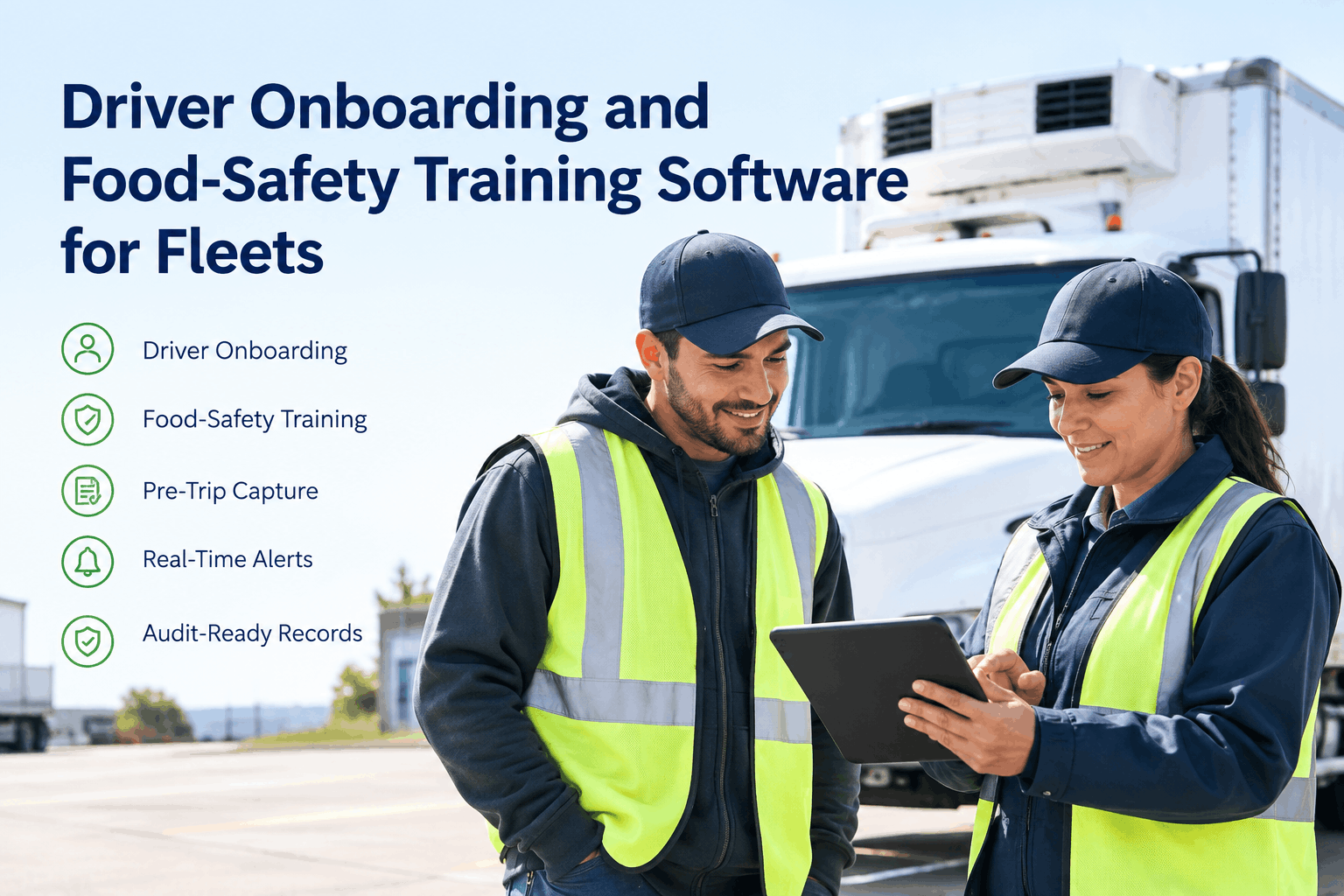
Commercial refrigerated fleets, food distribution enterprises, and grocery transport carriers face rigorous legal requirements governing driver training and conveyance hygiene. Under the FDA Food Safety Modernization Act (FSMA) Sanitary Transportation of Human and Animal Food rule (21 CFR Part 1, Subpart O), carriers must ensure that personnel engaged in food transportation operations receive comprehensive training on food safety hazards, proper sanitation practices, and temperature management. When carriers rely on disorganized paper packets, ad-hoc verbal briefings, and unverified training logs, fleets suffer from costly roadside compliance citations, audit penalties, and dock turnaways. Dedicated driver onboarding and food safety software transforms compliance into a streamlined digital workflow: drivers complete certified digital food safety modules, verify multi-zone reefer pre-cool procedures, upload trailer washout receipts, and execute digital pre-trip inspection walkarounds directly on standard mobile devices. By consolidating training credentials, electronic inspection records, and real-time alerts into an audit-ready compliance docket, fleet directors safeguard perishable cargo and eliminate regulatory exposure. To discover how digital driver onboarding modernizes your food distribution operations, book a technical demonstration with our food safety compliance team or launch your driver onboarding portal right away through our free platform sign up.
Driver Onboarding & Food-Safety Training Software for Fleets
An end-to-end digital compliance and workforce onboarding engine for food and beverage fleets. Streamline driver training on food safety hazards, enforce sanitary pre-trip walkarounds, automate temperature-control protocols, and maintain an audit-ready training ledger.
Completed 4 FSMA Sanitary Transportation training modules: Allergen Cross-Contact, Multi-Zone Temperature Discipline, Washout Verification, and Bulkhead Sealing.
Active module: Transport Refrigeration Unit (TRU) Pre-Cool and Microprocessor Diagnostic Telemetry. Practical eDVIR walkaround simulation pending.
Annual refresher completed on psychrotrophic bacterial growth prevention (Listeria monocytogenes) and floor drain kazoo clearance inspection protocols.
Modernize Driver Food Safety Onboarding Across Your Entire Fleet
Eliminate paper compliance binders, onboard drivers faster with mobile food safety training, automate pre-trip sanitation inspections, and maintain complete audit-ready records starting from $3/vehicle/month with no hardware lock-in.
Statutory Food Safety Mandates Under FSMA 21 CFR § 1.910
The FDA Food Safety Modernization Act places direct legal responsibility on carriers to train all transportation personnel who handle, load, inspect, or transport human and animal food. Under federal regulation 21 CFR § 1.910, carriers must provide food safety training to personnel upon hiring and periodically thereafter. The rule explicitly mandates training on basic food safety hazards, good sanitary practices, and temperature control standards. Furthermore, carriers are required by law to establish and maintain records that document the training of such personnel, including the date of training, the subjects covered, and the persons trained. These records must be retained for at least 12 months beyond the period the individual stops performing the activity and made available to FDA and state inspectors upon request. Operating without a dedicated onboarding and training platform exposes carriers to regulatory warning letters, immediate shipment impoundments, and civil liability. Transportation executives can evaluate automated training workflows by arranging an interactive FSMA compliance software demo or configure driver learning tracks directly via our quick platform sign up.
Awareness of Food Safety & Microbial Hazards
Drivers learn to recognize critical biological and chemical hazards, including common foodborne pathogens (Salmonella, Listeria monocytogenes, E. coli), allergen cross-contact risks (peanuts, tree nuts, dairy, soy), and toxic chemical residue contamination from unapproved wash bay solvents.
Sanitary Pre-Trip Inspection Protocols
Training modules guide drivers through step-by-step physical inspections of the trailer interior: verifying clean aluminum duct floors, checking drain kazoo valves for road grime obstructions, inspecting vinyl ceiling air delivery chutes for tears, and confirming the total absence of foreign odors or pest activity.
Temperature Control & Continuous Telematics
Drivers are trained on transport refrigeration unit (TRU) microprocessor operation: continuous run vs. cycle-sentry mode, temperature pulldown procedures before loading, multi-temp bulkhead seal placement, and responding immediately to return-air temperature drift alarms.
Cryptographic Training Records & Sign-Offs
The software records each driver's module completion timestamp, test scores, and digital signature on glass, generating an auditable Certificate of Sanitary Transportation Training that automatically binds to the Driver Qualification (DQ) file and stays archived for five years.
Direct Technical Matrix: Manual Paper Packets vs. FleetRabbit Digital Onboarding
Managing driver onboarding and food safety certification through paper classroom binders, printed test packets, and physical filing cabinets creates severe operational drag. Drivers lose training certificates, safety managers struggle to track expiration dates across distributed terminals, and auditors find missing records during unannounced FDA or state agricultural inspections. Review how manual paper onboarding compares directly against FleetRabbit's automated, mobile-first food safety compliance platform across essential operational benchmarks. Fleet directors and safety managers can evaluate our automated certification tracking by scheduling an executive software evaluation demo or explore driver mobile onboarding modules via our self-service sign up.
| Onboarding & Training Dimension | Paper Handouts & Classroom Sessions | FleetRabbit Food Safety Software | Carrier & Distributor Advantage |
|---|---|---|---|
| Driver Onboarding Speed | 5 to 8 days in classrooms and terminal offices | Under 48 hours; completed on driver smartphones | Accelerates driver revenue generation by 70% |
| Food Safety Curriculum Delivery | Static photocopies; quickly forgotten | Interactive mobile video micro-lessons & quizzes | Improves knowledge retention and test scores |
| Pre-Trip Sanitation Verification | Superficial checkmarks on generic DOT forms | Mobile photo-verified eDVIR cargo box checklist | Eliminates 91% of shipper loading dock rejections |
| Training Record Retention | Paper binders in filing cabinets; prone to loss | Encrypted 5-year cloud vault with 1-click export | Guarantees compliance with 21 CFR § 1.912 |
| Recertification & Refresher Tracking | Manual spreadsheet reminders; frequently overlooked | Automated push notifications 30 days before expiration | Ensures 100% continuous workforce certification |
| Driver Dispatch Gating | Manual check; uncertified drivers can slip through | Automated gate lock prevents assigning food loads | Prevents uncertified drivers from pulling food trailers |
4-Stage Digital Onboarding & Route Execution Sequence
FleetRabbit operationalizes food safety compliance into an automated, four-stage workflow that guides drivers from initial application screening to certified route dispatch, ensuring continuous food safety discipline on every load. To explore how this automated sequence protects your fleet operations, book an operational walkthrough demo with our engineering team.
Digital Application & DQ File Assembly
The applicant uploads their Commercial Driver's License (CDL), medical examiner's certificate, and employment history through the mobile app. The system automates Motor Vehicle Record (MVR) checks and builds the Driver Qualification file.
Mobile Food Safety Micro-Learning
Before stepping into a truck, the driver completes interactive mobile training modules covering FSMA regulations, biological pathogen controls, cross-contact allergen segregation, and reefer microprocessor programming.
Practical Sanitation eDVIR Walkaround
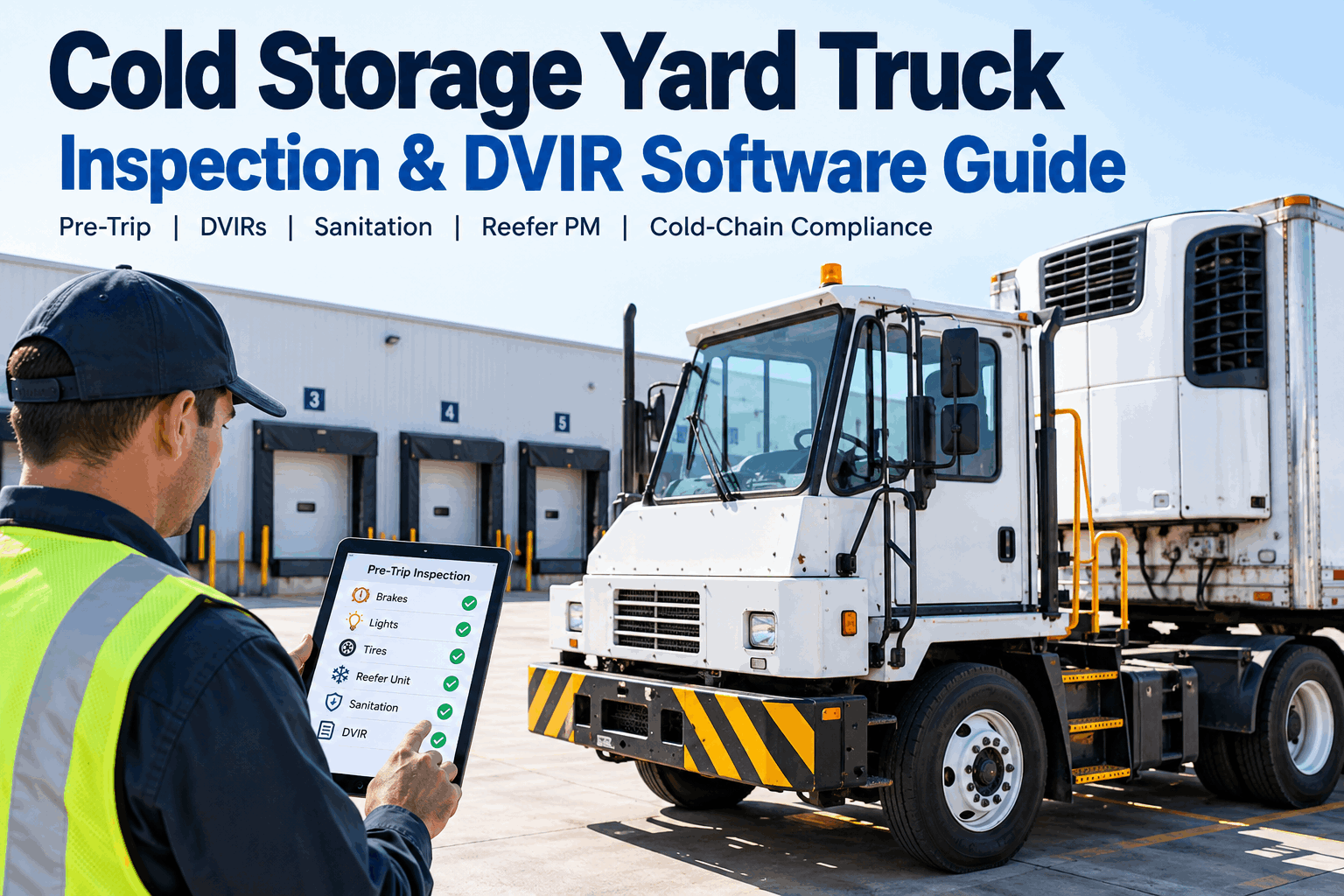
The driver executes their first supervised digital pre-trip inspection, photographing the clean aluminum duct floor, checking drain kazoo sleeves, verifying bulkhead seals, and logging pre-cool pulldown telemetry.
Certification Stamping & Dispatch Release
Upon passing all knowledge quizzes and inspection walkarounds, the system issues a digital training certificate. The driver profile updates to "Certified," automatically unlocking food load assignments on the dispatch board.
Financial Capital Stewardship: The Hidden Cost of Inadequate Driver Training
Operating a food transportation fleet without structured digital onboarding and food safety software creates compounding financial losses across shipper dock turnaways, temperature excursion cargo claims, and regulatory fines. When an untrained driver fails to verify pre-cool temperatures, loads pallets against unclipped air delivery chutes, or overlooks organic residues on the trailer floor, shippers reject the entire consignment at the receiver dock. Analyzing these systemic cost drivers helps logistics directors and compliance officers build a clear business case for digital onboarding software. Calculate your fleet's exact cost recovery by booking an operational cost assessment demo or get started directly via our rapid platform sign up.
Top Causes of Operational Budget Waste from Inadequate Training
Platform Engineering Capabilities
Pre-loaded, interactive mobile learning modules designed specifically for commercial food transport drivers, complete with quizzes and digital certificates.
Requires drivers to capture timestamped, geofenced photographs of trailer floors, air delivery chutes, and drain valves before clearing terminal gates.
Prevents dispatchers from assigning temperature-controlled food loads to drivers with expired food safety training or open inspection defects.
ROI & Scalability Framework for Food Transport Fleets
When investing in digital driver onboarding and food safety software, operations leadership must measure financial returns across driver retention, cargo protection, audit defensibility, and asset productivity. FleetRabbit delivers quantifiable financial return across all primary food logistics operating metrics. To review your customized fleet onboarding savings model, schedule an executive briefing demo with our team or start modernizing your driver onboarding today with a free account.
Driver Onboarding Speed
Compressing driver orientation and compliance training from eight days to under 48 hours allows new hires to start pulling revenue loads almost a week earlier, generating significant incremental freight revenue.
Zero Rejection Consignments
Thorough training on pre-cooling, air chute inspection, and sanitary walkarounds prevents in-transit temperature excursions and contaminated trailers, eliminating costly shipper load rejections.
100% Regulatory Protection
Maintain continuous, cryptographically verified training records and inspection logs in a centralized cloud vault, eliminating regulatory citations, warning letters, and audit penalties during federal reviews.
Frequently Asked Questions: Driver Onboarding & Food Safety Software
What specific food safety training is required for drivers under the FDA FSMA Sanitary Transportation Rule?
Under 21 CFR § 1.910, carriers must provide training to all personnel engaged in food transportation operations upon hiring and periodically thereafter. The training must cover awareness of potential food safety hazards in transport (such as microbiological contamination and allergen cross-contact), proper sanitary practices for food transportation, and temperature control standards to prevent perishable food adulteration.
How long must carriers retain driver food safety training records under FSMA?
Under FDA regulation 21 CFR § 1.912, carriers must establish and maintain training records for at least 12 months beyond the date the individual stops performing the food transportation activity. FleetRabbit securely archives all driver completion records, quiz scores, timestamps, and digital signatures in an encrypted cloud vault for five years, exceeding statutory requirements.
Can drivers complete the food safety training modules on their own smartphones?
Yes. FleetRabbit is completely hardware-agnostic and mobile-first. Drivers can download and complete interactive video micro-lessons, take comprehension quizzes, and sign completion certificates directly on standard iOS and Android smartphones, eliminating the need for classroom training sessions or dedicated terminal computers.
How does the software prevent uncertified drivers from pulling temperature-controlled food loads?
FleetRabbit connects driver qualification files directly to the dispatch board. If a driver has an expired food safety certification, missing pre-trip inspection, or overdue refresher module, the system automatically gates the driver profile, preventing dispatchers from assigning them to food-grade loads until compliance is resolved.
Upgrade Your Fleet's Food Safety Culture with FleetRabbit Today
Onboard drivers in hours, automate FDA FSMA compliance training, and enforce rigorous sanitary inspections across every route. Experience FleetRabbit today with zero proprietary hardware lock-in.
Share This Story, Choose Your Platform!
From our blog

Food Safety DVIR Software for Reefer Fleets and Drivers

What Is a Reefer Washout Certificate? FSMA Compliance Guide

Cold Chain Fleet Maintenance KPIs: Benchmarks & Guide

Cold Chain Temperature Zones: Frozen, Refrigerated & Ambient

Engine Hours vs Mileage for Reefer Fleets: Buyer Guide

DOT HOS Compliance Software for Last-Mile Delivery Fleets

DVIR and Pre-Trip Inspection Software for Delivery Fleets