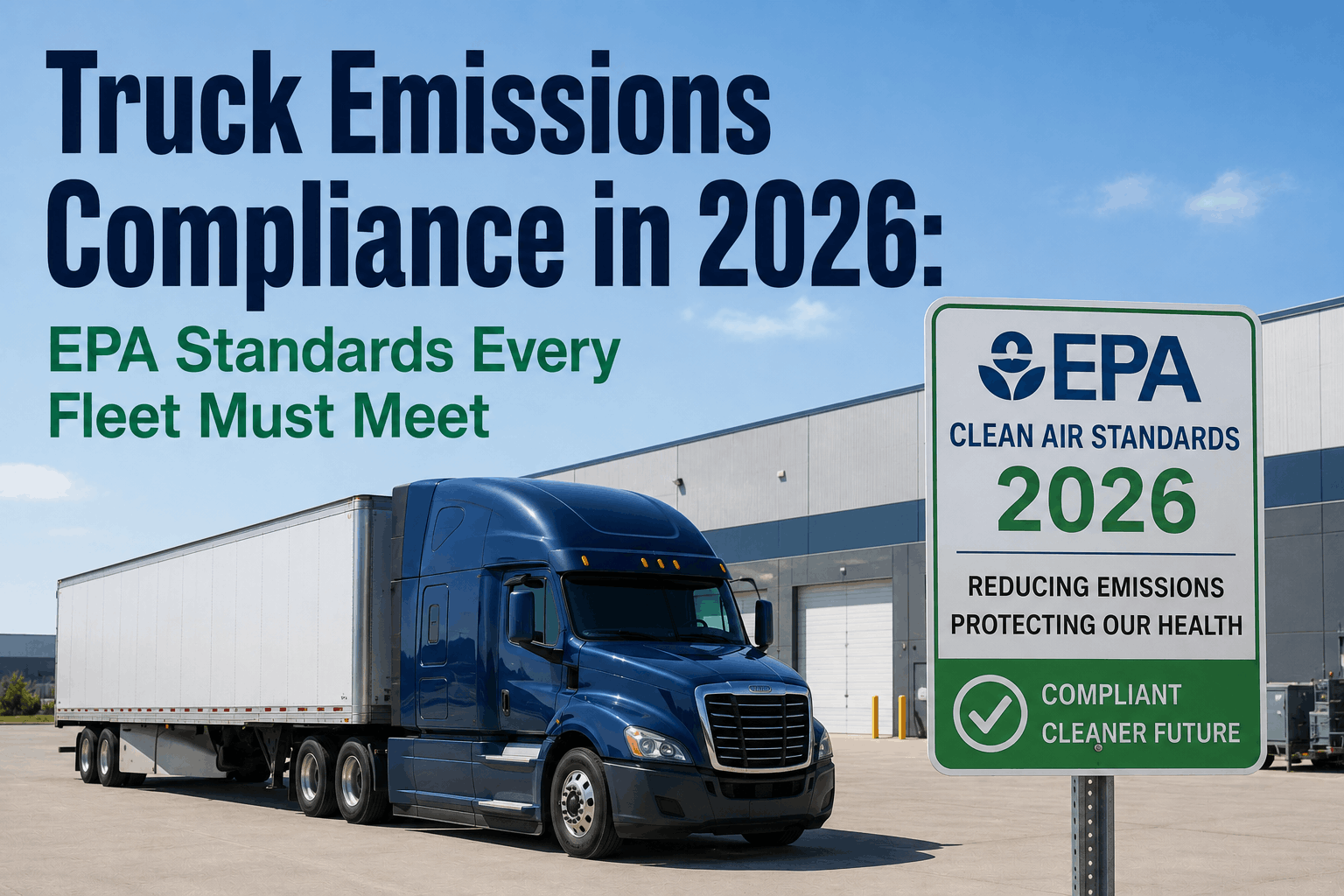
Running a truck fleet in 2026 means navigating one of the most consequential regulatory shifts in trucking history. The EPA is holding firm on its 2027 heavy-duty NOx standards, and the compliance clock is already ticking for every fleet manager in the country. Whether you operate five trucks or five hundred, what you do in 2026 will determine whether your fleet is ready — or whether you're caught scrambling when the rules kick in.
Get your fleet compliance-ready with FleetRabbit
Smart tools built for fleet managers who don't have time to fall behind.
What the EPA is actually requiring
The headline number is 35 mg of NOx per horsepower-hour — a reduction of more than 80% from the previous federal standard of 200 mg. That's not a minor tweak. It's a complete reimagining of what a compliant diesel engine looks like. The rule applies starting with Model Year 2027 vehicles, meaning trucks manufactured and sold from January 1, 2027 onward must meet these levels. Alongside the NOx cut, particulate matter limits are being reduced by 50%.
Beyond the emissions numbers themselves, the original rule also pushed OEMs to extend warranty coverage to 450,000 miles (up from 100,000) and useful life provisions to 650,000 miles. These extended requirements have been the biggest cost driver. The EPA has signaled it plans to adjust warranty and useful-life provisions in a rule expected in spring 2026, which is expected to reduce per-truck cost increases — but the 35 mg standard and 2027 start date are not moving.
N
NOx Limit
35 mg/hp-hr
Down from 200 mg — an 80%+ reduction
P
Particulate Matter
50% Lower
Soot reduction across all heavy-duty engines
W
Warranty (original)
450K miles
Up from 100K — likely to be revised in 2026
Y
Model Year Start
2027
Confirmed — no delay despite industry pressure
Why 2026 is the year that matters most
Here's the thing about regulatory transitions in trucking: the real pain doesn't arrive the day the rule takes effect. It arrives in the months before, when build slots fill up, supply chains tighten, and everyone who waited too long finds themselves priced out or shorted on inventory. That's exactly the situation fleet managers are facing right now.
Truck prices are expected to rise between $8,000 and $15,000 per unit once the new emissions technology becomes standard. That number was initially projected as high as $20,000 to $25,000 before the EPA signaled it would ease warranty requirements — but even at the lower end, a fleet replacing 50 trucks is looking at $400,000 to $750,000 in additional equipment costs. Private fleets are already securing build slots early to lock in pre-compliance pricing. If your fleet hasn't started this planning, you're already behind the curve.
If you're still figuring out where to start, sign up for FleetRabbit and get immediate visibility into your fleet's compliance status, vehicle age, and replacement timeline — all in one place.
The 2026 compliance timeline
Now — Mid 2026
Pre-buy window open. Audit your fleet, flag aging units, secure build slots before pricing increases hit.
Spring 2026
EPA releases its adjustment proposal — expected to revise warranty and useful-life provisions while keeping the 35 mg NOx standard.
Late 2026
Pre-buy inventory tightens significantly. Fleets that haven't ordered face allocation shortages and higher prices.
Jan 1, 2027
New MY2027 trucks must meet the 35 mg NOx standard. Non-compliant models cannot be sold for use on US roads.
The emissions control technologies your fleet needs to know
Reaching the 35 mg NOx threshold requires more than a software update. It requires a new generation of aftertreatment hardware — systems that work in combination to scrub exhaust before it leaves the tailpipe. Here's what compliant engines will be running:
Selective Catalytic Reduction (SCR)
Injects diesel exhaust fluid (DEF) into the exhaust stream to convert NOx into harmless nitrogen gas and water. SCR systems in MY2027 engines will need to operate at higher efficiency across a wider range of temperatures.
Exhaust Gas Recirculation (EGR)
Routes a portion of exhaust gases back into the combustion chamber, lowering peak combustion temperature and reducing NOx formation at the source — before it ever reaches the aftertreatment system.
Diesel Particulate Filter (DPF)
Captures soot particles from exhaust. Requires regular regeneration cycles to burn off accumulated particulate matter. Proper maintenance is critical — a clogged DPF is one of the most common compliance failures in existing fleets.
Cold-Start NOx Control
A major focus of the new standards is reducing NOx emissions during cold starts, when current aftertreatment systems are least effective. New engine designs will include faster catalyst warmup and more precise DEF injection controls.
For fleets running older vehicles, keeping these systems properly maintained is the difference between passing roadside inspections and facing fines. Book a demo with FleetRabbit to see how automated maintenance alerts can keep your aftertreatment systems in check year-round.
What about California and state-level rules?
Federal EPA standards set the floor, but California's Air Resources Board (CARB) has historically set the ceiling — and fleets operating in California, or in states that have adopted California standards, face a more complex compliance picture. Even with the EPA's recent decision to revoke its authority over certain greenhouse gas rules, the 2027 NOx standards remain in force federally. California continues to enforce its own additional emissions policies independently.
For multi-state fleets, this creates a patchwork of compliance requirements. A truck certified for federal standards may not be certified for California operations. Engine spec decisions made during the 2026 pre-buy window need to account for where those trucks will actually operate — not just what's cheapest at the time of purchase.
Key insight for multi-state fleets
Trucks registered or operated in California must comply with CARB standards in addition to federal EPA rules. Verify regional engine certifications before placing orders — buying a federally-compliant truck that can't legally operate in a state you service is a costly mistake. Use
FleetRabbit's compliance tracking to manage state-by-state requirements from a single dashboard.
What a non-compliant fleet actually costs you
The financial argument for compliance isn't just about avoiding fines. It's about the total cost picture that fleet managers often don't account for until it's too late.
Regulatory fines
EPA Clean Air Act violations can run into thousands of dollars per day, per vehicle. For a large fleet, enforcement actions can become existential.
Out-of-service downtime
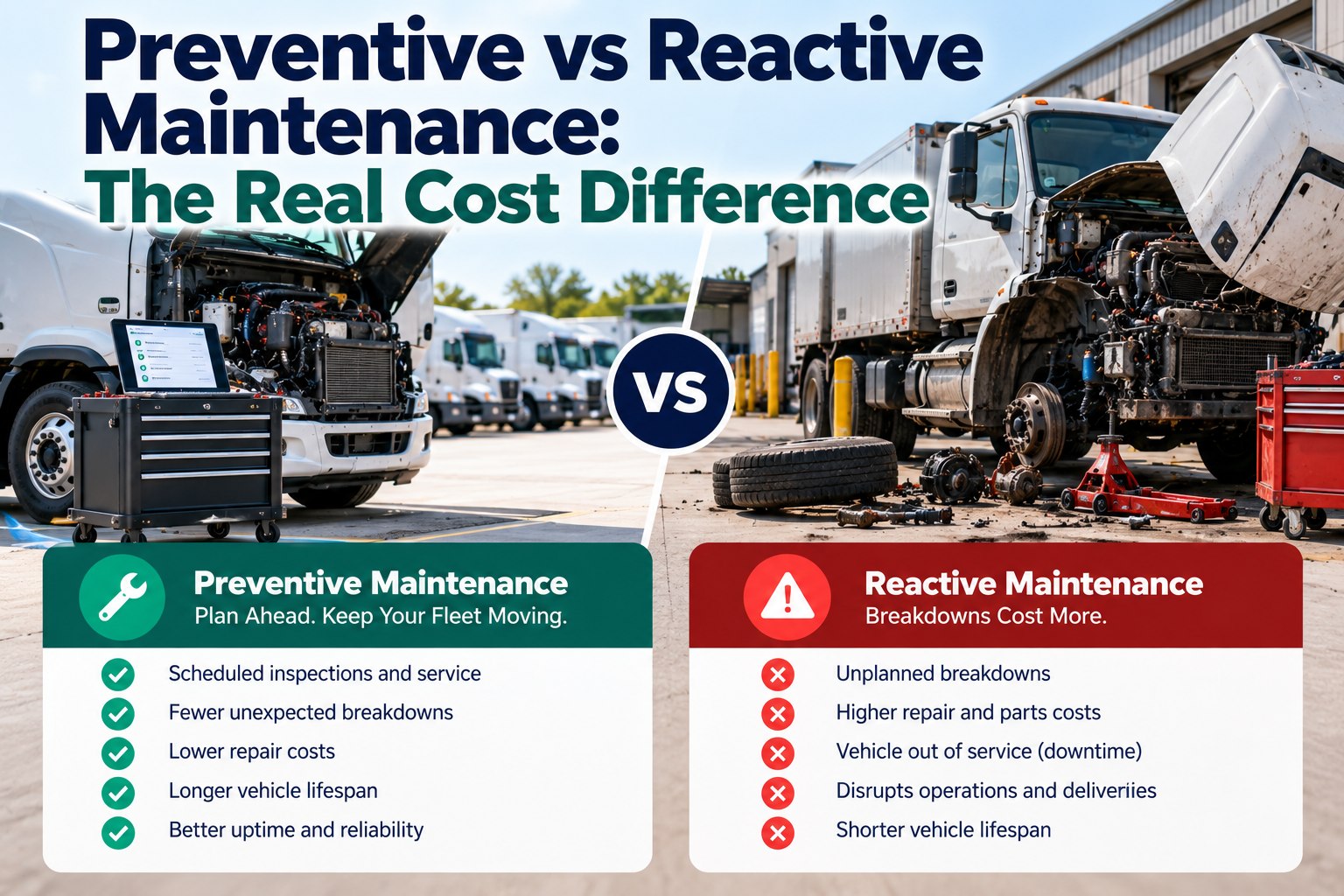
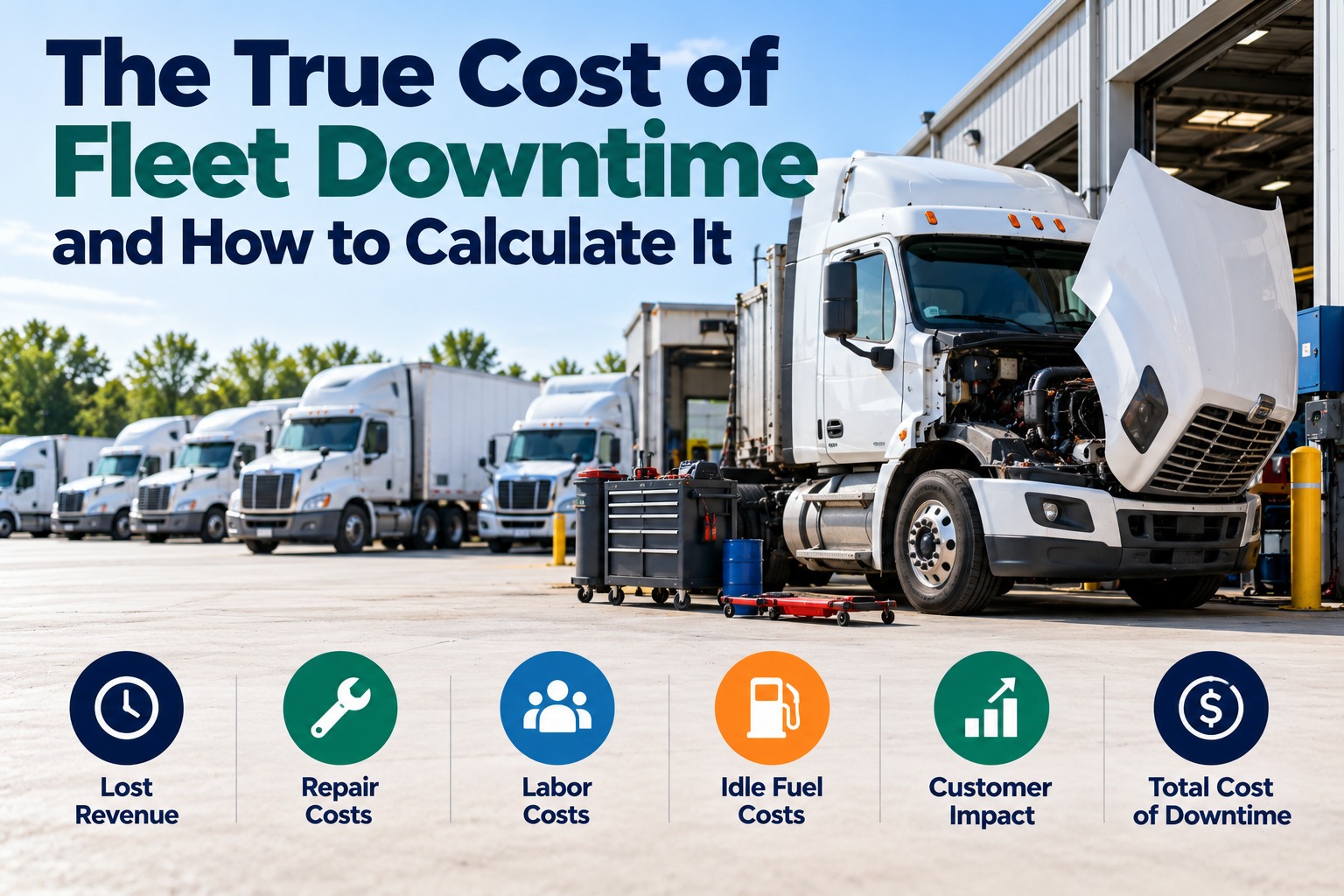
Trucks that fail roadside emissions inspections can be placed out of service immediately. A single day off the road can cost more than a month of preventive maintenance.
Contract risk
Shippers increasingly require proof of emissions compliance as part of carrier qualification. Non-compliant fleets risk losing contracts with sustainability-focused customers.
Resale value erosion
Pre-2027 trucks will retain value better if properly maintained. Poorly documented maintenance records — especially DPF and SCR service history — dramatically reduce resale prices.
The smartest fleets treat compliance not as a regulatory burden but as an operational discipline. Sign up for FleetRabbit to automate your compliance tracking, maintenance scheduling, and documentation — so you're never caught flat-footed by an inspection or an audit.
A practical checklist for fleet managers in 2026
Compliance planning doesn't require perfect information — it requires a structured approach. Here's how to get your fleet positioned before the window closes:
1
Audit your fleet by vehicle age and mileage. List every truck that will age out or reach high mileage by 2027. These are your priority replacement candidates. Flag units with histories of DPF or SCR failures — they're at highest compliance risk right now.
2
Determine your pre-buy budget and procurement timeline. Prices for pre-2027 trucks are still lower than what 2027 models will cost. Build your replacement plan around the pre-buy window and lock in pricing before availability tightens in late 2026.
3
Verify state-specific engine certifications for your routes. If your fleet operates in California or CARB-compliant states, confirm that the engines you're ordering are certified for those jurisdictions — not just federally compliant.
4
Put aftertreatment maintenance on a documented schedule. For trucks you're keeping through the transition, a clean and documented DPF/SCR maintenance record protects resale value and reduces inspection risk in the interim period.
5
Watch the EPA's spring 2026 proposal closely. The agency has committed to publishing a rule adjustment that may alter warranty and useful-life provisions. Final pricing on 2027 trucks will shift depending on what's in that proposal — don't finalize equipment decisions before reading it.
6
Centralize your compliance documentation. Inspectors want records, and shippers want certificates. If your compliance history is scattered across spreadsheets, paper logs, and email threads, you're one audit away from a serious problem. Use a fleet management platform that keeps everything in one place — and makes it printable on demand.
FleetRabbit is built to handle exactly this kind of multi-layer compliance planning. From vehicle age tracking to maintenance scheduling to document management, it gives fleet managers a single command center for everything that matters. Book a 30-minute demo and see how it fits your operation.
Your fleet's compliance future starts now
FleetRabbit gives you the tools to track, plan, and document emissions compliance — before the 2027 deadline becomes a crisis.
Frequently asked questions
Do the 2027 NOx standards apply to trucks already in my fleet?
No. The 2027 standards apply to new heavy-duty engines and vehicles manufactured for Model Year 2027 and beyond. Trucks already in your fleet continue to be held to the standards they were built to meet. However, proper maintenance of existing emissions systems — DPF, SCR, EGR — is required to stay in compliance with current rules and pass inspections.
What is the difference between EPA standards and CARB standards?
The EPA sets federal baseline emissions standards that apply nationwide. The California Air Resources Board (CARB) sets its own, often stricter, standards that apply in California. Several other states have adopted CARB standards as well. Fleets that operate in California or CARB-compliant states must meet both sets of requirements. An engine certified only to federal EPA standards may not be legally operable in those states.
How much will new 2027-compliant trucks cost compared to current models?
Industry estimates currently project a per-truck cost increase of $8,000 to $15,000 for MY2027 vehicles, down from earlier estimates of $20,000 to $25,000 following EPA signals that warranty and useful-life requirements may be eased. Final pricing will depend on the EPA's spring 2026 adjustment proposal. Fleets purchasing pre-2027 trucks now can lock in lower prices before compliance costs are factored into OEM pricing.
What is the pre-buy window and why does it matter?
The pre-buy window refers to the period before MY2027 trucks go on sale, during which fleets can purchase current-generation trucks at lower prices. This window is narrowing significantly in 2026 as build slots fill up and OEM supply chains shift focus to 2027 production. Fleets that act during the pre-buy window can avoid the cost increases that come with compliance-era trucks, while also giving themselves more time to plan the eventual full fleet transition.
What happens if my truck fails an emissions inspection?
A truck that fails an emissions inspection can be placed out of service immediately, meaning it cannot legally operate on public roads until the issue is corrected. Depending on the nature of the failure, you may also face fines under the Clean Air Act. Repeated violations can trigger formal enforcement actions from the EPA or state regulators. This is why proactive aftertreatment maintenance — not reactive repairs — is the right approach for any fleet operating in regulated environments.
How can fleet management software help with emissions compliance?
Fleet management platforms like FleetRabbit help in several concrete ways: tracking vehicle age and mileage to identify replacement priorities, scheduling and logging aftertreatment maintenance (DPF cleaning, SCR fluid refills, EGR checks), storing compliance documentation for inspections and shipper audits, and flagging vehicles that are approaching service intervals before they become a compliance risk. The best systems also let you view your entire fleet's compliance status in a single dashboard — not across a dozen spreadsheets.
June 17, 2026
By Edward
All Articles