The conversation around fleet electrification has shifted dramatically: it's no longer "if" but "how much" and "how fast." With light commercial EVs now delivering up to 13% lower total cost of ownership compared to diesel equivalents, urban and regional trucks achieving cost superiority, and 87% of fleet operators expecting to own EVs within five years, 2026 marks the transition from pilot programs to strategic deployment. Yet the gap between commitment and deployment remains real—FedEx operates 8,000 electric vehicles toward its 100% electric goal, while school districts manage to deploy only 38% of their committed electric buses. Start your electrification assessment today.
This comprehensive 2026 electrification strategy guide provides the practical roadmap mixed fleets need: from Total Cost of Ownership analysis and vehicle selection to charging infrastructure deployment and operational integration. Whether you're electrifying your first vehicles or scaling a pilot program, success depends on aligning vehicles, infrastructure, and operations through data-driven planning rather than assumptions. The fleets that treat electrification as a strategic five-year initiative rather than an emergency response will capture maximum financial benefit. Schedule your electrification strategy consultation.
Ready to Build Your Electrification Roadmap?
Get a customized fleet assessment that identifies the right vehicles, optimal charging infrastructure, and realistic timeline for your specific operations.
Frequently Asked Questions
What is the current state of fleet electrification heading into 2026?
Fleet electrification is entering a critical transition phase in 2026. After years of pilot programs and experimental rollouts, fleets are moving from exploration to execution. The economics have become increasingly compelling—light commercial EVs deliver up to 13% lower TCO compared to gas equivalents, and 87% of fleet operators expect to own EVs within the next five years. Assess your fleet's electrification readiness:
2026 Fleet Electrification Landscape
| Metric | Current Status | 2026 Projection | Strategic Implication |
|---|---|---|---|
| Light Commercial EV TCO Advantage | Up to 13% lower than ICE | Widening gap | Strong business case for last-mile |
| Fleet Operators Expecting EVs | 87% within 5 years | Accelerating adoption | Prepare now or fall behind |
| EV Fleet Growth Projection | 600% over next decade | Continued expansion | Infrastructure investment critical |
| Maintenance Cost Savings | 40-50% lower than ICE | Sustained advantage | Factor into TCO calculations |
| Deployment Timeline | 2-3 years typical | Unchanged | Start planning now for 2026-2027 |
| Federal Commercial Credit | Up to $40K (ended Sept 2025) | State/utility programs | Focus on remaining incentives |
Why is 2026 considered the strategic inflection point for fleet electrification?
2026 represents a critical transition year because multiple forces are converging to make electrification both more practical and more urgent. Technology is maturing, infrastructure is expanding, and TCO calculators—not just sustainability commitments—are now driving the majority of fleet electrification decisions. Schedule a 2026 readiness consultation:
Forces Driving 2026 Fleet Electrification:
- Economics are compelling: Urban and regional trucks already cost-superior; fuel savings of $0.04-0.05/mile vs. $0.17 for gasoline; maintenance savings of $6,000-12,000 per vehicle lifetime
- Technology is maturing: More electric vans and trucks hitting market; battery costs continuing to decline; range anxiety fading for predictable routes; real-world performance data accumulating
- Infrastructure is expanding: 16,700 new DCFC ports predicted in 2025 (16% YoY increase); depot charging becoming standard; utility programs supporting make-ready installations
- Regulation is accelerating: EPA Phase 3 standards requiring up to 40% ZEV by 2032; California ICE phase-out regulations; state-level ZEV mandates expanding
- Market is moving: Fleets shifting from exploring and piloting to putting strategies into action; first-mover advantages for those building business cases now
What is the deployment gap and how can fleets avoid it?
The deployment gap refers to the variance between ambitious electrification commitments and actual operational vehicles. Understanding this gap is critical for realistic planning—delivery fleets with return-to-base operations are advancing faster than expected, while transit agencies face 2-3 year procurement timelines. Get realistic deployment timeline planning:
Deployment Gap Reality Check:
- Success example: FedEx operates 8,000 electric vehicles toward its 100% electric goal, demonstrating that large-scale deployment is achievable with systematic planning
- Challenge example: School districts operate only 38% of their committed electric buses, highlighting infrastructure and procurement timeline challenges
- Grid capacity: Existing distribution grids weren't designed for EV charging demand, causing transformer overloads and project delays of months to years
- Utility coordination: Infrastructure upgrades and grid connections create substantial delays that can extend timelines significantly
- Key lesson: Infrastructure development, utility coordination, and operational adaptation often take longer than vehicle procurement
- Best practice: Early adopters who've closed the gap share common traits—realistic planning, early utility engagement, and effective energy management
How do I calculate Total Cost of Ownership for EV fleet vehicles?
TCO analysis is the foundation of every sound electrification decision. While EVs typically cost more upfront, they can deliver significant savings in fuel, maintenance, and operations. A complete TCO framework must account for all cost components specific to your use case. Access our TCO calculator tools:
Complete TCO Framework Components:
- Acquisition costs: Vehicle purchase price, financing/lease terms, federal tax credits (if applicable), state/utility rebates, delivery and prep
- Infrastructure costs: Charging equipment ($3,500-350,000/port), electrical upgrades ($10,000-40,000), site preparation ($5,000-25,000), permits and networking software
- Operating costs: Electricity vs. fuel ($0.04-0.05 vs $0.17/mile), demand charges (15-min peak usage), time-of-use rate optimization, insurance, registration and taxes
- Maintenance costs: 40-50% lower than ICE; no oil changes, fewer brake jobs; battery monitoring; software updates; tire rotation (same as ICE)
- Lifecycle factors: Depreciation patterns, residual value (typically higher for EVs), battery longevity (often outlasts vehicle), resale market development
- Operational factors: Downtime for charging, route modifications, driver training, backup vehicle needs, weather impact on range (25-50% reduction in cold)
TCO Comparison: Class 3 Delivery Van (8-Year Ownership)
| Cost Category | Diesel Van | Electric Van | Difference |
|---|---|---|---|
| Vehicle Acquisition | $45,000 | $55,000 | +$10,000 |
| Incentives/Credits | $0 | ($7,500) | -$7,500 |
| Charging Infrastructure (share) | $0 | $3,500 | +$3,500 |
| Fuel/Energy (8 years) | $48,000 | $16,000 | -$32,000 |
| Maintenance (8 years) | $24,000 | $12,000 | -$12,000 |
| Insurance (8 years) | $16,000 | $18,000 | +$2,000 |
| Residual Value | ($8,000) | ($12,000) | -$4,000 |
| Total 8-Year TCO | $125,000 | $85,000 | -$40,000 |
Based on 20,000 miles/year, $4.00/gallon diesel, $0.12/kWh electricity. Actual costs vary by location, usage, and incentive availability.
What commercial EV models are available for fleets in 2025-2026?
The commercial EV market has expanded significantly, though it remains more limited than traditional ICE options. Successful fleet electrification requires matching available vehicles to your operational requirements. The electric van market saw Rivian outsell Ford E-Transit and Mercedes eSprinter combined in 2024. Get vehicle selection guidance:
2025-2026 Commercial Electric Van Options
| Vehicle | Range | Starting Price | Payload | Key Features |
|---|---|---|---|---|
| Ford E-Transit | Up to 159 mi | $49,000+ | Up to 3,880 lbs | Best-selling, 8% premium over ICE Transit, Pro Power |
| Rivian Commercial Van (RCV) | 153-161 mi | $50,000+ | Up to 2,734 lbs | Purpose-built EV, available to non-Amazon fleets |
| Mercedes eSprinter | Up to 248 mi | $65,000+ | Varies by config | Premium option, US-assembled, longer range |
| Chevrolet BrightDrop | Up to 272 mi | $60,000+ | Up to 3,710 lbs | GM dealer network, longest range option |
| Ram ProMaster EV | 162 mi | $62,000+ | Varies | Low cargo floor, front-wheel drive |
Vehicle Selection Criteria:
- Range vs. daily mileage: Target vehicles with range 20-30% above maximum daily requirement to account for weather, payload, and battery degradation
- Payload capacity: Some EVs sacrifice payload for battery weight—verify requirements match your operational needs
- Charging compatibility: Confirm vehicle charging port type (CCS, NACS) matches planned infrastructure
- Service network: Evaluate manufacturer/dealer support capabilities in your operating areas
- Upfit compatibility: Verify aftermarket body/equipment options available for your use case
- OTA updates: Prefer vehicles with over-the-air software update capability for ongoing improvements
What are the charging infrastructure options and costs for fleet depots?
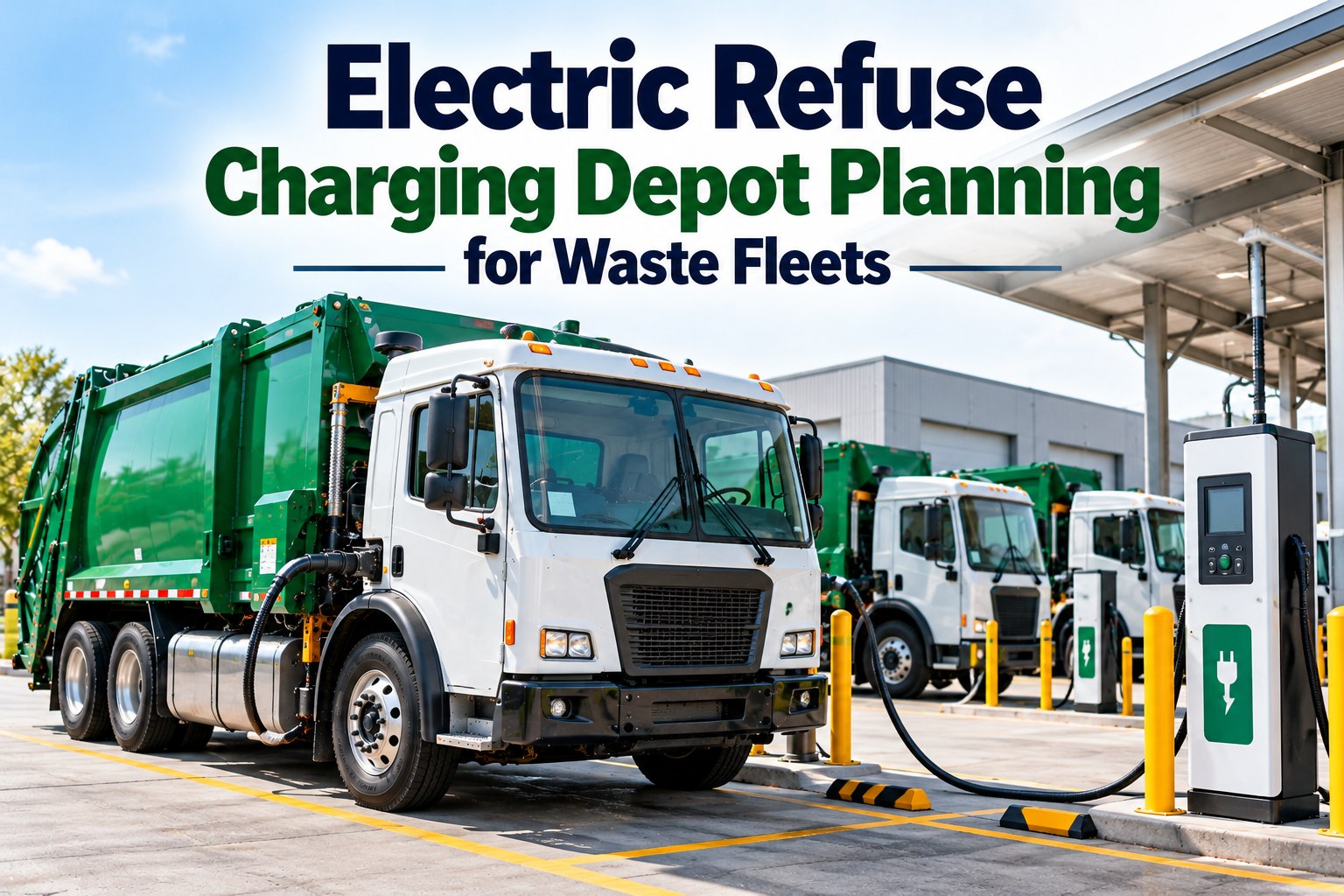
Infrastructure often takes longer to deploy than vehicles—utility coordination alone can add 12-18 months to timelines. Successful fleets start infrastructure planning early and build flexibility into their charging strategy. Level 2 charging is most cost-effective for overnight depot charging, while DC fast charging enables high-utilization or multi-shift operations. Start infrastructure planning:
Charging Infrastructure Options Comparison
| Specification | Level 2 (AC Charging) | Level 3 (DC Fast Charging) |
|---|---|---|
| Power Level | Up to 19.2 kW | 50-350+ kW |
| Charging Speed | 25-40 miles/hour | 100-200 miles/30 min |
| Equipment Cost (per port) | $1,500-5,500 | $40,000-150,000 |
| Installation Labor | $2,000-10,000 | $15,000-50,000 |
| Electrical Upgrades | $5,000-25,000 | $25,000-100,000+ |
| Site Preparation | $2,000-10,000 | $10,000-50,000 |
| Total Installed Cost | $3,500-15,000/port | $18,000-350,000+/port |
| Best Application | Overnight depot charging (8+ hours) | Opportunity/en-route, multi-shift |
| Demand Charge Impact | Lower | Higher—smart charging essential |
Critical Infrastructure Considerations:
- Utility coordination: Start conversations 12-18 months before needed—grid upgrades take significant time and are often the longest lead-time item
- Demand charges: 15-minute peak usage fees can significantly impact operating costs—smart charging systems are essential for cost control
- Future-proofing: Install Level 3 infrastructure even if current needs are Level 2—upgrades cost more later
- Load management: Smart systems allow multiple chargers to share capacity, avoiding expensive service upgrades
- Redundancy: Plan for charger downtime with backup capacity or public charging relationships
What incentives are available for fleet electrification after September 2025?
The incentive landscape changed significantly with the passage of the One Big Beautiful Bill Act in July 2025, which accelerated the termination of many Inflation Reduction Act programs. Federal clean vehicle tax credits ended for vehicles acquired after September 30, 2025. However, state, utility, and manufacturer incentives may still be available. Get incentive guidance for your location:
Available Incentive Categories (Post-September 2025):
- State programs: California HVIP offers up to $60,000/truck for qualifying vehicles; New York rebates up to $2,000+ for commercial EVs; Colorado, Oregon, Washington programs remain active; many state credits unaffected by federal changes
- Utility rebates: Make-ready programs covering infrastructure costs; equipment rebates ($500-5,000+ per charger); reduced EV charging rates; demand charge management programs
- Infrastructure credits: 30C charging infrastructure credit (30% up to $100K) may still apply; NEVI Formula Program for public charging; state clean fuel credits (California LCFS); local municipality incentives
- Manufacturer incentives: Fleet volume discounts; lease specials and reduced financing; charging equipment bundles; service/warranty packages
- Stacking strategy: Companies that plan wisely can combine multiple programs to cover up to 80% of charging infrastructure costs in favorable states
What is a realistic timeline for fleet electrification implementation?
Fleet electrification is typically a 2-3 year journey from initial strategy to operational vehicles. Rushing leads to costly mistakes; realistic timelines and phased deployment deliver the best outcomes. It can take up to 6 months to develop a deployment strategy and up to 21 months to design, permit, coordinate with utilities, and complete construction. Start your implementation planning:
24-Month Electrification Implementation Roadmap
| Phase | Timeline | Key Activities | Deliverables |
|---|---|---|---|
| 1. Assessment & Strategy | Months 1-6 | Analyze telematics data, identify pilot candidates, conduct facility electrical assessments, engage utility, research incentives, develop business case | Electrification strategy document, TCO analysis, stakeholder approval |
| 2. Planning & Procurement | Months 7-12 | Finalize vehicle selections and order, design charging infrastructure, submit utility requests, apply for permits and incentives, select contractors | Vehicle orders placed, infrastructure design complete, permits submitted |
| 3. Infrastructure Build | Months 13-18 | Complete electrical upgrades, install charging equipment, commission systems, set up energy management, conduct staff training | Charging infrastructure operational, staff trained, systems tested |
| 4. Pilot Launch & Optimization | Months 19-24 | Take delivery of vehicles, integrate into operations, monitor performance, refine routes and schedules, document lessons learned | Pilot fleet operational, performance baseline established, scaling plan |
What are the most common fleet electrification mistakes to avoid?
Understanding common implementation obstacles helps fleets prepare for success and avoid costly mistakes during program development. Most deployment challenges stem from underestimating timelines, ignoring operational requirements, or skipping critical planning steps. Get expert guidance to avoid pitfalls:
Common Deployment Mistakes to Avoid:
- Underestimating infrastructure timelines: Utility upgrades can add 12-18 months—start conversations with your utility immediately, not when you order vehicles
- Ignoring demand charges: Peak 15-minute usage can dominate electricity costs without smart charging—model these costs before deployment
- One-size-fits-all approach: Different routes and use cases require different vehicle/charging solutions—conduct route-by-route analysis
- Skipping pilot programs: Learning on 5-10 vehicles is far cheaper than learning on 50—pilot first, then scale
- Neglecting driver buy-in: Range anxiety and charging concerns need proactive training—engage drivers early in the process
- Overlooking cold weather impact: Range can drop 25-50% in extreme cold—plan backup capacity and adjust winter route assignments
- Treating vehicles and infrastructure separately: Align charging deployment directly with vehicle replacement schedules and EV acquisition
Which vehicles should I electrify first?
The future of fleet management isn't a binary choice between ICE and electric—it's a blended, strategic approach based on which powertrain makes the most sense for each use case. Prioritize vehicles that maximize the inherent advantages of electric propulsion. Get vehicle prioritization analysis:
Optimal Candidates for Initial Electrification:
- Last-mile delivery (under 100 mi/day): Predictable routes, overnight charging capability, best TCO advantage—electrify first
- Urban service/utility vehicles: Stop-and-go driving maximizes regenerative braking benefit, depot charging available—strong candidates
- Fixed-route shuttles: Consistent daily mileage, scheduled charging windows, high visibility for sustainability goals
- Multi-shift operations with DCFC: Fast charging enables continuous use if infrastructure investment is justified
- High annual mileage vehicles: More miles = more fuel savings—prioritize vehicles that drive the most
Applications to Electrify Later or Keep ICE/Hybrid:
- Regional haul (150-250 mi/day): EVs viable if return-to-base; consider hybrid if routes are variable or charging uncertain
- Long-haul trucking (400+ mi/day): Range and charging infrastructure gaps remain—keep diesel for now
- Cold climate operations: 25-50% range reduction in extreme cold requires careful planning—consider hybrid or right-sized EV with backup
- Remote/rural routes: Charging infrastructure limited—ICE or hybrid until network expands
- Refrigerated transport: Reefer power draw impacts range significantly—market still evolving
How do I manage EV operations differently from traditional fleet management?
Transitioning to electric requires operational changes beyond just different vehicles. Successful fleets adapt routes, schedules, and processes while maintaining service levels. The key differences involve route optimization, charging management, driver training, and maintenance adaptation. Access EV operations management tools:
EV Fleet Operational Considerations
| Operations Area | Key Changes Required | Best Practices |
|---|---|---|
| Route Optimization | Assign EVs to routes within range with margin; account for terrain, weather, payload | Use telematics to refine assignments; build in charging stops for longer routes |
| Charging Management | Schedule charging during off-peak hours; balance charger utilization across fleet | Implement smart charging for demand management; monitor state-of-charge for readiness |
| Driver Training | Efficient driving techniques; charging procedures; range management | Pre-conditioning and HVAC optimization; regenerative braking maximization |
| Maintenance | High-voltage safety training; updated tooling; adjusted PM schedules | Establish battery monitoring protocols; build OEM relationships for warranty |
| Emergency Procedures | Breakdown protocols for EVs; backup vehicle deployment | Establish mobile charging or towing relationships; backup ICE availability |
What metrics should I track to measure electrification success?
Tracking the right metrics ensures your electrification program delivers expected benefits and enables continuous improvement. Successful fleets monitor financial, operational, energy, and sustainability KPIs throughout the transition. Set up your EV performance dashboard:
Key Performance Indicators for EV Fleets:
- Financial metrics: Cost per mile (EV vs. ICE), fuel/energy savings vs. baseline, maintenance cost comparison, TCO tracking by vehicle, incentive capture rate
- Operational metrics: Vehicle availability/uptime, charging success rate, range utilization efficiency, route completion rate, backup vehicle deployments
- Energy metrics: kWh consumed per mile, charging efficiency (wall to wheel), demand charge impact, off-peak charging percentage, grid carbon intensity
- Sustainability metrics: GHG emissions avoided, gallons of fuel displaced, air quality improvements, sustainability goal progress, ESG reporting metrics
How do I handle EV range issues in cold weather?
Cold weather reduces EV range by 25-50% due to battery chemistry limitations and cabin heating energy draw. This is one of the most significant operational challenges for fleets in northern climates and requires specific mitigation strategies. Get cold weather operations planning:
Cold Weather Mitigation Strategies:
- Pre-conditioning: Heat vehicles while plugged in—cabin and battery warming uses grid power rather than depleting battery range
- Higher state-of-charge: Maintain fuller batteries in winter to provide margin for range reduction
- Route adjustments: Reduce daily route distances during cold periods to account for range loss
- Battery thermal management: Prioritize vehicles with active battery heating systems for cold climate operations
- Cabin heat alternatives: Use seat heaters instead of cabin heat when practical—significantly lower energy consumption
- Backup availability: Keep backup ICE or fully-charged EVs available during extreme cold periods
- Seasonal assignments: Some fleets reserve EVs for milder weather routes in winter, shifting to ICE for longest/coldest routes
What happens to federal EV incentives going forward?
The federal clean vehicle tax credits ended for vehicles acquired after September 30, 2025 due to the One Big Beautiful Bill Act passed in July 2025. Vehicles acquired by that deadline can still claim credits when placed in service. The commercial clean vehicle credit (up to $40,000 for heavy-duty EVs over 14,000 lbs) and new clean vehicle credit ($7,500) are no longer available for new purchases. Navigate the post-incentive landscape:
Post-September 2025 Incentive Reality:
- Federal credits ended: New clean vehicle credit ($7,500), commercial clean vehicle credit (up to $40,000), and previously-owned credit ($4,000) all terminated for vehicles acquired after September 30, 2025
- Transition provision: Vehicles acquired by September 30, 2025 can still claim credits when placed in service, even after that date
- State programs continue: Many state incentive programs remain active—California HVIP, New York rebates, and others unaffected by federal changes
- Utility incentives: Many utilities still offer make-ready programs, equipment rebates, and special EV rates
- Business case shift: Focus on building TCO-based business cases that work with or without subsidies—economics increasingly favor EVs regardless
- Manufacturer response: Expect automakers to offer their own discounts and lease specials if EV sales slow
Start Your Electrification Journey
Whether you're planning your first EV pilot or scaling a proven program, our platform provides the tools, data, and expertise to electrify with confidence.