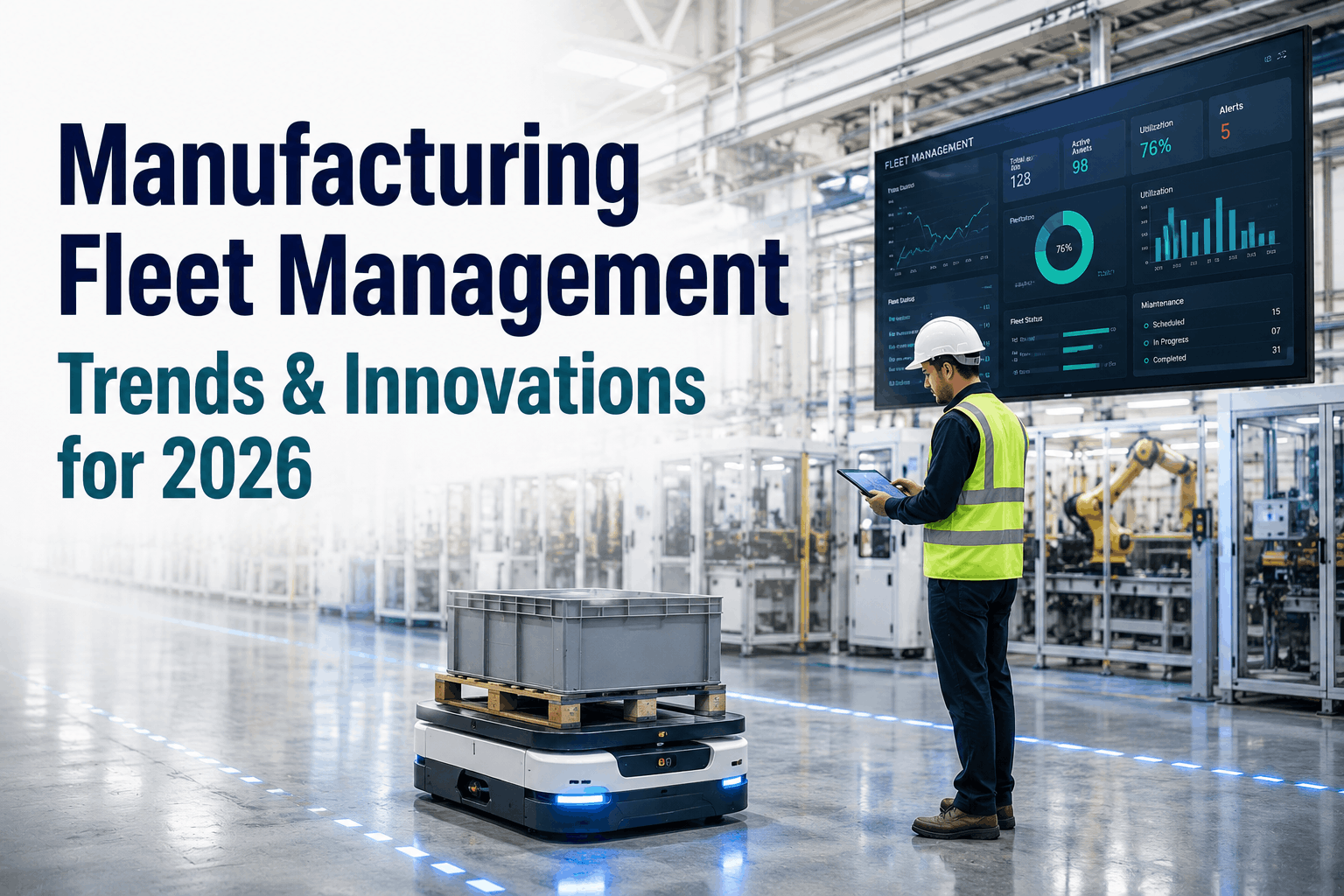
The manufacturing fleet management landscape is undergoing a fundamental transformation as we move through 2026. What was once considered a cost center is now recognized as a strategic driver of operational efficiency, sustainability, and competitive advantage. The era of fragmented systems and reactive decision-making is giving way to unified operations, AI-powered insights, and data-driven strategies that touch every aspect of fleet performance. From electrification to predictive analytics, the trends shaping this year are not just about adopting new technologies — they are about fundamentally rethinking how manufacturing fleets operate, adapt, and deliver value in an environment where margins are measured in inches and every decision matters .
The New Normal: Permanent Volatility
The post-pandemic era has given way to something more permanent: a state of continuous disruption. As industry leaders have observed, disruption is now simply part of the operating environment, not an exception to be weathered . This reality is forcing manufacturing fleet managers to redesign their planning, risk management, and investment strategies around the assumption that volatility will continue. Supply chain shocks, policy uncertainty, labor shortages, and technological acceleration are converging, creating a landscape where stability is no longer a reliable planning assumption.
What does this mean for manufacturing fleets in practice? It means building resilience through flexible systems, diversifying supplier relationships, and maintaining the ability to pivot quickly as conditions change. It also means leveraging technology to gain visibility and control over operations that are increasingly complex and geographically distributed. Sign up to discover how FleetRabbit helps manufacturing fleets build operational resilience.
Electrification: From Ambition to Execution
Electrification remains a top priority for manufacturing fleets, but the conversation has matured. According to the Global Fleet and Mobility Barometer 2026, 66% of organizations are already using or planning to incorporate electric vehicles within the next three years . However, the initial enthusiasm has given way to a more realistic, execution-focused approach. Companies now understand that electrification is not just about acquiring EVs — it requires redesigning processes, investing in charging infrastructure, and managing total cost of ownership with greater precision.
The infrastructure challenge remains significant, with 68% of fleet managers identifying the lack of charging points as a major barrier. In response, 99% of organizations are implementing or planning charging policies, with over half developing on-site charging solutions . For manufacturing fleets operating across large campuses or multiple facilities, site-by-site electrical capacity audits and careful sequencing of infrastructure investments are becoming standard practice.
Driver behavior has emerged as one of the biggest variables in EV success. Real-world data shows that most commercial duty cycles fall well below the range capacity fleets believe they need, with daily usage often under 75 miles. In many cases, EVs return to base with more than 50% of battery capacity unused — evidence that range anxiety often leads fleets to overspecify vehicles. The operational learning curve is real, but fleets that invest in understanding actual usage patterns, driver routines, and charging habits are finding that electrification delivers genuine value when matched to the right duty cycles. Book a demo to see how FleetRabbit helps optimize EV deployment for manufacturing operations.
AI and Data: From Concept to Daily Practice
Artificial intelligence is no longer a futuristic concept for manufacturing fleets — it is becoming an operational reality. At the 2025 Fleet Forward Conference, speakers noted that AI adoption is growing but remains uneven, with most fleets still experimenting or waiting for clearer use cases. The primary bottlenecks are not enthusiasm but fragmented systems, inconsistent data quality, and workforce readiness.
One of the most compelling developments is the emergence of AI agents that automate routine tasks such as maintenance triage, ticket processing, and vendor coordination. Natural-language interfaces are serving as the bridge, allowing fleet managers to query performance data conversationally and receive actionable insights. The goal is not sweeping automation but simplifying daily work and enabling faster, more informed decisions.
AI-Driven Fleet Management: Key Applications
However, industry experts caution that AI is only as reliable as the data it is fed. Incomplete or inconsistent fleet data leads to flawed conclusions, only faster. The most successful fleets are those investing in data structure, connectivity, and governance before scaling AI applications. As one analyst noted, "AI becomes powerful only when the underlying data is structured, connected, and tied to a clear operational problem". Sign up to learn how FleetRabbit structures data for AI readiness.
Unified Operations: Breaking Down Silos
Fragmented systems and siloed data are increasingly recognized as structural barriers to efficiency and AI success. The trend toward unified operations — connecting on-road, on-site, and enterprise data — is becoming a strategic necessity. Rather than managing separate systems for maintenance, telematics, inventory, and compliance, leading fleets are adopting integrated platforms that provide a single source of truth across all operations.
This integration is particularly critical for manufacturing environments where fleets include diverse equipment types — from forklifts and yard trucks to over-the-road vehicles and autonomous mobile robots. Analysts predict a 140% annual growth in multi-vendor fleet management systems by 2027, underscoring the critical role of integration in maintaining competitive advantage . Unified operations enable better coordination, reduce redundancy, and create the foundation for advanced analytics and AI applications that span the entire fleet ecosystem.
Total Cost of Ownership Under New Calculus
Total cost of ownership remains a top priority for manufacturing fleets, but the calculus is shifting. With 31% of fleets identifying TCO as their primary challenge, organizations are taking a more holistic approach that goes beyond acquisition cost. The full lifecycle — from leasing strategy and maintenance to remarketing timing and daily utilization — is now under scrutiny.
For manufacturing fleets, this means revisiting TCO assumptions more frequently. Cap costs, while off pandemic peaks, remain elevated. Interest rates have reset to levels that many fleets weren't budgeting for just a few years ago. Maintenance costs continue to rise 5-6% annually, and longer replacement cycles driven by allocation shortages have increased exposure to repair costs and downtime risks. The TCO case for replacing aging vehicles is getting stronger, even factoring in higher cap costs and rates, because running costs for older equipment are reaching a point where holding on is no longer the cheaper option.
Manufacturing fleets are increasingly turning to data-driven tools to optimize TCO, including automated vehicle monitoring, real-time visibility, and centralized data platforms. These solutions enable better decision-making across acquisition, maintenance, and utilization, helping fleets balance sustainability goals with financial viability. Book a demo to see how FleetRabbit helps manufacturing fleets optimize TCO.
ESG: From Ambition to Requirement
Environmental, Social, and Governance strategies are becoming more significant as regulations tighten and sustainability criteria increasingly influence contract tenders. Fleet managers must demonstrate clear progress on decarbonization, emissions reporting, and duty of care. The 2026 ZEV mandate requiring 24% of new vans to be zero-emission is just one example of the regulatory pressure mounting on manufacturing fleets.
This shift is driving demand for consultative solutions that help businesses align fleet operations with regulatory and commercial expectations. Organizations are no longer satisfied with generic sustainability claims — they need verifiable data, transparent reporting, and actionable plans for reducing environmental impact across their entire fleet footprint.
The Future of the Fleet Manager
The role of the fleet manager is being rewritten. As AI absorbs administrative and analytical work, fleet professionals are evolving from operational controllers to strategic orchestrators of data, systems, and decision-making. Today's fleet managers operate across multiple disciplines simultaneously — compliance, sustainability, risk management, and operational efficiency — and AI strengthens performance across all of those dimensions without replacing strategic oversight.
The scope of decision-making has broadened significantly, and the expectation that fleet managers get those decisions right has never been higher. This elevation changes what fleet managers should expect from technology partners: not just point solutions, but integrated platforms that support the full lifecycle of fleet management, from acquisition and maintenance to disposal and sustainability reporting. Sign up to explore how FleetRabbit supports the modern fleet manager's expanding role.
CTA section 1Ready to Navigate 2026's Fleet Trends?
From AI-driven insights to unified operations — FleetRabbit helps manufacturing fleets stay ahead of the curve.
Frequently Asked Questions
The key trends include AI-powered fleet management, unified operations that break down data silos, continued electrification with a focus on infrastructure and TCO, predictive maintenance, and the elevation of fleet management from cost center to strategic asset.
AI is automating routine tasks, enabling predictive maintenance, powering conversational analytics interfaces, and optimizing route planning. AI-driven predictive maintenance can reduce maintenance costs by up to 30% while cutting fleet downtime by 13%.
The primary challenges are charging infrastructure availability (cited by 68% as a barrier), matching EVs to appropriate duty cycles, managing TCO, and addressing driver behavior and charging routines. On-site charging solutions and careful duty-cycle analysis are key success factors.
Unified operations connect on-road, on-site, and enterprise data into a single platform, enabling better coordination, eliminating data silos, and providing the foundation for advanced analytics and AI. This integration is critical for operating mixed fleets that include forklifts, yard trucks, and over-the-road vehicles.
Fleet managers are evolving from operational controllers to strategic orchestrators. They now oversee compliance, sustainability, risk, and efficiency while leveraging AI to automate routine tasks. The role requires broader decision-making capabilities and a strategic partnership approach with technology providers.
Join 800+ Operations Using FleetRabbit
Stay ahead of 2026's fleet trends with a platform designed for modern manufacturing operations.