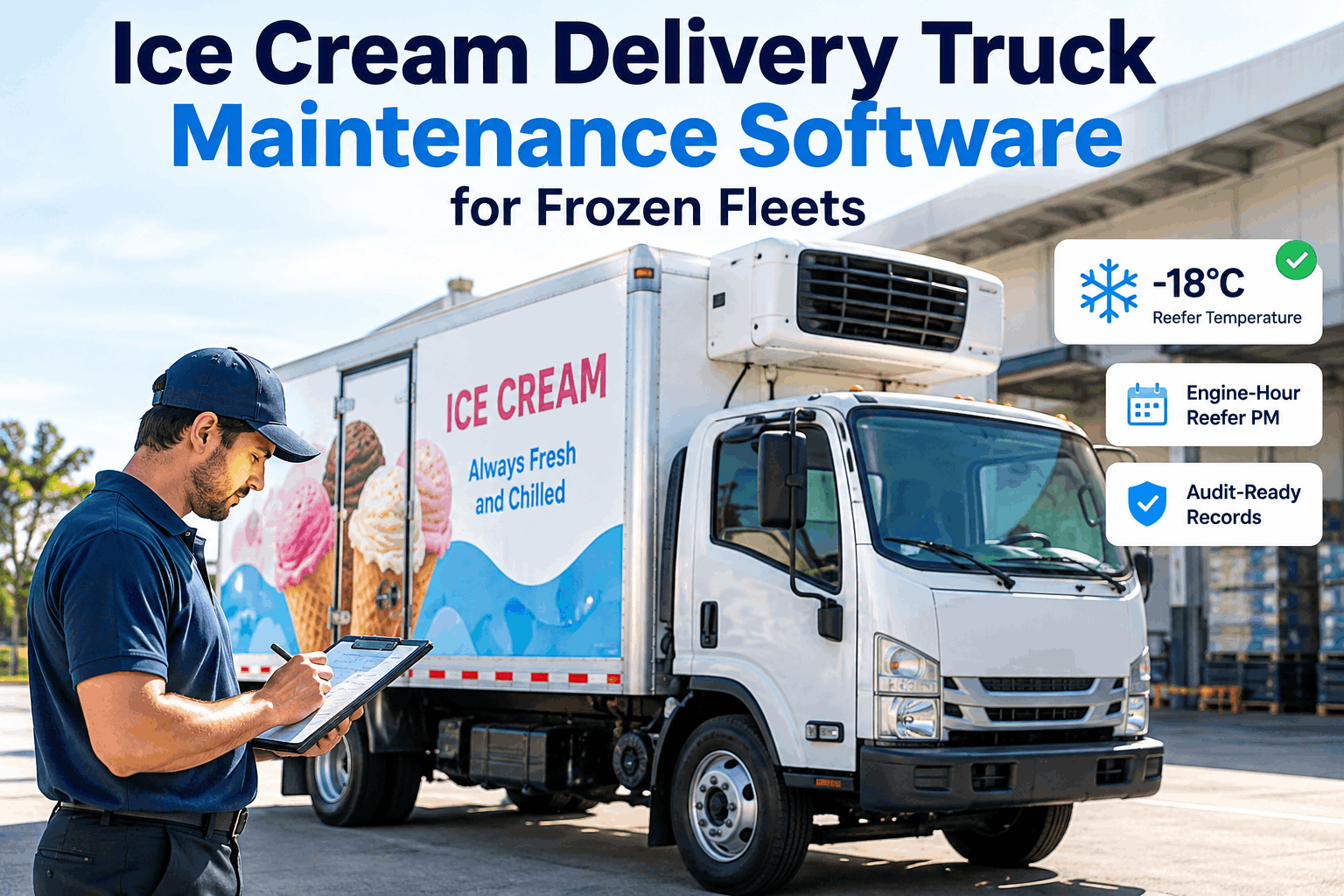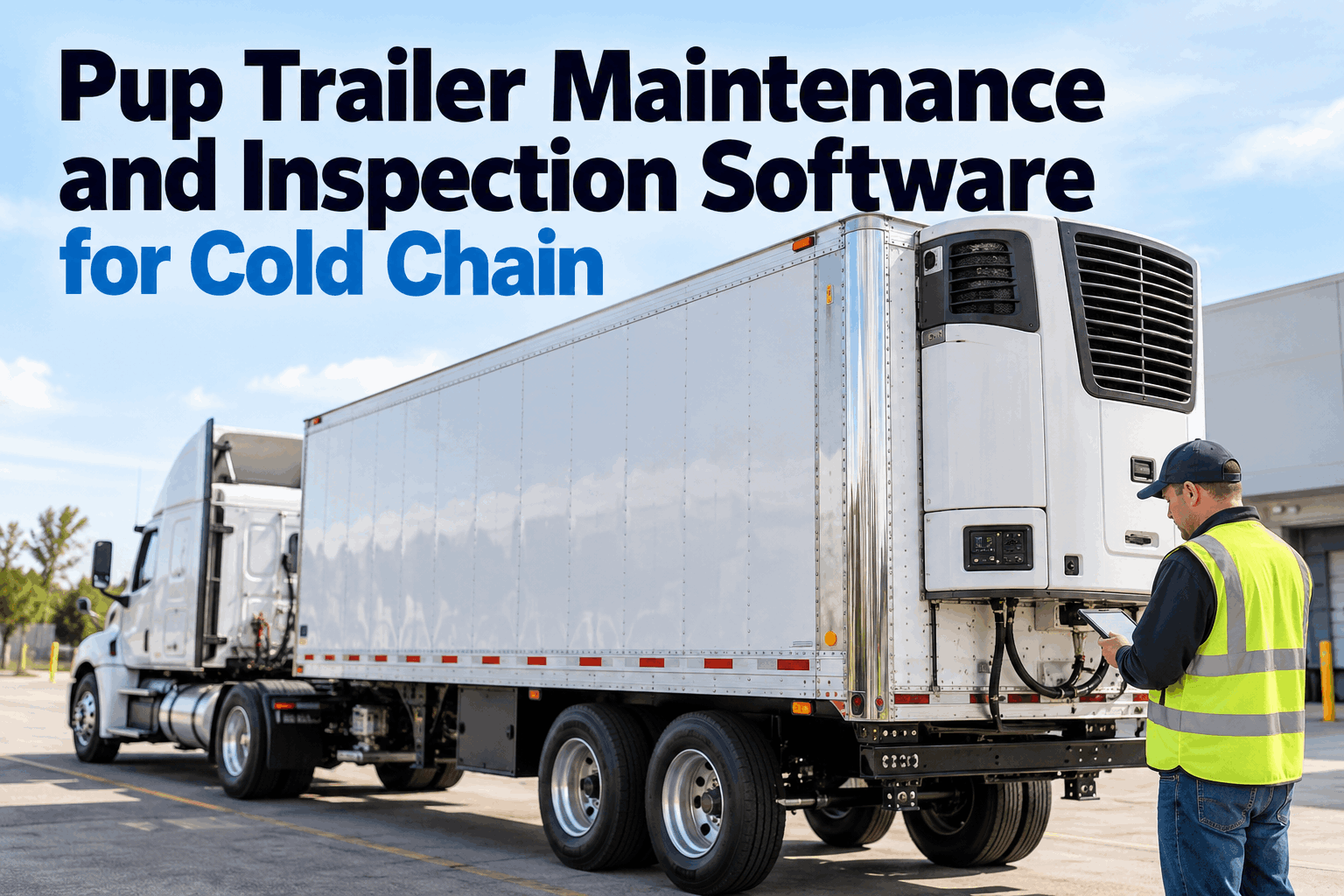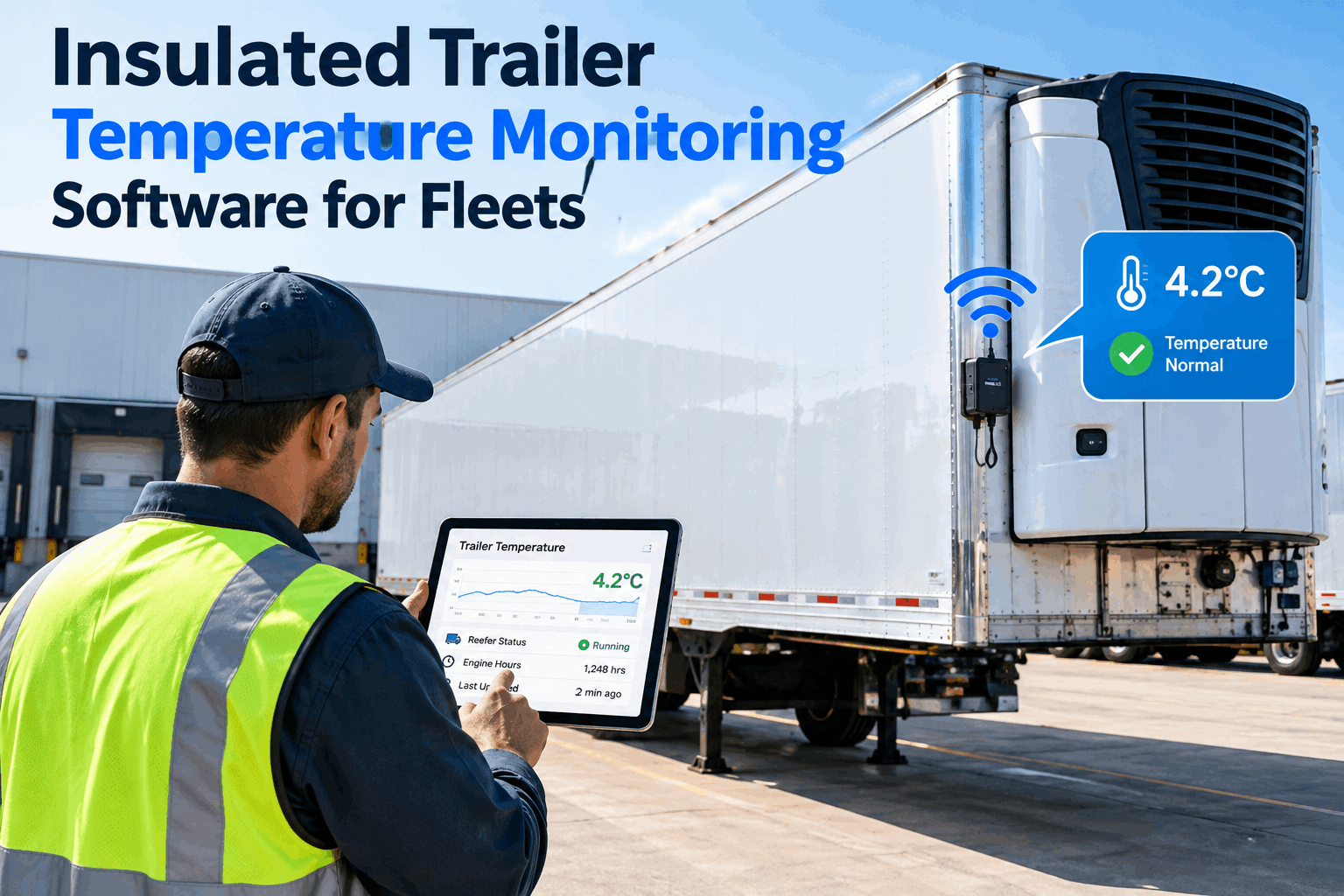
A refrigerated delivery van can look completely fine and still be failing. The engine runs, the driver never hears an alarm, the dashboard shows nothing unusual, and yet the cargo box in the back has been climbing past a safe temperature for the last forty minutes. That is the specific danger refrigerated delivery van inspection software is built to close, because a cold chain failure almost never announces itself, it just quietly turns a full load of product into a liability by the time anyone checks the temperature log.
A reefer unit can run perfectly, sound normal, and never trigger a fault code, while the cargo a few feet away slowly drifts out of a safe temperature range.
Two Failures, One Delivery Van
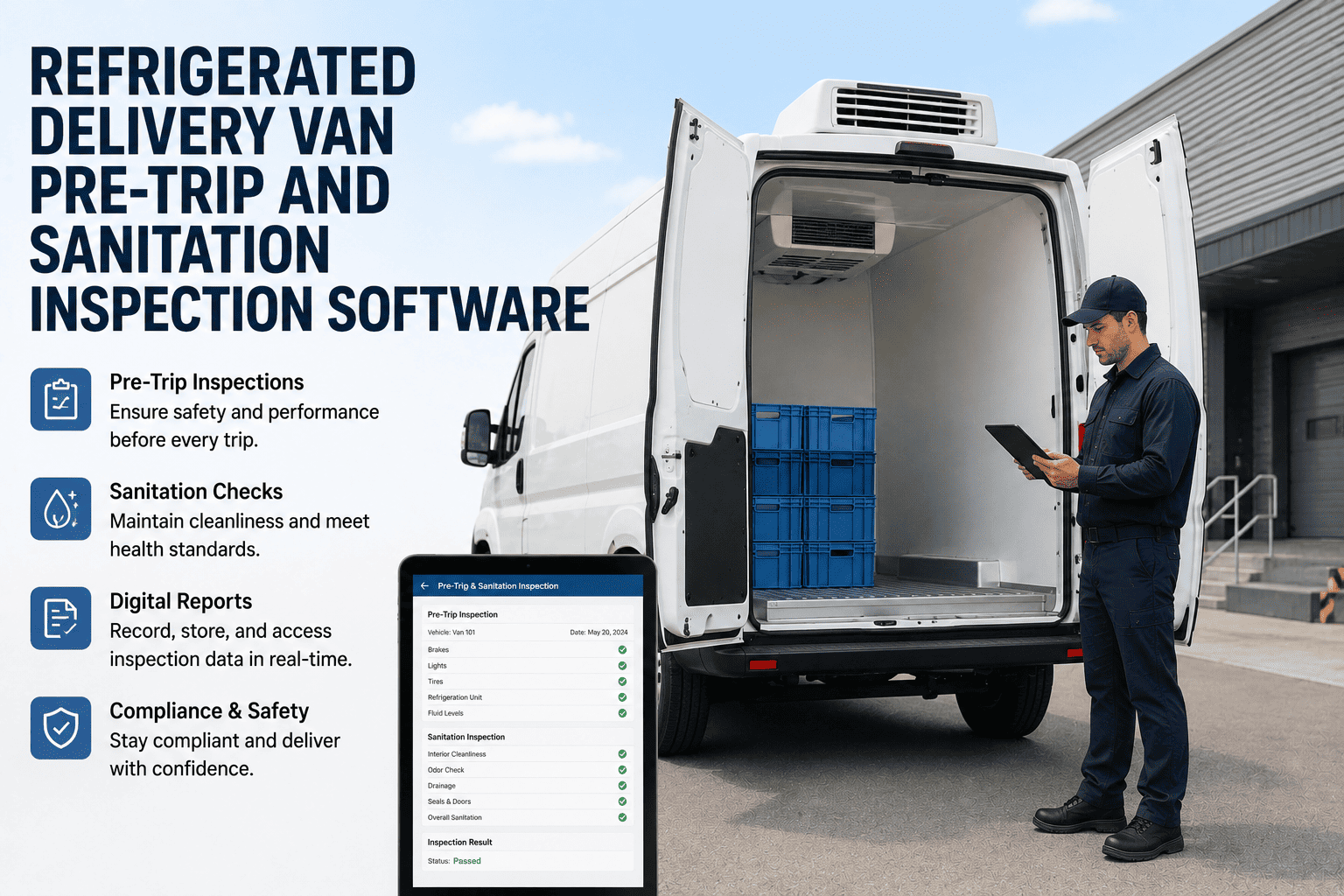
A standard delivery van pre-trip check looks at brakes, tires, lights, and fluids. A refrigerated delivery van needs all of that plus an entirely separate layer most inspection routines were never built to catch. The refrigeration unit runs on its own fuel and power source, the door seals have to hold a temperature boundary and not just close, and the inside of the box has to be sanitized between loads or it becomes a contamination risk regardless of whether the temperature ever moved. Fleets managing this two-layer check by hand tend to move to a digital process fast, which is usually the moment a food safety lead decides to sign up for a system that tracks both layers in one place.
- Brakes, tires, and lights
- Fluid levels and belts
- Chassis and suspension
- Reefer fuel and compressor check
- Door seal and gasket integrity
- Setpoint verification before departure
- Interior sanitation sign-off
What FSMA Actually Requires From Your Fleet
The FDA's Food Safety Modernization Act Sanitary Transportation Rule requires documented temperature control from pre-cooling through delivery, along with written proof that corrective action was taken whenever a deviation occurred. It also treats structural details, damaged seals, blocked airflow, contaminated surfaces, as compliance issues, not just maintenance notes. A single undocumented excursion, or a sanitation record with a gap in it, is enough to turn a routine audit into a serious problem.
Pre-cooling, transit, and delivery temperatures must all be documented, not just spot-checked
Every deviation needs a written record of the corrective action taken
Door seals, insulation, and airflow paths are compliance items, not optional maintenance
Records must be retained and produced to the FDA within 24 hours of a request
Put Pre-Trip And Sanitation On One Screen
See how continuous temperature monitoring, digital pre-trip forms, and sanitation sign-offs come together in a single audit-ready record for every van in your fleet.
What A Paper Log Misses And A Digital One Catches
Most temperature failures do not happen at the loading dock where someone is watching. They happen mid-route, quietly, between the last manual check and the next one. A paper log built around hourly readings has built-in blind spots by design, and closing those gaps is usually why a fleet manager decides to book a demo instead of adding another column to a clipboard.
Paper log approach
A driver notes the temperature once every few hours. If the unit drifts out of range between readings, nobody finds out until the delivery is already made.
Continuous digital monitoring
Temperature is logged constantly and compared against a set threshold in real time, so a drift is flagged the moment it starts, not hours later.
Automatic alert routing
A deviation notifies the dispatcher and the driver immediately, giving the fleet a chance to correct course before the product is compromised.
Audit-ready record
Every reading, alert, and corrective action is timestamped and stored automatically, ready to hand to an auditor or a customer without anyone digging through paperwork.
Silent Failure Points Worth Building Into Every Pre-Trip Check
The refrigeration unit runs on its own independent fuel source. A driver checking only the tractor's fuel gauge can miss a reefer unit about to run dry mid-route.
A damaged gasket lets warm air in continuously, defeating the refrigeration system even while it runs at full capacity.
Residue from a prior load left uncleaned is a compliance issue on its own, regardless of whether temperature ever left the safe range.
Loading patterns that block internal airflow channels can create violations even when the sensor near the front reads correctly.
Building all four of these into a single digital pre-trip form is one of the fastest ways a food and beverage fleet closes its compliance gaps, which is why so many teams choose to sign up before their next shipper audit rather than after one goes wrong.
Ready To See Your Cold Chain On One Dashboard
From pre-trip inspection to sanitation sign-off to continuous temperature logging, everything a shipper or an auditor will ask for lives in one connected record.
Common Questions About Refrigerated Van Inspection Software
What is the difference between a standard pre-trip check and a cold chain pre-trip check
A standard check covers brakes, tires, lights, and fluids. A cold chain check adds the refrigeration unit's independent fuel and power source, door seal integrity, setpoint verification, and a sanitation sign-off before the van ever leaves the lot.
Does FSMA require continuous temperature monitoring
FSMA requires documented temperature control throughout pre-cooling, transit, and delivery along with written proof of corrective action for any deviation, which in practice makes continuous monitoring the most reliable way to stay compliant.
How long do temperature and sanitation records need to be kept
Industry practice and FSMA guidance call for retaining temperature monitoring, sanitation, and training records for at least 12 months, with the ability to produce them to the FDA within 24 hours of a request.
Can sanitation records and temperature logs live in the same system
Yes, a connected platform ties digital pre-trip checklists, sanitation sign-offs, and continuous temperature data together into one audit-ready record instead of three separate paper trails.
What happens if a temperature excursion is caught mid-route
With automated alert routing, the dispatcher and driver are notified the moment a deviation starts, giving the fleet a chance to correct the issue before the product is compromised rather than discovering the problem after delivery.
Is this only relevant for large cold chain fleets
No, any fleet moving temperature-sensitive food, from a handful of local delivery vans to a large regional network, carries the same FSMA documentation requirements and benefits from closing the same silent failure points.